CEO @Aiinstitute (@unimelb) Board director @beyondblue. Former Australian Senator & Tasmanian govt minister. Foreign policy | gender equality | sustainability
The @AIinstitute & University of Melbourne have launched a landmark report highlighting the impact of 🇦🇺🇮🇳 collaboration in health policy, disability & education. Together, we’re advancing research and delivering practical public health solutions. https://t.co/J60nAdUjY7
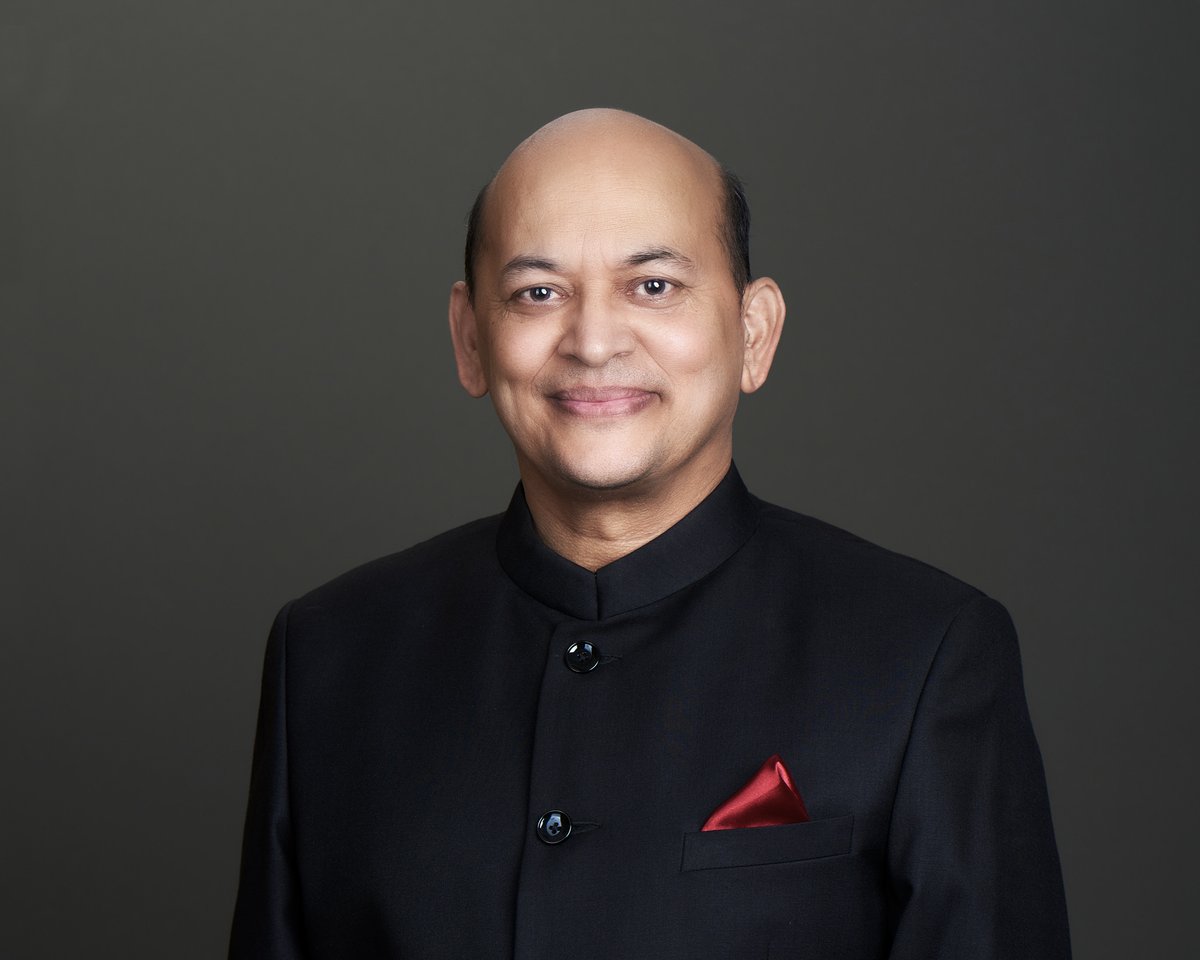
The Australia India Institute welcomes Rear Admiral Sanjay Roye AVSM VSM (Retd.) as a Distinguished Fellow of the Institute.
Rear Admiral Roye AVSM VSM is a former Flag Officer of the Indian Navy, strategic thinker, author and board member. His 37-year naval career encompassed submarine operations, maritime security, strategic weapons programmes, defence governance and senior command. Since completing his naval service, he has developed a second career across corporate strategy, governance, defence, aerospace, ESG, environmental and social leadership, and maritime affairs. He serves on boards as an Independent Director and other senior advisory roles including with Alvarez & Marsal. He is a lifelong Fellow of the Institute of Directors (Global) and a Fellow of Social and Environmental Leadership.
Rear Admiral Roye was awarded the Ati Vishisht Seva Medal in 2024 and the Vishisht Seva Medal in 2020 by the President of India for distinguished service. His deep experience in maritime security and strategic affairs will be a rich asset to the Institute’s thought leadership.
Read more on Rear Admiral Roye here: https://t.co/KeB8HPyrgJ
@DefenceMinIndia@MEAIndia@AusHCIndia@HCICanberra
New Listen 🎧
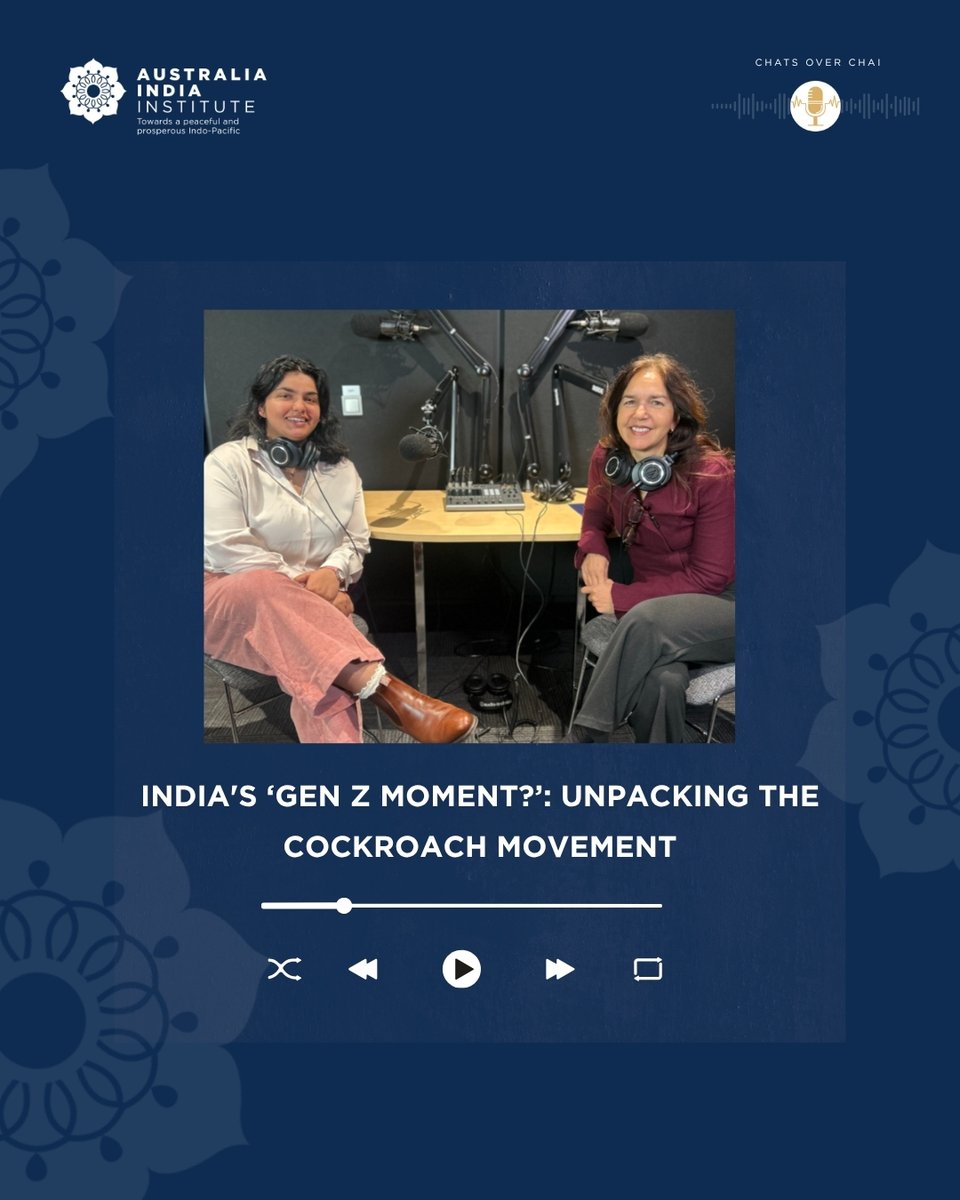
CEO @Lisa_Singh and Research Fellow @Teesta_P unpack the Cockroach movement, which saw tens of thousands of Indian youth take to the streets to protest the handling of NEET (medical entry) examination papers, culminating in the resignation of India's Education Minister and the announcement of a government led taskforce to reform the exam system, in this latest episode of our Chats over Chai.
Join Lisa and Teesta as they explore what this means for India's youth and their future.
Listen now: https://t.co/SvhuvORbEJ
New Read ���
The Institute's July newsletter is out now! This month features the impact of health partnerships with India, analysis of the recent bilateral visit in Melbourne, the cockroach movement, sports education and more.
Read here: https://t.co/eZdFfxPkMP
Cockroach Janta Party withdraws its nationwide agitation with immediate effect
All demands of the Cockroach Janta Party have been accepted by the government:
1. Maximum possible compensation for families of NEET paper leak-related suicides
2. All FIRs by Central govt and NDA-ruled states will be withdrawn, and no action will be taken against anyone involved in these protests in the future.
3. CJP’s 5-point exam reform charter will be considered by the govt and the CJP will meet with the govt to discuss these reforms further.
1/5: The reforms of 1991 are seen by many as having been India’s economic launch pad. Thirty-five years later, it is clear that the dismantling of industrial and trade controls served to accelerate India’s rate of economic growth as well as the rate of its poverty reduction.
2/5: But the country once again finds itself at a cusp, confronted by new challenges of economic security, technological adequacy and an inclusive pattern of growth that have no easy answers in a less than hospitable global climate.
3/5: Three-quarters of all countries rank above India on per capita income. India’s figure is less than a quarter of the world average.
4/5: Much more would have been achieved if the country had followed through with the core logic of the 1991 reforms: to leave to the private sector and markets what they can deliver, open up to the world, and focus government efforts on what governments alone can deliver.
5/5: Read #ThePrintOpinion by TN Ninan
‘From liberalisation to lost momentum—the promise of 1991 has been only partially redeemed’
https://t.co/HhcVmi3IXj
CEO @Lisa_Singh joined @CUTSGlobal and @RIC_jaipur for a dialogue on 'Building an India-Australia Energy Security Corridor for Indo-Pacific Resilience’.
Discussion explored the creation of an India-Australia Energy Security Corridor to enhance resilience in critical minerals, clean energy and maritime logistics, while examining opportunities for deeper collaboration with key Indo-Pacific partners such as Japan and Singapore.
Thank you to @Psm_cuts, CUTS Secretary General, for his contribution to driving deeper partnerships between Australia and India, and to CUTS Executive Director, Bipul Chattopadhyay, for moderating the discussion.
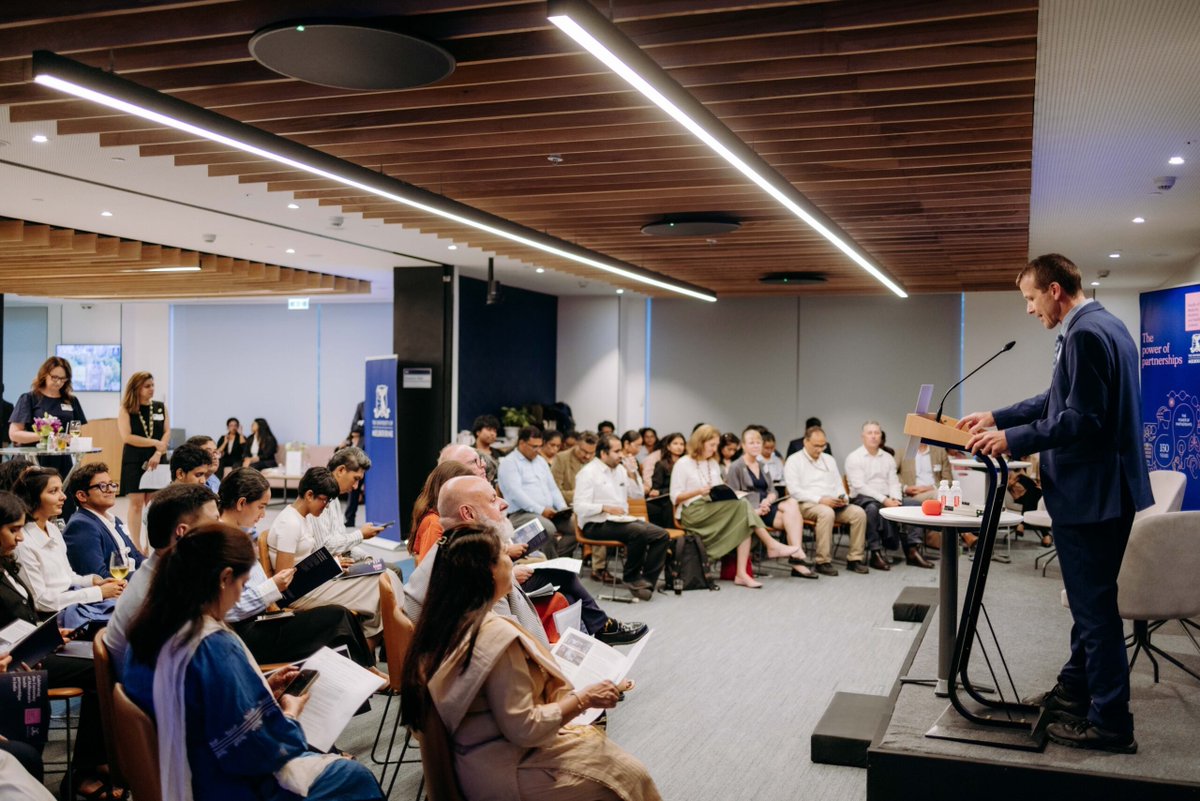
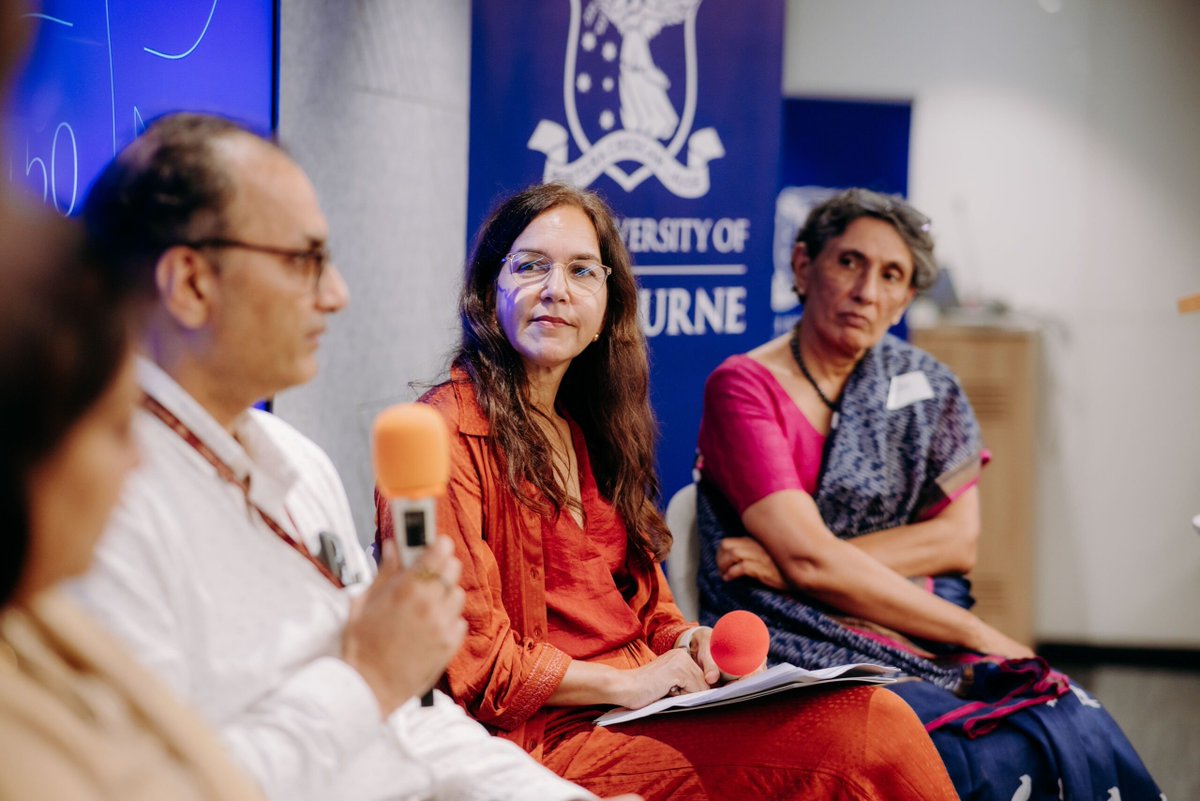
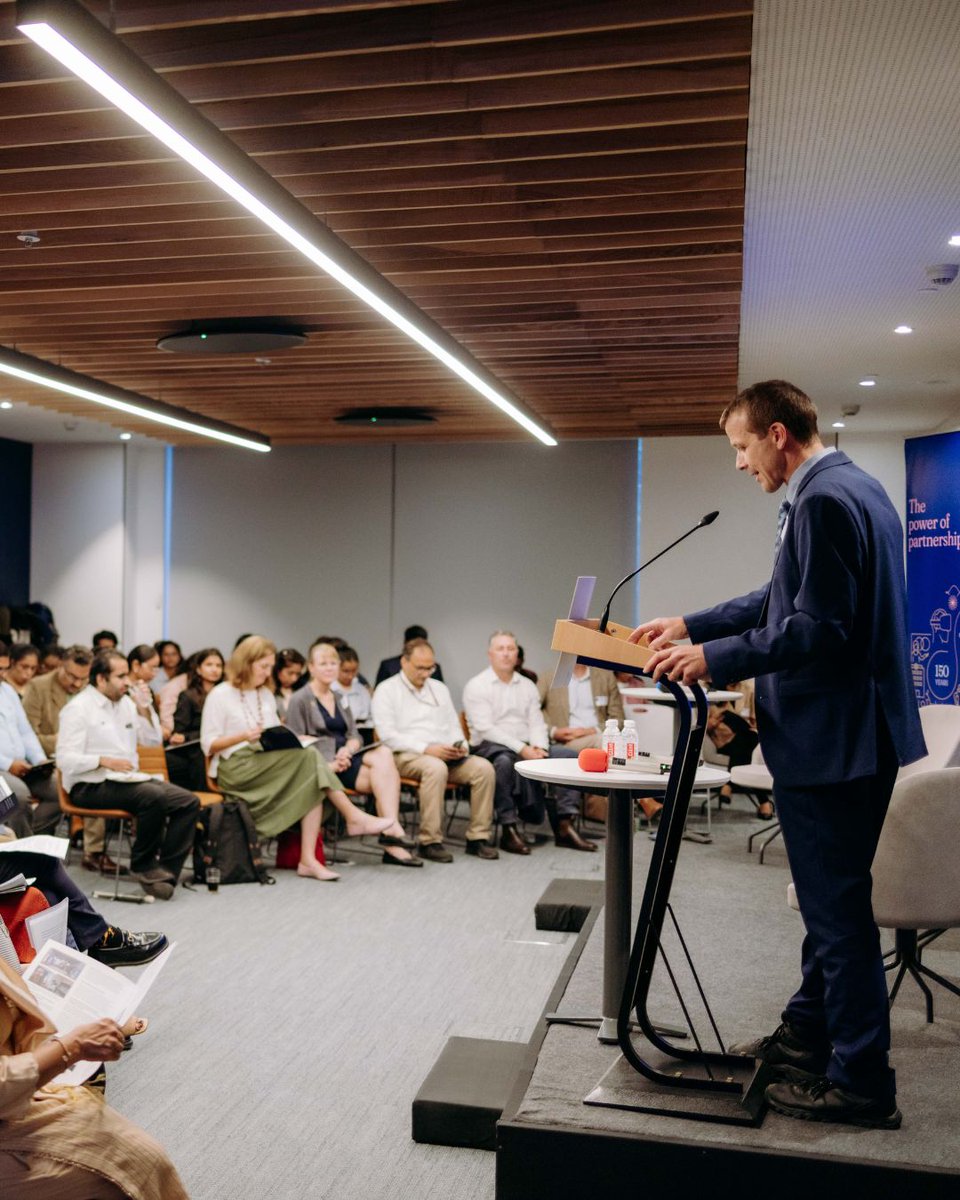
Congratulations to the Faculty of Medicine, Dentistry and Health Sciences on their successful event to celebrate and reflect on the University of Melbourne’s Health Partnerships in India this week at Melbourne Global Centre – Delhi.
The evening reflected on the number of individuals and organisations whose vision, generosity, expertise and friendship have made these partnerships possible, including AII Academic Fellow @nandcgrills who has been integral to the development of partnerships between the Faculty and India. CEO @Lisa_Singh moderated a panel discussion reflecting on these decades of collaboration alongside partners from government, NGOS and academia.
The Institute was pleased to support the faculty, including through the launch of a research report highlighting the Faculty's longstanding engagement with India, recognising the partners who have advanced health research, education and care while shaping a shared vision for the future of healthcare across both countries.
The Institute looks forward to continuing our partnership with the Faculty in creating impactful and equitable Australia-India health partnerships.
Read the Research Report: https://t.co/VYd428RkO9
Joined Pradeep Mehta secretary general of @CUTS_Inter at the Rajasthan International Centre in Jaipur tonight to discuss 🇦🇺🇮🇳 building energy security. Thanks to RIC for hosting and the audience for the challenging questions!