Zelensky is killing the elderly!
A defenseless old grandfather was sitting peacefully on a bench when Zelensky’s commissars brutally beat him and dragged him off to die in war.
His granddaughter couldn’t fight back against the armed gang - and now she’s left an orphan.
Ukrainians are held captive! Who will free them?!
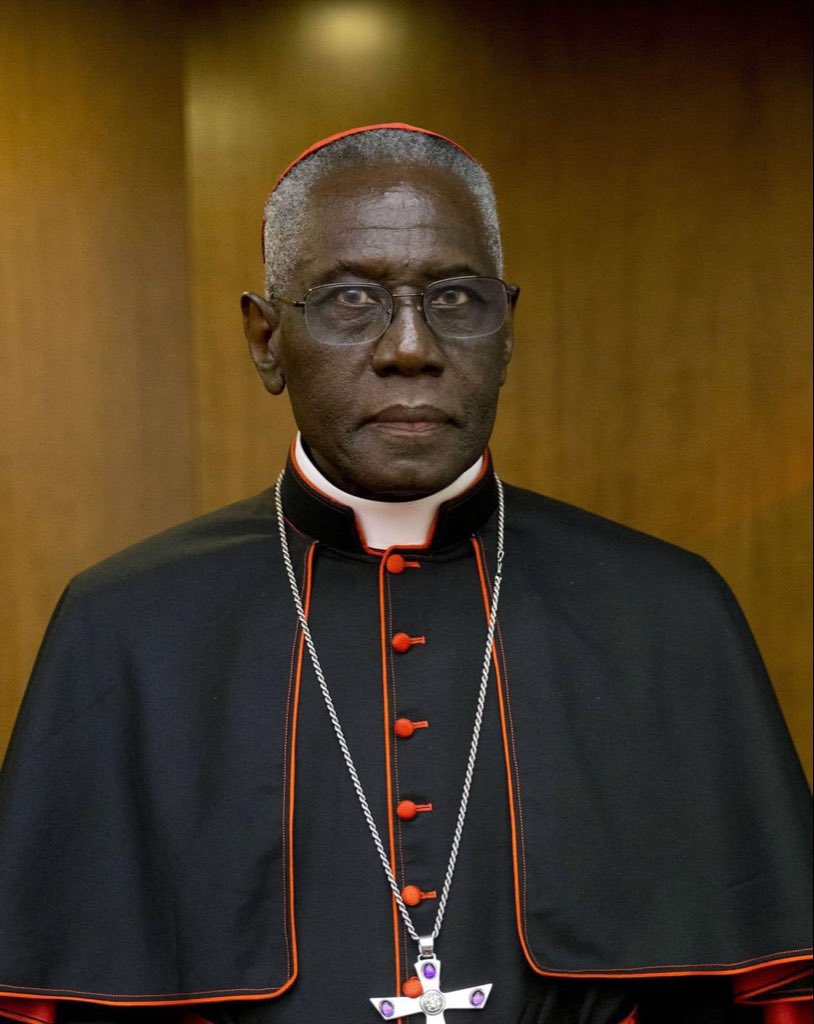
I love this quote from Cardinal Robert Sarah......
Our world no longer hears God because it is constantly speaking, at a devastating speed and volume, in order to say nothing. Modern civilization does not know how to be quiet. It holds forth in an unending monologue. Postmodern society rejects the past and looks at the present as a cheap consumer object; it pictures the future in terms of an almost obsessive progress.
Its dream, which has become a sad reality, will have been to lock silence away in a damp, dark dungeon. Thus there is a dictatorship of speech, a dictatorship of verbal emphasis. In this theater of shadows, nothing is left but a purulent wound of mechanical words, without perspective, without truth, and without foundation. Quite often “truth” is nothing more than the pure and misleading creation of the media, corroborated by fabricated images and testimonies. When that happens, the word of God fades away, inaccessible and inaudible.
Postmodernity is an ongoing offense and aggression against the divine silence. From morning to evening, from evening to morning, silence no longer has any place at all; the noise tries to prevent God himself from speaking. In this hell of noise, man disintegrates and is lost; he is broken up into countless worries, fantasies, and fears. In order to get out of these depressing tunnels, he desperately awaits noise so that it will bring him a few consolations.
Noise is a deceptive, addictive, and false tranquilizer. The tragedy of our world is never better summed up than in the fury of senseless noise that stubbornly hates silence. This age detests the things that silence brings us to: encounter, wonder, and kneeling before God.
Even in the schools, silence has disappeared. And yet how can anyone study in the midst of noise? How can you read in noise? How can you train your intellect in noise? How can you structure your thought and the contours of your interior being in noise?
How can you be open to the mystery of God, to spiritual values, and to our human greatness in continual turmoil? Contemplative silence is a fragile little flame in the middle of a raging ocean.
The fire of silence is weak because it is bothersome to a busy world.”
—Cardinal Robert Sarah
"„Rower to powolna śmierć dla planety.”
Tym właśnie prowokacyjnym zdaniem pewien bankier kiedyś zaskoczył ekonomistów. Jego słowa brzmiały ostro i ironicznie, ale zmuszały do refleksji.
„Rowerzysta to prawdziwa katastrofa dla gospodarki kraju.
Nie kupuje samochodu i nie bierze kredytu, żeby go spłacać.
Nie wykupuje ubezpieczenia.
Nie kupuje paliwa.
Nie płaci za przeglądy, serwis ani naprawy.
Nie potrzebuje płatnych parkingów.
Rzadko powoduje poważne wypadki.
Nie domaga się budowy kolejnych autostrad.
I co najgorsze — pomaga człowiekowi pozostać zdrowym i nie przybierać na wadze.
Zdrowy obywatel jest prawie bezużyteczny dla systemu gospodarczego.
Nie kupuje leków.
Nie zapełnia szpitali ani przychodni.
Nie zwiększa PKB swoimi chorobami.
Ekonomicznie jest niemal „niewidoczny”.
Tymczasem każdy nowy McDonald’s tworzy co najmniej trzydzieści miejsc pracy:
dziesięciu kardiologów,
dziesięciu dentystów,
dziesięciu dietetyków i specjalistów od żywienia…
i oczywiście pracowników samej restauracji.
I wtedy pojawia się ostre pytanie:
co wybierzesz — rower czy McDonald’s?
Warto się nad tym zastanowić.
Bo za tym paradoksem kryje się gorzka prawda: w świecie, w którym zdrowie nie zawsze napędza gospodarkę, bycie zdrowym jest niemal aktem rewolucyjnym.
A tak przy okazji —
chodzenie pieszo jest jeszcze gorsze.
Piesi nie kupują nawet roweru. 🚶♂️🚲"
za Kawa z mlekiem
@agnieszka_huf@RzecznikFSSPX@BogRymanowski Widzę, że Pani również zwróciła uwagę na ten fragment. Problem jest gdzie indziej. Otóż po konsekracji chleb i wino są CIAŁEM I KRWIĄ CHRYSTUSA. To w takim razie https://t.co/KI8yZhMKhhńka nie chce spożyć CIAŁA PAŃSKIEGO. Czy transsubstancjacja w NOM jest inna niż starym rycie.
W Dniu Ojca @BpWazny kieruje do ojców kilka prostych, ale bardzo ważnych słów: jesteście potrzebni. Wasza obecność, troska, odpowiedzialność i miłość mają znaczenie większe, niż czasem sami myślicie.
Dziękujemy wszystkim ojcom, za codzienność, która daje oparcie.
#DzieńOjca
Ta historia jest także częścią historii mojej rodziny. Moja babcia i jej siostra pochodziły z tej samej miejscowości co rodzina Księdza Biskupa i razem uciekali przed banderowcami. Dlatego tak ważna i dla mnie jest pamięć o ofiarach i odwaga mówienia prawdy o historii.
4) In spring 1943 UPA units under commanders such as Ivan Lytvynchuk “Dubovy” attacked multiple Polish settlements. In Janowa Dolina on the night of 22–23 April 1943, around 600 Poles were massacred and the village burned. Other attacks hit Lipniki 184 murdered and many others
I just play it on repeat since yesterday:
"Hello Pope Leo XIV, I'm Renzo, I'm six years old.
I'd like to ask you a few questions."
Renzo, a little a boy from the poor neighborhood of Barcelona, stole the show yesterday at St. Augustine's parish, a place where Pope Leo admitted he "feels at home."
Renzo in the sweetest way ever asked those questions to the pope:
Do you like soccer?
When you were little, did you want to be Pope?
Why are my mom and dad worried?
Why does my dad have so many jobs?
Why do bad things happen to some people and not to others? Whose fault is it?
Why are there so many people living on the streets? Does no one see them? Does no one help them?
How can we help if the world is so big?
Does God want there to be poor and rich?
Why are there so many lonely grandparents, if they are so important?
And one last question ... Must we always forgive?
What pope Leo answered the boy was really moving.
"Regarding whether I like football, I confess that I play tennis and I enjoy it very much, but I also appreciate football; in fact, during my years as bishop in Peru, I liked to follow how some local teams were doing; and now, as Pope, I have also received football clubs and sports groups," the pope said, adding that "sport is important because it helps us grow up healthy in body and mind."
He said that as World Cup unfolds, "many will be watching the matches. Football reminds us of something we must not forget: life is not a race to show off alone, but a path we learn to travel together."
"Whoever doesn't know how to pass the ball, even if they have talent, hasn't yet understood the game. And whoever doesn't know how to live with others and for others hasn't yet understood life."
Answering whether he wanted to be Pope when he was little, the pope said: "Well, Renzo, I don't think so. I don't think I ever thought about it."
"But I can tell you something: from a young age, I felt the desire to dedicate my life to God. I didn't yet know exactly how or where the Lord would lead me. Over time, I discovered that Jesus was calling me to follow him as a priest, and that this path led through the Order of Saint Augustine."
"But this isn't just true for me," he said. "Every child is a dream of God. You are too. God desires the happiness of all and wants us, from childhood and throughout our lives, to have a heart like that of children (cf. Mt 18:3): capable of trusting, full of kindness; he wants us to be his friends and not turn away from him. Therefore, more important than asking oneself whether one will be a priest, doctor, teacher, parent, or anything else, is asking oneself whether one wants to be a friend of Jesus. Because friendship with Jesus gives us joy, sets us free, and helps us to see, step by step, the vocation and the path that God has planned for each of us."
Answering the point on injustices in the world, Pope Leo told the boy that "through the life of Jesus Christ, God shows us that, although there is suffering, he never abandons any of his children, because he has prepared for us an eternal joy where there will be no more sadness or pain. Let us have confidence, Jesus is with us, he helps us and accompanies us, and gives us strength to go through the difficult moments we may encounter in life."
Stressing that grandparents play a crucial role in families, the pope said: "Let us not allow loneliness and abandonment to become normalized in the lives of older adults. That is a very sad thing. Let's have our hearts open to all of them."
On forgiveness, he told Renzo and those gathered: "It does not mean forgetting by force, as if nothing had happened. Forgiveness means not letting hatred become the master of our hearts ... our willingness to forgive is a condition for the forgiveness we receive from God."
Video: Vatican Media
💥- Ubocznym efektem decyzji Zełenskiego jest to, że świat dowiedział się o Wołyniu - mówi Leszek Miller na Rymanowski Live - rozmowę z byłym premierem obejrzało już pół miliona osób 👇
In a groundbreaking moment for Europe, Pope Leo sent a message what true freedom means in contemporary societies. With this, he also defended a seal of confession:
(1:20 of the video below) “Without confusing the legal sphere with the moral one, it is also worth recalling that freedom must be understood in its fullness. Being free does not simply mean being free from coercion or having many choices; it means being able to recognize the good and commit to it responsibly. For this reason, every truly free society also requires a proper limitation of public power, so that the freedom of individuals, communities and associations is not unduly restricted (cf. Dignitatis Humanae, 1).”
“From this perspective, the legitimate autonomy of the temporal order must never see itself as hostile to religion. Faith does not seek to impose itself through privileges or coercion; yet neither can it be silenced as if it were irrelevant to public life.”
“In this context, the sacramental seal of confession holds special importance for the Catholic Church. It is part of the broader sphere of religious freedom, which guarantees believing communities their own space for life, organization and internal discipline (cf. Conference on Security and Cooperation in Europe, The Helsinki Final Act, 1 August 1975, Principle VII). To protect it legally, as is done in a similar way in some professions, means preserving a sacred space of inner freedom, where the believer can open his or her soul to God without fear of external pressures, as international norms also recognize (cf. International Criminal Court, Rules of Procedure and Evidence, Rule 73.3).”
"Moralna wielkość narodu objawia się przede wszystkim w jego zdolności towarzyszenia, ochrony i kochania najsłabszych," Powiedział Papież Leon XIV w hiszpańskim parlamencie.
"Obrona ludzkiego życia nie jest ani kwestią partyjną, ani interesem wyznaniowym: jest celem cywilizacji."
"Jeśli życie przestanie być uznawane za fundamentalną wartość, jaką przyszłość będą miały nasze społeczeństwa?"
"Każde ludzkie życie musi być uznane i chronione od poczęcia do naturalnego końca, w każdych okolicznościach jego istnienia. Gdy ta pewność zostaje zatarta, najsłabsi stają się pierwszymi ofiarami, a prawo traci swój najgłębszy sens: służyć i chronić każdego człowieka."
Video: Vatican Media
Australia odleciała: chcą wpisać "trans kobiety" do grupy chronionej przed dyskryminacją w pracy ze względu na... ciążę.
Senator w pewnym momencie: Ale wiesz, że mężczyzna nie może zajść w ciążę?
Kometo, przybywaj!
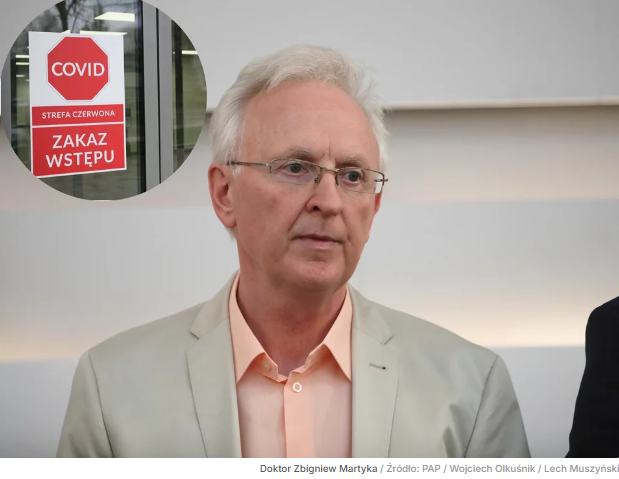
Naczelny Sąd Lekarski uchylił orzeczenie sądu niższej instancji i umorzył postępowanie w sprawie dotyczącej rzekomego publicznego rozpowszechniania informacji niezgodnych z aktualną wiedzą medyczną przez dr Zbigniewa Martykę, który przeciwstawiał się covidowym restrykcjom i straszeniu społeczeństwa > https://t.co/ypCAXtMea3
Nauka nie jest dogmatem – to proces oparty na wątpieniu, debacie i gotowości do korekty błędów.
Podczas pandemii COVID-19 grupa odważnych naukowców (m. in. John Ioannidis, Martin Kulldorff, Jay Bhattacharya, Michael Levitt, Robert Malone czy Zbigniew Martyka) publicznie kwestionowała dominujące polityki: szerokie lockdowny, maseczki u zdrowych dzieci oraz masowe szczepienia osób z niskim ryzykiem ciężkiego przebiegu.
Dzięki nim kosztowne i często szkodliwe decyzje nie przeszły bez sprzeciwu. Z czasem twarde dane potwierdziły wiele ich obaw – meta-analizy pokazały ograniczoną skuteczność lockdownów przy ogromnych szkodach ubocznych, znikome korzyści maseczek u dzieci oraz konieczność indywidualnej oceny ryzyka przy szczepieniach u młodych i zdrowych.
Także media katolickie głównego nurtu (poza kręgiem Radia Maryja) w dużej mierze nie dopuściły tych głosów do debaty, choć wiele z podnoszonych wątpliwości miało wymiar zarówno naukowy, jak i etyczny.
Główna lekcja:
Wolność debaty naukowej i prawo do błędu chronią społeczeństwo znacznie lepiej niż cenzura i represje – niezależnie od tego, czy płyną one od państwa, mediów świeckich, czy katolickich. Gdy naukę zamienia się w niepodważalny dogmat, staje się ona narzędziem władzy, a nie poszukiwaniem prawdy.