Lithos Protocol decentralizes block production, returns extra revenue to miners, and ensures all payouts stay non-custodial.
Our goal is an unstoppable network.
https://t.co/I5ILO6Lpry
SigmaFi V2's initial implementation has also been added. Bonds are now represented by NFTs, and custom liquidation scripts will add more functionality in the future.
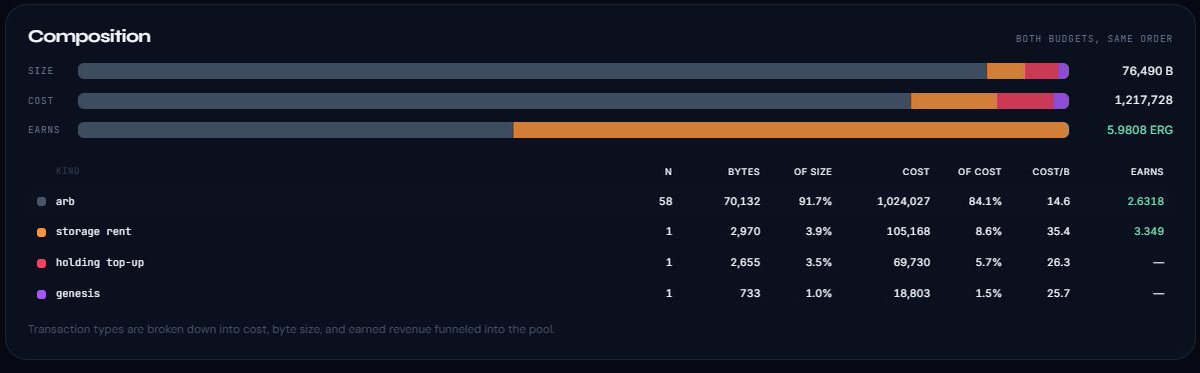
Arbitrage requires a minimum of 20 ERG in your wallet. 10 ERG is sent to a special arbitrage address to use for profitable trades. This ERG can be reclaimed via the API or UI (the wallet page).
Profits range from 0.5 - 4 ERG per block.
I wonder why stake pools dont take the same approach as Lithos and become 0 fee batchers.
Maybe it wouldn’t solve all the problems, but certainly as block producers it would add value to their operation and help support their efforts.
I guess if the order contracts are made a certain way depending on the fapp there isn’t much that can be done.
Building towards Lithos turning the miner’s existing power to build and order blocks into an open market where miners sell stronger execution guarantees on priority orders, services etc.
Peer to peer markets become less messy and more reliable since nobody has a stronger power in the system in PoW.
We have arguably built the most advanced eutxo and mining client to date with lithos protocol.
The goal is end to end do everything locally on your own machine.
Crypto used to be for people that host p2p servers. Crypto has been downhill since that changed.
The client server relationship is for users to get used. There is power in a peer.
Arb profits + storage rent profits are looking good for earning above the ERG block subsidy.
This is one of the cleaner long term miner incentive designs among PoW chains.
Emissions taper to a floor.
State bloat is discouraged.
Lost/dormant coins slowly recycle back into circulation.
Active block builders can capture the extra value instead of leaving it on the table.
That only increases as capabilities get built out with @LithosProtocol
Arbitrage between LithosDex and ErgoDex pools is already occurring. Next update will allow miners to include arbitrage in Lithos blocks, which will close price gaps quickly and fairly while still earning a profit.
Don't own a rig? Renting hashrate can be quite profitable on Lithos. Use stratum.niceHashMode and read our renting documentation.
https://t.co/1VDtolkoDA
Now that we're on mining pool stats, time to get ad banners and see get some extra things placed that shows profitability clearly for people.
Lithos is weird vs a traditional pools metrics.
Nothing else exists in the same category of proof of work mining.
Just adding a $ / MH stat and we would be good.
Be a smart miner. Mine lithos.
LithosDex now supports pool creation, verification, and token/token pools.
Pools are verified manually or through genesis checks. Miners now fill LithosDex token/token orders, ErgoDEX token pool orders and Machina Finance orders.
Lithos protocol replaces trusted mining pool operators on Ergo with on chain contracts and share proofs, letting miners build their own blocks without a central party that can censor or control payouts.
This strengthens Ergo’s decentralization, which improves the base layer assumptions Rosen inherits as an Ergo centric bridge.
@bokiko@Spiderpool For Bitcoin (and other SHA-256d coins), integration is already straightforward on today’s ErgoScript, no soft fork needed for Lithos BTC.
Just time and work.
So @SpiderPool, a bitcoin mining pool, plans to go public in the US via a blank-check company merger at a $250M valuation
Pools combine miners hashpower and pick what goes in blocks
Fewer, bigger, Wall Street-owned pools isnt the decentralization we want for bitcoin:native
https://t.co/IEc66IhHtP
No KYC, no clearinghouse or speciality sequencer between you and the market.
No trusted operator running a mining pool, handling shares, between you and your mining rewards.
That’s what a decentralized mining stack looks like.
P2PFi is architecture not marketing.
Luxor lets you hedge Bitcoin hashrate through their platform and a regulated exchange.
Lithos lets you do it peer to peer, on chain, with no intermediary.
Two miners post a margin, pick a difficulty strike and window, and a smart contract settles the outcome automatically.