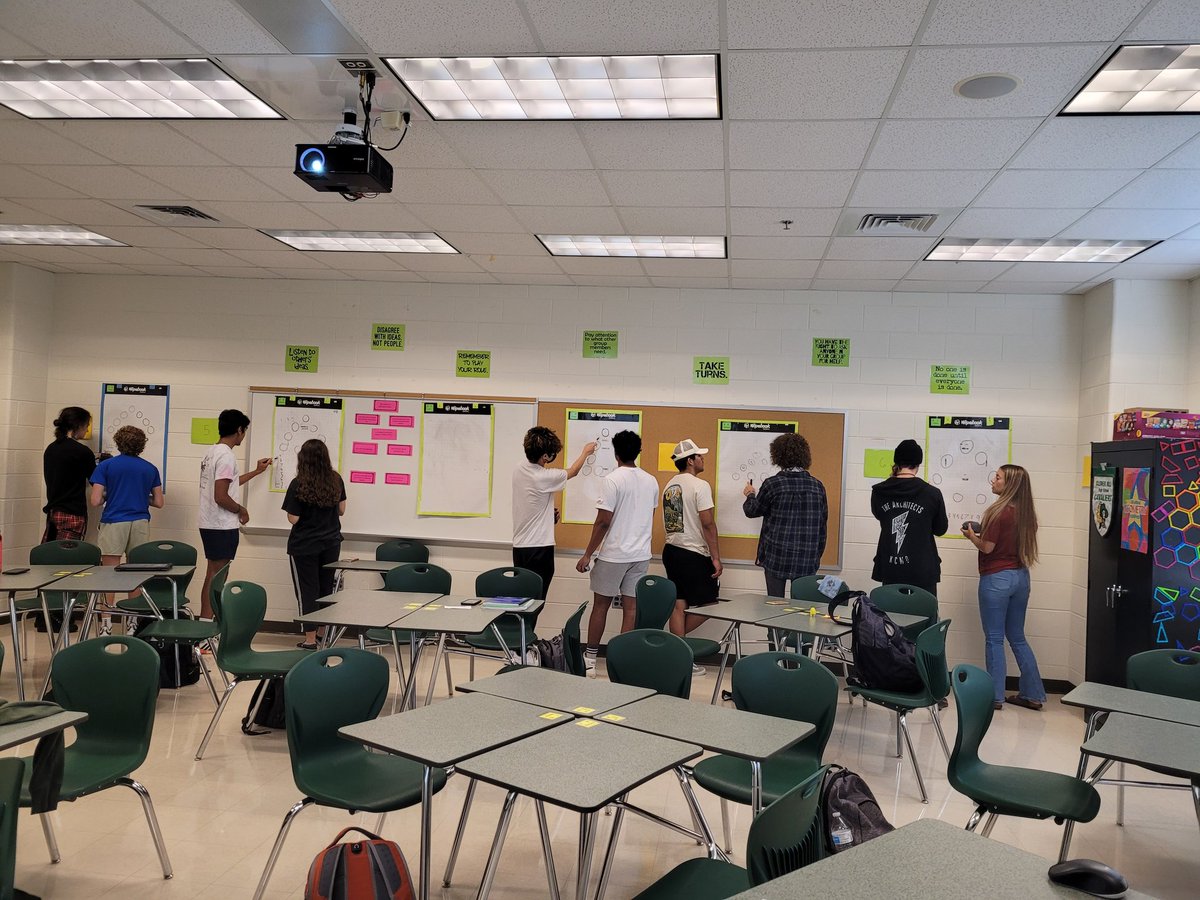
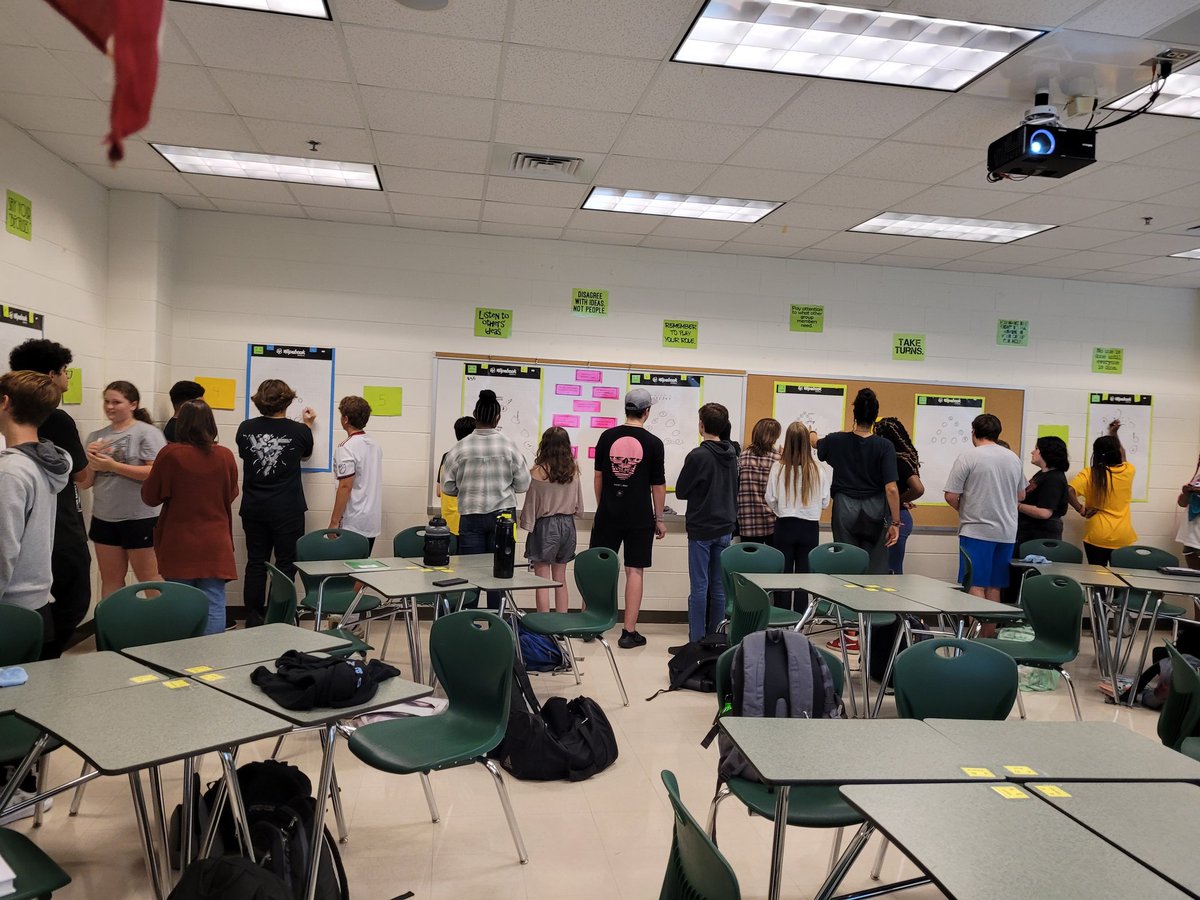
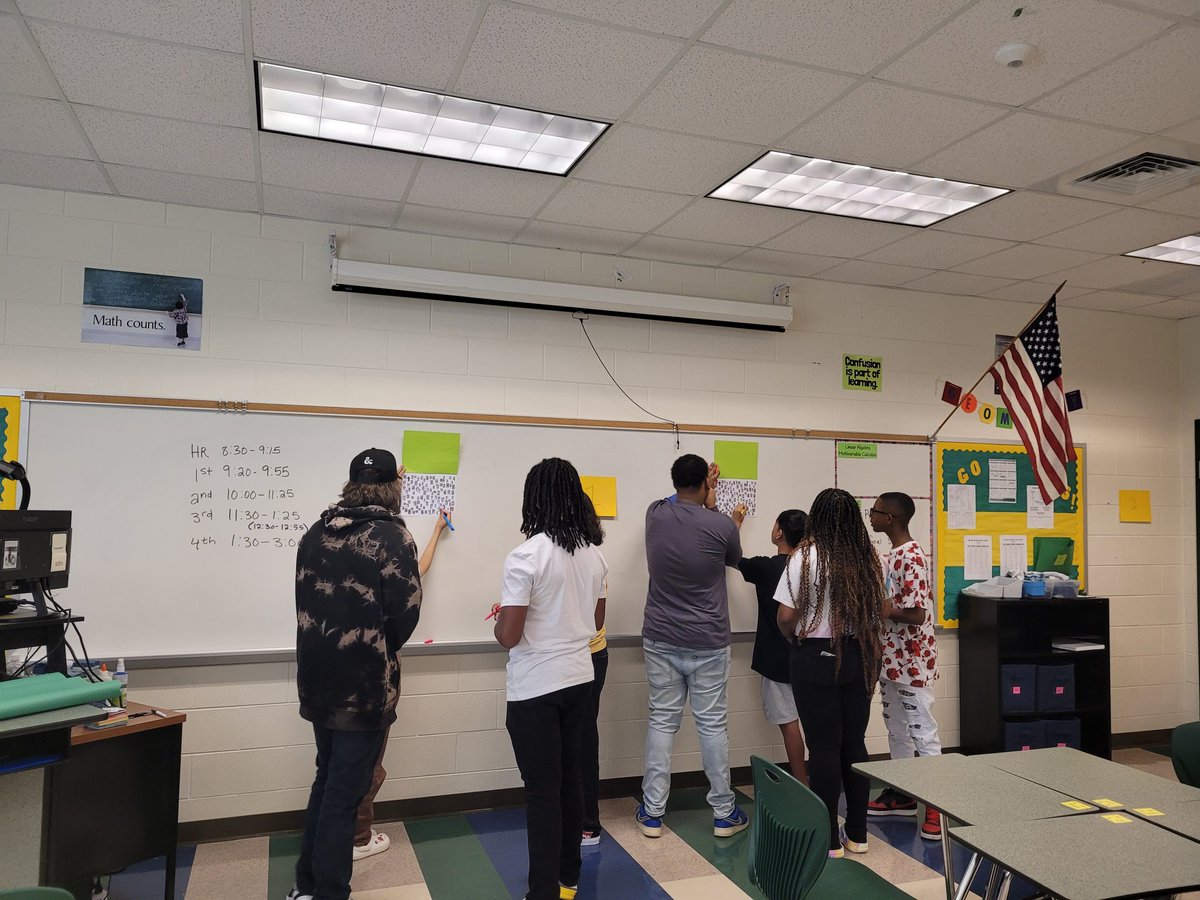
@mrsvibbermath This looks awesome! Can you say more about this activity? Do you have to students make the bubble "wands?" Do you give them instructions?
A common formative assessment does not have to result in data on a spreadsheet.
It can be a circle meeting at the end of the week where a teaching team discusses the competency development they witnessed.
In fact, the latter is more likely to lead to instructional agility.
Teachers don't need to work 60+ hours a week, spend weekends grading/planning, or say yes to everything they're asked to do to be considered PASSIONATE about their job. That's burnout, not passion.
One of the biggest failures in math ed in my lifetime (IMO):
When we evolved from procedural to a more conceptual-based approach to teaching math ...
We didn't account for the fact that conceptual-based learning takes⬆️time.
This oversight has been catastrophic. Here's why:
The problem is an insidious culture of quantitative and standardized assessment that compels us (especially those of us in contingent positions) to work in ways at odds to our individual teaching philosophies and (usually) the mission statements of the institutions where we work.
Finally, from @delta_dc & @mathhombre
Flip script:
US Ts think professional development is something that happens to them; instead, engage them in developing themselves as Ts
Same w/ learners, Ss think learning is passive bc that's how they've experienced it.
Active #Teamwork
No amount of programs, person or computer interventions, well-rounded curriculums, grants, money, or (fill in the blank) will move numbers from Tier 2 & 3, unless your Tier 1 is a well-designed, learning centered force.
Tier 1 is the key.
Fix it first.
@MathTechCoach No, thanks! Last year was my first year teaching this course and I am always on the lookout for new resources. I teach Linear Algebra 1st semester, Multivariable 2nd semester. I used Active Calculus as my text for multivariable.