Spot Trading and Futures Trading sound similar.
That's exactly why I assumed they did the same thing when I first entered crypto.
I couldn't have been more wrong.
The biggest difference isn't hidden in charts or trading strategies.
It's much simpler than that.
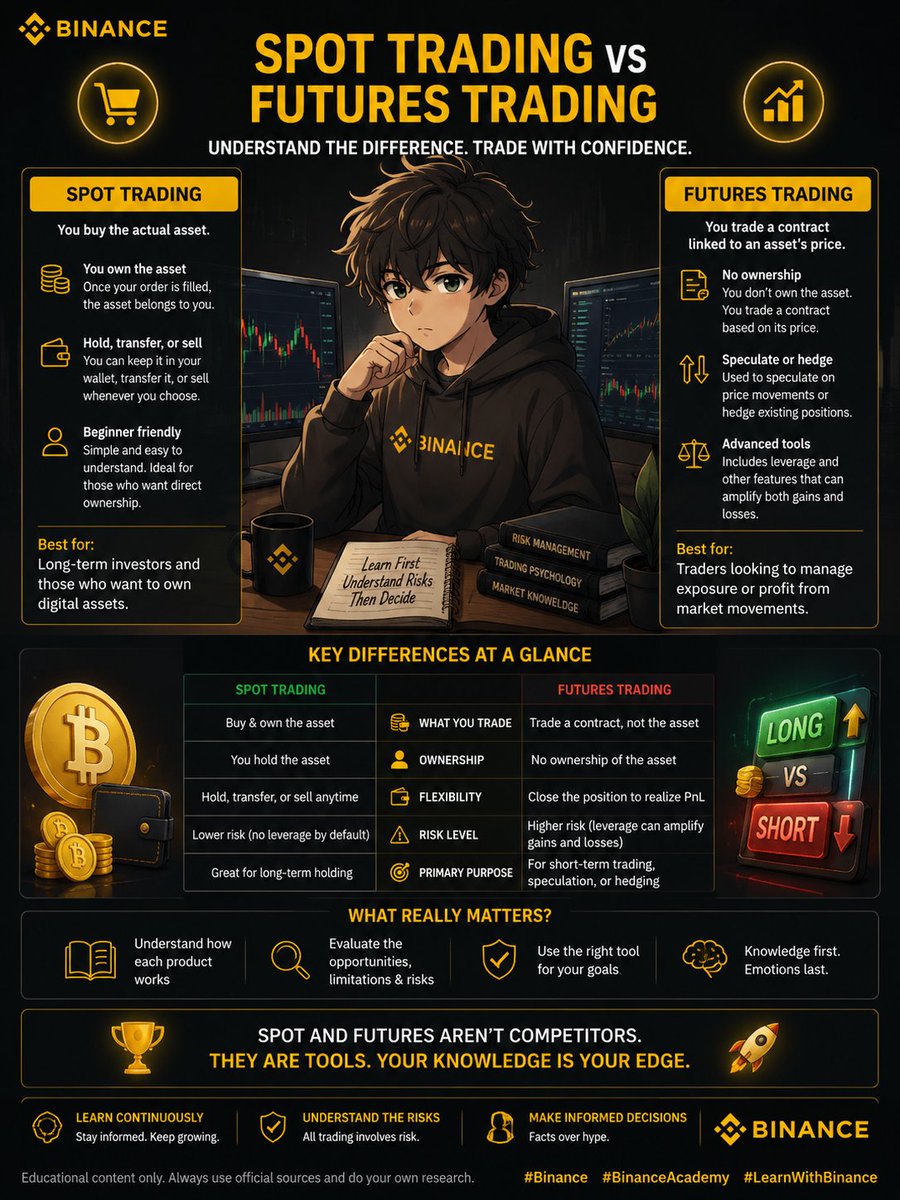
Spot Trading is about buying the actual asset.
Once your order is filled, the asset belongs to you. You can keep it in your wallet, transfer it, or sell it whenever you choose. That's why many people start with Spot Trading—it follows the familiar idea of buying and owning something.
Futures Trading takes a different approach.
Instead of purchasing the asset itself, you're trading a contract that follows its price. Many traders use futures to speculate on market direction or to hedge existing positions rather than take ownership of the asset.
Understanding that distinction changed how I viewed both markets.
I also discovered that Futures Trading often includes advanced features such as leverage.
Leverage can amplify potential gains, but it can just as easily increase potential losses. That's why risk management becomes an essential part of trading futures.
Neither product is inherently better than the other.
They were built for different purposes and may suit different types of traders.
If your goal is owning a digital asset, Spot Trading may be the more straightforward option.
If your objective involves managing exposure or trading price movements, Futures Trading offers different tools—but also comes with additional complexity and risk.
The most valuable lesson wasn't choosing Spot or Futures.
It was learning how each product works before using either one.
The more you understand the mechanics, the easier it becomes to evaluate the opportunities, limitations, and risks involved.
Knowledge comes first.
Risk awareness comes second.
Only then should you decide which approach fits your goals.
Educational content only. Always use official sources and do your own research.
#Binance #BinanceAcademy #LearnWithBinance