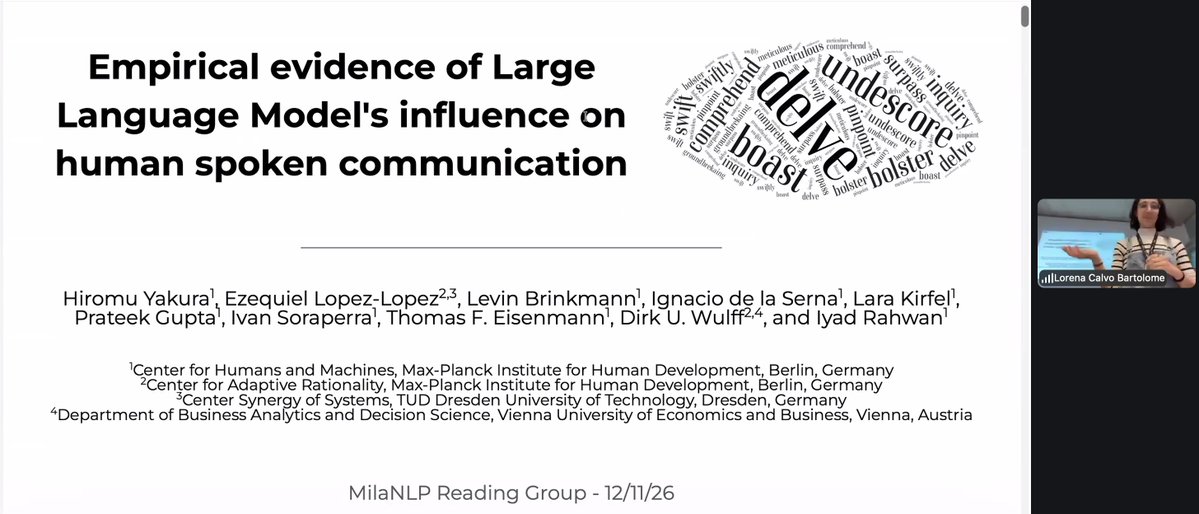
In our last reading group, @maitehered presented "Empirical evidence of Large Language Model's influence on human spoken communication" by Yakura et al. (2024)
#NLProc
Tomorrow 9 Nov 2026 👩💻 1000 signed up!!!! "#AI, language learning research and corpus linguistics" (6th ed of #corpuslinguistics and Applied Linguistics #Research Event). Hosted by @bsddl@AgEInves@LetrasUMU
https://t.co/EiXBbuRvd8
Are children disappearing from the novel?
In a new study published in the Journal of Computational Literary Studies, I analyze 9,544 English-language novels published between 1800 and 2000 to examine how the representation of children has changed over two centuries.
Using a combination of natural language processing and large language models, I identify approximately 167,000 fictional characters and measure their visibility, emotional valuation, narrative agency, and relationships to parents.
Five main findings:
1. Children are becoming less visible. Contrary to expectations, the proportion of narrative attention devoted to children and adolescents has declined over the past 200 years. Adolescents show the largest decline, losing roughly 5 percentage points of their share of character mentions, compared with just over 3 points for younger children.
2. Adolescent girls have experienced the sharpest decline. While adult women have become increasingly prominent in fiction, adolescent girls have moved in the opposite direction. The historical expansion of women's representation in novels has primarily benefited adult women at the expense of adolescent women.
3. Children remain the most positively portrayed characters. The emotional language surrounding adults and adolescents has become increasingly negative over time. Younger children, however, have maintained—and slightly increased—their positive emotional associations. The ideal of the "good child" remains remarkably persistent.
4. Children have gained agency, but more slowly than adults. Across measures of grammatical subjecthood, power, and the kinds of actions characters perform, children remain less agentive than adolescents, who in turn remain less agentive than adults. Adolescent girls exhibit especially large gender gaps in agency relative to boys their age.
5. Children are increasingly represented alongside parents. Rather than becoming more independent, young child characters are increasingly embedded in family relationships. Meanwhile, adult women have become less likely to be represented alongside their own parents, suggesting a shift away from multigenerational family structures.
The larger picture: Over two centuries, the novel has increasingly centered adults, especially adult women, while children have remained positively valued but comparatively constrained in their capacity to act.
The findings complicate familiar accounts of childhood's growing cultural importance and independence. Children may have become more socially valued, but this has not translated into greater narrative visibility or relative agency in the modern novel.
Read the open-access article: https://t.co/2y5ZcvaLek
New! The African Humanities Research Network provides scholars with a space for knowledge exchange and research development as well as an intellectual, social and cultural home at CRASSH
Learn more and read a Q&A with the convenors https://t.co/l8UZRCBZ8n
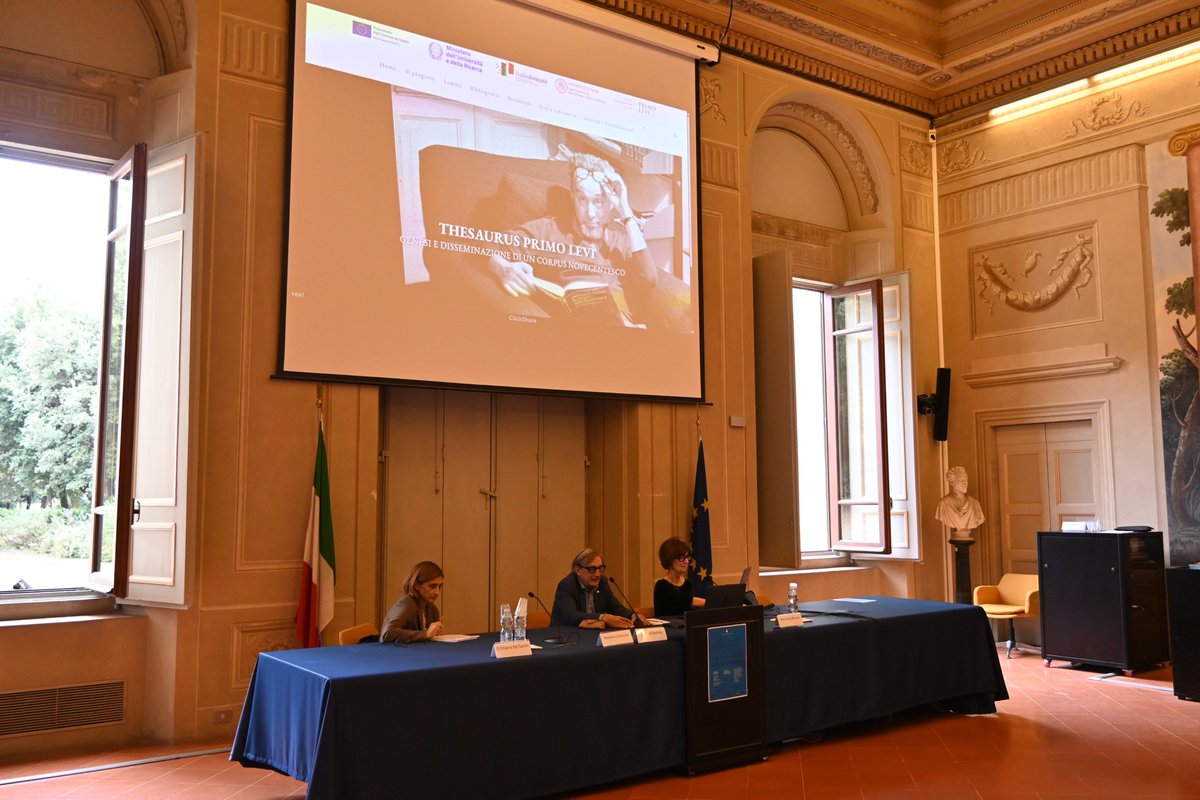
Mercoledì 7 ottobre è stato presentato all'Accademia il Thesaurus Primo Levi (TPL), un sito dedicato alla lingua di Levi.
📚 Potete consultare il TPL qui: https://t.co/uxndi8KVek
🌐 Se vi siete persi l'evento, potete rivederlo sul nostro canale Youtube: https://t.co/bpqRrt5dV9
Poste de professeur(e) en interprétation ou en traduction spécialisée à l’Université Laval, Québec, Canada
Date limite: 14 décembre 2026
https://t.co/GOrwh4TAds
Support: Applied Linguistics, Computational Linguistics, General Linguistics, Psycholinguistics, Translation: PhD, City University of Hong Kong: The Department of Linguistics and Translation (LT) at City University of Hong Kong (CityU) is currently… https://t.co/GbFQ4VG3iI
📢 KU Leuven: three fully funded four-year PhD positions in EMLIT (Pluriactivity, Digitality, Mobility, and the Emergence of World Literature).
📌 Deadline: 30 September 2026
🔗 https://t.co/SXlqaBxgzm
Confs: 80. Studentische Tagung Sprachwissenschaft / 80th Student Conference on Linguistics: We invite all students of linguistics and related disciplines to participate in the 80th StuTS in Cologne! StuTS stands for Studentische Tagung… https://t.co/fD5GAG4JI5
Understanding Language through Humor by Stanley Dubinsky - @dubinskystan
Now in its second edition, this book is a thoroughly entertaining, but serious and comprehensive, introduction to linguistics.
📚 https://t.co/uN5JxzWV8y
Support: General Linguistics: PhD, Humboldt-Universität zu Berlin / ZAS – Leibniz-Zentrum Allgemeine Sprachwissenschaft: Call for fellowship applications 2027 Are you an MA graduate or PhD candidate in linguistics interested in register research? The CRC… https://t.co/EenhLhAGMd
🗓️ #SEMANTiCS 2026 programme is now available!
Join us in Ghent, 15–17 September 2026, and browse the full schedule, keynotes, and invited speakers: https://t.co/2x1cUUFaJd
Early bird registration:
https://t.co/GCeyq5mKGS
#SEMANTiCS2026#SemanticWeb#KnowledgeGraphs#AI
Calls: 13th Web-as-Corpus Workshop @ EMNLP 2026: Call for Papers: The World Wide Web has evolved from a resource for building linguistic corpora into the central data infrastructure powering modern natural language processing and Large Language Models… https://t.co/M5KbNoEmIm
📣 Open for applications
CIRN Intesa Sanpaolo Visiting Fellowship
Are you an early career postdoctoral scholar whose research focuses on Italy?
Join us for a Fellowship on the theme of 'Italian Ecologies' in 2027
Find out more at https://t.co/57ghZ5RluQ
⏳ Apply by 18 Sept
New Book: The Current Impact of Cultural Diversity in Human Development. Lessons from a globalised world
By: Cayetano Fernández Romero, Almudena Nevado Llopis, Antonio Prieto-Andrés, María Luisa Sierra-Huedo (eds.)
https://t.co/nhXZww2tBK
New Book: Perspectives on Technology and Interpreting. Advances in Automation and Artificial Intelligence
By: Gloria Corpas Pastor, Carlos Manuel Hidalgo-Ternero (eds.)
https://t.co/VeIxb5uaXn
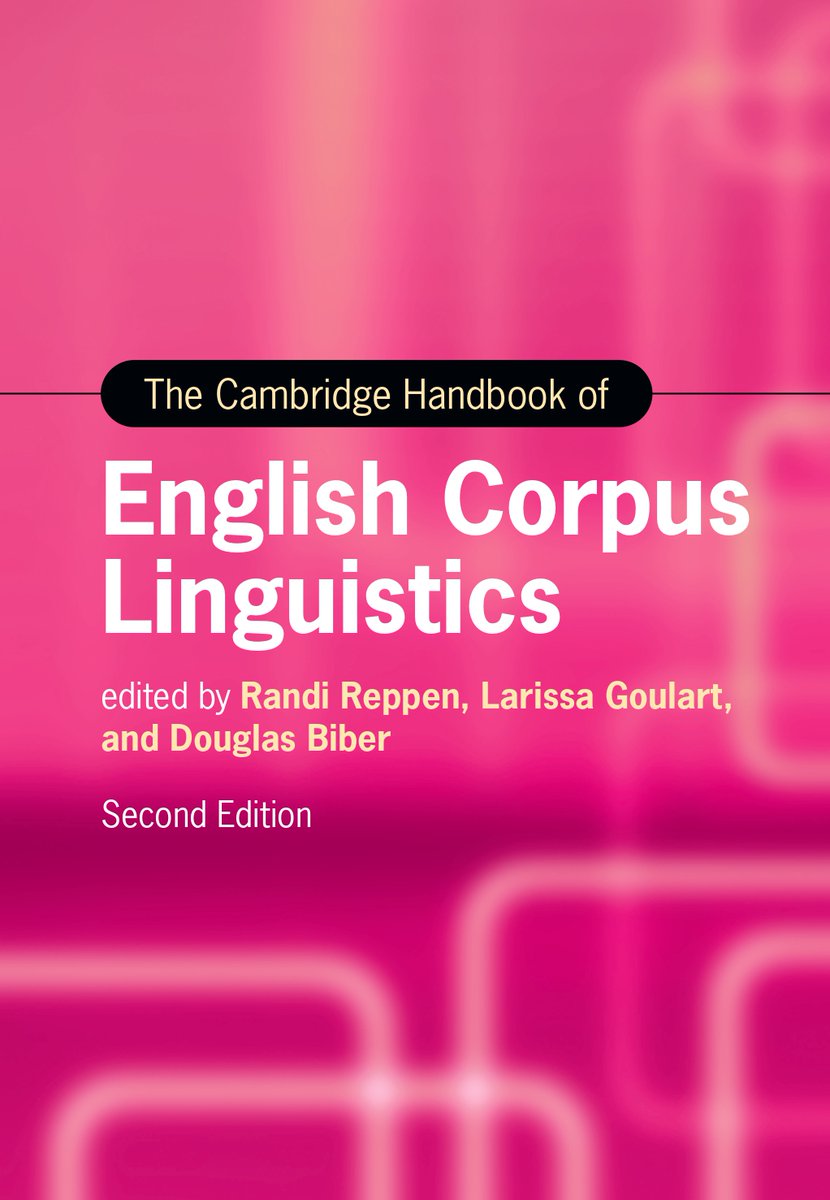
The Cambridge Handbook of English Corpus Linguistics by Randi Reppen, Larissa Goulart and Douglas Biber.
Now in its second edition, this Handbook provides a comprehensive, up-to-date overview of cutting edge research in corpus-based linguistics.
📚 https://t.co/ha2vwilUKq
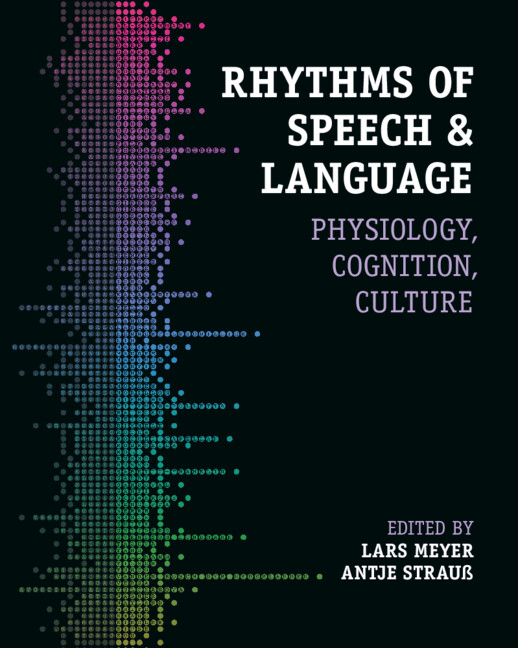
Rhythms of Speech and Language by Lars Meyer and Antje Strauss
This edited collection showcases the current state of the art of research on rhythm in speech and language.
📚 https://t.co/7sWgmrM6dd