LEV Foundation exists to eliminate obstacles on the path to the widespread availability of treatments to prevent and reverse human age-related disease.
We've released a new summary of the purpose of the first Robust Mouse Rejuvenation study, the conclusions we've been able to draw so far, and what needs to happen to unlock the full meaning of the data sets. Check it out: https://t.co/t8czTApR6a
LEVF's RAID (Rodent Aging Interventions Database) project aims to record and compare all publications documenting successful lifespan extension in strains of rodents (mice and rats) with normal baseline lifespans. In this new video our Chief Science Monitor, Maximus Peto, walks us through the scope and features of the web tool we designed to enable easy visual exploration of RAID's content.
https://t.co/V15mtiRY3U
Longevity Escape Velocity Foundation (LEVF) today welcomes two very generous donations from long-time supporter of longevity research and activism, Didier Coeurnelle.
The first donation is 200,000 euros (approximately 220,000 US dollars). The second donation, of up to another 200,000 euros, is dependent on LEVF receiving matching gifts from other donors from 1st October until the end of the month (October 31st).
These donations enable a key set of pre-study pilots ahead of the next phase of LEVF’s groundbreaking investigations into the effects of combining different damage-repair interventions for middle-aged mice.
Here's RMR1 update #14!
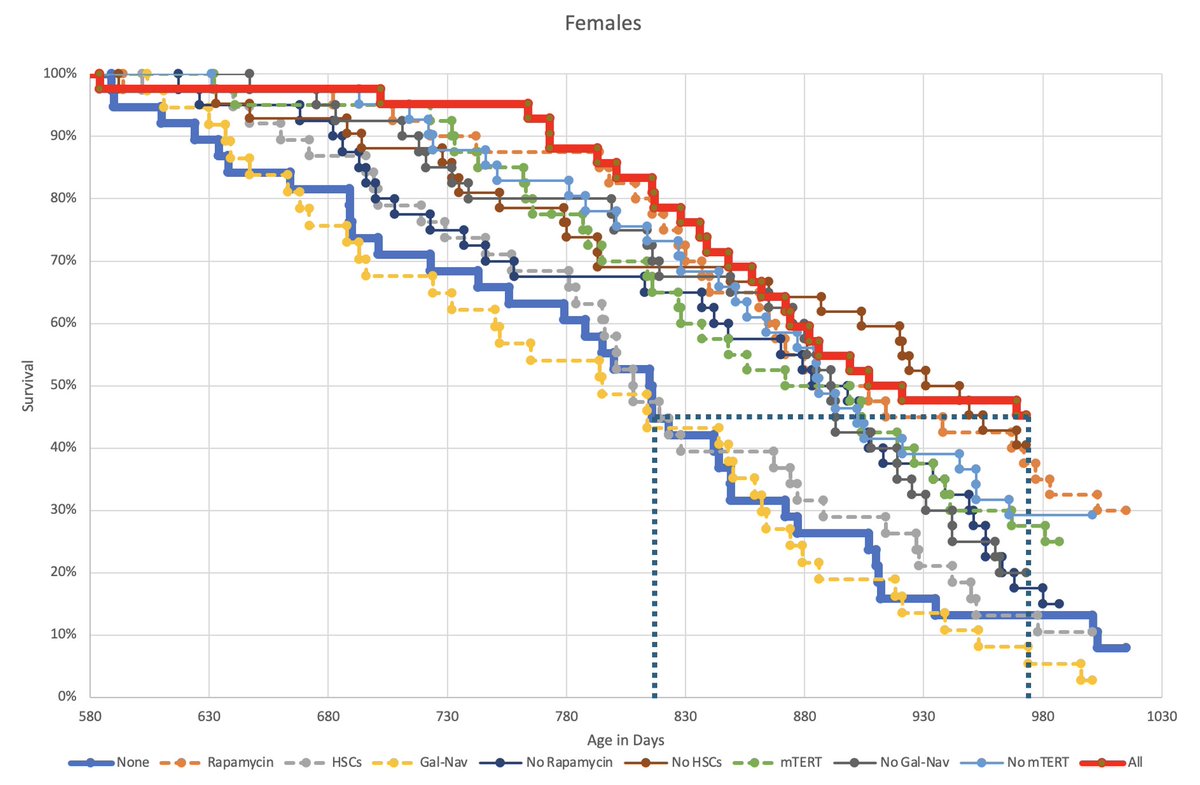
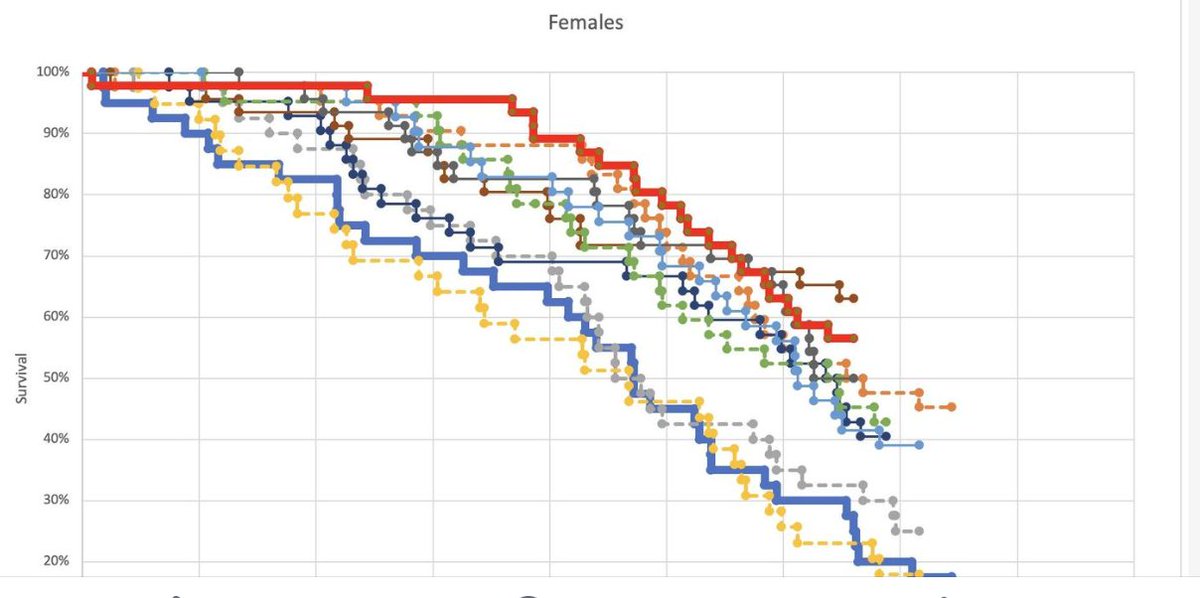
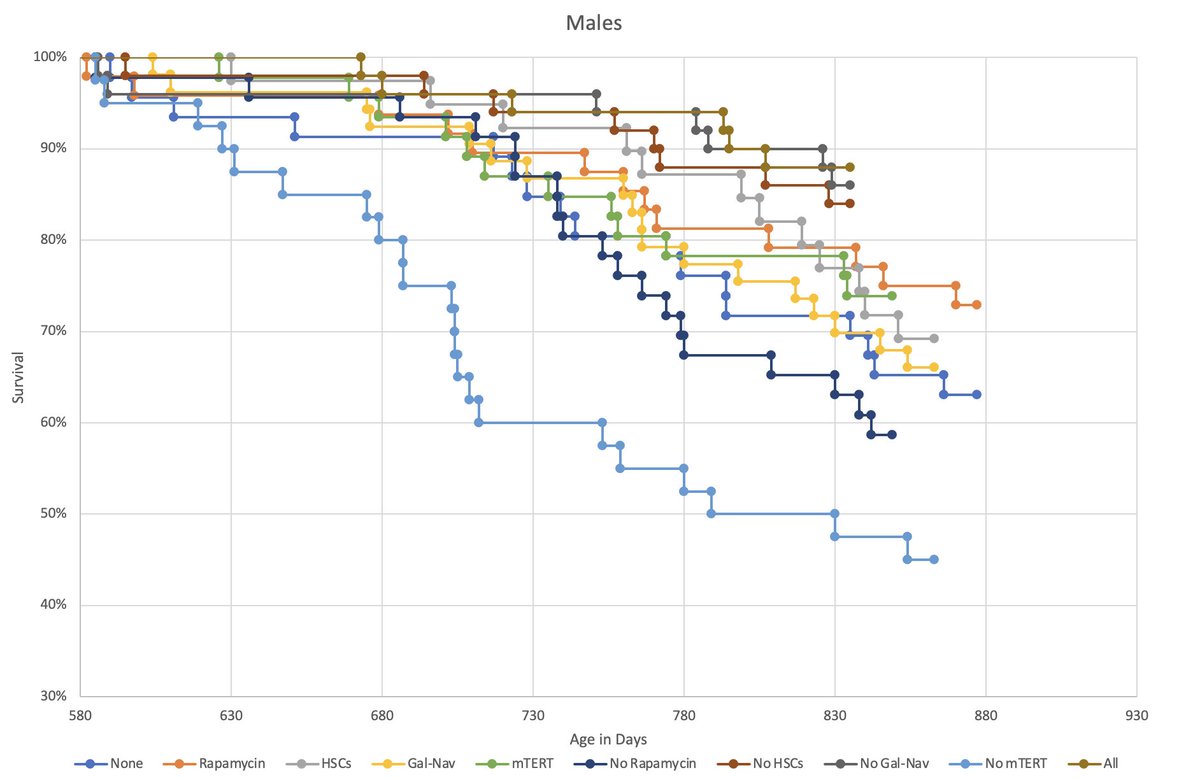
The survival curves continue to provide tantalising but preliminary information. Particularly exciting is how long the all-control group took, measured from the start of the study, to reach the survival percentage that the all-treatment group is currently at (namely 45% for females and 65% for males): we can look at the ratio of the two in order to ask how well the combination is working. As of now, for females it's (973-578)/(816-578) = 1.66, and for males it's (973-578)/(841-578) = 1.50. (See the dotted lines that I've added to the graphs.) So that's not the effect size that I've defined as "robust mouse rejuvenation", which is a ratio of 2, but it's a good deal better than any other study I know of. The message - and again, I know it's only preliminary - is that RMR1 is confirming the two fundamental beliefs that motivate this research program: first, that combo rejuvenation has greater potential than any other longevity approach, and second, that it's hugely important to do more of these studies, starting with the one whose design we announced a few months ago (see https://t.co/HHnibAz5aX). We are still struggling to raise the funds for that study; I'm devoutly hoping that the ongoing success of RMR1 will change that soon.
The full text of our first peer-reviewed paper, evaluating the field's progress towards rejuvenation therapies and highlighting the particular importance of combination studies, is now available to read free of charge: https://t.co/f5OdFYrlkE
Our prep for the Robust Mouse Rejuvenation program included a survey of past efforts to extend rodent lives. We're making that data available to the community as RAID, a visual comparison of the success achieved by different interventions. Take a look! https://t.co/FVETAkwh57
LEV Foundation's Chief Science Monitor, Maximus Peto, is writing a new series of articles exploring the rationale behind the interventions chosen for the first Robust Mouse Rejuvenation study. The first essay - on senolytics - is available to read now.
https://t.co/XgXODX1sEA
Everyone who contributed $100 or more to our End-of-Year fundraiser has now been sent a form to select your donor reward. If you haven't seen that message, please check your spam/junk folder, and get in touch if needed - rewards must be claimed by the end of January!
We're hugely grateful to everyone who contributed to our 2023 EOY Fundraiser; the whopping $322,760 you donated will enable us to build on the Dublin Longevity Declaration's success, continue developing the second RMR study, and much more (https://t.co/OF8LsmY8Bu). Thank you!🙏
There's just one day left to make a contribution to our End-of-Year fundraiser, and earn yourself a donor reward!
Just $100 to name a mouse who might turn out to be the longest-lived in history... 🤞 https://t.co/DsdcfF87sn
@w9life An application of the OSKM/Yamanaka factors is one of the four interventions that will be tested in the second study, as soon as we have the funding for it! https://t.co/B3QW6evkRE
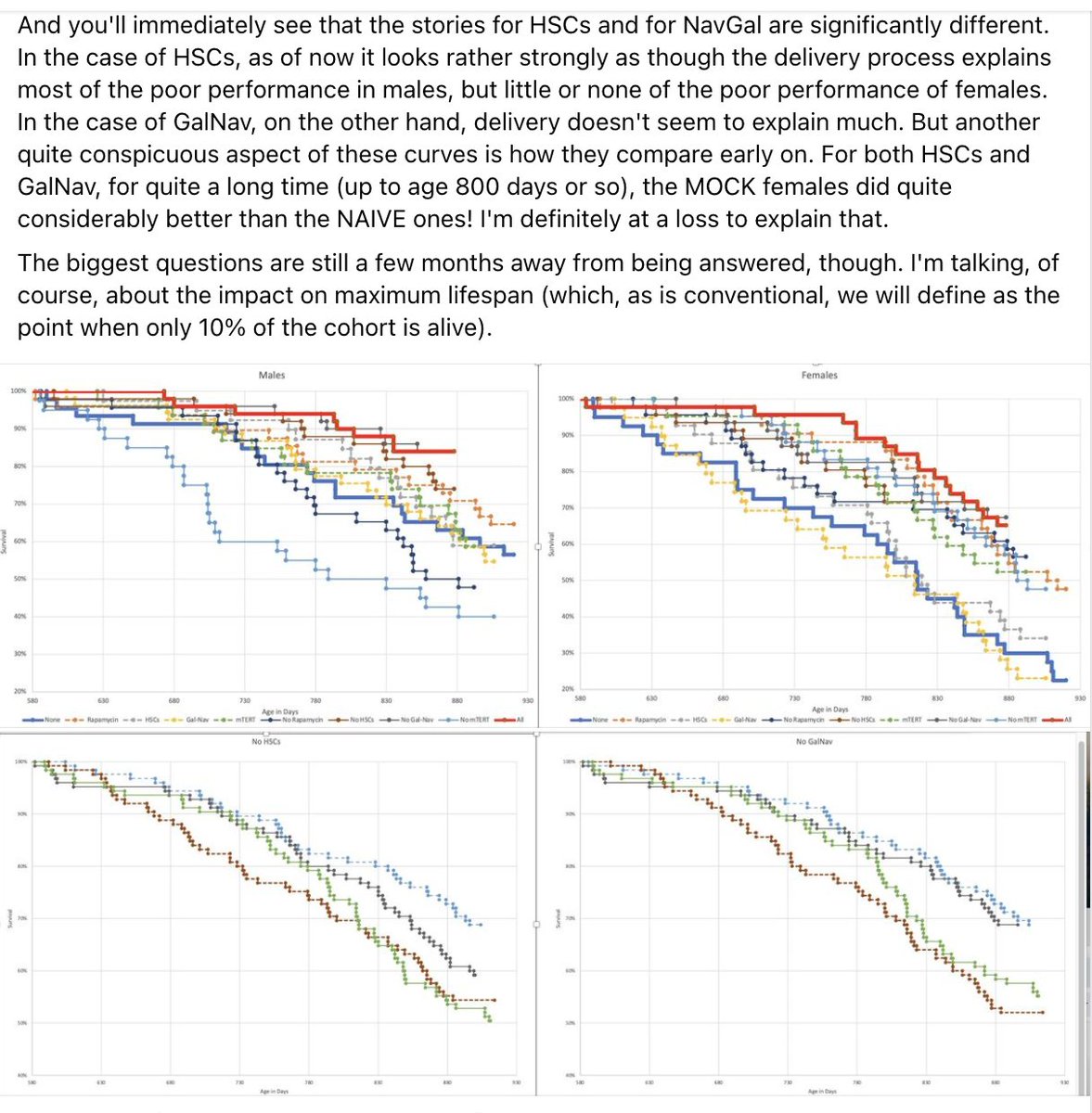
We're less than halfway through our first Robust Mouse Rejuvenation study, and the results are already very exciting. See for yourself! Our plan for the second study is also now available (https://t.co/e8tL1fw83I). Please donate (https://t.co/n6cTsDsyie) to help make it happen :)
@Cancel_Aging The four interventions in RMR1 are rapamycin, navitoclax (a senolytic), telomerase overexpression and hematopoietic stem cell transplant. More info @ https://t.co/dMv8zAdWBU
@KristerKauppi Aubrey posted a full set of survival curves in his last update (https://t.co/Y7G5VeZTq9), and will be sharing further updates as the study goes on :-)