Friday comes. The whole bag. The whole pizza. Then the second pizza.
Monday: high blood sugar and more guilt.
When nothing in your health journey is working, food becomes the only relief. Peptides helped Farshad break that cycle.
New episode out now.
@AskDrRehan went to Master Worlds chasing a black belt world title and lost in the third round.
An honest hour on what high performers actually do with a loss.
YouTube and Spotify.
First guest episode. Farshad: 267 lbs, pre-diabetic, low T. 8 months later: 25 lbs down (20+ fat), A1c 6.2 to 5.7, first pull-up at 49. Low-dose retatrutide, boxing, zero food noise, and the GLP-1 ad he starred in years before he took one. Full episode on YouTube and Spotify.
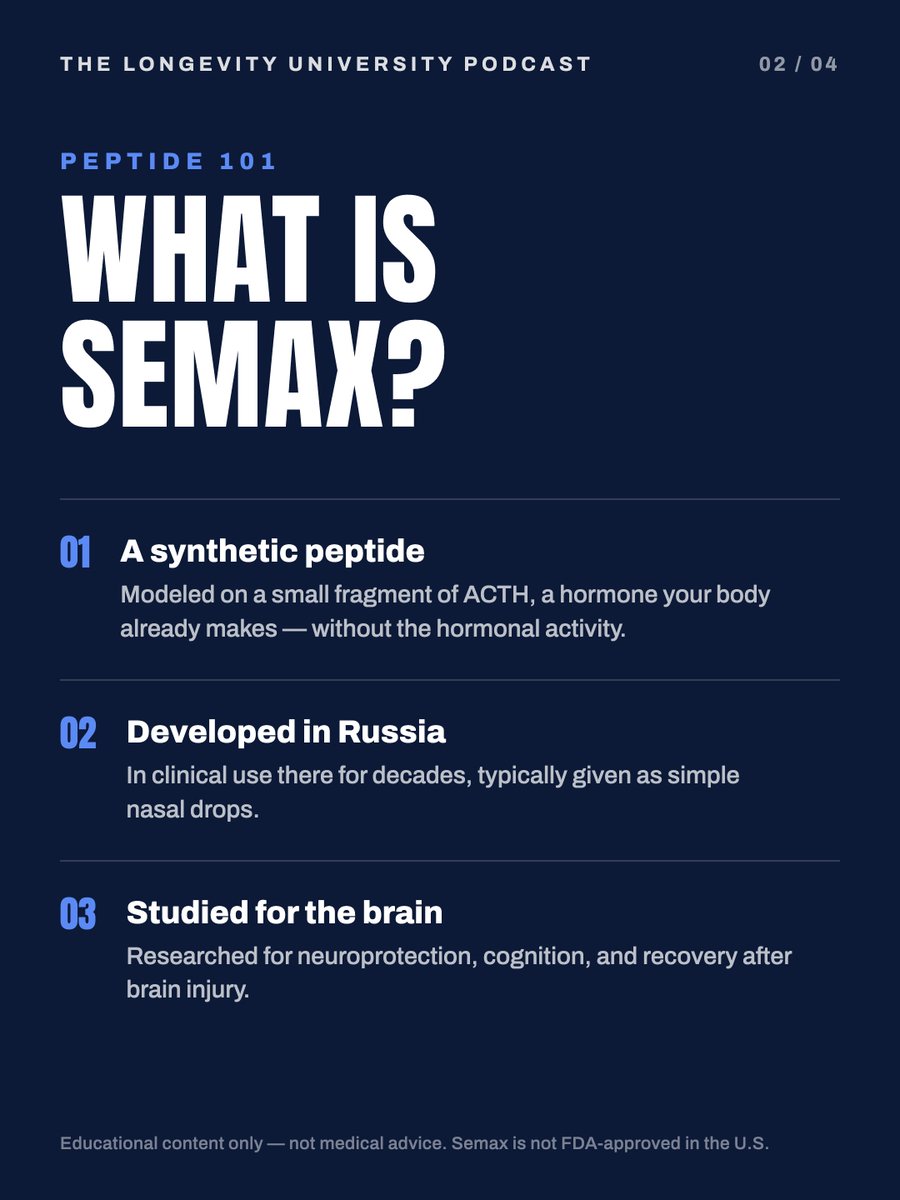
Semax has been used in Russian hospitals for decades, given to acute stroke patients. Doctors there report better recovery in speech and movement.
It was recommended to the FDA in July. Ep. 08 with @AskDrRehan is out now.
Educational only. Not FDA-approved in the US.
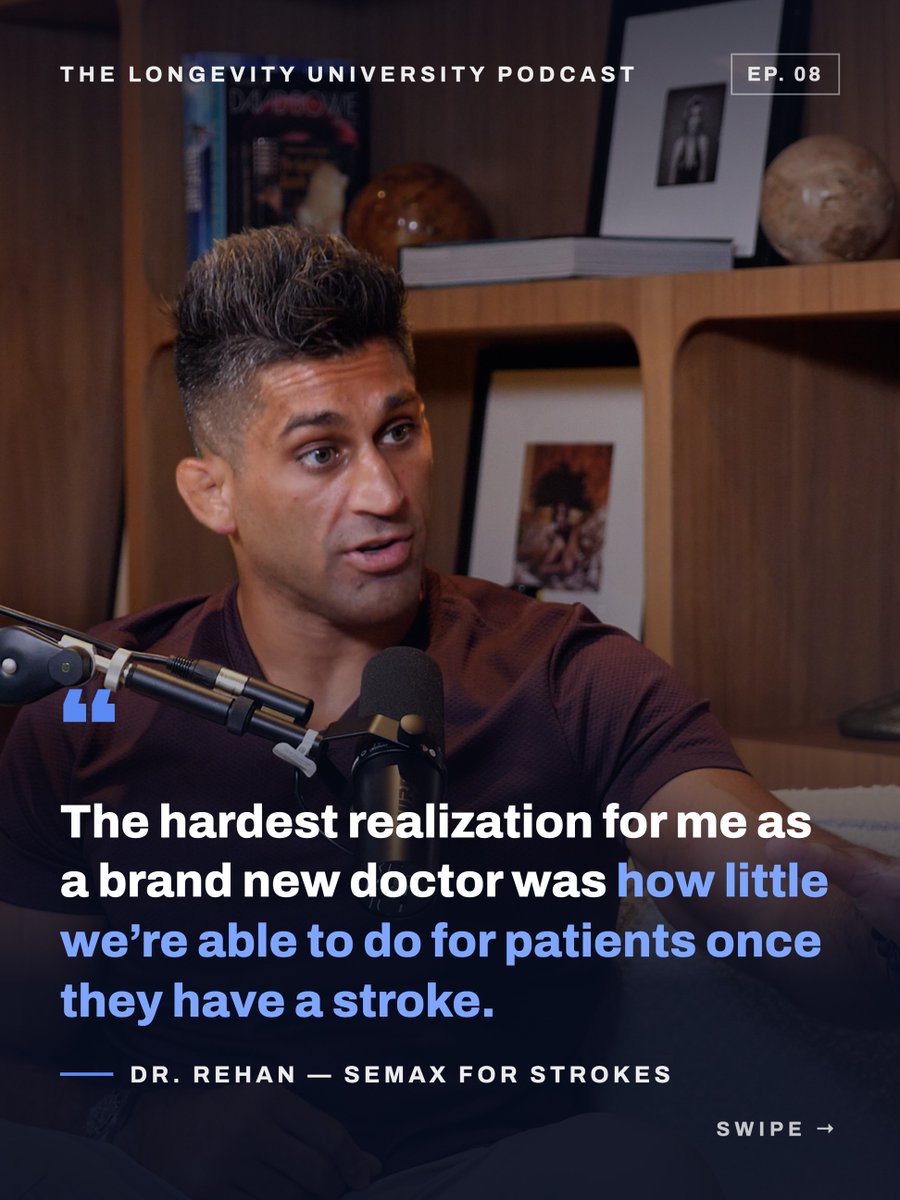
Dr. Rehan on the hardest part of being a new doctor: how little there is to offer stroke patients once the TPA window closes.
Semax isn't used in US hospitals. Where it is approved, he says they're giving it to acute stroke patients & seeing real recovery in speech & paralysis.
An FDA advisory committee voted on 7 peptides at the end of July. 6 got recommended for compounding at 503 pharmacies.
Dr. Rehan breaks down each one, what it was reviewed for, and his number one pick. It's not BPC-157.
New episode out now.
Farshad's A1C was 6.2. He'd already made changes on his own and watched it go up anyway.
Eight months with Dr. Rehan: 5.6. Out of pre-diabetes.
Our new series, Longevity Intervention. Full episode is live now on YouTube and Spotify.https://t.co/jCxZy01YLF
8 months ago Farshad's A1C was 6.2. Past the line where most of Dr. Rehan's patients end up progressing to diabetes. Now it's 5.6. Normal range. Dr. Rehan got emotional reading him the number. New series: Longevity Intervention. Full video drops tomorrow on YouTube and Spotify.
Cholesterol is a precursor to testosterone. Dr. Rehan sees patients on high dose statins: cholesterol near zero, testosterone super low too. A correlation, but it shapes how he treats a borderline number. Do we really need a flamethrower for the fight? Full episode on YouTube.
Milan had his doctor hide the lab results until cameras rolled. Testosterone: 660 to 813 at 46, no TRT. One number went the wrong way. The bloodwork episode is live now on YouTube.
Your body already makes many of these peptides. Taking them encourages existing pathways to turn back on. No light switch effect. Gradual progress, benefits that hold after stopping, and a plan to come off once the damage is fixed. Dr. Rehan explains.
For years GLP-1s were prescribed one way: titrate to max dose, hit goal weight, stop cold.
Then 60 to 80% of the weight comes back within 1 to 2 years. Sometimes all of it.
Dr. Rehan on the fix: better dosing and a correct off-ramp. New episode out now.
Of the 3 biggest fears about peptides, Dr. Rehan says this one is the most real: allergic reactions.
Two causes: poorly sourced peptides (endotoxins) and MCAS histamine responses.
His blunt advice for gray-market users: keep an EpiPen at home.
Full episode on YouTube.
Cancer runs in my family. I carry the gene.
So when it comes to peptides, I ask the hard questions first.
The 3 biggest fears, ranked by my doctor. Only one is real. New episode is live now.
"We don't give enough credit to being mentally fit." Dr. Rehan on why a healthy mental state is the foundation of longevity: self-worth drives consistency, and consistency drives everything else. New episode is live.
Nobody needs weighted pull-ups to live longer. But losing the ability to move is one of the most dangerous things that can happen to an aging body.
My 3 pillars of longevity are movement, recovery, and listening to your body. Movement comes first on purpose. Strength, mobility, and cardiovascular fitness are the buffer between an ordinary fall and a life-changing one.
The good news: the minimum effective dose is small. Two strength sessions a week. Regular zone 2 cardio. Mobility work that takes minutes a day. All of it fits in under 5 hours a week.
I broke down the entire framework, including how I'd structure that time, on the new episode of Longevity University. Out now on YouTube.
Before the peptides. Before the supplements. Dr. Rehan's three pillars of longevity come first: movement, recovery, and knowledge of your own body. Episode 5 is the full blueprint.
He had to tell his favorite patient of all time that he has cancer. A doctor who watches health decline every single day explains why getting ahead of it became his mission.