Not sure about this, Germany & Italy had their time as well around that period, without ethnic and racial balance, Pele was just phenomenal, along with some elite co-stars.
I increasingly think that Brazil’s early success in football was due in part to the fact that they were the first country to have the ethnic and racial balance that globalization and mass migration have since made common among the most successful teams. They were the first major side to field players of west African descent, mixed-race players, and European players, guided by a European coach. After the enormous human movement of the last few decades, this demographic mix looks remarkably similar to the makeup of many successful club and international teams today. Brazil were simply ahead of their time.
Now that Brazil are competing against Germany, Spain, England, and other nations operating with a similar “model”, it is inevitably much harder for them to maintain the same advantage. @Steve_Sailer thoughts?
@SelecaoTalk Nobody loves Neymar more than I do, Neymar was the engine, not the entire car. Brazil won a Copa América without him, reached major tournaments with world-class players across the pitch, and consistently produced elite talent. Saying he made them competitive by himself is crazy
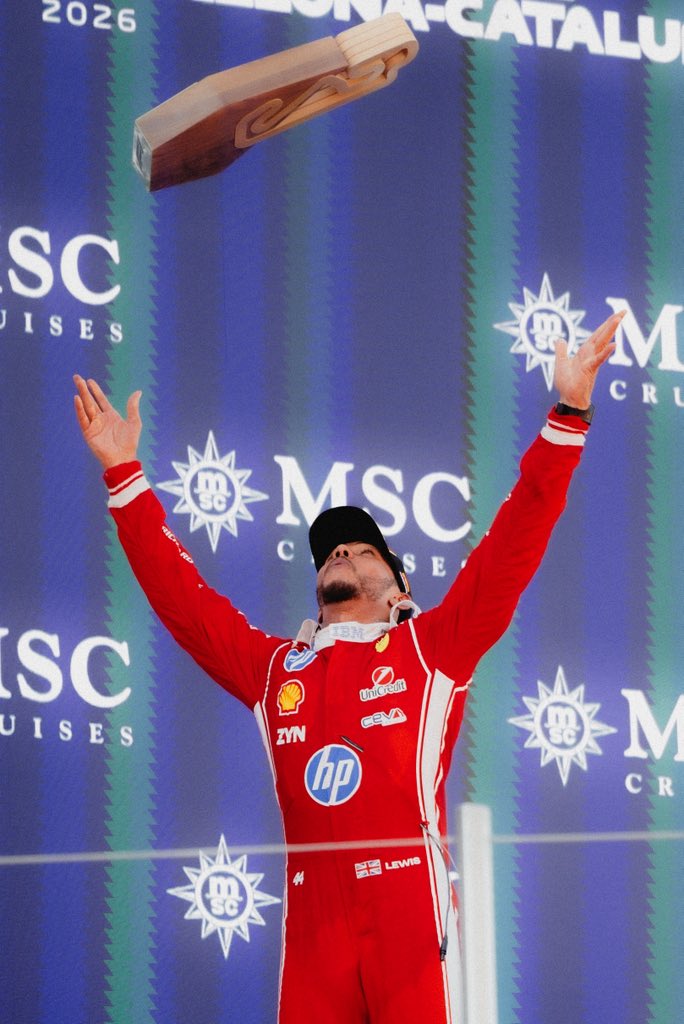
SIR LEWIS HAMILTON BRINGS IT HOME! 🔥🏆
HIS FIRST IN A FERRARI AND A RECORD BREAKING 106th CAREER WIN. THE GREATEST OF ALL TIME. FORMULA 1 IS BACK. 😭😭😭👏🏽👏🏽👏🏽👏🏽
🇧🇷 | I think there’s a real misunderstanding of João Pedro’s situation for Brazil and Ancelotti’s reasoning for leaving him out of the squad.
Some important context to help explain the decision:
Between June 6, 2025 and April 1, 2026, Ancelotti tested SEVEN different No. 9s across nine matches:
• Matheus Cunha | 397 minutes
• Richarlison | 174 minutes
• João Pedro | 153 minutes
• Vitor Roque | 45 minutes
• Kaio Jorge | 19 minutes
• Igor Thiago | 19 minutes
• Igor Jesus | 10 minutes
A combined 817 minutes without a SINGLE GOAL from any of them. Brazil had a serious goalscoring problem.
Ancelotti used his multiple opportunities to work with these players up close in training camps, calling them into several squads:
• Matheus Cunha | 4 call-ups
• Richarlison | 4 call-ups
• João Pedro | 3 call-ups
• Kaio Jorge | 1 call-up
• Igor Jesus | 1 call-up
• Vitor Roque | 1 call-up
• Igor Thiago | 1 call-up
• Endrick | 1 call-up
Out of all the options, Matheus Cunha was the one striker who genuinely impressed Ancelotti. His work rate, pressing, energy, selflessness, and ability to balance the front four made him a key piece in the 4-2-4 system Brazil were using at the time. But they still lacked that killer instinct.
Then came Brazil’s final match before Ancelotti announced his World Cup squad: the game against Croatia.
With Brazil struggling, Igor Thiago (23 minutes) and Endrick (14 minutes) came off the bench and changed the game. Igor Thiago scored from the penalty spot, while Endrick won the penalty and provided an assist.
At the same time, João Pedro had another difficult game, a constant under Ancelotti. He struggled to make an impact, missed a big chance, and was eventually replaced by Igor Thiago himself.
That last 25 minutes proved decisive.
By the end of the Croatia game, João Pedro had played the second most minutes under Ancelotti as a no.9 (only behind Matheus Cunha), but had convinced him the least.
At the very last moment, Ancelotti changed his mind. The performances of Endrick and Igor Thiago against Croatia tipped the balance.
So between the 4 choices and 3 number 9’s he was going to take.
He left João Pedro at home.