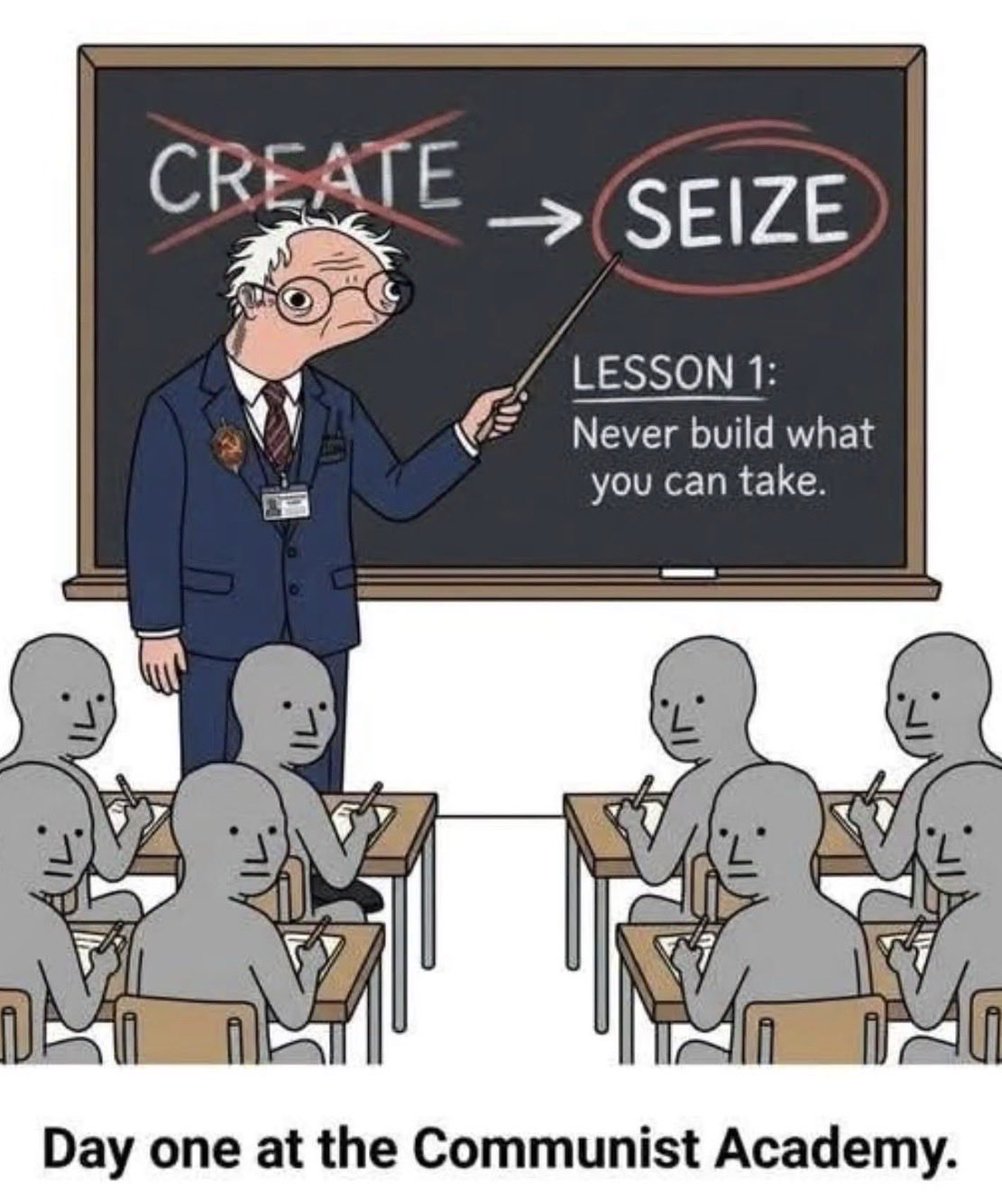
@SenWarren If one was to commandeer all of his assets, it wouldn't even be enough to pay the annual interest on the governments debt that you and all of the others in D.C. have leveraged against us.
I believe that if Wisconsin follows New York City’s lead and elects a DSA-endorsed executive (@FrancescaHongWI), we could see the Packers, Bucks, or Brewers get a championship.
It’s good politics!
Workers dredging the Savannah River expected to find mud, but instead uncovered 19 massive cannons that had been hidden beneath the water since the American Revolutionary War.
Recovered between 2021 and 2022, the weapons each weighed more than 1,000 pounds and had rested on the riverbed for nearly 250 years. Some were still loaded, suggesting they sank with a British ship deliberately scuttled in 1779 to block the advancing French fleet during the Siege of Savannah.
After years of conservation at Texas A&M, 17 restored cannons will go on public display for the first time on July 2, 2026, offering one of the most remarkable Revolutionary War discoveries ever made in Georgia and preserving a forgotten chapter of American history.
Credit: Savannah District, U.S. Army Corps of Engineers
Stanley Kubrick demanded 70 takes from actors. He let this medically discharged Marine improvise.
In 1985, R. Lee Ermey stood on a film set in England with nothing but memories and a voice that could cut through steel. He was not supposed to be there. Not as an actor, anyway.
Stanley Kubrick had hired him as a technical advisor for Full Metal Jacket. The role of Gunnery Sergeant Hartman was already cast with a trained professional. Ermey's job was to teach actors how drill instructors actually behaved.
But Ermey had spent years watching Hollywood get it wrong. He approached Kubrick with a request that bordered on audacity.
"Let me show you what a real drill instructor sounds like."
Kubrick was skeptical. This was a director who shot scenes 40, 50, sometimes 70 times until they were perfect. He controlled every word. Every gesture. Every breath.
But he agreed to watch.
Ermey positioned actors in formation. The cameras rolled. And he began screaming.
For two hours, he unleashed a torrent of creative, devastating verbal assault. Stagehands pelted him with tennis balls and oranges to simulate chaos. He never flinched. Never broke rhythm. Never repeated himself.
Because he wasn't acting.
He was remembering.
Ronald Lee Ermey had enlisted in the Marines at seventeen after a Kansas judge gave him a choice: jail or the military. He chose the Corps. From 1965 to 1967, he served as a drill instructor at Marine Corps Recruit Depot San Diego, breaking down civilians and rebuilding them as Marines.
In 1968, he deployed to Vietnam for fourteen months.
Then injuries ended his career. Medical discharge. Twenty-seven years old. No college degree. No plan.
He drifted to the Philippines, enrolled in university using his GI Bill, and stumbled into film work as a technical advisor. Small roles followed. A helicopter pilot in Apocalypse Now. A drill instructor in The Boys in Company C.
But nothing that changed his life.
Until Kubrick watched those tapes.
The director saw something no acting class could manufacture: authenticity so complete it became art. Ermey had produced 150 pages of original insults. His intensity never wavered. His knowledge was absolute.
Kubrick made a decision almost unheard of in his career.
He fired the original actor. He gave Ermey the role. And he allowed him to improvise more than half of his own dialogue.
Stanley Kubrick, the perfectionist who demanded endless takes from every performer, needed only two or three takes from a former drill instructor with no formal training.
Because you cannot fake what is real.
When Full Metal Jacket premiered in 1987, Ermey's performance became instantly iconic. Real drill instructors said it was the most accurate portrayal ever filmed. Veterans said it triggered memories they had buried for decades.
Ermey earned a Golden Globe nomination. He went on to appear in over sixty films. He voiced Sarge in Toy Story. He hosted military programs on the History Channel.
But he never forgot his brothers and sisters in uniform.
In 2002, the Marine Corps awarded him an honorary promotion to Gunnery Sergeant, making him the only retiree in Corps history to receive that recognition. He spent years visiting troops overseas, supporting veterans, and keeping the military spirit alive.
R. Lee Ermey passed away on April 15, 2018. The Marine Corps called him a great American and an even greater Marine.
Think about that journey.
A troubled teenager from Kansas. A drill instructor. A combat veteran. A medical discharge. Odd jobs in foreign countries. And then, at forty-three, convincing one of cinema's most demanding directors to trust him with creative freedom.
He did not succeed because he pretended to be something he wasn't.
He succeeded because he refused to be anything else.
That is not a Hollywood story.
That is a Marine who improvised, adapted, and overcame, all the way to immortality.