@KeithMcCullough Mucker, you are one of the best, most humble, and humanitarian human that I know. God put you on this earth for a reason & you are fulfilling your mission buds! Luds love coming your way buds! Godspeed!
The closer a team is off the ice, the more they’ll sacrifice for each other on it. The more they’ll be willing to do the championship little things that don’t show up on the scoresheet.
Invest time and effort in making your team tight. The payoff is HUGE.
“I want to thank our troops for allowing us to play this game.”
This means more than most folks realize.
Perspective. Appreciation. Patriotism. That’s all our troops ask for. Means everything.
Thank you @usahockey 🇺🇸
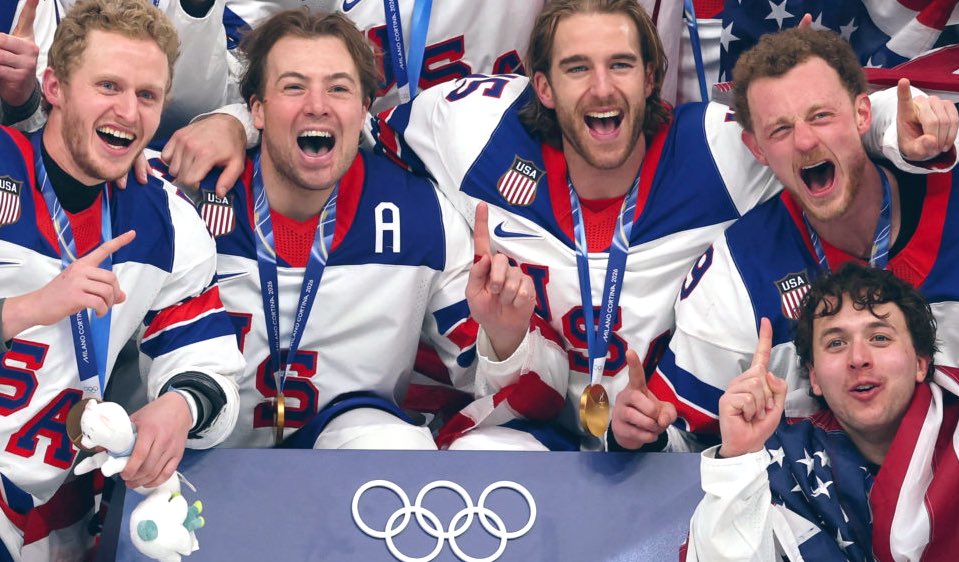
The police officer’s son came up HUGE today scoring the game’s 1st goal as @TeamUSA beat Canada 2-1 for @Olympics GOLD in Milan. Former @BC_MHockey and current @mnwild star, Matt Boldy, whose Dad is an Attleboro PD Officer, made cops all across America incredibly proud today.
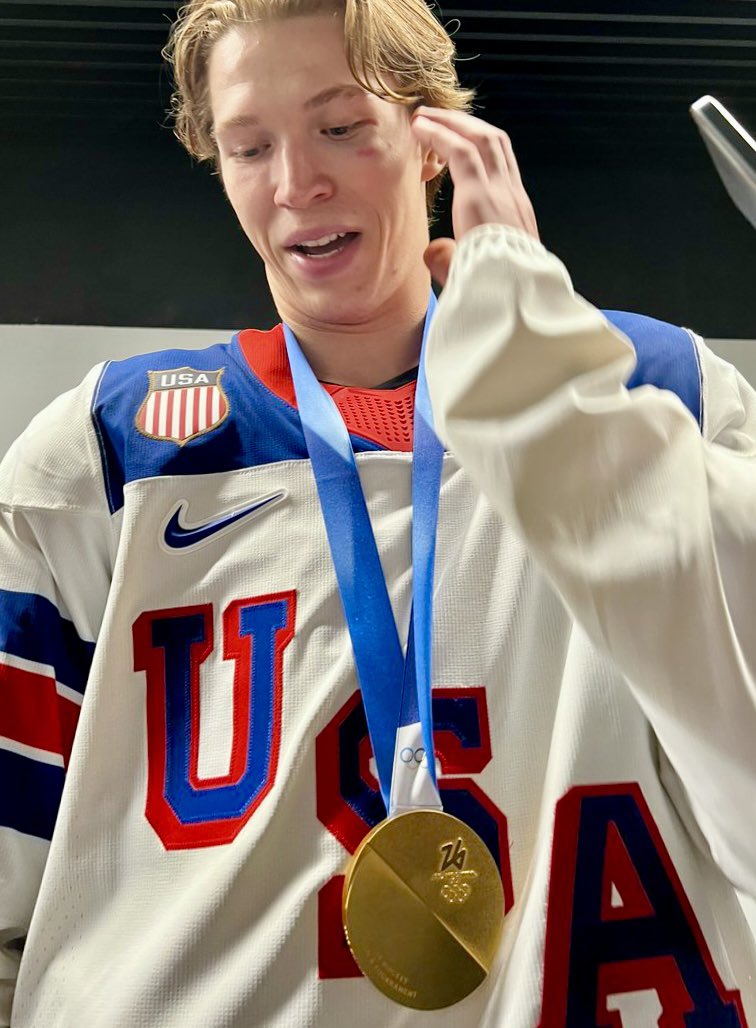
Jack Hughes' social media post after scoring the game-winning goal in the gold medal game 🇺🇸🇺🇸
What a day for American sports fans 🙌
(via jackhughes/IG)
Game winner - Jack Hughes - was going to be a star from birth.
Best player - Connor Hellebuyck. Played Michigan high school hockey - to NAHL - to UMass Lowell - to the AHL - to now.
EVERYONE HAS A DIFFERENT PATH.
For nearly seventy-five years, the Walter Brown Award has represented the very best of American-born players at the highest level of college hockey in New England...
To read full article go to https://t.co/rEsGJk6Uol
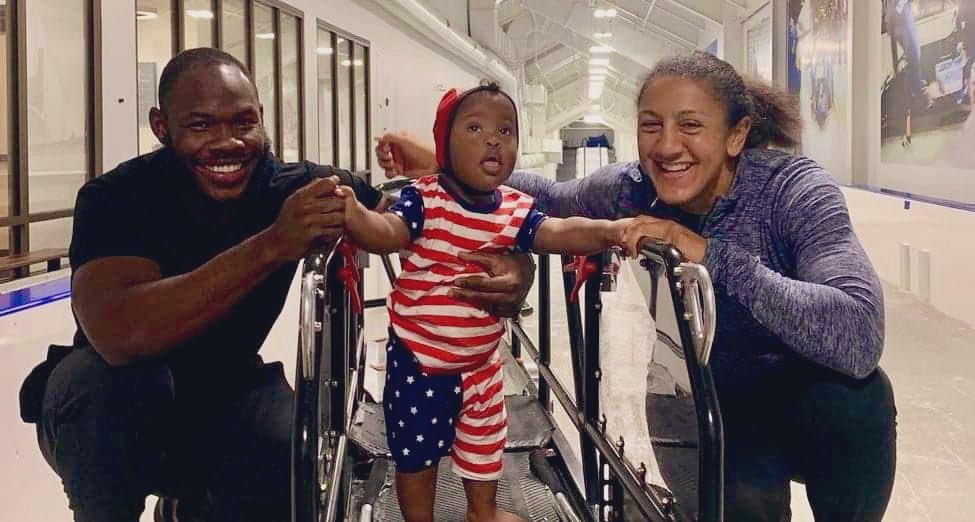
Elana Meyers Taylor is much more than an Olympic champion bobsledser. And she is much more than the oldest Gold medal winner in Winter Olympic history. The 40-year-old athlete is also the devoted mother of 2 deaf children, one with Downs Syndrome. With 2 previous Bronze medals & 3 Silver, today she won her first Gold Medal 🥇, with a win in Women’s Monobob.
“God put me here for a specific reason, and I don’t think it’s just to win medals. At the end of the day, I’m in this sport to glorify God, so if that means I come in last place, or I win the gold medal, that’s what I’m going to do.” #WinterOlympic2026
Following up on this as there’s some discourse saying everything’s fine in Canada and if they had the likes of Celebrini and a few other NHLers they would have won and we wouldn’t be having this conversation.
And they’re right. Canada would’ve had a much better shot at gold if they had their full arsenal to work with.
But two things can be true at the same time. I feel like that argument is just putting lipstick on a pig.
Every year Canada is missing top players. Yet in its history they’ve still fared way better than this 3 year stretch where they haven’t played in the championship game. It’s not just about this year. It’s about the big picture and what could be ahead if things stay the same.
I also don’t think we should judge a country’s development model solely on how they do in best-on-best competition. It’s a part of it for sure, but there are other things like growth and retention rates and other metrics that tell a more complete story.
If you think that everything is fine in Canada because the best players weren’t at World Juniors, I don’t think you’re looking deep enough at the systemic failure of the youth hockey model in the country.
Literally tens of thousands of less boys playing the game than a decade ago. Costs out of control. Winning over development. Super teams over TEAM teams. Ego over process. Fast track over patience.
We’re taught to look at process over result. So let’s forget about the result of World Juniors. Do you think the way youth hockey is delivered is the right process?
Every elite player I know has one thing in common.
They LOVE the game.
Do you think that the youth hockey experience is growing a love for the game more today than when you played? With the amount of pressure that is being put on kids and their families to dive into the crazy younger and younger every year?
I get messages from parents and coaches daily. We collaborate with a ton of youth organizations. The stress and FOMO is real. And the membership numbers are hard data to back it up.
The issues are real. Results aside, it’s imperative that hard conversations need to be had about youth hockey in the country. For better results in competition. For better development. For better mental health for the kids. And for the game we all love.
Thoughts on Team Canada at World Juniors:
There's been a lot of discourse today about Canada's performance after bowing out to Czechia again. I've read a lot about roster construction, team toughness, how players were used during the tournament, and other things related to the team's inability to get the job done.
These things may have been an issue, but reality is the problem runs way deeper.
Here is the biggest thing that people aren't talking about:
Canada has WAY fewer youth boys playing hockey than it did a decade ago.
Looking at Hockey Canada registration and membership data, it's mind-boggling to see the numbers.
And the numbers in the biggest provinces (Ontario and Quebec) are especially egregious.
So why is this happening? Hockey is Canada's sport. It shouldn't be like this.
It's what we hear every day from families all over North America:
Costs are too high. It's professionalized at too young of an age. The stress of the youth hockey experience is too much for kids and families.
Community programs have been replaced by for-profit entities leading to higher costs and more pressure. Development has been replaced by super teams and rogue/outlaw leagues outside of Hockey Canada even before kids are 8 years old. At the older ages, hockey academies have become what families believe is the only way their kids will make it - shelling out INSANE amounts of money to send their kids to do so.
Ontario just got rid of residency rules which will only lead to less accountability and more club-hopping than there already was in the nation's craziest and biggest youth hockey market.
The reason why Canada was the hockey superpower for so long is because it was part of the fabric of the country. There was such a pride and passion for the game and what the game meant to the flag. There was such a sense of playing the game for something bigger than yourself.
Now rather than playing for the love of the game, hockey in Canada is like a job for many of these kids in the environment they're being put in. It's less about pride and passion and more about the path to making it. When in all honesty, it's the pride and passion for the game that is the biggest consistency in the kids that do end up making it.
If Canada wants to restore its hockey dominance, it better take a long look in the mirror at the grassroots and what is going on in youth hockey. If you have tens of thousands of fewer boys playing the game, you should probably look at that first. The bigger your pool of athletes, the more elite athletes you can develop.
"As many as possible, for as long as possible, in the best environment possible". That has to be the guiding principle.
There's a lot of great people in Canada doing incredible things for the game, but the system itself is fundamentally broken. If Hockey Canada is serious about getting back to the top, it has to start at the bottom.
“You guys didn’t really care about the hockey knowledge of the coach that I was gonna play for. It was ‘Is this a good person who is gonna teach my kid life lessons?’”
When I was growing up and my parents were choosing teams and organizations for me to play for, the HOCKEY side of the decision was always secondary. They wanted me to play for good people that would teach me the life skills to succeed on and off the ice.
And that’s why I succeeded on the ice.
Hockey parents - please watch this clip. It will help you to support your player on their journey so much better.
This is why I had the best hockey parents in the world. I don’t get to where I did without them. This should be required watching for every hockey parent from my dad.
The most important conversation a kid is going to have on their journey to achieving their dreams is the conversation they have with their parents after hitting their first big adversity.
Parents who point fingers and make excuses for their kid = kid has no shot
Parents who emphasize taking responsibility and ownership of their failure = kid has a shot
As former D1 college coaches, Jason Guerriero and I talked about this on our latest podcast.
A story for kids and parents about Jeff Malott who scored a pretty nice goal here against the Sharks:
We were recruiting Jeff when I was still coaching at Cornell. Benny our other assistant liked him as a player, but he hadn't yet jumped off the page. He had average production in the AJHL as a 19 year old and was going back for his 20 year old age-out year in junior hockey.
At the beginning of the season, Jeff with his playing schedule couldn't get out for a visit but his parents were driving distance so they drove out to see campus and meet us as a coaching staff. On that visit, we absolutely fell in love with his parents - they were such great people. I cannot understate enough how much of a positive effect their visit had on our staff.
Jeff had a pretty good start to his 20 year old junior year. Our research on his character was off the charts and meeting his parents we were blown away as well. And even though he hadn't yet proven himself in junior hockey (only 6 goals and 20 points in 53 games the prior year in the AJHL), we offered him a spot in our program. At worst, he would be a potential captain.
Turns out his 20 year old year he scored 60 points, he lead his team to an AJHL championship (he also won a junior B championship a few years earlier), and became the captain at Cornell for the team that was number one in the country before Covid canceled the season.
He signed a pro contract out of Cornell but only played games in his first season in the AHL and the ECHL. But with his character he just kept working, was a great leader, and willed his way to the NHL where he's scoring goals like this for the @LAKings.
Benny's eye for talent is incredible seeing something in him even though he hadn't yet popped in junior hockey and he wasn't heavily recruited. And his character along with his family's character was just off the charts.
I share this story because like we say all the time - everyone has a different path to high level hockey. And the players that are resilient, outwork everyone, and stay the course even if they don't get the result in the time they want it are the ones who put themselves in the best position to achieve their dream.
And for the parents - we recruit and evaluate you too, not just your kids. Any college coach will tell you that they've crossed kids names off their list based on the behavior of a parent.
But it goes the other way too.
We fell in love with Jeff's parents and that absolutely played a role in our decision to offer him a spot in our program.
Seeing this goal, there are a lot of people who couldn't be happier for Jeff and his family.