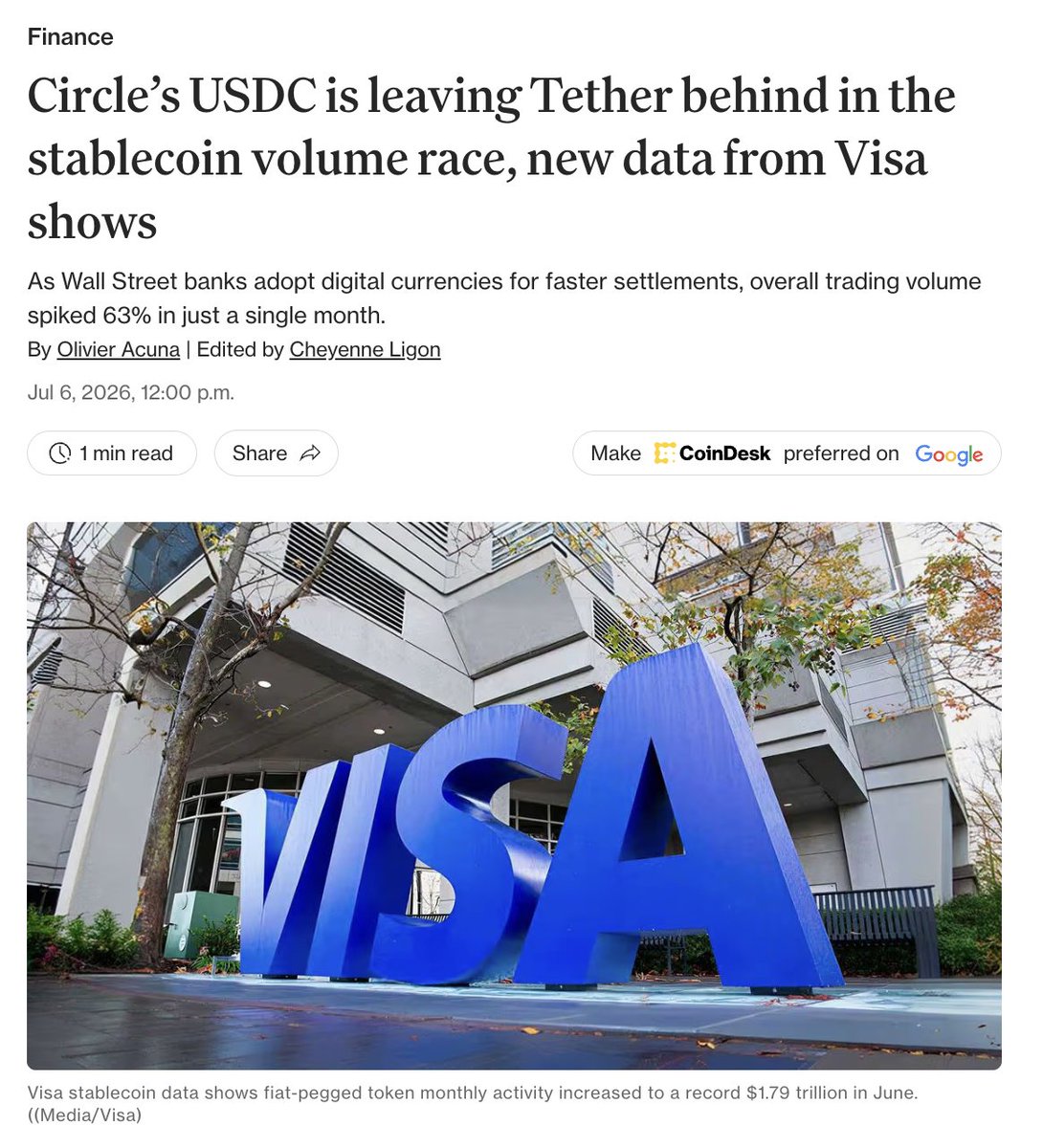
DATA: @Circle’s $USDC accounted for roughly 70% of adjusted stablecoin transaction volume in the first half of 2026, compared with about 25% for @Tether’s $USDT, according to Visa data.
Read the full story by Olivier Acuna on CoinDesk
Cross-chain settlement currently relies on operator claims.
That changes with the #Soroban Verification Layer.
Here's how trust becomes transparency. 🧵
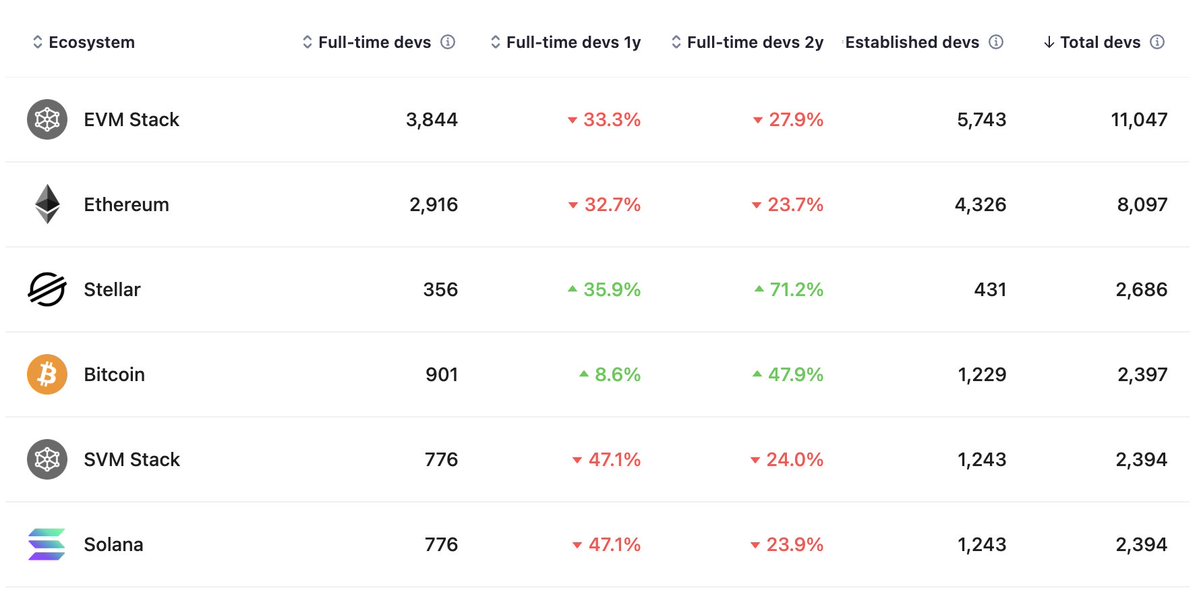
🤯 mind blowing numbers from @ElectricCapital. Stellar is the fastest growing dev ecosystem of any major chain. Everyone else is collapsing while Stellar is growing. Total devs only second to Ethereum/EVM. We've got ways to go on full time devs but we're getting there.
This fundamentally changes cross-chain infrastructure.
Instead of: "Trust us that it worked"
Future: "Verify it yourself"
Users won't need to rely on operator claims. Proof will be written to the blockchain. Settlement moves from trust-based to verification-based.
That's infrastructure maturity.
Cross-chain settlement currently relies on operator claims.
That changes with the #Soroban Verification Layer.
Here's how trust becomes transparency. 🧵
The Soroban Verification Layer will anchor every #LRP swap on #Stellar's settlement layer.
Each cross-chain swap will write:
• Source chain transaction hash
• Destination chain transaction hash
• Cryptographic linkage between the two
Result: Public, immutable proof that settlement completed correctly. Verifiable by anyone.
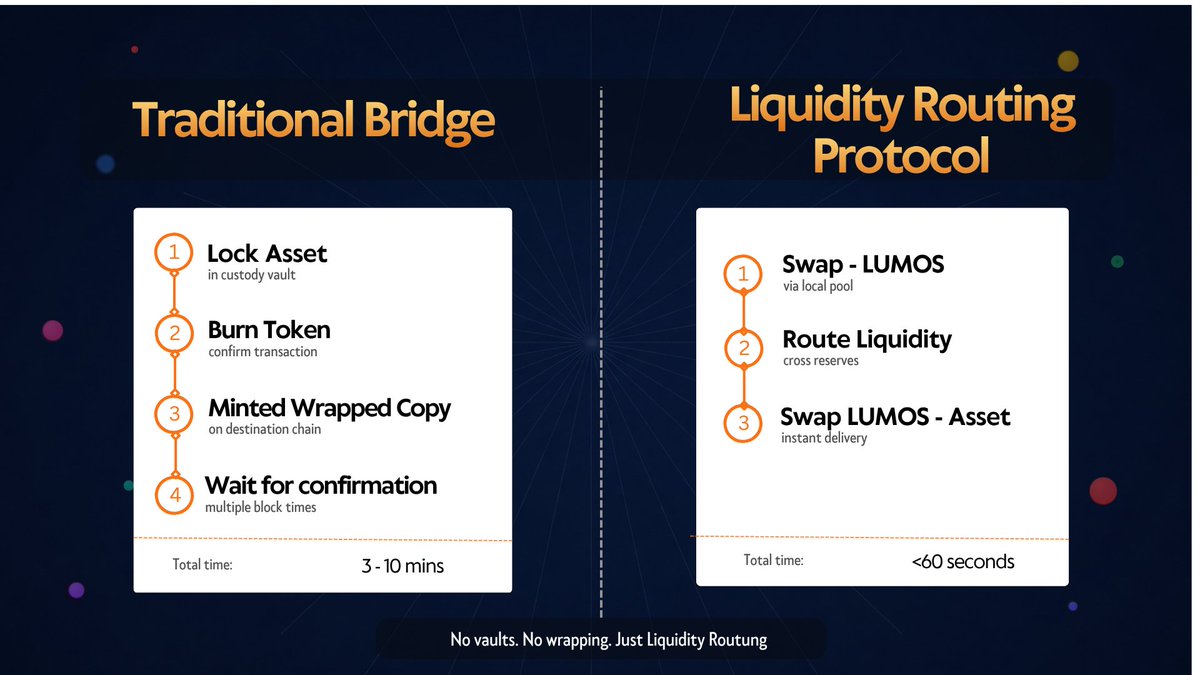
Traditional bridges: Lock → Burn → Mint → Confirm
That's 3 extra steps. Each one takes time.
LRP skips them entirely.
Instead of locking your token in a vault and minting a copy, we route through existing liquidity pools.
Your value moves. The asset you receive is real.
Settlement: under 60 seconds.
Speed matters when you're moving capital.
Why Liquidity Routing Protocol stands out for cross-chain:
-Every token on a supported network is swappable by default — even if minted minutes ago
-Under 1 minute settlement
- No wrapped assets. Native liquidity, native speed
- Scales network-by-network, not asset-by-asset
- No custody honeypots. No wrapped supply to drain. Fewer exploits
That's the difference between bridges and infrastructure.
#LRP #Crosschain #Web3
Why Liquidity Routing Protocol stands out for cross-chain:
-Every token on a supported network is swappable by default — even if minted minutes ago
-Under 1 minute settlement
- No wrapped assets. Native liquidity, native speed
- Scales network-by-network, not asset-by-asset
- No custody honeypots. No wrapped supply to drain. Fewer exploits
That's the difference between bridges and infrastructure.
#LRP #Crosschain #Web3
$LUMOS Incentives for July 1st have been distributed across #XRPL and #Stellar.
✅ Native LPs, Ecosystem LPs, and Whale Holders have all been rewarded.
Full breakdown👇
https://t.co/oheIVpqdR3
12 hours until the next cycle.
We reward the providers, the holders, and the ecosystem:
- Core LPs (LUMOS/XLM, LUMOS/XRP)
- Whale Holders (5,000,000+ LUMOS)
- Ecosystem LPs (20 active pools)
Three streams. One protocol.
#LumosCore#LUMOS#Stellar#XRPL
Cross-chain interactions are the most vulnerable moments in Web3. You hand your assets to an operator and hope the destination leg executes.
LumosCore’s #LRP solved the architectural flaws of bridging (no wrapped assets, no honeypots). But the other half of the battle is proving it.
Enter the Soroban Verification Layer. 🧵