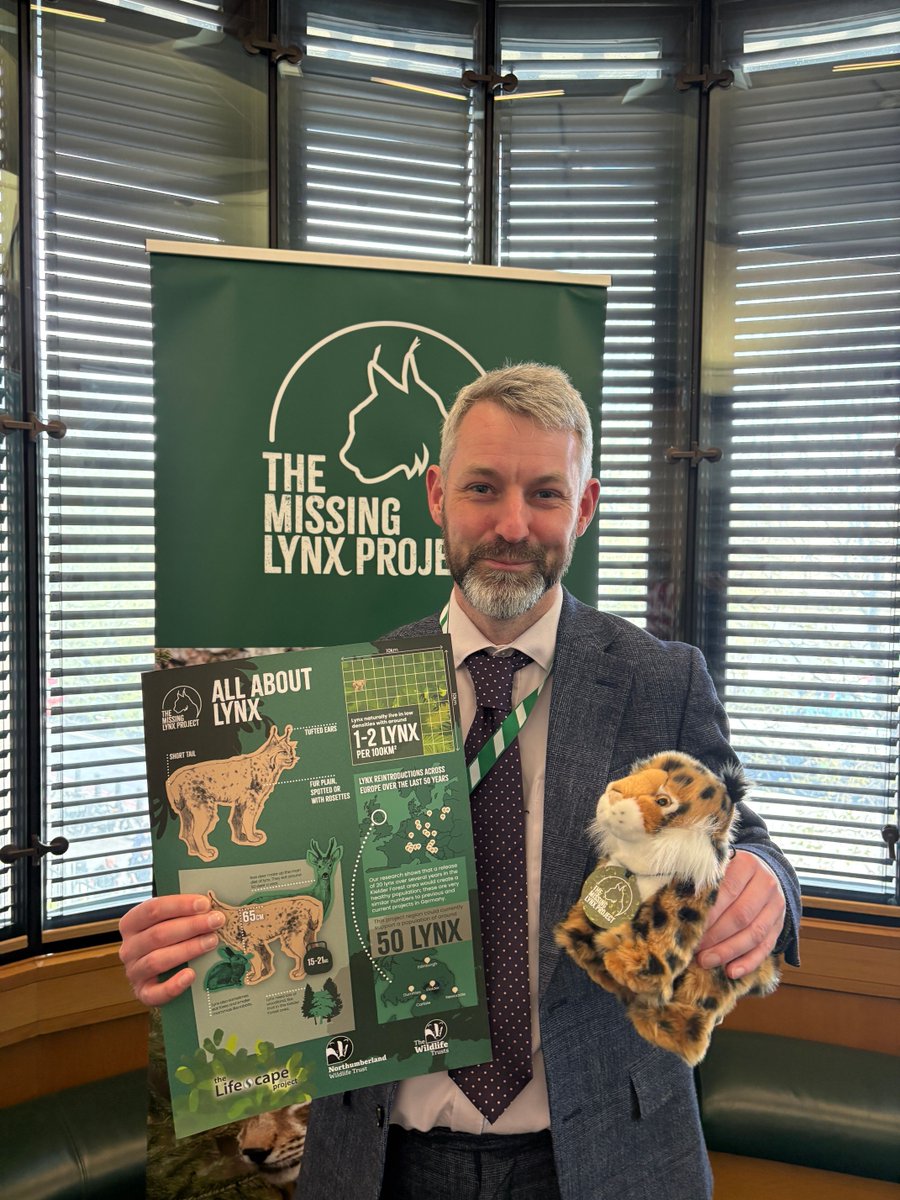
@SamaHoole@DianaLyddo67405 A rewilding fan👏🏻
Now all we need to commit to is reintroduce the apex predators (bears, wolves, lynx, eagle owls, golden eagles etc) to bring a balance to the numbers of herbivores & smaller predators (sheep, deer, foxes, crows etc) & we’re cooking with electricity 👏🏻🤷🤞🏻
Today is 𝗜𝗻𝘁𝗲𝗿𝗻𝗮𝘁𝗶𝗼𝗻𝗮𝗹 𝗟𝘆𝗻𝘅 𝗗𝗮𝘆, and we are celebrating the largest and most impressive wild cat in Europe! 🐈🌟
Beyond their captivating appearance, lynx play a crucial role in nature and for people. As top predators and keystone species, they boost biodiversity, maintain ecosystem health, and contribute to the circle of life. They can also serve as a major drawcard for local tourism.
🌍 Europe hosts two species: the Eurasian lynx and the Iberian lynx. 𝗕𝗼𝘁𝗵 𝗵𝗮𝘃𝗲 ����𝗲𝗲𝗻 𝗿𝗲𝘁𝘂𝗿𝗻𝗶𝗻𝗴 𝘁𝗼 𝗽𝗮𝗿𝘁𝘀 𝗼𝗳 𝘁𝗵𝗲𝗶𝗿 𝗳𝗼𝗿𝗺𝗲𝗿 𝗿𝗮𝗻𝗴𝗲 𝘁𝗵𝗿𝗼𝘂𝗴𝗵 𝗹𝗼𝗻𝗴-𝘁𝗲𝗿𝗺 𝗰𝗼𝗻𝘀𝗲𝗿𝘃𝗮𝘁𝗶𝗼𝗻 𝗲𝗳𝗳𝗼𝗿𝘁𝘀.
Across Europe, local teams, partners, and members of the European Rewilding Network are working in various ways to support the lynx comeback. Efforts include improving habitat connectivity, supporting and restocking prey species and enhancing coexistence measures. 🐇🏘️
Check out our website to learn more this remarkable comeback 👉 https://t.co/f0V4cX2WVD
📷 Sophie Monsarrat / Neil Aldridge
#Rewilding #InternationalLynxDay #Wildlife
Celebration of Lynx Day continues! 🐈
This research on the Iberian lynx investigates intestinal protozoan parasites Cryptosporidium and Giardia across populations in Spain.
👉 https://t.co/cA0qXxPhYd
#InternationalLynxDay#WildlifeHealth#Parasitology#Conservation
Iberian lynx are dispersing seeds and reshaping ecosystems in Spain, and researchers find that a top predator can also act as a gardener 💚
The Iberian lynx has become one of Europe’s most celebrated conservation stories. Once pushed close to extinction, this spotted wild cat is now expanding again across parts of Spain and Portugal, a recovery that many biologists see as a rare win for nature.
A new study led by researchers at the University of Cádiz, however, shows that the lynx’s return may be changing Mediterranean forests in a quieter way.
By altering the behavior of foxes and stone martens, the predator appears to be reducing the spread of seeds from the Iberian pear, a fleshy-fruited tree also known as Pyrus bourgaeana. In areas with lynx, seed dispersal fell by up to 80%, according to the university’s summary of the findings.
The Iberian lynx (Lynx pardinus) is a top predator, which means its presence can shape the behavior of many animals below it in the food web. That is usually the point of rewilding, since bringing back large carnivores can restore missing ecological pressure.
Still, nature rarely moves in a straight line. The University of Cádiz said the research shows lynx recovery can affect not only predator and prey relationships, but also mutualistic interactions that help plants regenerate.
Tamara Burgos, the study’s first author, said conservation programs should “consider all levels of the trophic network.”
https://t.co/O7o5Ynk27O
'This year’s results consolidate El Acebuche and Zarza de Granadilla as key centres for the rescue of the Iberian lynx' #rewilding#conservationoptimism
https://t.co/ZS7q0lIggu
Lynx to Scotland update 🐆 Earlier this year, the Lynx to Scotland partnership engaged with 1,640 people at 42 information sessions across Highland and Moray.
Thanks to everyone who has shared their thoughts and provided feedback. We’re currently analysing over 1,000 questionnaires completed during and after these sessions.
Many people also requested 1:1 conversations which our Engagement Officers are carrying out this summer to understand local concerns and potential benefits that a potential lynx reintroduction could bring.
Once the individual conversations are complete, the Lynx to Scotland partnership has a Community Feedback phase planned for later this year.
For more information, visit 👉 https://t.co/TuHSqegRZs
📷 @ScotlandTBP
#LynxToScotland @LifescapeProj
#Lynx coming back to England!
6 yrs work so far
N England best area bc much forest. #Coniferous but lynx not fussy
@xonguyenn video at https://t.co/R2KbHkFuqi
#Eurasian#Lynx. Scottish reintroduction 2025 not well prepared bc lynx were domesticated
I'm looking forward to hosting again, after my successful first attempt. This month, I'll be talking about rewilding projects involving species reintroductions - focusing on beavers, boar, white-tailed eagles, and lynx.
Communicating Carnivore Coexistence in the UK
@jonnyhhanson screens 'Snow Leopard Trail' and discusses his book 'Living with Lynx' with Dr Tom Fry.
A deep dive into reintroduction debates and storytelling.
Wed 13 May, 1-2pm, David Attenborough Building
#Woking residents care deeply about animal welfare and the environment. It's something I'm frequently contacted about.
That's why I attended an event about the potential reintroduction of lynx to Britain - which could help restore ecosystems and support woodland regeneration.
@RewildScotland Brilliant! I support lynx reintroduction to restore ecological balance and boost biodiversity. These magnificent predators belong in Scotland.
Few conservation stories illustrate resilience better than the remarkable recovery of the Iberian lynx. Once considered one of the most endangered feline species on Earth, its population declined dramatically during the late twentieth century due to habitat loss, declining prey availability, road mortality, and fragmentation of its natural range across Spain and Portugal. At its lowest point, the species was reduced to just a handful of isolated individuals, placing it on the brink of extinction.
Through coordinated conservation efforts led by Spanish and Portuguese authorities along with international environmental organisations, intensive recovery programmes were introduced. These initiatives focused on habitat restoration, captive breeding, reintroduction into suitable wild environments, and careful monitoring of released individuals. One of the most critical components of this recovery has been the protection and restoration of Mediterranean scrubland habitats, which provide shelter and hunting grounds for the lynx’s primary prey, the European rabbit.
Captive breeding centres played a vital role in increasing population numbers and maintaining genetic diversity. Offspring born in controlled environments were gradually reintroduced into the wild under closely monitored conditions. Over time, these efforts began to show measurable success, with established breeding populations forming in several regions of the Iberian Peninsula.
Today, the Iberian lynx population has grown significantly, with numbers surpassing two thousand individuals across multiple reintroduction zones and natural habitats. This represents one of the most successful recoveries of a large carnivore in modern conservation history. However, the species still requires ongoing protection, as threats such as habitat fragmentation, disease affecting rabbit populations, and human infrastructure continue to pose risks.
From a paleontological and ecological perspective, the recovery of the Iberian lynx highlights how modern ecosystems can be preserved and restored when scientific knowledge is applied effectively. It also serves as a reminder that even species on the edge of extinction can rebound with sustained effort, planning, and international cooperation.
Strangely enough, despite its rarity, the Iberian lynx has a diet that is highly specialized, with European rabbits making up the vast majority of its food intake, meaning the survival of the lynx is closely tied to the health of a single prey species.
#archaeohistories
Good Friday Good News: govt announces £90 million funding for species recovery across England. £60m to fund local projects aimed at recovering endangered species. England expected to see the reintroduction of birds, mammals, spiders, snails and more. Lynx?
Conservation efforts in Southern Spain have seen the successful reintroduction of the Iberian lynx. This landmark achievement marks a major victory for wildlife preservation in the region. https://t.co/587Dmg0U7D
Scotland is aiming to be the world's first rewilded country. It's looking to rewild 30% of the country by 2030.
We have the solutions. Replenishing and protecting nature is one of them. #ActOnClimate#climate#biodiversity
🎙️ Episode 8 of the Citizen Zoo Rewilding Podcast is now live! This month, Lucas, Elliot, and Digby break down four incredible stories, from the recovery of apex predators to increased hope for the future of lynx in the UK!
🔗Listen here: https://t.co/SNaWsCDmD3
Rewilding will fail without apex predators. The ban is being challenged - help if you can. BRING BACK THE LYNX https://t.co/MMPiLLoP6P via @CrowdJustice