Applications are open for our world-class @IMPRSBrainBehav PhD program in neuroscience. Get international research experience with program locations in #Jupiter, FL & #Bonn, Germany. Apply by December 1 (Florida) or November 15 (Germany) 🧠 🗓️ 💻https://t.co/NkwGPM56ml
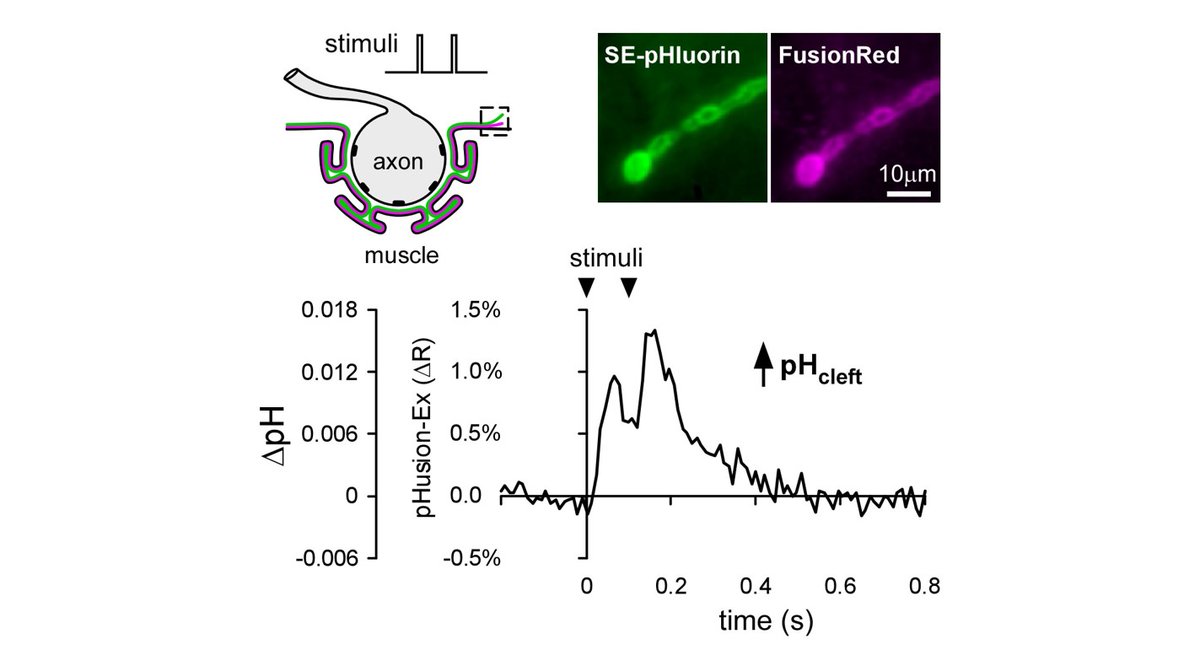
Acidification of synaptic vesicles is needed for transmitter uptake so vesicle release acidifies the cleft at some synapses. But a JN Journal Club by @peterniesman & @valesilvamo describes work by @MacleodLab & @RendenLab showing alkinization at larval NMJ
https://t.co/DATU0VfLP3
Looking forward to presenting a talk tomorrow to the whole world! I’ll explain how flies (& neurons) see motion, then I’ll discuss (some of) what their brains do with this motion info. I’ll go from computations to biophysics to behavior. Plenty of cool movies—hope it all works🤞
Les presentamos el nuevo website droso4LatinAmerica con material para divulgación y educación utilizando a #Drosophila, traducciones del fantástico material creado por @Poppi62 que hicimos con colegas de México y Chile. Retwiteen porfi! #advocacy
https://t.co/7bFt8xdq8y
Earlier this month we closed to do our part to flatten the curve & protect our employees. Because of this, we were able to donate our N95 masks, gloves, & hand sanitizer to PBC Fire Rescue & Jupiter Medical Center. Thank you to everyone working tirelessly to keep us safe.
.@WilkesHonorsFAU Alumni Roberto Hernandez and Rubens Tavora, are celebrating successful applications to highly selective doctoral graduate programs. Both are currently conducting neurophysiological research in the Macleod laboratory on FAU's Jupiter campus. Congrats!
Our Wang lab is hiring a highly motivated & independent research tech to help with our research into learning and episodic memory. Excellent opportunity to get hands-on research experience before grad school. https://t.co/WkCVs94ZGa
FAU Jupiter Research Finds Neuronal Glutamatergic Synaptic Clefts Alkalinize Rather Than Acidify during Neurotransmission
#FAU#FAUJupiter@WIlkesHonorsFAU@FAUScience
➡️ https://t.co/nkYAm9OD9Z
New work from @MacleodLab @RendenLab finds that nerve activity generates an alkaline shift in pH within synapses, encouraging reassessment of the scope of activity-dependent pH influences on neurotransmission & short-term synaptic plasticity.
#JNeurosci: https://t.co/DlHEFYHse2
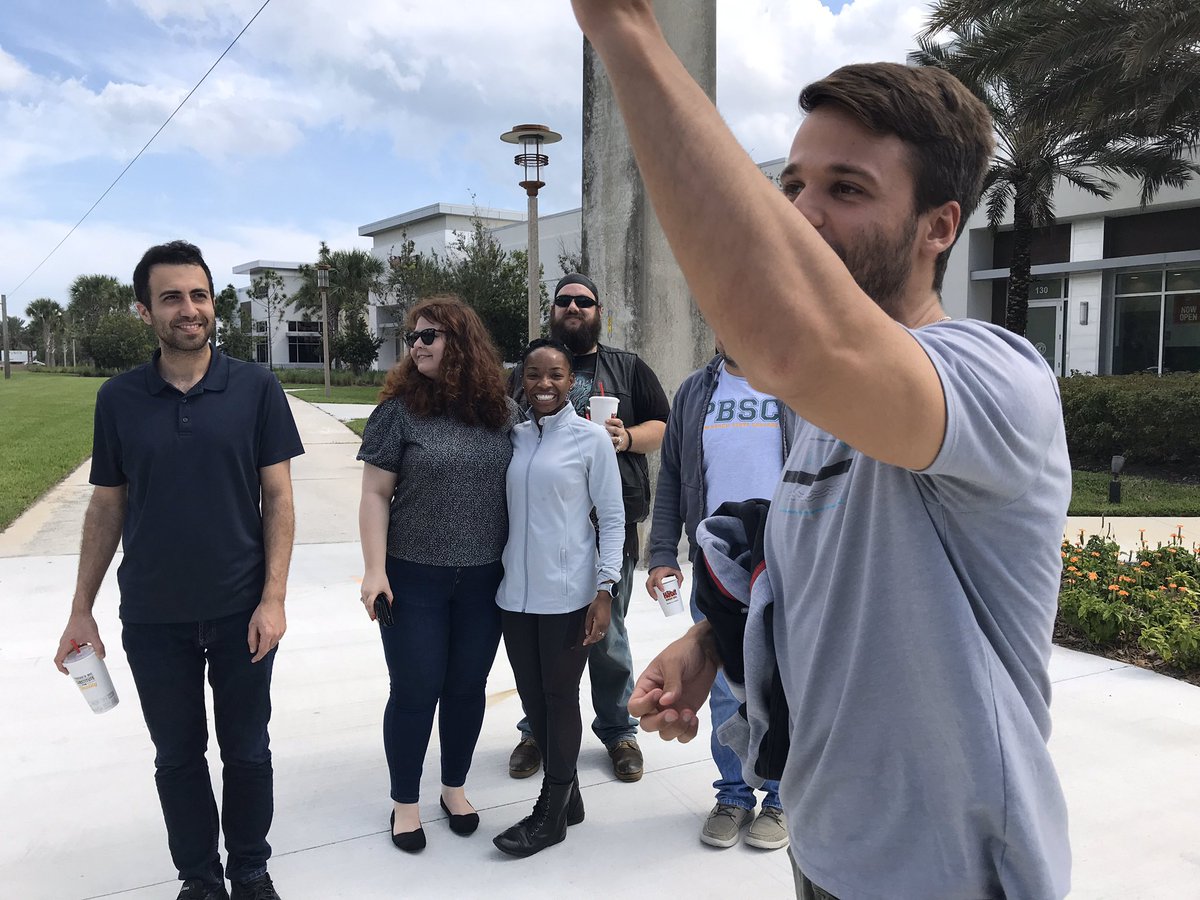
Graduate students, Ian and Danielle, attend the first regional SACNAS conference at UF!
Pictured: Karla Holt, Ian Gaudet, Monica Maldonado, Michael Solomon, and Danielle Riboul
#SouthEastRegionalSACNAS2020
Touhid and Sergio at The 2020 Biophysical Society Annual Meeting in San Diego presenting their work on: A computational model of pH dynamics within the cleft of conventional neuronal synapses and Phosphagens as energetic moderators at chemical synapses: A computational approach.
Neurotransmission is highly sensitive to the pH at synapses and so quantification of the size, duration and direction of these pH shifts is essential if we are to understand the subtle influences on communication between nerve cells.
In our recent publication we show that nerve activity generates an alkaline shift in pH within the cleft of glutamatergic synapses in flies and mice. With the use of genetically-encoded pH reporters we put to bed the notion that acidification occurs. https://t.co/iEu8nqe5IQ