Brainmaxxing is simple. It’s just getting addicted to neuroplasticity, doing hard things, making the unconscious conscious, being delusionally optimistic, seeing stress as growth, and mastering pattern recognition. This is how you change your life for the better.
I raise you:
Infection- admit to medicine
Pain- admit to medicine
Dying of old age- admit to medicine
Psychotic but not dangerous- admit to medicine
Not sure what's going on- admit to medicine
Homeless- admit to medicine
Big news in TAVI vs SAVR. JACC has published 10-year results of Partner 2 trial and ...IT IS COMPLICATED
I've long said that the TAVI trials have been an example of industry-funded trials done well (except that primary endpoint in Partner 3).
Now that we have 10-year data, you'd think we'd have answers. But the tension comes in something that affects all device trials: iteration.
How do you translate data gathered with older technology to today when we use better devices? It's a question. I don't know.
In the Watchman debate, proponents say the newer devices are better. But the evidence from the IDE study (not a trial, just a study) were not great.
With TAVI, the SAPIEN 3 does look better. But it's still hard to decide what to do in a 70 year-old with 15 years life expectancy. SAVR is harder on people up front, but there may be long term advantages.
I will study this topic and try to summarize this Friday on This Week in Cardiology podcast.
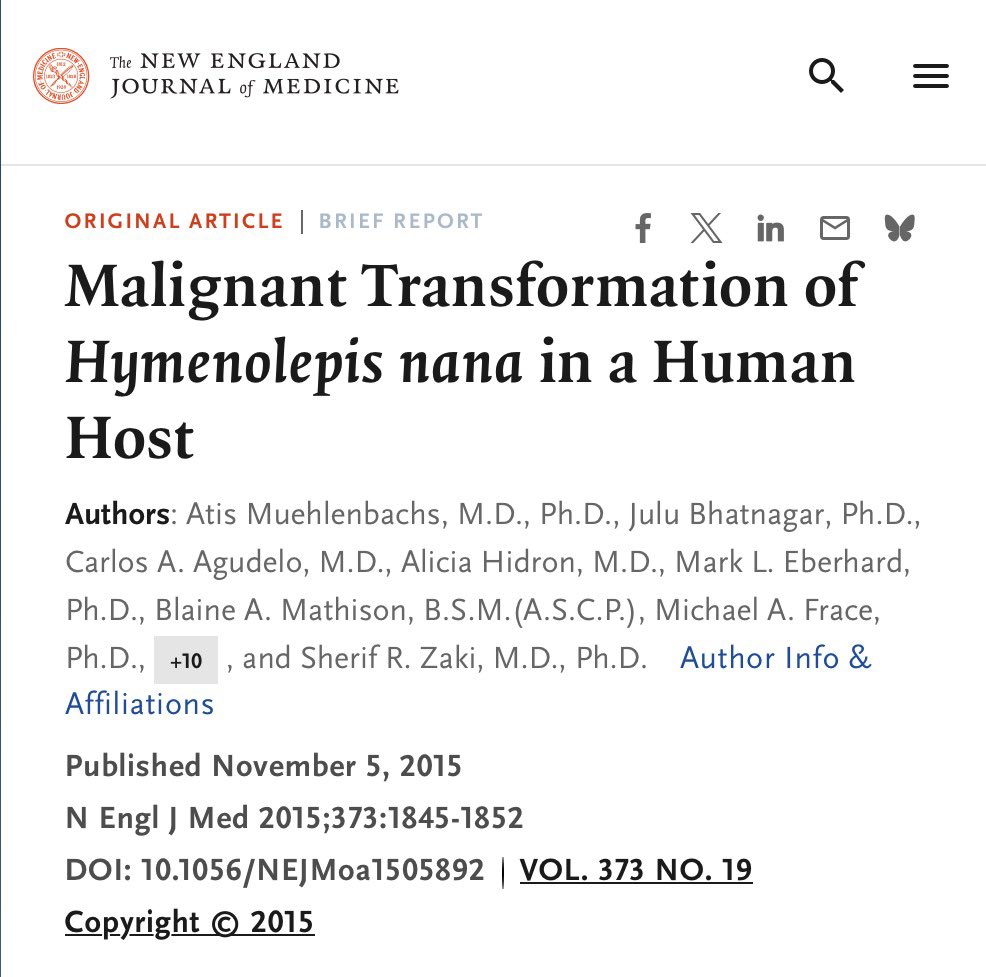
This patient died of a cancer that wasn’t his
When doctors talk about cancer, they’re usually talking about one thing:
your own cells going rogue.
Normal cells follow rules.
Cancer cells don’t.
They grow when they shouldn’t.
They ignore stop signals.
They invade nearby tissue.
They spread to places they don’t belong.
Under the microscope, cancer has a “look” crowded cells, chaotic growth, lots of division, and destruction of normal structures.
So when a 41-year-old man came to the hospital with months of fever, weight loss, cough, and extreme fatigue, doctors were worried.
Scans showed multiple masses:
- In the lungs
- In the liver
- In the adrenal glands
- In lymph nodes throughout the body
This wasn’t one tumor.
This was something spreading.
All signs pointed to aggressive cancer
Biopsies were taken.
Under the microscope, the findings were exactly what doctors fear:
- Cells multiplying uncontrollably
- Invasion into surrounding tissue
- Areas of cell death
- Spread to distant organs
In every way that matters, this behaved like advanced cancer.
But then someone noticed something unsettling.
The cells didn’t look human
Cancer cells come from the body, so they usually resemble the tissue they came from, lung, lymph node, liver, blood.
These cells didn’t.
They were unusually small, even smaller than red blood cells.
They lacked the typical markers of human cells.
They didn’t organize themselves like any known human cancer.
They looked primitive.
Undifferentiated.
Almost…foreign
This raised a terrifying question:
If these cells weren’t behaving like human cells…what were they?
The case becomes a mystery
Doctors tested for everything:
- Common cancers
- Rare cancers
- Fungal infections
- Amoebas
- Exotic parasites
Nothing fit.
Meanwhile, the disease progressed. The masses grew. The patient’s condition worsened.
Experts at the Centers for Disease Control and Prevention (CDC) were consulted. Tissue samples were sent for advanced testing.
And that’s when the case crossed into uncharted territory.
The genetic material inside the “tumor” cells did not belong to the patient.
It wasn’t human.
It belonged to a tapeworm.
Specifically, Hymenolepis nana, one of the most common tapeworms in the world, usually harmless and often symptom free.
But in this man, something unprecedented had happened.
➡️ The tapeworm’s own cells had turned cancerous.
Not a parasite causing cancer.
Not an infection triggering cancer.
A parasite developing cancer inside a human body, then spreading like a malignant tumor.
This had never been documented before.
Why this is a big deal:
Until this case, cancer was considered a disease of the host’s own cells.
This shattered that assumption.
It showed that under extreme conditions, especially severe immune suppression, non-human cells can mutate, grow uncontrollably, invade human tissue, and spread throughout the body like cancer.
In simple terms:
The patient died of cancer that he never developed.
The malignancy that killed him did not arise from his own cells.
It came from something living inside him.
This single case forced doctors to rethink some of the most basic ideas in medicine:
- What cancer actually is
- How infections can behave in weakened bodies
- The role of the immune system as a final line of defense
- And what is biologically possible inside the human body.
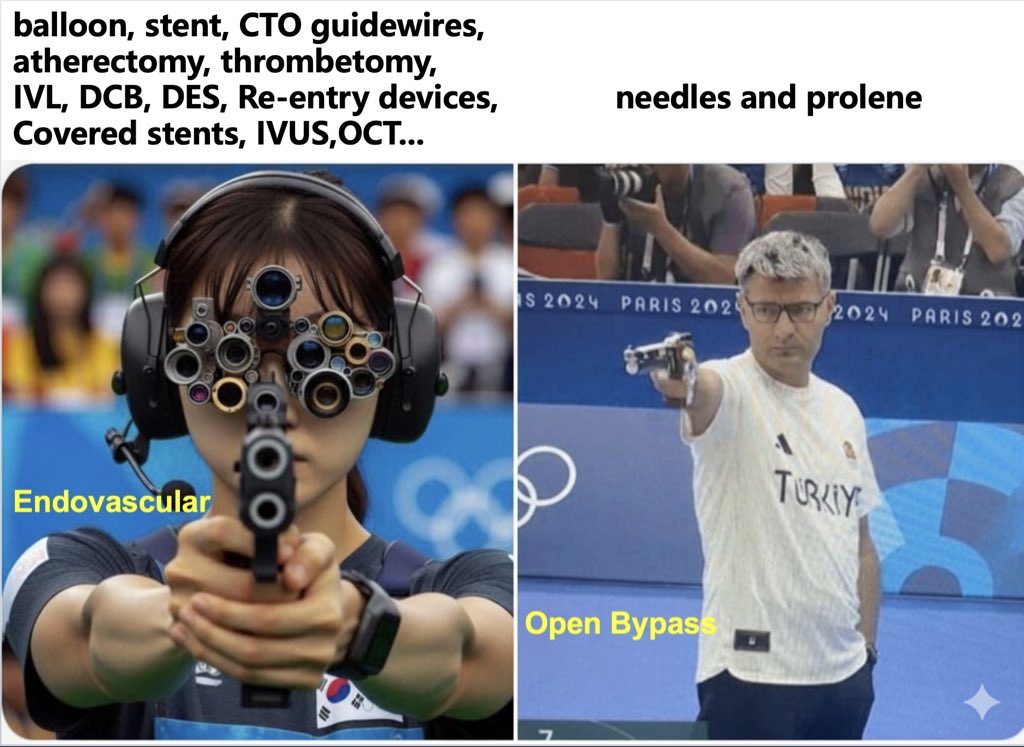
We need the left side to make the Olympics popular and efficient, and the right side to let people know what the gold standard is. Same thing in #CLTI treatment.
Here’s a nice analysis of 2.5M children about Tylenol and autism. The study found a small association between tylenol use in pregnancy and autism, but the association went away in sibling analysis. In sibling analysis you compare children born to the same mother where one child was exposed to Tylenol but not the other. This is a better comparison because genetics are similar between siblings whereas they differ greatly in non siblings from different families. Bottom line: no increased risk of autism with tylenol use in a huge population analysis. https://t.co/JyodtiSwWC