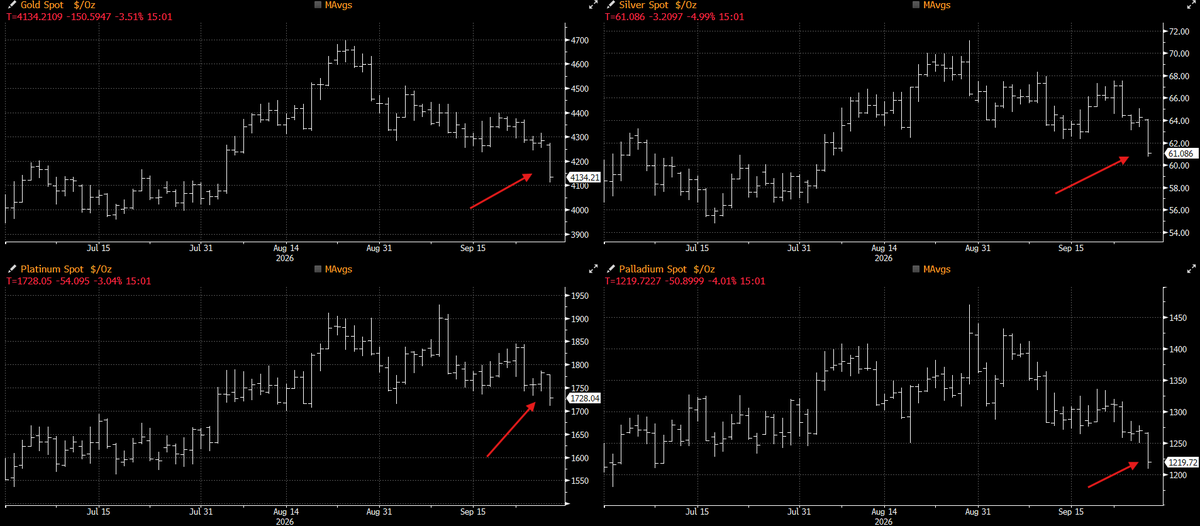
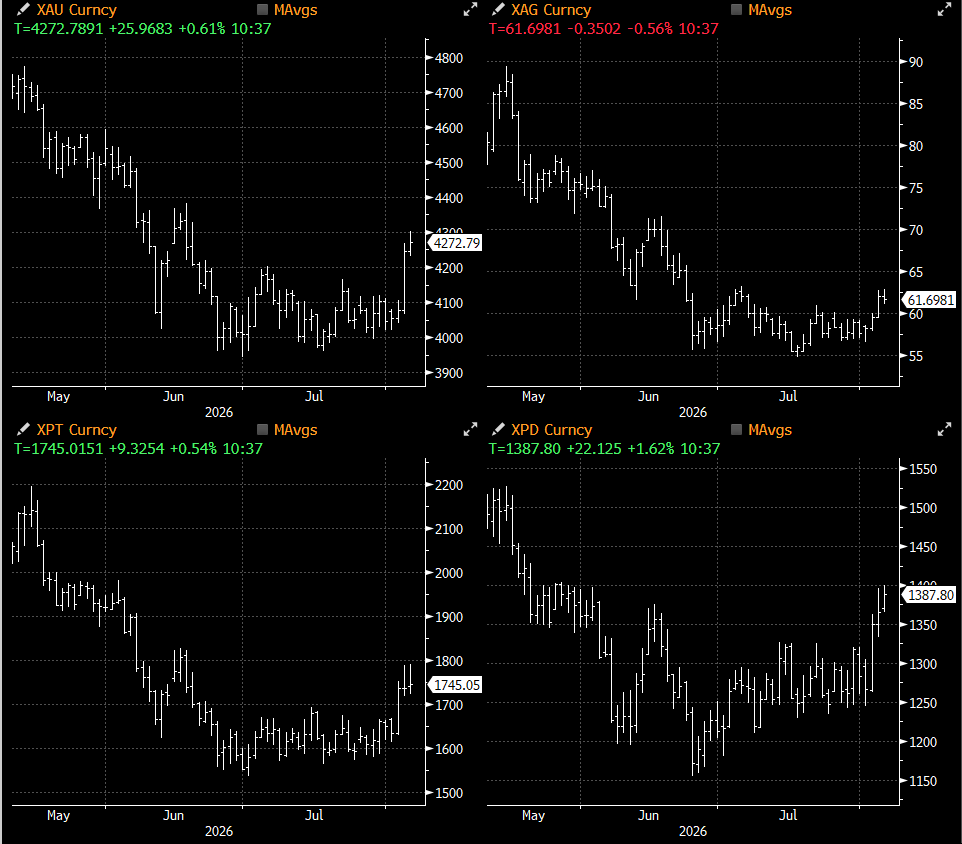
Not to sound like a broken record, but gold and the broader precious metals complex remain under pressure as elevated oil prices continue to support the dollar, while yields show little sign of reversing course
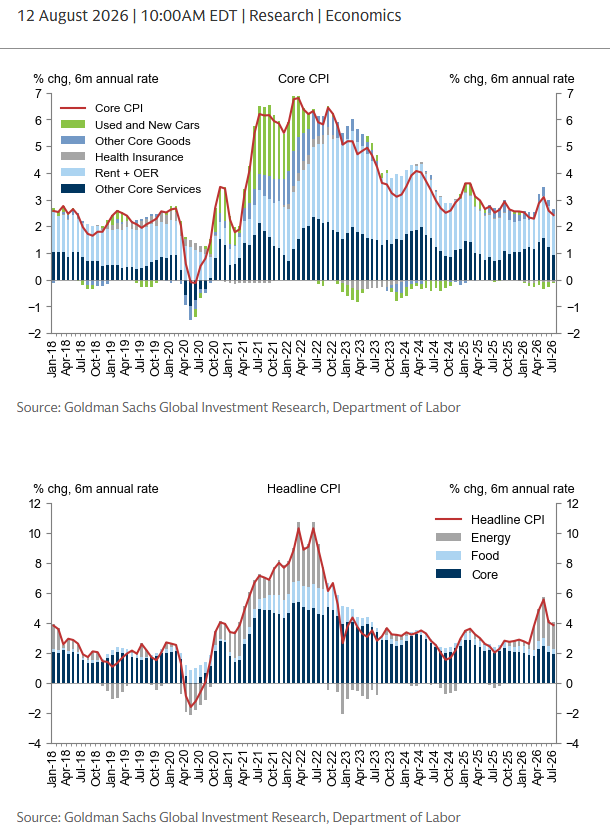
Market update post Warsh's Jackson Hole speech: gold lower, yields and the dollar higher, equities flat. Betting markets now pricing 50/50 chance of rate hike at Sept. meeting. August jobs and CPI are likely the next macro data points that the market focuses on
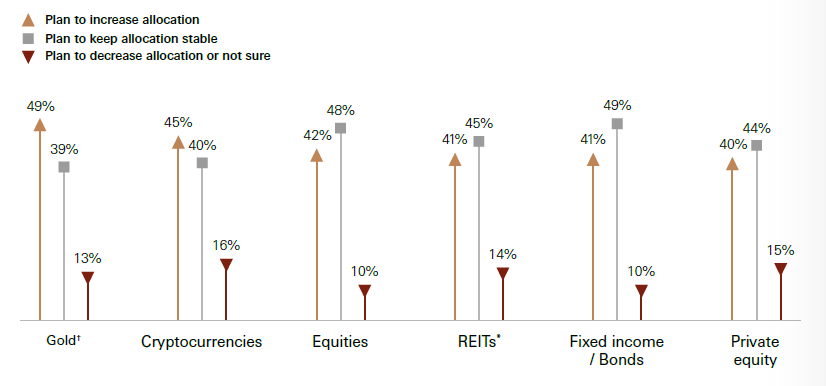
HSBC’s latest affluent investor survey points to growing appetite for #gold. Nearly 9/10 investors plan to maintain or increase their allocation over the next 12 months, including 49% who expect to add exposure, with particularly strong interest across the UAE and Asia
Seeing questions about whether the Switzerland-China trade deal affects gold. Gold was already exempt from tariffs and remains Switzerland's largest export to China, so the agreement is unlikely to materially affect gold trade flows
Gold and precious metals get the green light as Bessent doubles down on long-end Treasury buybacks.
Yields lower + Dollar lower = Metals higher
A setup that edges closer to yield-curve control territory
Namibia’s central bank plans to triple #gold’s share of its FX reserves to at least 3% by end of next year, from ~1% currently.
Bloomberg: Bank of Namibia is buying gold from local mines monthly, paying in Namibian dollars, as part of its accumulation program.
Note: Namibia has not reported gold reserves to the IMF since 2019.
Thanks for referencing my recent note! As an update, in the first week of August we’ve already seen an additional ~US$3bn in gold ETF fund flows, with Europe again leading at $1.1bn, North America close behind at $1bn, and Asia strong at ~$800mn
Been on the road the past few weeks, but back to scheduled programming. Gold continues to find support at the $4,000/oz level and bounced higher today, with Asian sessions continuing to drive the majority of the year-to-date price support.
Gold and precious metals sold off after hawkish FOMC + Warsh comments. Strong hawkish tone: inflation “well ahead of 2%”, firm commitment to the 2% target, no dovish pivot, forward guidance scrapped, and new task forces adding uncertainty.
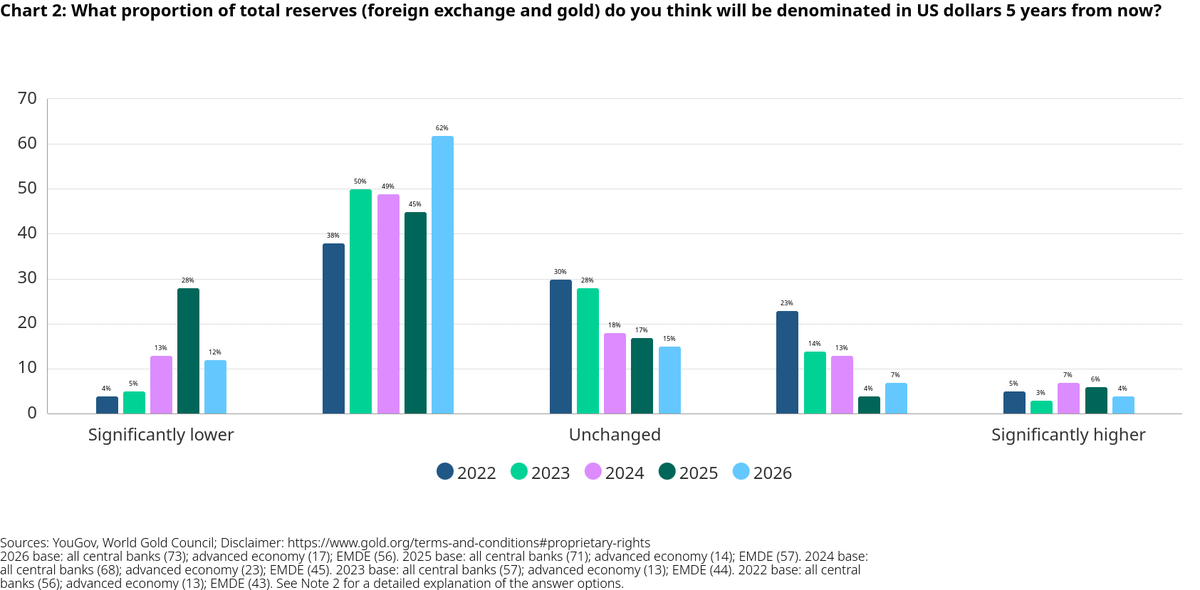
And to add onto this, central banks are not expecting the dollar’s reserve dominance to strengthen from here. In the latest survey, 74% expect the dollar’s share of total reserves to be lower 5 years from now, despite it remaining the dominant global reserve currency today. Both advanced economy and EMDE responses were aligned in this view.
Gold’s selloff has been a US-session story. Since the start of June, gold has held up better during Asian and European trading hours but has been hit hard once the US opens. The pressure looks less like global selling and more like US-driven liquidation as rates, positioning, and risk sentiment weigh on gold.
Lots of noise in the market today as a stronger-than-expected payrolls report pushed Treasury yields and the dollar higher, sparking cross-asset volatility across gold, equities, and energy markets.
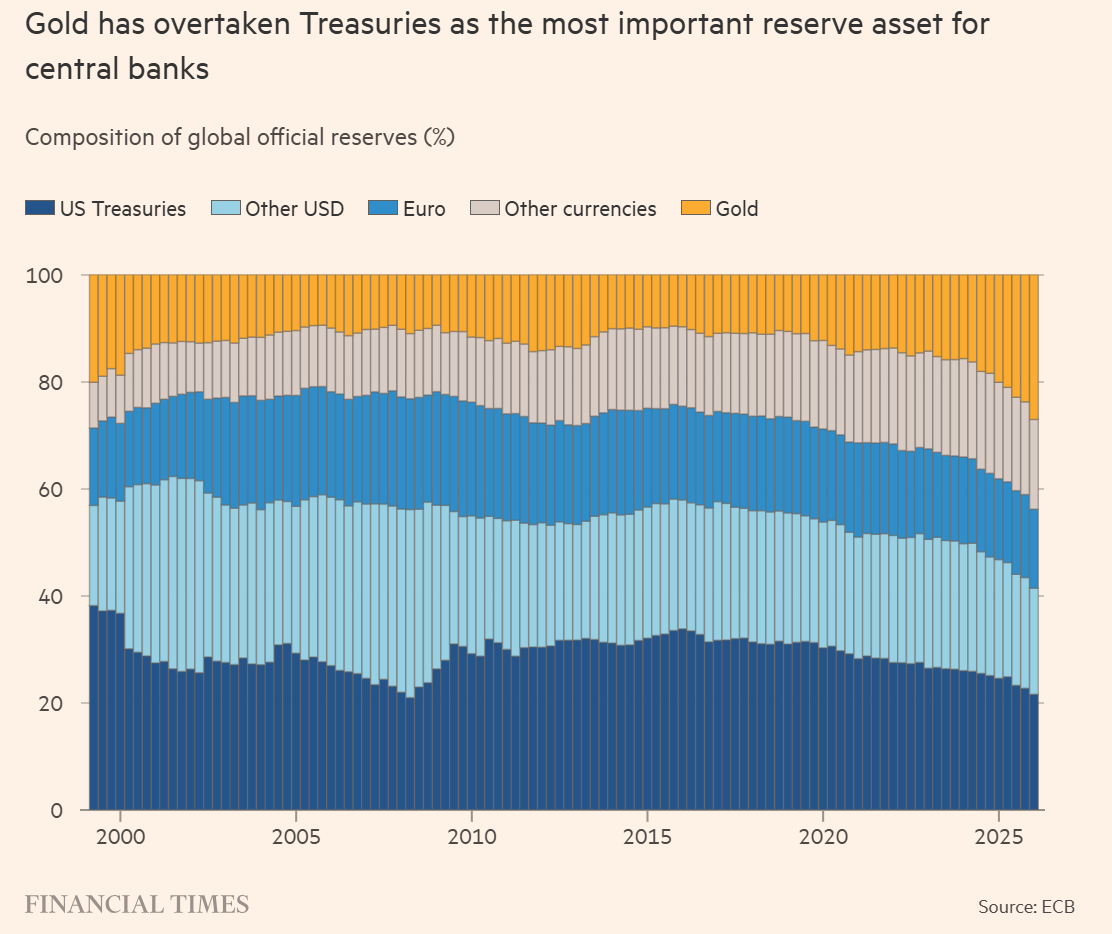
Gold has officially overtaken US Treasuries as the #1 reserve asset for central banks worldwide. According to the ECB’s latest data (via FT):
• Gold now makes up 27% of global official reserves at end-2025 (up from 20% a year earlier)
• US Treasuries slipped to 22% from 25%.
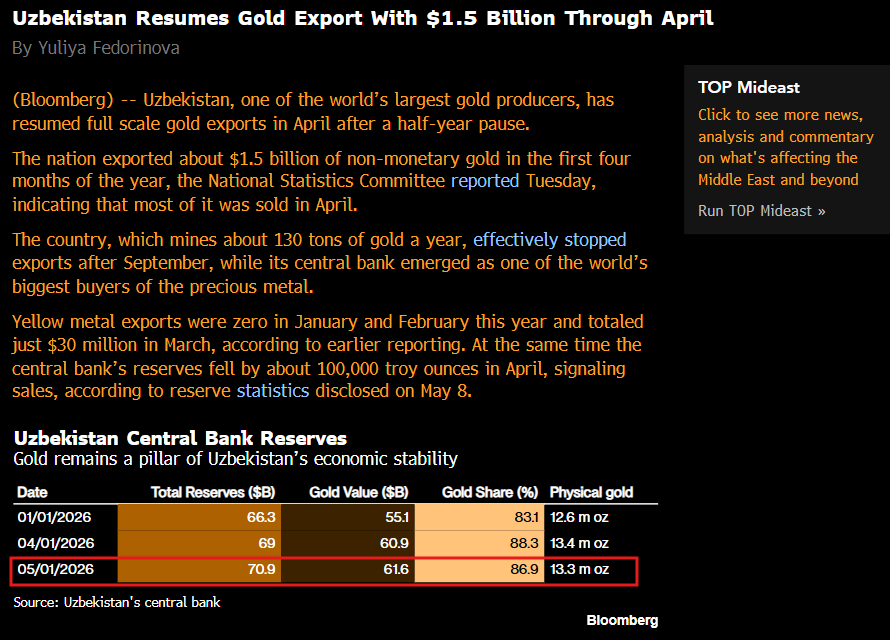
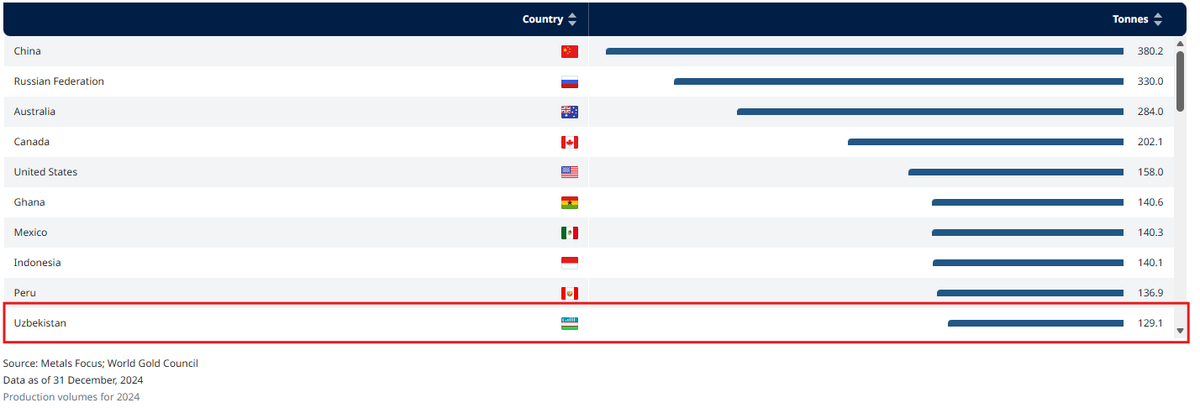
Uzbekistan’s gold exports are back after a half-year pause. The country is one of the world’s top 10 gold producers, mining roughly 129 tonnes in 2024. Gold also remains central to its balance sheet, now accounting for nearly 87% of total reserves.