Orka 4.0, live. Tue, Nov 17 at 9 AM MT, our product team walks through Android emulators on Apple silicon, automated VM setup with userdata, image cache management, and every major update since 3.6. Bring your questions. ➡️ https://t.co/dCx0KgRNIh
What’s new in Orka, live with our product team on Nov 17: Android emulators on Apple silicon, userdata bootstrap scripts, image cache cleanup, CIDR-based VM network isolation, CI plugin updates, and the 4.0 upgrade path. Bring your questions.
🎬 https://t.co/gBXsyW89FZ
At #KubeCon this week? Stop by booth #255 and ask us why anyone would run Kubernetes on a Mac.
iOS apps can only be built on macOS, on Apple hardware. Orka puts those Macs under Kubernetes so they’re managed like the rest of your workloads.
Book time: https://t.co/ijdBeQPK84
Android on Orka, explained: the emulator runs alongside its paired macOS VM on the same Apple silicon Mac. Your test job connects through ADB. Orka handles the pairing.
https://t.co/Sj41ixt6Ze
Going to #KubeCon next week? The question we hear most at our booth: why run Kubernetes on a Mac?
Xcode only runs on macOS, and macOS is only licensed for Apple hardware. Orka runs those build Macs as Kubernetes-managed VMs.
Talk to us at booth #255
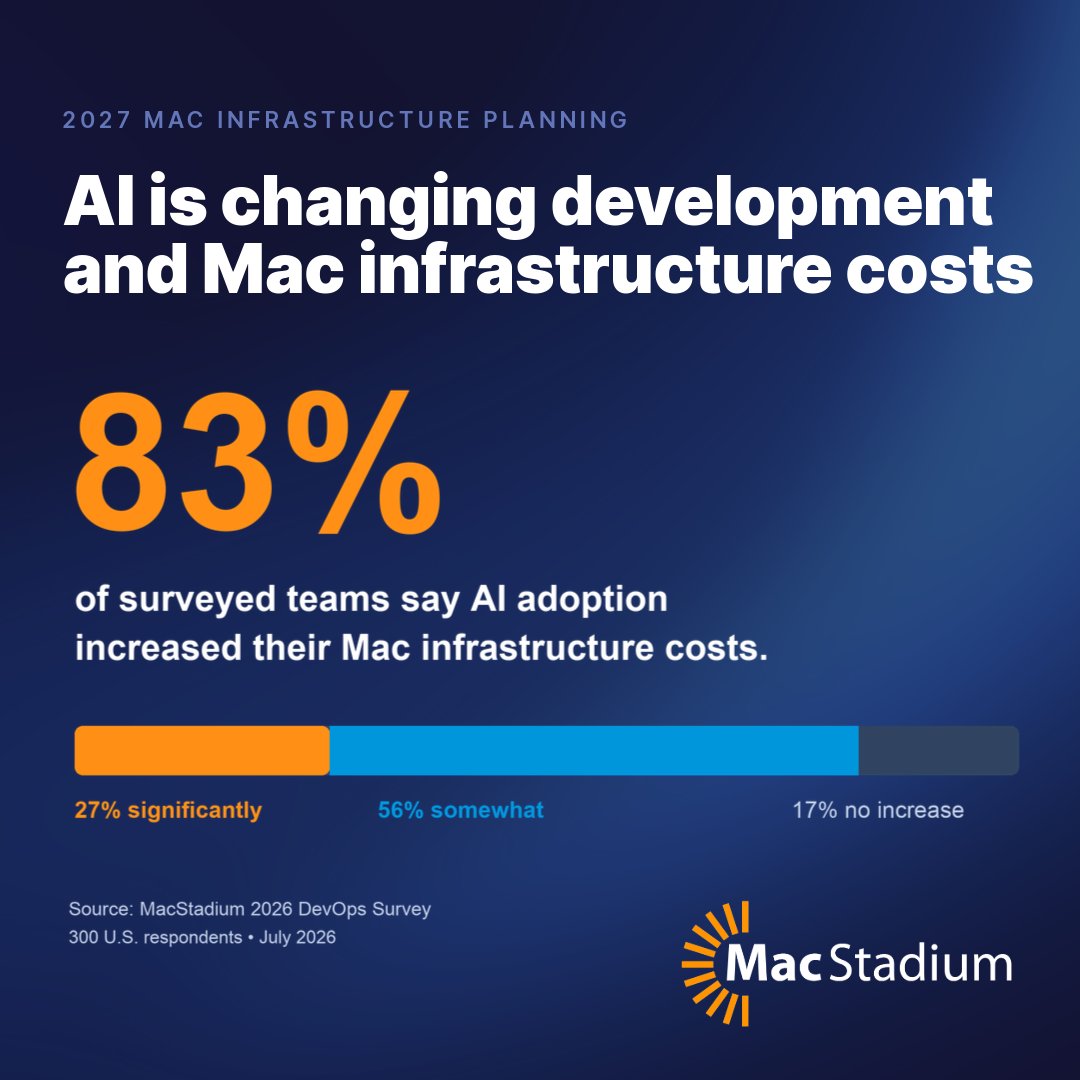
We asked engineering teams about:
→ CI infrastructure challenges
→ hardware & capacity
��� time lost to Mac CI issues
→ what's changing as AI adoption grows
See the results: https://t.co/cBbdHfVpD2
Your Macs can do more for mobile testing. Orka 4.0 brings Android emulators to the same Apple silicon Macs that host your macOS VMs. One platform for more of your iOS and Android testing.
https://t.co/QaA3NXDMnE
The newest Mac mini isn’t the fastest Xcode build box.
From our benchmarks, M6 (12-core) vs M5 Pro (18-core):
Single-core, Geekbench 6: M6 +9%
Multi-core: M5 Pro +35%
Xcode build, iOS project with 76 CocoaPods: M5 Pro +29%
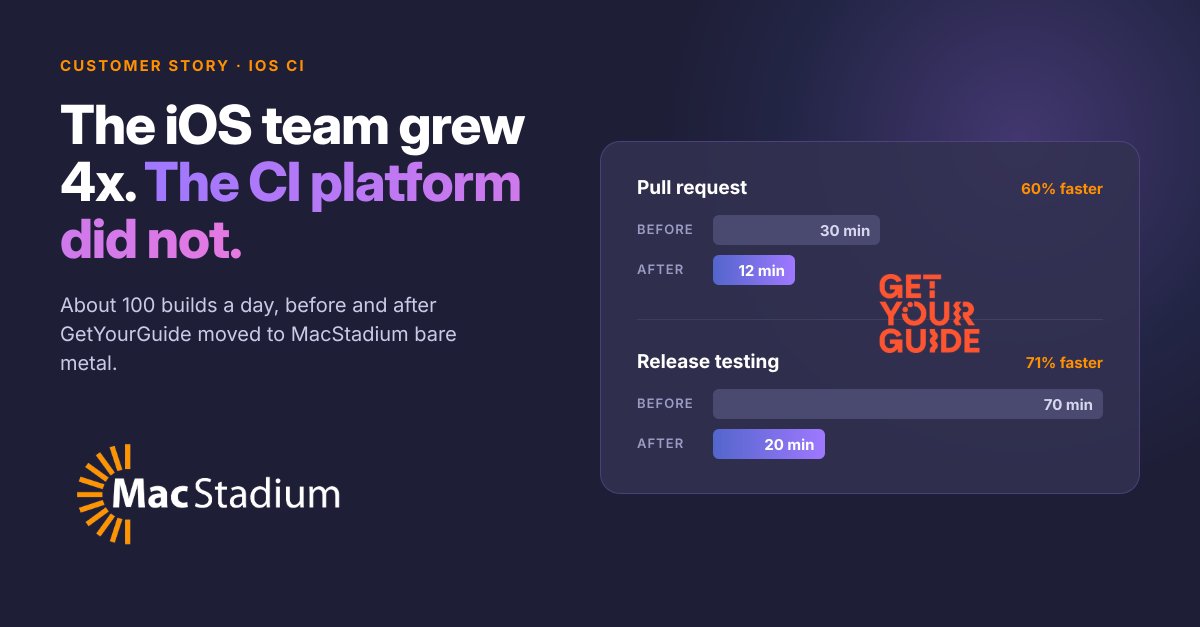
GetYourGuide's iOS team grew 4x.
~100 builds/day
PRs averaging 30 min
Release tests at 70 min
On MacStadium: PRs at 12 min, release tests at 20.
Adding engineers to a queue-bound pipeline just makes the queue longer. 🔗 https://t.co/DKlcFvxv3Y
Your build machine remembers too much.
Old dependencies. Config changes. Leftover packages. That “temporary” fix from three months ago.
Ephemeral macOS VMs change the model:
Create → build → destroy → repeat.
Every build starts clean.
Mac is no longer a niche platform within the enterprise. @MacStadium + @Presidio are partnering to help enterprises deploy, scale, and manage Mac infrastructure. #MacOps#Apple
That’s pretty cool. It’s also a good reason to check whether your testing covers the actions your app exposes to Siri.
Apple’s pitch for these devices is hands-free, so that’s the path a lot of people will take.
Apple dropped HomeView today: a 7" shared screen for the kitchen counter that knows who’s standing in front of it, with the new Siri AI built in.
What caught our attention is what Siri AI can do with your iPhone app.
Siri AI on HomeView and the new Apple TV 4K (HomePod mini 2 later) can take actions inside iPhone apps: add to a grocery list, pull a recipe from an email, play a song a friend texted.
Your app could get used from someone’s kitchen, by voice, on a shared screen.
That’s pretty cool. It’s also a good reason to check whether your testing covers the actions your app exposes to Siri.
Apple’s pitch for these devices is hands-free, so that’s the path a lot of people will take.
New Macs = faster CI jobs.
But faster hardware doesn't fix:
→ idle capacity
→ configuration drift
→ dirty build environments
→ host-by-host maintenance
→ workloads tied to individual Macs
A hardware refresh is a good time to rethink the infrastructure layer, too.
https://t.co/m3rAYOmi2d
Your next macOS upgrade shouldn’t compete with your next release.
MacStadium’s Orka lets teams run old and new environments side by side on the same fleet. Start with pre-built macOS and Xcode images from OrkaHub.
https://t.co/kqq9EFt0aE