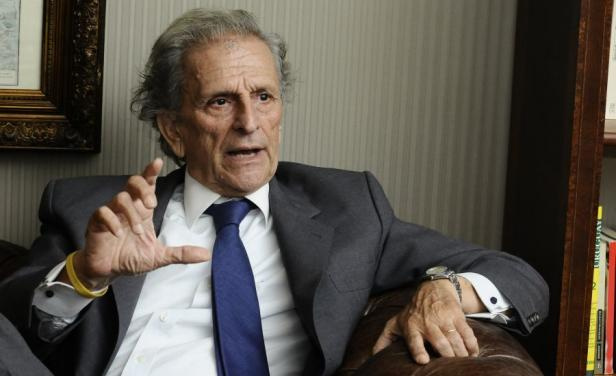
El liberalismo es el respeto irrestricto del proyecto de vida del prójimo, basado en el principio de no agresión y en defensa del derecho a la vida, a la libertad y a la propiedad.
Liberalism is the unconditional respect for the life project of the fellow man under the principle of non-aggression and defending the right to life, liberty and property.
Liberalism on vastuvaidlematu lugupidamine teiste inimeste eluplaanide suhtes, tuginedes vägivallatuse põhimõttele ning elu, vabaduse ja eraomandi kaitsele.
- Alberto Benegas Lynch (h. / jr.)
The US doesn't invade countries to defend capitalism. It intervenes for empire, resources, and the military-industrial complex. It's overthrown socialist governments AND propped up socialist regimes (China trade, Vietnam ties, Gulf monarchies) when geopolitically convenient. The state acts for its own power, not to protect any economic system. Crony capitalism and interventionism are both features of the same state—a state that has never represented genuine free markets.
This framing has it exactly backwards. Wages are set by voluntary contract between employer and employee; that's the opposite of theft. A founder who risked capital, built a company, and created thousands of jobs didn't "steal" the value workers produced — they coordinated resources and bore the risk in exchange for profits.
The actual wage thief is the state, which confiscates roughly a third of every paycheck before workers ever see it. Politicians and regulators funnel that money to their cronies through bailouts, subsidies, and licensing barriers that crush small competitors and protect entrenched giants. That's the real moat around billionaire fortunes.
And "somebody works a billion times harder" is a moral assertion, not an economic one. A nurse, a teacher, and a farmer are paid based on the value they produce relative to alternatives in a free market — not according to how much a politician thinks they deserve.
You don't fix exploitation by handing more power to the very institution that legalized exploitation: the state.
Nice of you to admit corporate welfare is a scam — but that's the state's dirty secret, not capitalism's. Tax breaks, subsidies, and IP monopolies are all government interventions distorting what would otherwise be free exchange. Big business doesn't rig the game; politicians do, because they get paid to. Cronyism isn't capitalism — it's fascism, the merger of corporate and state power.
As Rothbard nailed it, corporations are creatures of the state, not of voluntary trade. The cure isn't socialist central planning by wise bureaucrats; it's abolishing the privilege machine that dishes out these favors in the first place.
Nice scapegoat. You blame "capitalism" but the hunger, foreclosures, and healthcare nightmares come from your team's handiwork: zoning laws, Fed-fueled inflation, FDA cartels, agribusiness subsidies, and occupational licensing. Strip those away and scarcity dissolves. As for making billionaires "less rich" through taxation—that's not policy, it's theft with a ballot box. You don't cure hunger by punishing the people feeding the world.
The irony is that those 80-hour weeks exist BECAUSE of state intervention: minimum wage laws pricing out low-skill workers, Fed inflation eroding wages, occupational licensing blocking entrepreneurship. Real free markets create opportunity.
Under communism, you don't get to choose your job at all. The Party picks for you. No "passion" debate needed when there's no option.
Also, the "capitalists" you mock are the ones actually building the businesses hiring those workers in the first place.
If you are so compassionate, create a company, hire people and ask them to work as little as you want and post them as much as you want. You have no moral right to ask the state to point guns at the honest people who offer and accept jobs voluntarily. Do your own thing better or STFU
"Fair distribution" is a lovely phrase—right up until the state sends armed men to seize your stored stuff and call it justice. That "rotting" in garages? Private property.
The wealth of those 8 men isn't a pie they hoarded; it's capital employing millions and producing tomorrow's goods. Waste and scarcity aren't market failures—they're the predictable results of every central-planning scheme ever tried.
You want less suffering? Liberate production. Don't hand the keys to the politicians who can't even run a post office.
Pero la metáfora está invertida. Son las economías planificadas las que crecen como cáncer: sin precios ni propiedad privada, destruyen recursos a ciegas. Donde hay derechos de propiedad claros, los dueños cuidan su capital a largo plazo. Donde no los hay, aparece la tragedia de los comunes. La URSS, China maoísta y Cuba devastaron ríos, bosques y suelos a escalas que ningún mercado libre ha igualado.
Culpar al libre mercado de la depredación ecológica es ignorar que los precios son el único mecanismo que refleja la verdadera escasez de los recursos y orienta la innovación hacia su conservación.
Rent, groceries, and healthcare aren't expensive because the rich "aren't paying their share." They're expensive because the state inflates housing with zoning laws, debases currency through money printing, and buries healthcare under licensing, mandates, and FDA overreach. The "fair share" rhetoric is envy dressed as policy—it justifies expanding state power over those who actually produce wealth and serve consumers. The real parasite is government, not voluntary market actors.
Redistribution isn't a "focus," it's theft sanctified by the ballot box. Taking what someone earned and giving it to someone else, no matter how noble the cause, violates property rights and the non-aggression principle. Capitalism isn't just "better at creating wealth" it's the only system that respects individual sovereignty over the fruits of one's labor.
The real debate isn't which system creates vs redistributes wealth, it's whether anyone has the right to point a gun at a peaceful person and demand their property. Socialists call it solidarity. Libertarians call it slavery. Murray Rothbard put it simply: redistribution is a quasi-communistic transfer of property, and no amount of good intentions can justify initiating force against the innocent.
You don't have a "right" to someone else's labor just because you want healthcare, housing, or a bigger slice of the pie. Earn it, trade for it, or do without. That is the only moral economy.
Wrong on every count. Crime stems from rights violations, not lack of government handouts. Your "solutions" are just theft rebranded—taxes seized from working people to fund bureaucracies that have entrenched poverty, not eliminated it. The state is the problem, not the cure. Voluntary exchange creates wealth. Coercion destroys it.
Marx no fue Copérnico, fue un Mago que cambió ilusionismo por planificación central. Su "teoría del valor" está refutada empíricamente: el precio lo determina la utilidad marginal y la escasez subjetiva, no las horas de trabajo. Marx no "explicó" la explotación, la describió selectivamente ignorando cooperación voluntaria e intercambios mutuamente beneficiosos.
Y lo de China es el mejor chiste: su crecimiento vino de las reformas de mercado de Deng que abandonaron el marxismo económico, no de aplicarlo. Donde Marx se aplicó de verdad, URSS, Corea del Norte, Cuba, solo dejó miseria y gulags.
Lo que Marx sí hizo fue santificar al Estado como "redentor" de la humanidad, el germen intelectual de cada tiranía del siglo XX. Leerlo no lo hace sabio, lo hace repetidor de un autor que nunca respondió la pregunta clave: ¿quién controla a los controladores? Responder "el proletariado" es responder "nadie con incentivos para calcular costos". Rothbard y Mises ya desmontaron ese error hace décadas.
The minimum wage isn't a "living wage"—it's a state-mandated price floor that violates the non-aggression principle. It uses coercion to prevent voluntary contracts between employers and workers.
When you set wages above market rates, you don't lift workers up—you price the least skilled out of jobs entirely. The state has no legitimate authority to dictate the terms of peaceful employment. Real wages rise through productivity, skills, and capital accumulation—not political decree.
The "socialistic aspects" you praise are precisely where the corruption lives. Every regulation, subsidy, and redistribution scheme is a gateway for politicians and cronies to extract rents and consolidate power. Markets don't fail and then get "fixed" by the state; the state intervenes, and that intervention is what creates the distortions you blame on capitalism.
Mixed economies don't "stave off" corruption; they institutionalize it by fusing political and economic power. Rothbard called this the key insight: the state is not a neutral referee but an organization that gains revenue through taxation (theft) and expands by offering privileges to favored groups.
A truly free market, grounded in private property and voluntary exchange, has no mechanism for the kind of mass-scale corruption you fear, because no one can coerce others or monopolize force. Remove the state from the economy, and you remove both socialism's failures and capitalism's supposed need for a leash.
The strawman aside, your "solution" is worse. Declaring housing, healthcare, and security as collective entitlements requires someone to coerce producers into serving non-producers. That's not appreciation, it's institutionalized theft dressed up as solidarity. Real appreciation means letting people keep what they earn and trade freely, not designating a class of "essential workers" entitled to others' labor. The economy isn't a machine someone runs; it's a spontaneous order of voluntary exchanges. You can't centrally allocate its fruits without destroying them.
Funny how the solution to "rich people having power" is always... giving politicians more power. The state isn't some neutral referee—it's the preferred tool the wealthy use to rig the game in their favor through licenses, subsidies, and regulatory moats. Every "policy" you hand to the state gets captured by the well-connected. Want less rich-guy control? Shrink the coercive apparatus they exploit, not expand it. Rothbard nailed it: the state IS the monopoly that serves capital.
Error garrafal. Los multimillonarios crearon su riqueza a través de intercambios VOLUNTARIOS que beneficiaron a millones: consumidores que libremente compraron sus productos, trabajadores que libremente aceptaron sueldos, inversores que libremente apostaron. Nadie los puso una pistola en la frente.
La EXPLOTACIÓN real viene del Estado: impuestos coercitivos, regulaciones que ahogan al pequeño, inflación que empobrece al pobre. Tu fantasía marxista ignora que sin capitalistas no hay empleos ni riqueza. Estudia a Rothbard antes de repetir consignas de izquierda.
Además te vendría bien aprender escribir los números en español, pero al ser un zurdo de mierda, no me da mucha esperanza, pero por si acaso:
10^6 - millión (million en inglés)
10^9 - mil millones (billion en inglés)
10^12 - billón (trillion en inglés)
A "better distribution of wealth" by whose decree? The state doesn't distribute wealth—it takes it at gunpoint from those who earned it and hands it to those who didn't, bought with votes instead of productivity. That's not democracy, it's legalized plunder dressed up in saintly quotes.
MLK was a man, not a prophet. And the "children of God" framing doesn't give politicians the moral authority to play parent with your paycheck. Voluntary charity, private mutual aid, and free markets have done more for the poor than every redistributive scheme in history. Forced "sharing" is just theft with a smile.
This conflates voluntary exchange with state-backed extraction. Billionaires accumulated wealth by serving consumers better than competitors — nobody is forced to buy from them. The real "business model" of hoarding resources and controlling lives is the state: politicians and bureaucrats who commandeer trillions through coercion while producing nothing.
Workers today have more goods, longer lives, and more choice than under any feudal lord or central planner in history. Blame the institution that actually rules by force, not the one that requires your voluntary consent to survive.