The world has changed, and so has accountancy.
We look far beyond the bottom line, shaping businesses today, pioneers of a better tomorrow.
That's accountancy redefined.
Find out more: https://t.co/ZthOWDjzYU
True wisdom starts with knowing the limits of what we know.
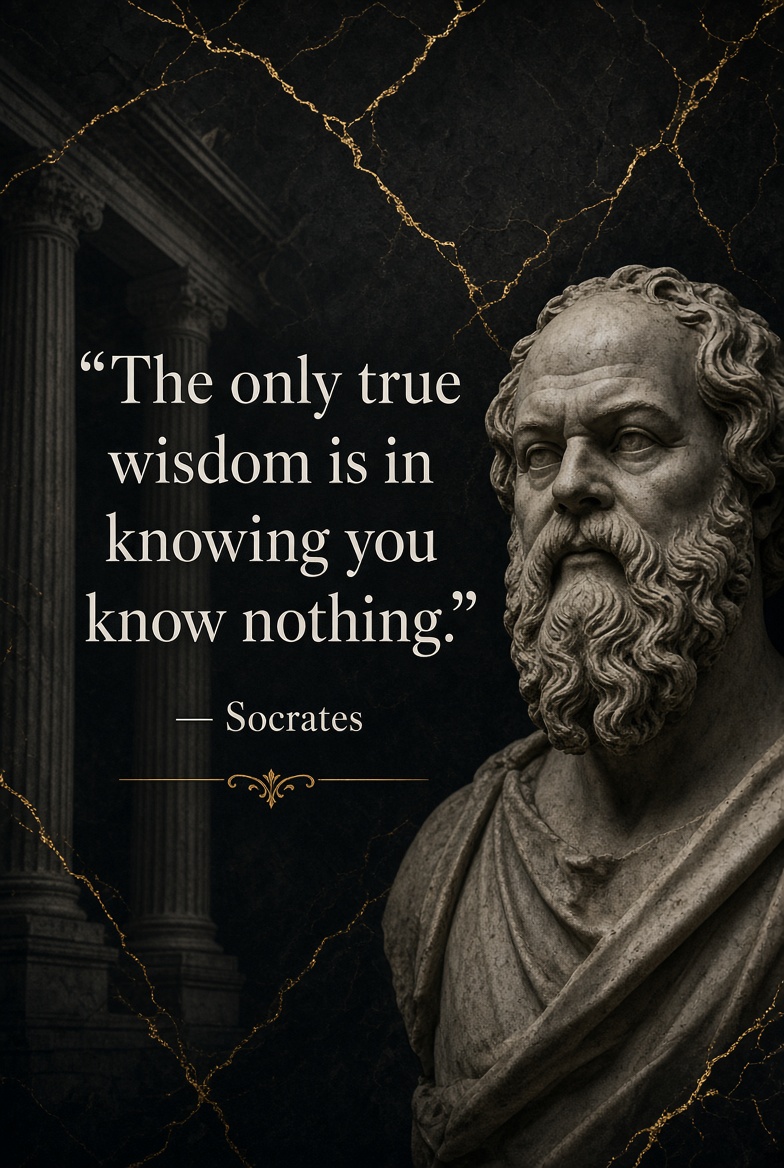
Socrates said:
“The only true wisdom is in knowing you know nothing.”
Critical thinking is not about winning arguments.
It’s about improving the quality of your own thinking.
Waste no more time arguing about what a good person should be. Be one.
— Marcus Aurelius
Critical thinking is a form of self-development.
It asks better questions than it gives easy answers.
Which of these questions do you need to ask yourself more often?
Nowadays, we have access to more information than ever. Critical thinking is still rare.
Algorithms feed us what we want to hear. We drown in noise and convenient “truths.”Critical thinking is a skill.
And as every skill it can be trained.
Here are 9 free courses worth taking:
7. Mindware: Critical Thinking for the Information Age – University of Michigan https://t.co/NQSEpuKBQF
8. The Science of Mind and Decision Making – University of Cambridge https://t.co/GUiGnKASv7
4. Logic and Critical Thinking – Duke University https://t.co/rIo6WOvYTB
5. Critical Thinking and Decision Science – University of Michigan https://t.co/mU9xIcp4dd
6. Critical Thinking Skills for Professionals – UC Davis https://t.co/HzqTklAqXX
Structure and Function of Argument – Harvard https://t.co/BCHDyLisPD
2. Tech Ethics: Critical Thinking in the Age of Apps, Algorithms and AI – Harvard https://t.co/NN62ZYeetE
3. Philosophy and Critical Thinking – University of Queensland https://t.co/AN0gCGqxiX
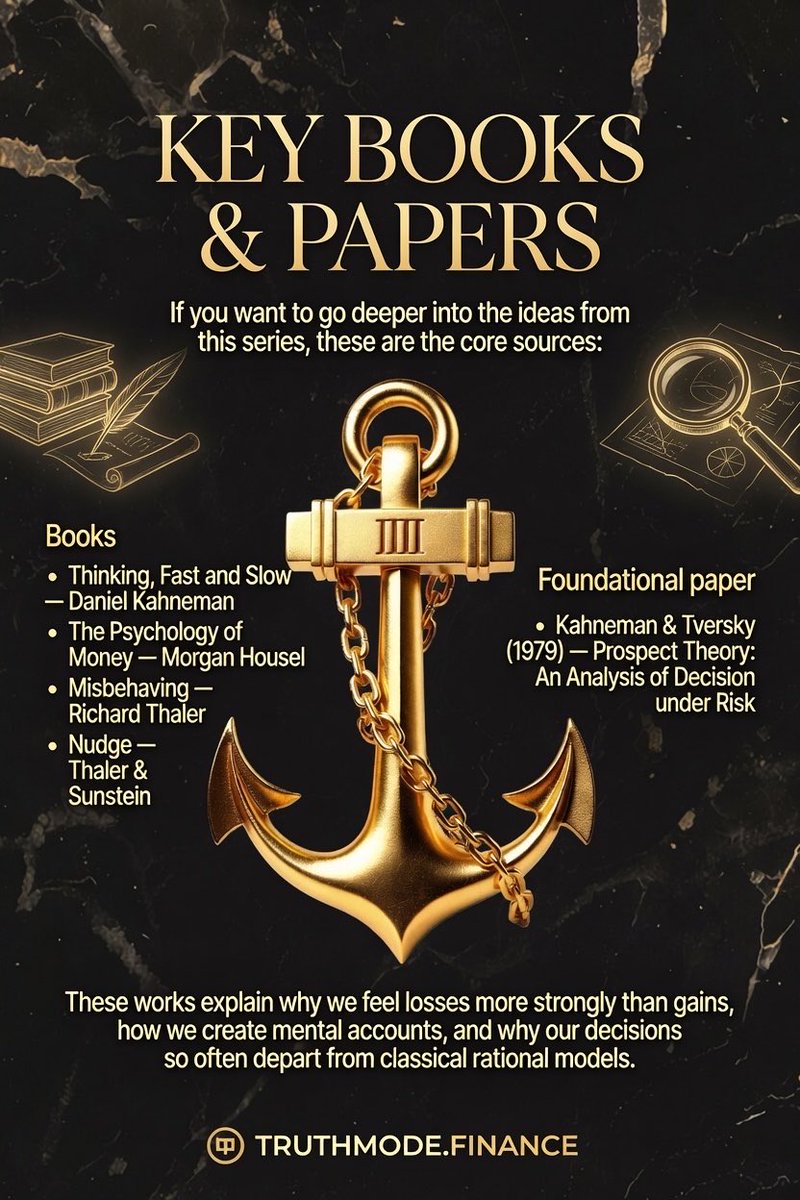
After going through loss aversion, prospect theory, mental accounting and the rest, here are the sources that keep coming up:
• Thinking, Fast and Slow — Daniel Kahneman
(the one that makes you realise your brain has been freelancing without permission)
• The Psychology of Money — Morgan Housel
(short stories that quietly expose how weird we are with money)
• Misbehaving — Richard Thaler
(how people refuse to behave like the rational creatures economists hoped for)
• Nudge — Thaler & Sunstein
(because apparently we need help not sabotaging ourselves)
And the original 1979 paper by Kahneman & Tversky —
the one that started this whole “maybe humans aren’t fully rational” conversation.
Still working my way through them.
Slowly. With coffee. And occasional denial. 🙂🔋💥
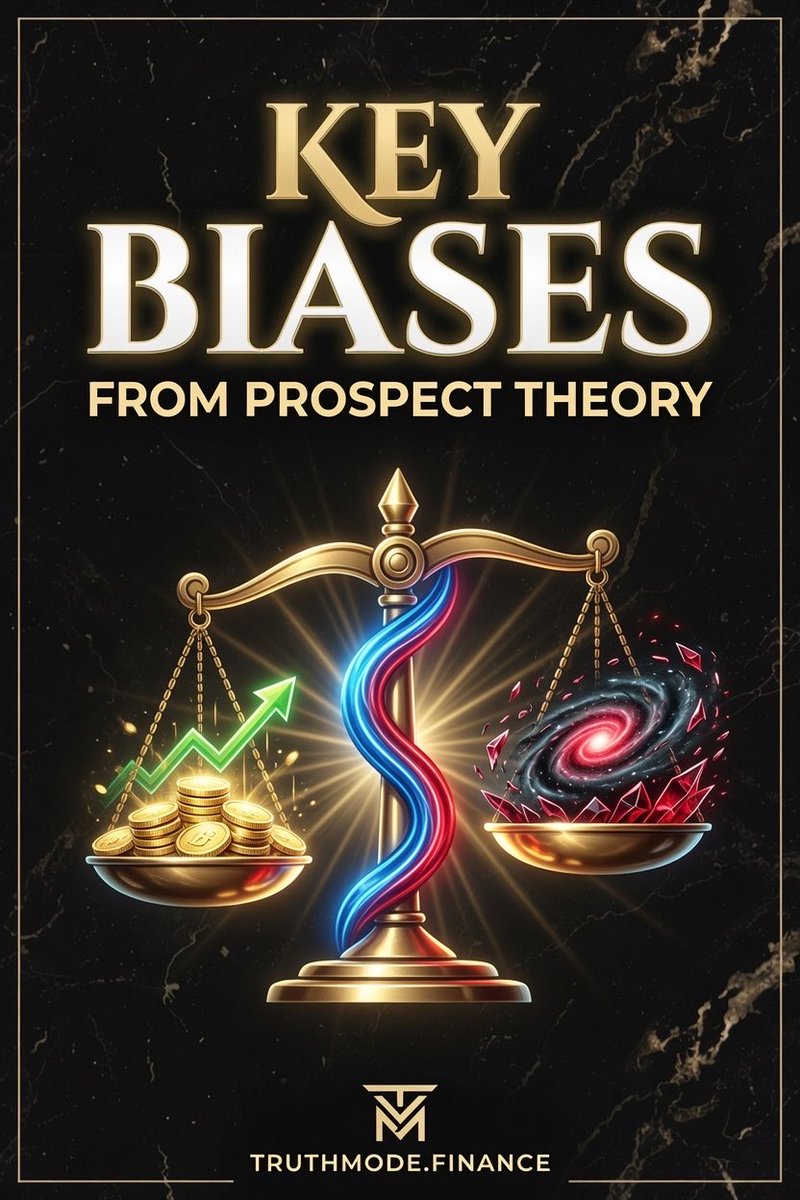
Key Biases from Prospect Theory
Prospect Theory helps explain several systematic biases in decision-making:
Endowment Effect
We value things more highly simply because we own them.
Example: demanding more money to sell something than we would pay to buy it.
Certainty Effect
We overweight outcomes that feel certain compared to those that are only probable.
Example: preferring a sure £900 over a 90% chance of £1,000.
Framing Effect
The way a choice is presented changes the decision, even when the numbers are the same.
Example: reacting differently to “90% fat-free” vs “contains 10% fat”.
Disposition Effect
The tendency to sell winners too early and hold losers too long.
Example: locking in a 20% gain quickly while holding a 20% loss in hope of recovery.
All of these biases stem from the same core mechanism:
we evaluate outcomes relative to a reference point, and losses weigh more heavily than gains.
Don’t forget to take care of yourself sometimes.
Growth doesn’t only come from pushing harder.
Often it comes from removing what gets in the way — including exhaustion.
Rest is not the opposite of progress.
It’s part of it.