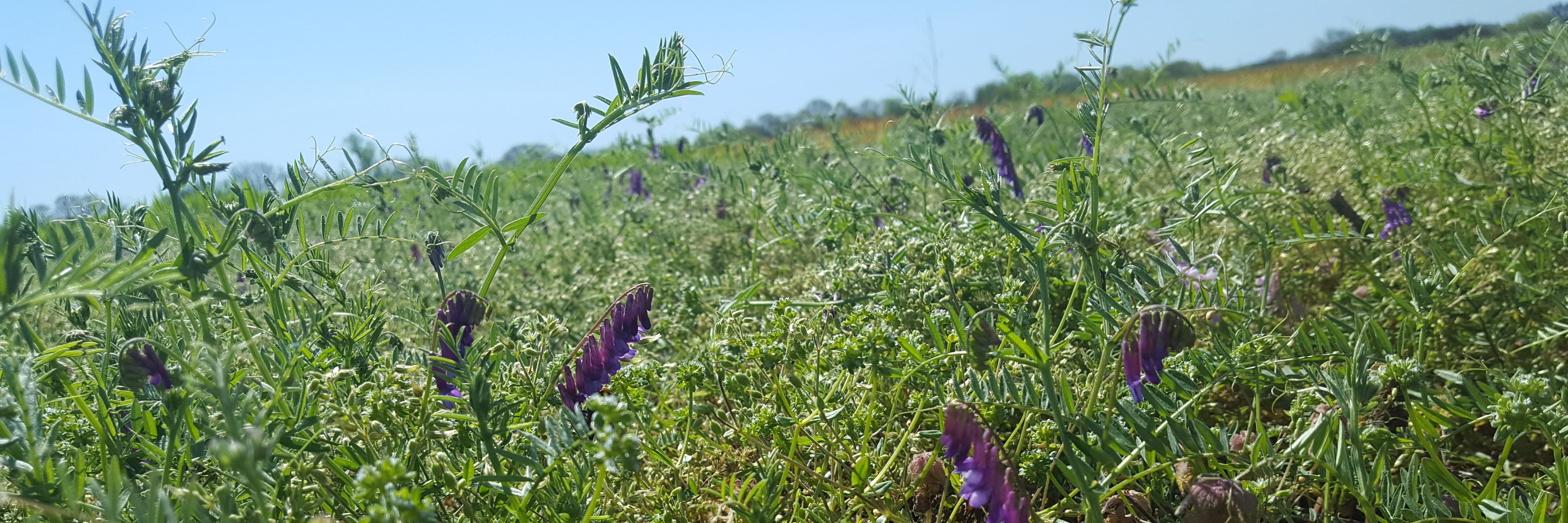
Can’t decide which #CoverCrop to use? @ArkAgResearch has you covered. Results from a recent study can help you select species that retain nutrients and ensure that nitrogen is released for the next batch of crops. https://t.co/TkRLciE8kx
Dr. Tatiana Erukhimova shared her passion for physics and for her students today on @CBSMornings!
As the @TAMUArtSci professor says, "You don't need to be a musician to go to a music festival, so why would you need to be a scientist to celebrate science?" @TAMUPhysAstr
Panda was excited to get her first Christmas card. Her she’s reading it. She had a little problem holding it so we assisted her. Panda wants to wish @RiceFarming a Merry Christmas and Happy New Year also and a big Thank You. @AgWriterArk
Nitrogen (N) uptake and storage by cover crops can mitigate N loss caused by runoff or leaching. The amount of N accumulation by cover crops largely depends on biomass production, which varies by species. Read more here: https://t.co/jJfhJWzPxs
The annual Aggie Corn Maze hosted by @TAMUagronomy returns this weekend! 🌽🎃
The corn maze is open Oct. 24-25 and benefits @The12thCanTAMU, Texas A&M’s student-run food pantry.
https://t.co/MOZIqELdIG
New videos share #SoilHealth info from two #cotton field days. Compare tillage impact, learn about #CoverCrop seeding rates, and more.
https://t.co/XeI3GBDnQD
Soil Health Institute is thrilled to announce that we’ve been selected for funding through @ARPAE’s SMARTFARM program to develop the DeepC System – a carbon sequestration measurement and monitoring tool. https://t.co/aysq8SvrX6
Learning from Dr. Paul Tracy, @Soil Health Institute scientist, how historical metadata from selected #NAPESHM experimental sites were used to simulate #GHG Emission estimates, working with leaders of the #COMETfarm Model. #SoilHealth2020