On Monday, all roads lead to the Main Building, @Makerere, as we commemorate the 16 Days of Activism Against Gender-Based Violence.
Join our panel of experts, moderated by @RhodaWanyenze, as we engage in meaningful conversations, share insights and explore solutions to end gender-based violence.
Together, let’s speak up, take action and build a safer, more equitable society for all.
#16DaysOfActivism #EndGBV @EuzobiaB@MakerereGMD
How can leaders turn public statements into real action?
Join our high-level technical panel to explore what true accountability for GBV prevention and response looks like in higher education institutions.
#Makerere16DOAagainstGBV#16Days
Study draws lessons from Uganda’s rapid containment of the 2025 Sudan virus outbreak
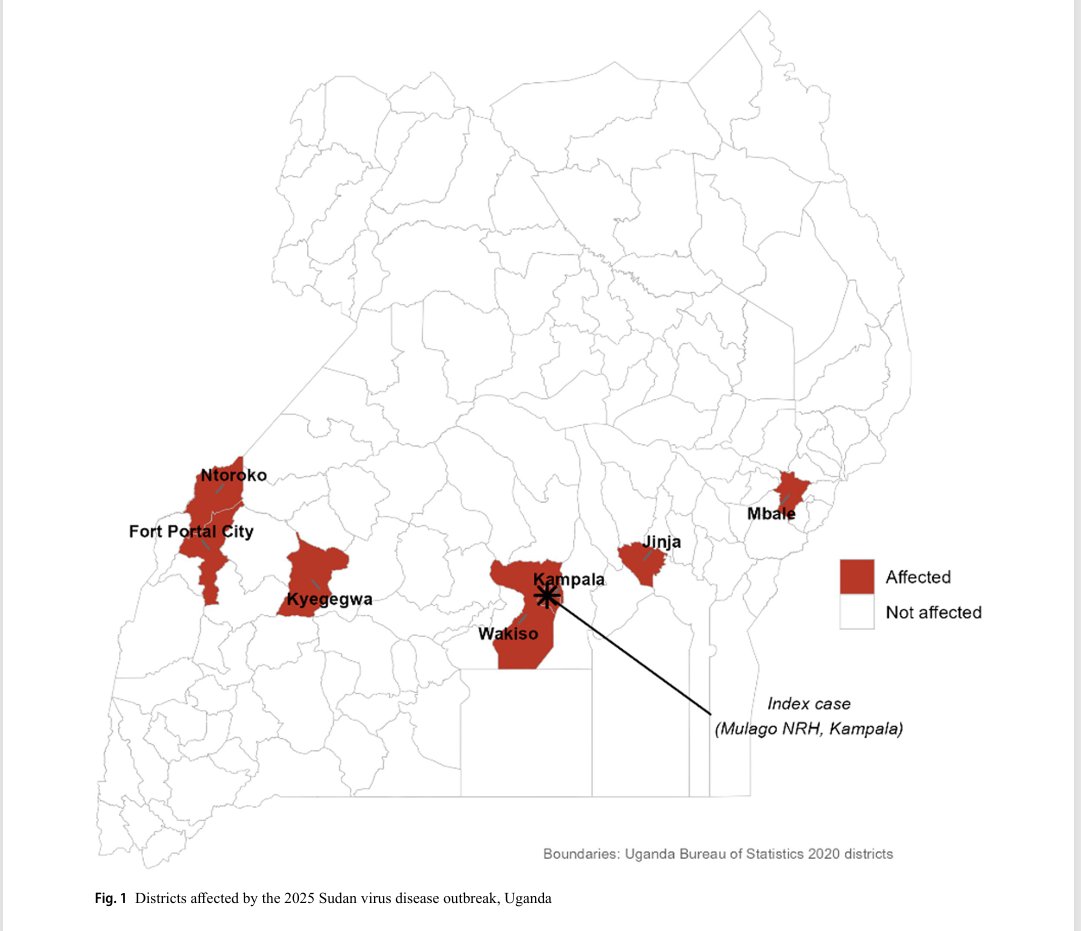
A study of Uganda’s 2025 Sudan virus disease (SVD) response highlights how existing laboratories, trained teams and preparedness investments supported containment of an outbreak first detected in Kampala. The outbreak was declared over after 87 days, with 14 cases, even though the response mobilised only 29% of its estimated funding needs (US$16 million of US$56 million). No vaccine or therapeutic was licensed specifically for SVD during the outbreak.
Published in the Journal of Epidemiology and Global Health in August 2026, the analysis involved @MinofHealthUG, @WHO and @Makerere University School of Public Health researchers, including Trasias Mukama, @rawleng, @stevenkabwama and @RhodaWanyenze. It retrospectively reviewed response plans, situation reports, laboratory and surveillance summaries and after-action reviews, using the 2022 outbreak, which caused 164 cases and 77 deaths, as a historical comparison.
The cases comprised 12 confirmed and two probable infections across seven districts. Both deaths among confirmed cases occurred in people who did not receive Ebola Treatment Unit care; all confirmed patients admitted to these units survived. Testing of postmortem samples collected under routine mortality surveillance identified the first detected case and one other fatal infection.
The response combined institutional quarantine, follow-up of 491 contacts, mobile laboratories, community engagement, digital partner coordination and rapid activation of vaccine and therapeutic trials. Funding gaps delayed sample transport and responder payments and limited the scale-up of mortality surveillance.
The authors caution that individual interventions’ effects could not be isolated and that Uganda’s experience may not transfer directly to less-prepared settings.
They recommend routine mortality surveillance, pre-positioned quarantine facilities with clear operating procedures, research-ready teams and protocols, dedicated domestic emergency funding and permanent isolation infrastructure.
Read the full paper:
https://t.co/yguDMMwQXu
#SudanVirusDisease #OutbreakPreparedness #OutbreakResponse #HealthSecurity #MakSPH
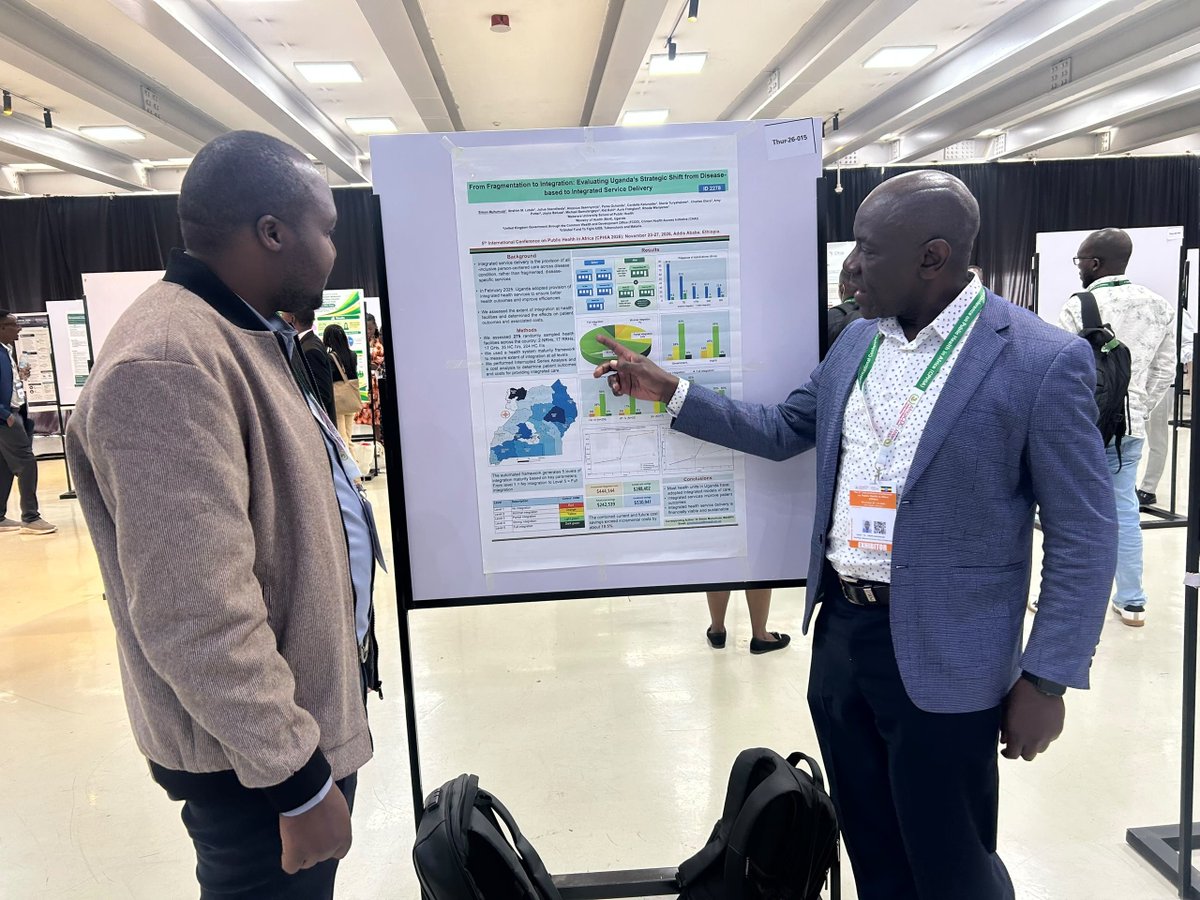
How is Uganda progressing in its shift towards integrated healthcare?
At #CPHIA2026, Douglas Balafu presented a research poster examining the country’s move from disease specific services to integrated service delivery.
The study assesses how far health facilities have embraced this approach, what it means for patient outcomes and whether it offers a sustainable way of delivering care.
Research that helps us understand how our health systems are changing and where improvements are still needed.
#MakSPH #PublicHealth
It’s been a valuable week for Makerere University School of Public Health at #CPHIA2026 in Addis Ababa.
Our faculty, researchers and students have joined colleagues from across the continent to share experiences, present research, build connections and contribute to conversations shaping Africa’s public health future.
We continue to learn, collaborate and strengthen African led research and health systems.
MakSPH Joins Global Partners to Advance Child Passenger Safety
Children travelling in vehicles need protection suited to their age and size. @Makerere University School of Public Health is working to strengthen that protection through its Strengthening Child Restraint Systems in Uganda (CRS) project, which supports stronger laws, regulations and standards and promotes public awareness and use of child restraints, including child car seats.
Project lead Dr. @e10star represented the School at the 2026 @BloombergDotOrg Initiative for Global Road Safety Partner Meeting in Addis Ababa, Ethiopia, linking the project's Uganda-focused work to the wider global road safety partnership.
Held from 10 to 12 November 2026, the meeting covered road safety policy, vehicle safety standards, media advocacy, coordination between national and city-level efforts, and country priorities towards 2030, all directly relevant to the project's work.
The CRS project works with the Ministry of Works and Transport, the Uganda National Bureau of Standards and other partners to review and strengthen child restraint laws, regulations and standards. With support from the Global Road Safety Partnership and the Global Health Advocacy Incubator, it also promotes public understanding and use of child restraints and strengthens coordination among road safety advocates.
Together, these efforts aim to reduce preventable injuries and deaths among child passengers.
#ChildPassengerSafety #ChildRestraintSystems #RoadSafety #SaferRoadsUganda #MakSPH
As #CPHIA2026 continues in Ethiopia, the Dean of @MakSPH, Prof. @RhodaWanyenze, shares insights on what epidemic preparedness for Africa should look like.
She underscores the importance of strong health systems, sustained investment in research, effective regional collaboration and the capacity to detect, respond to and contain disease outbreaks before they escalate.
Drawing lessons from past epidemics, including the Bundibugyo Ebola outbreak, Prof. Wanyenze highlights the need for Africa to move beyond reactive responses and build resilient, well-prepared health systems capable of protecting communities and safeguarding the continent’s health security.
Africa must prepare for the next outbreak long before it happens.
At #CPHIA2026, Prof. @RhodaWanyenze shared findings from a review of Ebola preparedness and response across three African countries, highlighting progress, persistent gaps and the need to turn lessons into action
Africa must prepare for the next outbreak long before it happens.
At #CPHIA2026, Prof. @RhodaWanyenze shared findings from a review of Ebola preparedness and response across three African countries, highlighting progress, persistent gaps and the need to turn lessons into action
Webinar | Closing the Health Data Use Cycle
@Makerere University School of Public Health, in partnership with @GlobalFund, invites you to a webinar on “Closing the Health Data Use Cycle: From Data Generation to Decisions, Action and Learning.”
Drawing on experiences from Zimbabwe, Rwanda, Ethiopia and Tanzania, the session will explore how health data shapes policy, resource allocation and service delivery, and what enables or prevents its use.
The webinar is relevant to policymakers, researchers, monitoring and evaluation specialists, health information professionals, programme managers and development partners. Participants will identify lessons for strengthening data use in their institutions and feeding implementation experience back into planning and decision-making.
Date: Thursday, 3 December 2026
Time: 2:00–4:00 p.m. EAT | 12:00–2:00 p.m. CET
Platform: Zoom
Register to participate:
https://t.co/zkYrkBrww6
#HealthDataUse #EvidenceInformedDecisionMaking #HealthSystems #MakSPH #GlobalFund
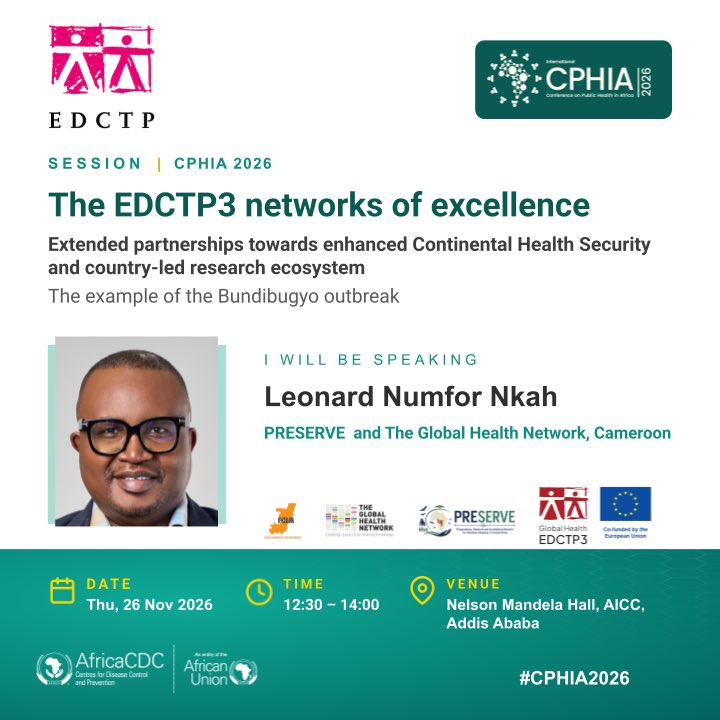
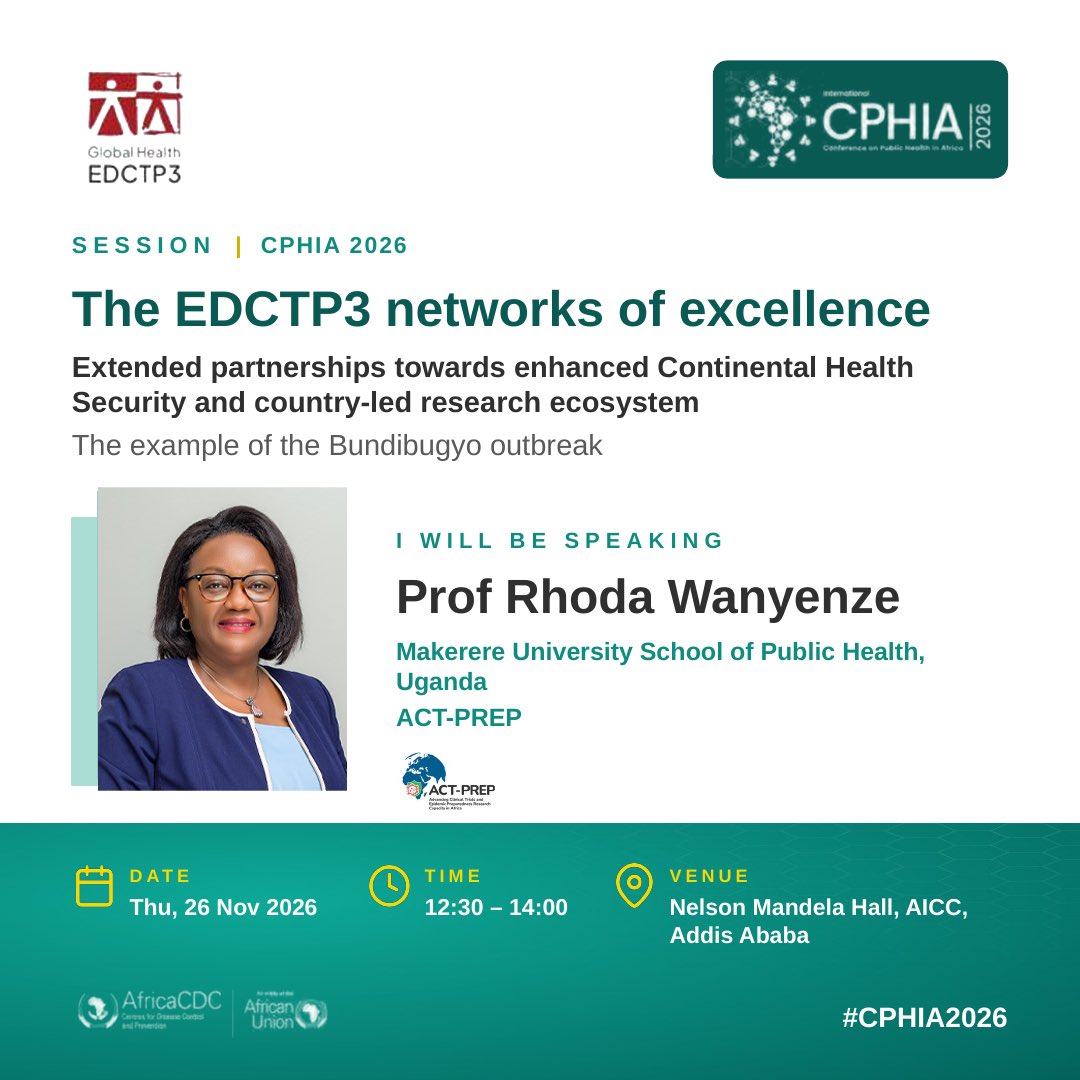
How can stronger research partnerships help Africa prepare for future epidemics?
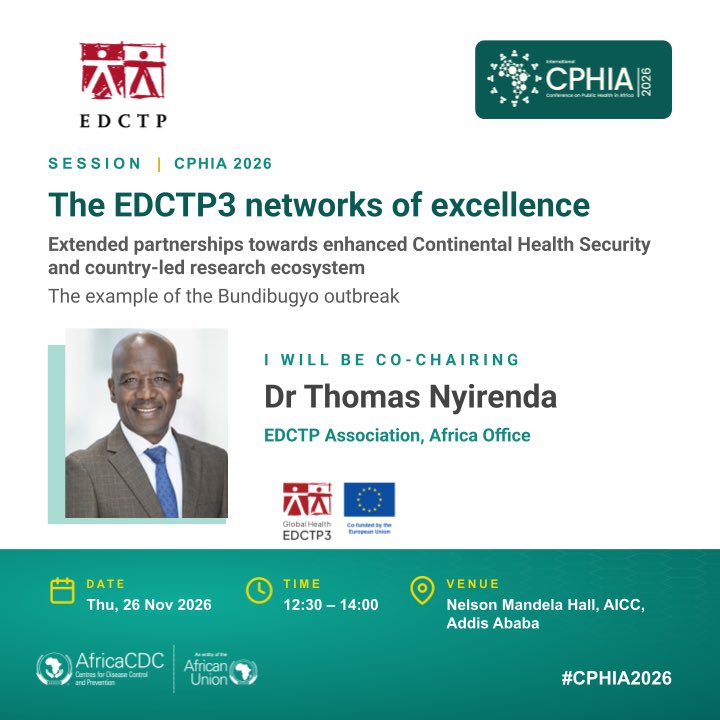
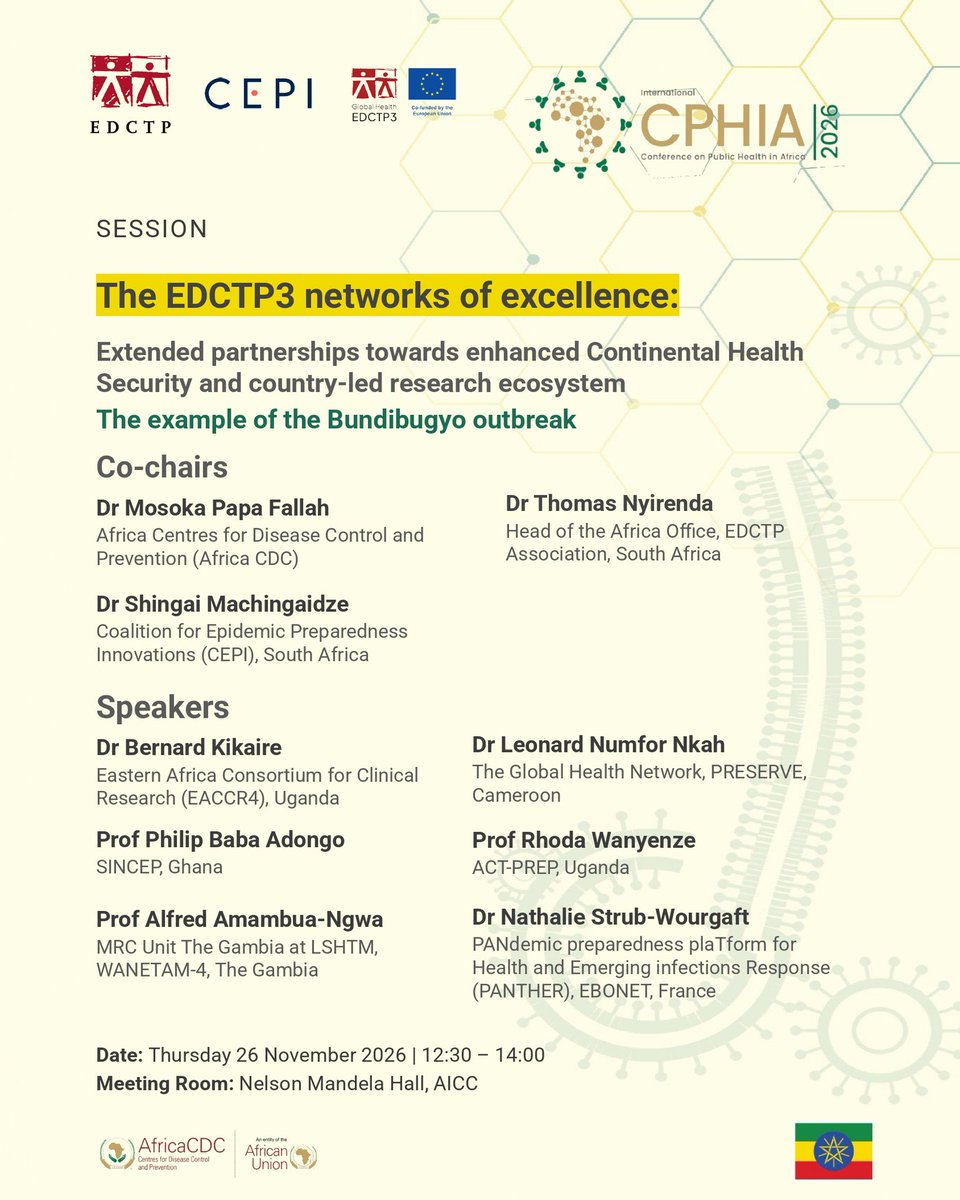
At #CPHIA2026, Prof. @RhodaWanyenze , our PI, joins a discussion on the @EDCTP3 Networks of Excellence, drawing lessons from the Bundibugyo Ebola outbreak.
#ACTPREP
How can research partnerships strengthen Africa’s health security?
At #CPHIA2026 in Ethiopia, our Dean, Prof. @RhodaWanyenze, joins public health and health systems experts to explore this question, drawing lessons from the Bundibugyo Ebola outbreak.
The discussion will highlight how collaborative research can build stronger, more resilient health systems across Africa.
#ACTPREP joins fellow @EDCTP3 Networks of Excellence at #CPHIA2026 to discuss how research partnerships can strengthen Africa’s health security, drawing lessons from the Bundibugyo Ebola outbreak.
Our PI, Prof. @RhodaWanyenze, will be part of the conversation.
Heartfelt congratulations @ProfNawangwe upon your appointment by H.E. the President as Chairperson of the National Council for Higher Education (NCHE).
This is a well-deserved recognition of your distinguished leadership, vast experience and unwavering commitment to the advancement of higher education in Uganda. Your appointment is a testament to the confidence placed in your ability to provide strategic leadership and guide the sector towards greater excellence, quality and relevance.
@MakSPH wishes you great success as you take on this important national responsibility. May your tenure be impactful and transformative for Uganda’s higher education sector.
@RhodaWanyenze@Makerere
Join us for the public PhD defence of, Ms. Biribawa Claire, scheduled to take place on December 3rd at 10am.
Thesis Title: Advancing the Quality and Effectiveness of Alcohol and Drug Treatment Services in Uganda
Date: 3rd December 2026
Time: 10am
Venue: MakSPH Auditorium, Makerere University
Join Online: https://t.co/3KNXMpLVxX
The Dean invites you to the public PhD defence of, Dr. Buwembo Denis, scheduled to take place on December 2nd at 9am.
Thesis Title: Perceptions, Measurement and Effectiveness of support on quality of Dementia self-care for older people in Wakiso District, Uganda
Date: 2nd December 2026
Time: 9 :00am,
Venue: College of CHS Boardroom
Join Online: https://t.co/l03L3KztVg
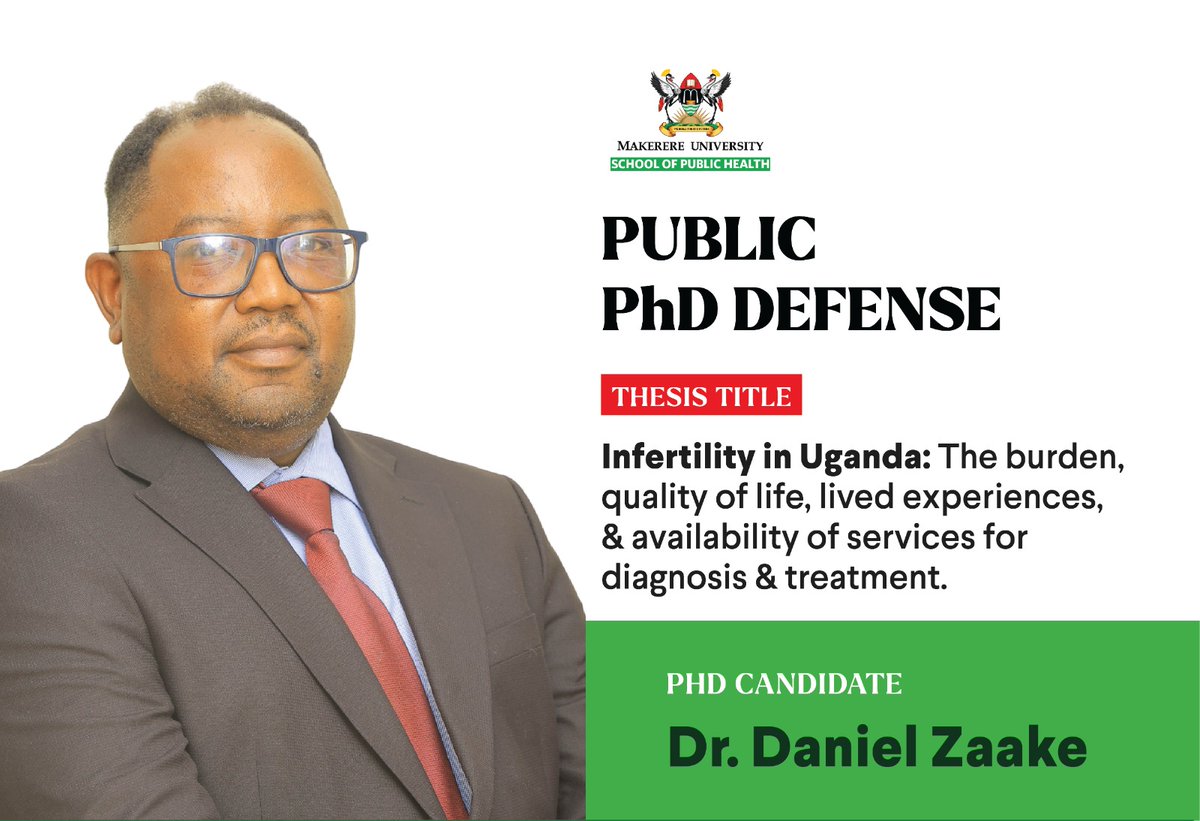
The Dean invites you to the public PhD defence of Dr. Daniel Zaake, scheduled to take place on Monday November 30, 2026 at 9am.
Thesis Title: Infertility in Uganda: The burden, quality of life, lived experiences, and availability of services for diagnosis and treatment.
Date: 30th November 2026
Time: 9 am
Venue: Dean's Conference room, School of Medicine, College of Health Sciences
Join Online: https://t.co/NH6QheobQY
@Makerere University School of Public Health (MakSPH) has today launched a 12-month project, funded by @CEPIvaccines to strengthen Uganda’s preparedness for Bundibugyo ebolavirus through mathematical modelling, bioinformatics and vaccine research.
Led by @AbelWalekhwa , the project aims to support vaccine planning, trial design, laboratory validation and Uganda’s preparedness for future filovirus threats. The project brings together seven institutions: MakSPH, @MinofHealthUG , @UVRIug , African Centre of Excellence in Bioinformatics and Data-Intensive Sciences, University of Cape Town, @UCBerkeley , and @Esp_Kin
First identified in Bundibugyo District in 2007, the virus caused another outbreak in 2012. According to research, unlike Zaire ebolavirus, there is currently no licensed vaccine or specific licensed countermeasure against it.
The project operates across three work packages. Ring vaccination modelling which uses a transmission model calibrated to Ugandan outbreak data to estimate vaccine dose needs, test trial feasibility, and guide study design for immunising contacts of confirmed cases and their contacts.
Training and capacity development aim at training nine Ugandan public health fellows in mathematical modelling, bioinformatics and data analytics through a residential programme with supervised project work.