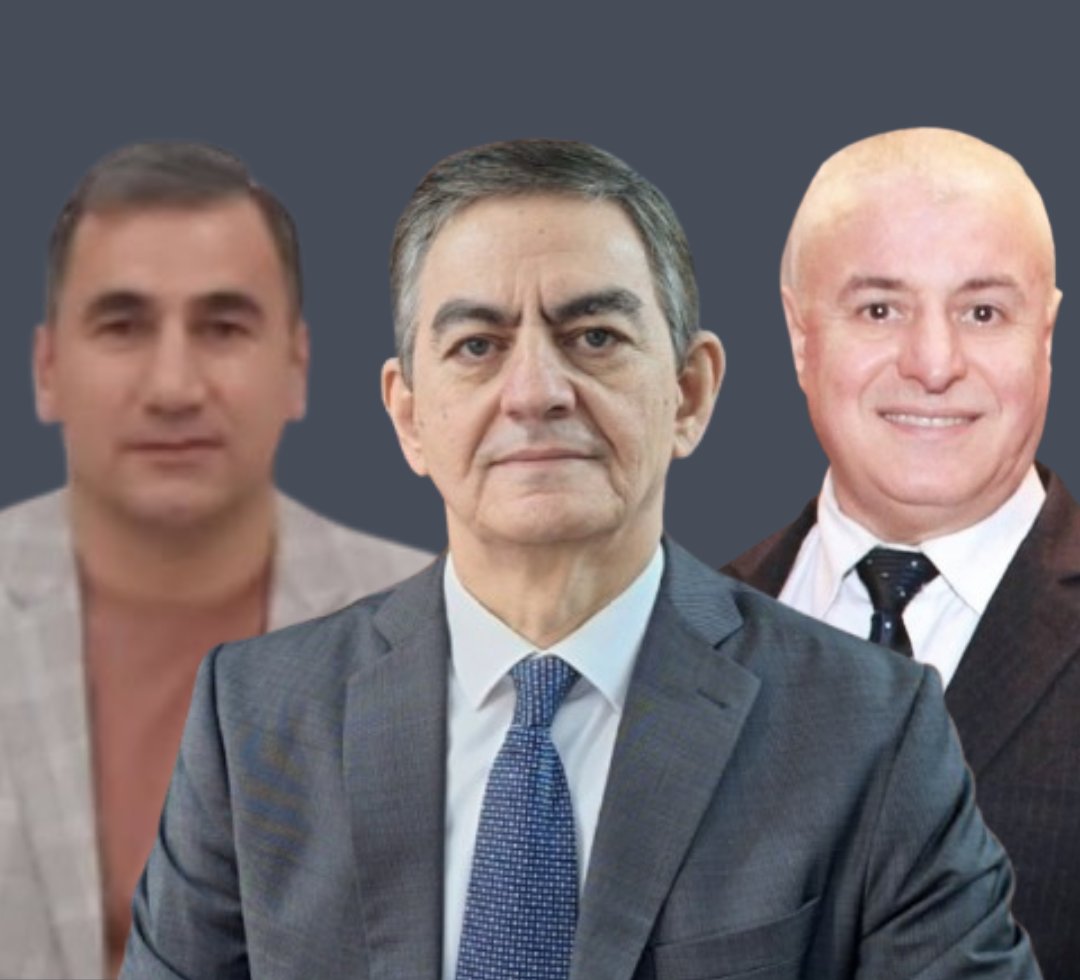
My security volunteer, Kenan Basgal, has been imprisoned on fabricated charges. He is a Karabakh veteran and one of those who fought for Azerbaijan’s independence. Yet today, those who hide behind slogans like ‘state interests,’ ‘service to the state,’ and ‘national interests’ while siphoning off national wealth through corruption care nothing about the fact that, while they were avoiding their duty, Kenan volunteered for the First Karabakh War and suffered life-altering injuries.
Those who quietly collect bribes under the shadow of the state flag feel no shame that the man they have framed—PFPA activist Kenan Basgal—was among the veterans who fought for our independence and one of the first to raise our national flag. For them, patriotism is merely a slogan to conceal their actions.
To the slanderers and case-fabricators, Kenan is a “criminal” precisely because he is a man of principle and conviction. Despite repeated threats of long-term imprisonment, he never abandoned his role in my public protection and remained by my side. Authoritarian regimes have always feared principled, steadfast individuals. That is why, after his arrest, the regime held Kenan in complete isolation for seven months—banning all family visits and phone calls. Only recently, after his trial began, has he been allowed to contact his family.
Yesterday, together with colleagues, we attended his court hearing. Kenan remains resolute, as always. Neither he nor we have any illusions about the outcome. The political order will be carried out. Yet even in such a courtroom, it will become clear that the charges against him are fabricated, that he never stabbed anyone, and that he does not even know the person he is accused of harming. The regime’s apparatus of repression and false accusations will once again be exposed.
The current wave of mass repression does not only test Kenan and others imprisoned on political orders—it tests all of us as a nation. Despite the growing number of politically motivated arrests, we must stand with the innocent and speak out against injustice. In these difficult days, we must collectively demand freedom for Kenan and for all political prisoners jailed on fabricated charges.
This is how human capital is destroyed in Azerbaijan.
Anar Mammadli — now facing his second imprisonment as a political prisoner — is a laureate of the prestigious Václav Havel Human Rights Prize.
As the architect of Azerbaijan’s domestic election-monitoring network, Mammadli has partnered with some of the world’s most respected institutions, including the OSCE Office for Democratic Institutions and Human Rights, the Council of Europe, the U.S. National Democratic Institute, and the International Foundation for Electoral Systems. He is one of the very few Azerbaijani experts with genuine international recognition.
A graduate of Syracuse University and a participant in multiple EU fellowship programs in Germany, the Czech Republic, and Belgium, Mammadli developed strong expertise in good governance and local self-government. He could have easily built a successful life and career as a highly qualified professional in any Western country.
Instead, he chose to remain in Azerbaijan, devoting his life to public education, strengthening local election observation, and defending human rights. And this is the price he is paying: Anar Mammadli has been imprisoned for the second time on fabricated charges.
Yesterday, together with Professor Jamil Hasanli, Chairman of the National Council, and colleagues from the PFPA, we attended Mr Mammadli’s latest court hearing. His spirits remain strong, and he does not regret his unwavering service to the people. Our society must fully grasp how principled, capable, and forward-thinking individuals are being destroyed in prisons through politically motivated repression.
As a nation, we must collectively and insistently demand freedom for Anar Mammadli and for all political prisoners.
Yes — the regime is openly blackmailing me by arresting innocent friends around me. I criticise their clumsy and ineffective policies with facts and reason; I demonstrate, with evidence, that they cannot govern the country and have driven it into a dead end. Unable to counter my arguments or engage in open debate, they instead fabricate charges against the honest and principled people beside me, hoping their imprisonment will silence me.
I draw international attention to the repression in our country, the election fraud, the plight of our political prisoners, and the way one-man rule is destroying Azerbaijan’s democratic institutions. Rather than learning from this or correcting their course, the authorities once again try to pressure me by arresting the loyal and courageous PFPA activists who drive me to events or shield me from the regime’s provocations — all in an effort to force my silence.
The imprisonment of my principled colleagues — who are guilty of nothing — and the arrest of any innocent citizen on fabricated charges deeply saddens me. But my friends and I know that silence or retreat is not an option. It will neither stop unlawful detentions nor ease repression. On the contrary, if the PFPA — today a bastion of resistance — were to abandon its struggle, it would plunge our country into even deeper darkness.
The vast majority of my colleagues in the PFPA, including those now jailed on false accusations, understand this clearly. As one united PFPA family, we have consciously embraced every risk in the pursuit of our people’s freedom from authoritarianism, repression, lawlessness, and poverty. We have chosen — knowingly and deliberately — the difficult but honourable path of fighting for democratic change.
Our resolve and determination are unshakeable. We believe Azerbaijan deserves a brighter future. We trust in our people’s sense of justice and in the day when the nation will stand together for freedom and fairness — when a democratic republic will be restored in our country for the third time. We demand freedom for every political prisoner unjustly detained on fabricated charges.
Dans une autocratie, la tâche principale d’un leader d’opposition est de convaincre le peuple de ne pas avoir peur du régime et de ne pas capituler même face à une répression sévère.
https://t.co/KJpeZdhteb
Ancien député et dissident de l’ère soviétique, il est resté un critique virulent et de longue date des régimes autoritaires successifs d’Heydar Aliev et de son fils Ilham Aliev.
https://t.co/JG41nqPbWN
My principled friends, PFPA activists, and my voluntary bodyguards, Kenan Basqal and Novruz Tagiyev, have had their detention extended for another three months. Neither Kenan nor Novruz has committed a crime—or even the most minor legal infraction.
Their only so-called “crime” has been their determination to protect me from the regime’s provocations, even at the cost of their own freedom.
The accusations against them are entirely fabricated—the claim that Kenan Basqal stabbed someone, or that Novruz Tagiyev engaged in fraud, is pure invention.
As in the cases of Tofig Yagublu, Rufat Safarov, Elxan Aliyev, and others, Kenan and Novruz have been imprisoned under a pre-written script, without offering any pretext for such charges. What has been done to them is itself a crime.
Justice demands that Kenan Basqal, Novruz Tagiyev, Tofig Yagublu, and all political prisoners be released, and that those who deliberately fabricate charges to jail innocent people be held accountable before the law.
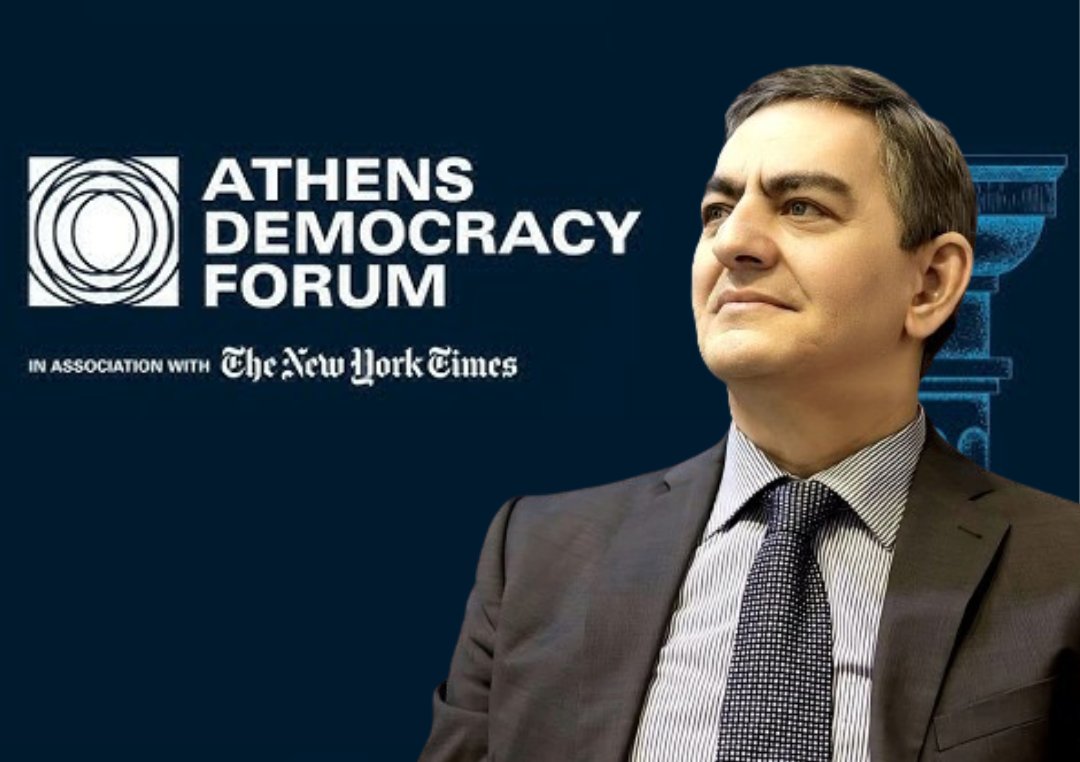
I have been invited to the Athens Democracy Forum.
The Athens Democracy Forum is organized by the Democracy and Culture Foundation, in partnership with The New York Times and under the patronage of the President of the Hellenic Republic.
At the Athens Democracy Forum, real solutions to the most pressing challenges facing democracy will be discussed with leaders from government, business, and civil society.
The Democracy Forum will take place in Athens, the capital of Greece, from September 30 to October 3, 2025.
Friends, as you know, I have previously been invited to the Warsaw Security Forum and the Riga Conference. Those forums and conferences are mainly dedicated to discussions on security issues in the European continent.
The Athens Democracy Forum, however—as its name suggests—is a prestigious international forum where solutions to the challenges confronting democracy are discussed.
Unfortunately, the Azerbaijani authorities continue to fight their political opponent in an uncivilized manner, through bans and restrictions. My letter to the Prosecutor General of the Republic requesting the lifting of the passport ban against me has still not been answered. Meanwhile, the dates of these conferences are approaching.
I call on the Azerbaijani authorities to lift the passport ban that has been imposed on me for 20 years.
If the Azerbaijani authorities once again refuse to issue me a passport and prevent my participation in these important international events, they will be openly admitting—not only before our people but also before the international community—that they are unable to compete with their opponent through political and legal means, that they see the strengthening of their rival’s international ties as a threat, and that they themselves know very well they would lose in a fair and civilized competition.
Власть, обладающая уверенностью в себе и верящая в поддержку народа, не увидела бы угрозы в трёх-пяти минутных выступлениях оппозиционных лидеров.
https://t.co/rAeeqjeiCP
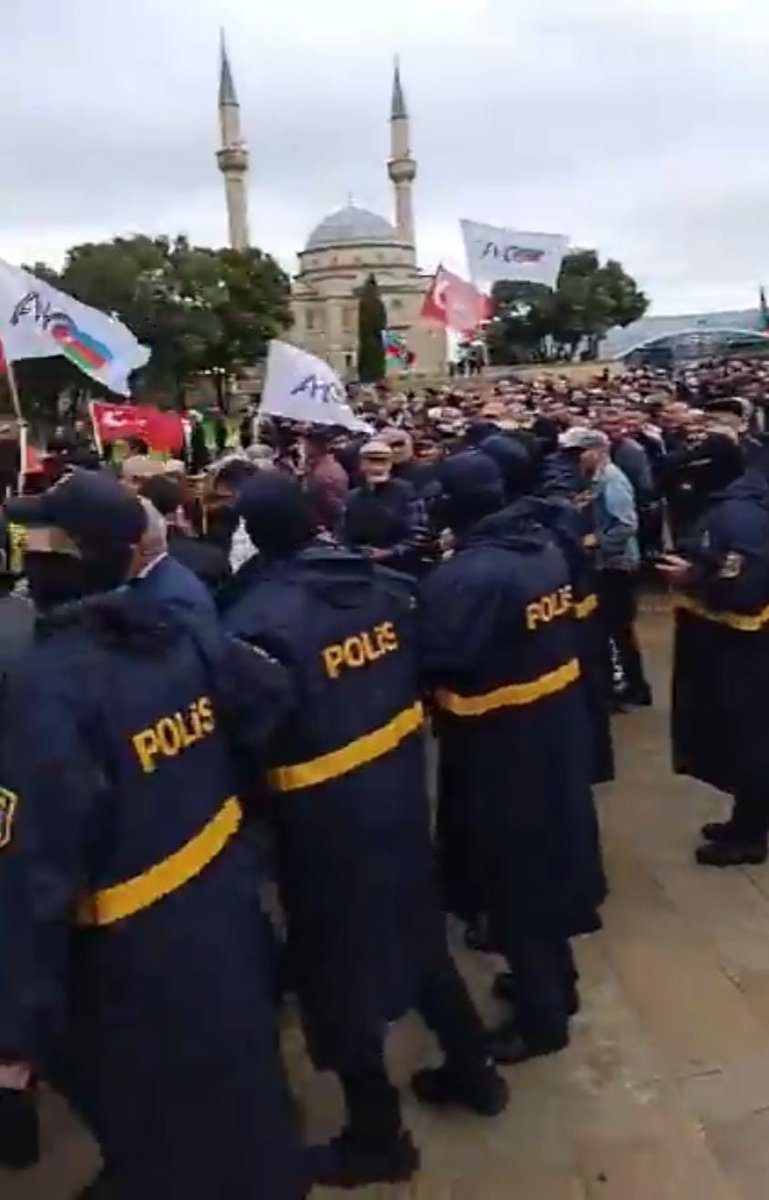
The police regime in Azerbaijan is becoming even harsher. The police intervened to prevent the Azerbaijani Popular Front Party (AXCP) and the National Council from visiting the Martyrs’ Alley.
On May 28, 1918, the state independence and republican system of Azerbaijan were declared by our founding fathers in the city of Tbilisi. At that time, most of Azerbaijan’s territories were still under occupation. Among them was Baku, Azerbaijan’s ancient and main city, its natural capital, which was under the occupation of Russian Bolsheviks and the Armenian Dashnak party. The newly established Azerbaijan Democratic Republic (ADR) declared the liberation of Baku as its main mission.
The Azerbaijani army began to be formed rapidly, and thousands of Azerbaijanis from all over the country volunteered to join the battles for Baku. However, this was not enough to liberate the city. The leaders of the ADR negotiated with Turkey and secured an agreement for the Ottoman army (as it was called then) to assist in the liberation of Baku.
Through the joint efforts of the Azerbaijani army and the troops arriving from Turkey, Baku was liberated on September 15, 1918. Alongside thousands of Azerbaijani fighters, 1,130 Turkish soldiers and officers also lost their lives in the battles for Baku.
During Azerbaijan’s years of independence, a memorial complex was erected at the mass grave where Turkish soldiers who fell in the battle for Baku are buried. Every year on September 15, thousands of Azerbaijanis visit this memorial complex and commemorate the Turkish soldiers who gave their lives for the liberation of Baku with gratitude.
Every year on September 15, the AXCP commemorates the liberation of Baku at the Turkish Martyrs’ Cemetery.
However, during this year’s visit to the Turkish Martyrs’ Cemetery, something happened that was unprecedented even for Azerbaijan. Large police forces deployed at the Turkish cemetery interrupted our commemoration ceremony and dispersed our event. The police did not allow the chairman of the National Council, Professor Jamil Hasanli, or me to deliver our speeches at the ceremony.
Every year after visiting the Turkish Martyrs’ Cemetery on September 15, we also visit the Martyrs’ Alley (the two cemeteries are located together) to pay tribute to the martyrs of January 20 who gave their lives in the struggle for Azerbaijan’s liberation from Russian occupation.
This time, however, a police cordon blocked our way and did not even allow us to visit the January 20 martyrs.
In a country where rallies, marches, opposition events, and the free press are already banned, the police’s intervention in visits to the Martyrs’ Alley shows that the regime in our country has become even harsher, and it should be regarded as evidence that the police state has entered yet another, more repressive stage.
Last week, I formally appealed to Prosecutor General Kamran Aliyev, requesting that the travel ban imposed on me be lifted so I can participate in the Warsaw Security Forum on September 29–30. I enclosed with my appeal the Forum’s official invitation.
Incidentally, it has been exactly 31 years since the Nasimi District Prosecutor’s Office opened a fabricated criminal case against me. That is why I feel it necessary to share additional details with the younger generation about the politically manufactured “grenade case” and “passport case.”
On September 10, 1994—exactly 31 years ago—the Popular Front Party of Azerbaijan (PFPA) called for a rally in the center of Baku to protest Heydar Aliyev’s decision to invite Russian “peacekeeping” forces into occupied Karabakh. The authorities, of course, did not authorize it.
As Deputy Chairman of the PFPA, I led preparations and the rally itself, since Abulfaz Elchibey was in Kalaki. On the day of the protest, after police dispersed demonstrators for about an hour, several thousand of us regrouped in the square by Jafar Jabbarli’s monument. With no platform available, demonstrators lifted me onto their shoulders, and I began addressing the crowd. When police realized they could not disperse the rally by ordinary means, they drove police vehicles directly into the crowd. While my colleagues urged me to leave the square, I refused and remained alone. After dispersing the crowd, police encircled me, beat me severely with batons, arrested me, and took me to the Baku City Police Department.
There I learned that a false criminal case had been launched against me: I was accused of carrying an anti-tank grenade in my pocket to the rally, which police supposedly “discovered” during my arrest. I was then held in the notorious basement prison of the city police—a place comparable only to Assad’s underground jails. I immediately went on hunger strike, demanding transfer to Bayil prison. After a week, I was transferred and ended my strike.
They could not keep me imprisoned for long. First, the case was clumsily fabricated: investigators claimed the grenade was found in my suit pocket, but during forensic tests it became clear that the factory stitching in my suit pockets was intact—meaning nothing could have been placed inside. The grenade also did not fit into my shirt pocket. Investigators were left humiliated.
Second, my arrest provoked a serious international outcry. Just a year earlier, I had served as State Secretary (equivalent to head of the Presidential Administration) and was known abroad. Seventeen U.S. senators and members of Congress sent letters to Heydar Aliyev demanding my release. At the time, the world was unipolar, and Aliyev could not ignore Western leaders. As a result, I was freed within weeks and the case was suspended.
The root of today’s problem lies there: the case against me was never closed, only suspended. For 31 years, it has remained unresolved, and on this absurd pretext the regime continues to block my foreign travel.
Legally, the statute of limitations for the alleged charge—illegal possession of a weapon—is five years. The investigative body had two options: either prove the crime within that period or terminate the case once the statute expired. Failing to do so, and instead using a fabricated case from 31 years ago to ban my foreign travel for two decades, is unprecedented—worthy of the Guinness Book of Records as an extraordinary abuse without parallel.
If the regime again exploits this 31-year-old sham case to bar me from attending the Warsaw Security Forum, it will only disgrace itself once more before the world and admit that it cannot compete with its political opponents in a civil and democratic manner. Every illegality must eventually end. Even after 20 years, the regime should recognize that correcting half the damage is still a gain—and finally restore my passport and lift the travel ban.
Azərbaycan Xalq Cəbhəsi Partiyasının (AXCP) sədri Əli Kərimli bildirib ki, xarici səfərlərinə qoyulan qadağa səbəbindən Varşava Təhlükəsizlik Forumunda iştirak edə bilmir.
AXCP sədrinin sözlərinə görə, artıq 20 ildir ona pasport verilmir və ölkədən çıxışına məhdudiyyət qoyulub:
“20 ilə yaxındır ki, hakimiyyət mənə pasport vermir və xarici ölkə səfərlərimə qadağa qoyulub. Forumda iştirak edə bilmək üçün Baş Prokurorluğa bir daha müraciət edəcəyəm, pasport almaq üçün yenidən təşəbbüs göstərəcəm”.
Kərimlinin dəvət aldığı Varşava Təhlükəsizlik Forumu 29–30 sentyabr tarixlərində keçiriləcək. Tədbir Kazimir Pulaski Fondu, Polşa Prezident Administrasiyası və NATO-nun strateji tərəfdaşlığı çərçivəsində, Polşanın Xarici İşlər və Müdafiə nazirliklərinin iştirakı ilə təşkil olunur. Forum Avropanın aparıcı təhlükəsizlik platformalarından biri hesab edilir və məqsədi qlobal təhdidlərə qarşı birgə cavab mexanizmlərinin hazırlanmasıdır.
Əli Kərimli 2006-cı ildə pasportunun müddəti bitdiyi üçün yenidən sənəd almağa müraciət etsə də, bu, təmin edilməyib. Hakimiyyət buna səbəb kimi 1994-cü ildə başlanmış və hələ də açıq saxlanılan cinayət işini göstərib. O zaman hüquq-mühafizə orqanları Kərimlinin cibindən partladıcı maddə tapıldığını iddia etmiş, siyasətçi isə bunu yalanlamışdı.
Avropa İnsan Haqları Məhkəməsi 2015-ci ildə Kərimlinin şikayətini haqlı sayaraq, pasportun verilməməsini onun hərəkət azadlığının pozulması kimi qiymətləndirib və dövlətin üzərinə 8 min 600 avro kompensasiya ödəmək öhdəliyi qoyub. Buna baxmayaraq, siyasətçiyə hələ də pasport verilməyib və o, 2006-cı ildən etibarən ölkədən çıxa bilmir.
Friends, I have received an invitation to the Warsaw Security Forum. Organized by the Casimir Pulaski Foundation in strategic partnership with the Office of the President of Poland and NATO, and prepared with the participation of Poland’s Ministries of Foreign Affairs and Defense, the Forum is one of Europe’s leading platforms on security.
Its mission is to strengthen transatlantic cooperation and to shape joint responses to shared threats and challenges.
As you know, for nearly 20 years the authorities have refused to issue me a passport and have prohibited me from travelling abroad.
Ahead of the Forum, taking place on September 29–30, I will once again appeal to the Prosecutor General’s Office and renew my efforts to obtain a passport so that I may participate.
İlham Əliyev bir gün Vaşinqtonda sülhdən danışır, bir gün müharibə ilə hədələyir, bu gün isə Moskva ilə barışır, sanki işgəncələr�� məruz qalan soydaşlarımız heç olmayıb. Bu, xarici siyasət deyil, xaos, improvizasiya və xəyanətdir.
One day Aliyev talks about peace in Washington, the next he threatens war, and today he reconciles with Moscow as if our tortured compatriots never existed. This is not foreign policy—it is chaos, improvisation, and betrayal.
What a tragedy—for the lives and freedoms of our compatriots tortured to death and unlawfully imprisoned in Russia. Yet the Azerbaijani government, as though nothing had happened and without a single demand being met, has restored its alliance with Moscow.
This raises an obvious question: could there be a link between Ilham Aliyev’s declaration of war preparations yesterday and today’s sudden reconciliation with Russia?
I believe there could. Just two weeks after signing a joint declaration on peace in Washington—in full view of the world—it was striking, and deeply puzzling, to hear Aliyev once again speak of preparing for war. Now, only a day later, we learn that Azerbaijan’s Deputy Prime Minister Shahin Mustafayev has traveled to Astrakhan to meet Russia’s Deputy Prime Minister Aleksey Overchuk.
At that meeting, the 23rd session of the Intergovernmental Commission on Economic Cooperation between Azerbaijan and Russia, the two old “allies” agreed to strengthen ties as if nothing had occurred. The two-month estrangement, the public quarrels, the speculation—all now brushed aside. Once again, Aliyev’s government will speak of peace one day and of war the next; of friendship with Trump one day and with Putin the next.
But the people deserve answers: why the rupture, and why the reconciliation?
Weren’t you boycotting cooperation with Russia? Weren’t you declaring that the torture and killing of our compatriots in Yekaterinburg was unacceptable? What changed? Have those responsible been arrested and no one informed? Or have our unlawfully imprisoned compatriots been released without the public knowing?
And what of the downing of our aircraft in Russian airspace—an act for which you claimed you would never allow impunity? Has the Russian government now held those perpetrators accountable?
A state’s foreign policy cannot be reduced to such inconsistency and improvisation. What we are witnessing is a collapse of governance. It shows that the Azerbaijani authorities are incapable of pursuing a principled, consistent policy—or of protecting their own citizens.
@sahila_aslanova Tək ona yox, 375 nəfərə hörmət edir. Ona görə həbs edib. Heç kimin həbsini istəmərəm, amma indi deyirəm ki, o hörmətdən onu yazana da qismət olsun.