And a special thanks to Matt & Taylor for our wonderful Hijet Jumbo. The fold down sides make a perfect platform for moving supers around and for other beekeeping duties. https://t.co/DydyP1UmcE
Wild ginger found on our land (Hexastylis arifolia). It is common in shady damp woods.
Look at the base of the plant for the “little brown jug” flower. Ants scatter the seed once the flower has matured.
Aromatic sassafras root bark was one of many botanical ingredients in Hires original root beer recipe, which was promoted as a healthy alternative to hard liquor and other alcohol-based drinks. Root beer is still enjoyed as an All-American soft drink today!
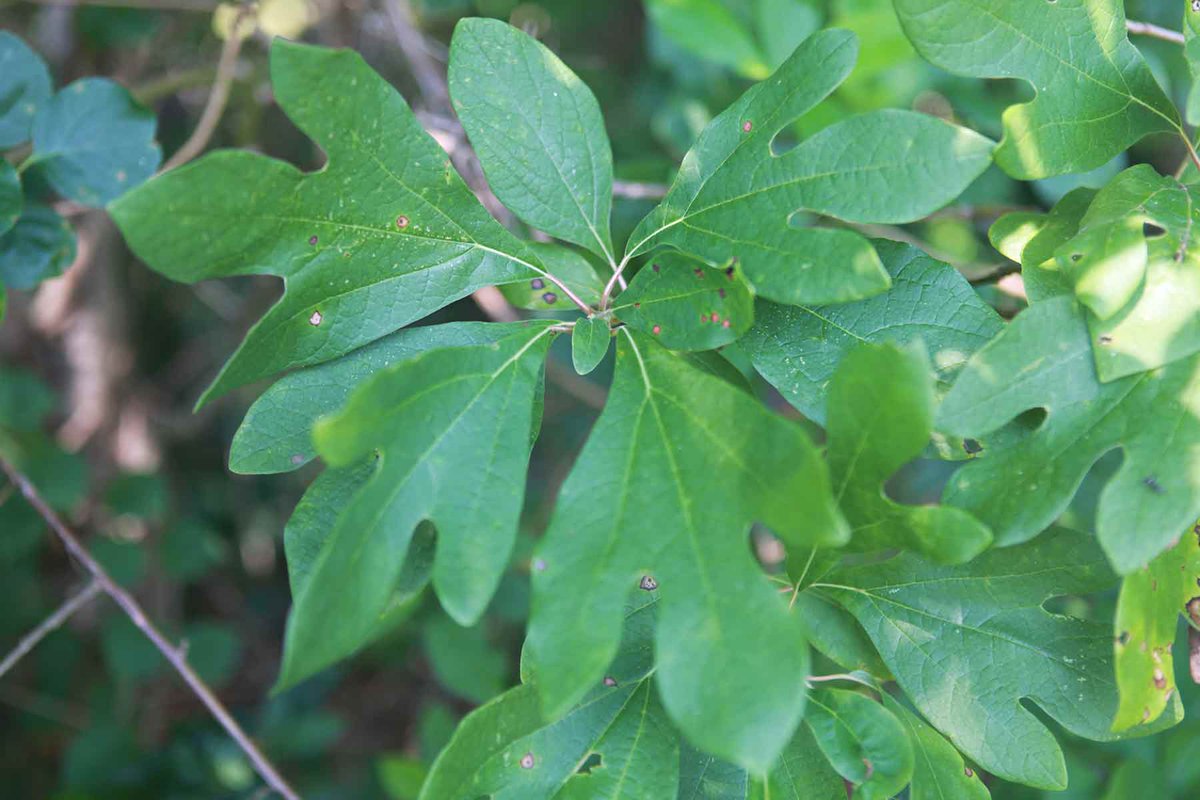
Sassafras is deserving of praise in the wild, as well as in cultivated landscapes. The tree is dioecious, in other words, there are female and male trees. Female trees produce small yellow flowers, which bloom between March and April, followed with dark blue berries attached to vivid red pedicels, from late summer into fall. Its leaves can have three different shapes: a simple oval, three-lobed, and a signature mitten-shaped leaf.
In the fall, the leaves turn vibrant colors that range from yellow, burgundy, crimson, and orange hues. The tree’s roots produce sprouts or suckers resulting in groves or thickets along the edges of fields and forests. A mass of sassafras trees glowing with brilliant fall colors and sporting dark blue berries on red pedicels are a colorful addition to a woodland garden. The berries are a source of food to wildlife. Birds eat and disperse the seeds to other areas. The spicebush swallowtail butterfly has been observed to lay its eggs on sassafras trees, and when hatched, the caterpillars feed on the leaves.
Here is a sassafras tree we found (one of only three we've found out of the roughly 26,000 trees on our property).
Sassafras (Sassafras albidum) trees are relatively small in stature in the North East, but in the South, they can grow 50 feet-to 80 feet or more. The sawn lumber of sassafras has been used as flooring, door frames, kitchen cabinets, and furniture. The wood has also been used to make boats, fence posts, and barrels, due to its reputation for being resistant to decay.
Cinnamon-colored bark that contains safrole, an aromatic oil cherished for its spicy scent covers the tree’s roots. Its scent is a combination of star anise, cinnamon, citrus, and vanilla. The bark has imparted its flavor to fragrant tea, soft drinks, and its extracted oil has been used to scent candles, soaps, and perfumes. However, safrole is considered a carcinogen and has been banned for human consumption by the Food and Drug Administration since the 1960s.
Another beautiful Eastern Kingsnake my wife & I caught on the farm. The female snake was very calm, and made no attempt to strike. We took some photos and released her back where we found her.
How do we know she is a girl without probing? Well,it's a bit of a guess, but here are the indicators:
Size: Adult males tend to be larger on average than females. Males average over 1 meter in length (snout-vent length (SVL) while females are about 10% smaller.
Tail characteristics: Males generally have longer tails due to more subcaudal scales: males average ~47 vs. females ~42) to accommodate the hemipenes. Males often show a slight bulge or "speed bump" just past the vent (cloaca) from the hemipenes. Females have shorter, often thicker-based tails that taper more.