Shastras do not teach the destruction of the mind.
They teach its refinement.
For the mind that wanders becomes bondage, and the mind that awakens becomes moksha.
Ancient texts never gave rituals or gemstones as the first remedy. They gave behaviors.
Behavioural Remedies for all 9 planets - what vedic stories and scriptures suggest you to do ?
1/N 🧵
Don’t fight karma. Don’t fight the shadripus. Don’t fight any bad habit.
The moment you fight, you feed it.
Instead, simply be aware. Cultivate sakshi bhav, the witness within you.
Watch how the impulse arises.
Watch what it makes you do.
Watch how it promises satisfaction and never truly delivers, and then watch it rise again.
You are not the doer.
Your life is a movie unfolding before you, and you are the one quietly seeing it.
The second thing to understand is this. Everything has a threshold.
Every habit, good or bad, builds the same way.
You try once, it feels exciting.
You try again, and again, and again.
You struggle, you slip, you return.
Slowly it strengthens, until one day it has taken you over completely.
That is how good habits root themselves, and that is exactly how bad ones do too.
Awareness is the only thing that breaks the pattern.
🌺।।दस महाविद्या - अधिकांश तान्त्रिक साधकों द्वारा पूजे जाने वाले मां दुर्गा के दस रूप।।🌺
🧵
दशमहाविद्या अर्थात महान विद्या रूपी देवी। महाविद्या, देवी दुर्गा के दस रूप हैं, जो अधिकांश तान्त्रिक साधकों द्वारा पूजे जाते हैं, परन्तु इनकी पूजा से साधारण भक्तो को भी उनका आशीर्वाद प्��ाप्त होता है। शास्त्रों के अनुसार इन दस महाविद्या में से किसी एक की नित्य पूजा अर्चना ��रने से सभी तरह के संकट तत्काल ही समाप्त हो जाते हैं और व्यक्ति परम सुख और शांति पाता है। इन माताओं की साधना कल्प वृक्ष के समान शीघ्र फलदायक और सभी कामनाओं को पूर्ण करने में सहायक मानी गई है।
12 Jyotirlingas. 🔱
12 sacred spots where Mahadev manifested His divine presence.
Each one carries immense power—protection, healing, liberation.
Not just temples… pure, living energy.
All it takes is true devotion to feel it.
Thread 🧵👇
VEDIC ASTROLOGY TERMINOLOGIES YOU MUST KNOW
01) Jyotish → The "Science of Light"; the traditional Vedic system of astrology.
02) Kundli → The birth chart; a map of the heavens at the exact moment of birth.
03) Lagna → The Ascendant; the rising sign that defines the self and physical body.
04) Graha → Planet; the celestial bodies that "seize" or influence human consciousness.
05) Rashi → Zodiac Sign; the 12 divisions of the 360° zodiac (e.g., Mesha, Vrishabha).
06) Bhava → House; the 12 sectors of a chart representing specific life domains.
07) Nakshatra → Lunar Mansion; the 27 star constellations that refine planetary energy.
08) Dasha → Planetary Period; a unique timing system indicating when karma unfolds.
09) Gochar → Transit; the current movement of planets in the sky relative to the birth chart.
10) Drishti → Aspect; the "glance" or influence a planet casts on other houses.
11) Yoga → Union; specific planetary combinations that produce distinct fortunes or challenges.
12) Dosha → Affliction; a blemish or imbalance in the chart (e.g., Mangal Dosha).
13) Vakra → Retrograde; when a planet appears to move backward, intensifying its energy.
14) Uchcha → Exaltation; the sign where a planet is at its maximum strength and dignity.
15) Neecha → Debilitation; the sign where a planet is at its weakest or most restricted.
16) Kendra → Angular Houses (1, 4, 7, 10); the pillars of the chart representing power and action.
17) Trikona → Trine Houses (1, 5, 9); the houses of grace, spirituality, and past merits.
18) Dusthana → Difficult Houses (6, 8, 12); houses associated with obstacles, debt, and loss.
19) Karaka → Significator; a planet that naturally represents a person or concept (e.g., Venus for marriage).
20) Sade Sati → The 7.5-year transit of Saturn over the natal Moon, signifying a period of testing.
21) Atmakaraka → Soul Significator; the planet with the highest degree in the chart.
22) Shadvarga → The divisional charts (like D-9, D-10) used for micro-analyzing specific life areas.
23) Remedial Measures → Actions (Upayas) like mantras or gemstones used to balance planetary energies.
ये २० शब्द वैदिक सनातन सभ्यता को मानने वालों के लिए उचित नहीं
आइये सीखें - किन प्रचलित शब्दों के स्थान पर कौन से शब्द बोलें
वैदिक संस्कृत विद्वान एवं आईआईटी-आईआईएम स्नातक @SanjeevSanskrit द्वारा लिखा एक लेख
https://t.co/UsGpuEQ0j5
The Concept of Prakriti… Your Ayurvedic Blueprint From Birth 🔥
Ayurveda explains that every individual is born with a unique constitution... This innate blueprint is called prakriti… and it shapes the body, mind, and tendencies throughout life.
> Prakriti is determined at the time of conception
> It reflects the balance of doshas influenced by parental factors, season, and the state of mind
> Vata dominant prakriti… characterised by lightness, mobility, and variability
> It shows as quick thinking, creativity, but also instability and sensitivity
> Pitta dominant prakriti… characterised by heat, sharpness, and intensity
> It shows as strong digestion, intelligence, leadership… but also irritability and inflammation
> Kapha dominant prakriti… characterised by stability, heaviness, and endurance
> It shows as calmness, strength, and resilience… but also tendency toward accumulation and sluggishness
👉 Most individuals are a combination… not a single type.
> Prakriti does not change through life
> But its expression can become balanced or disturbed
> Health in Ayurveda is not becoming someone else
> It is living in alignment with your own constitution
> Disease arises when lifestyle, diet, and habits go against prakriti
🚨 What modern science explores as genetics and individuality... Ayurveda understood as prakriti thousands of years ago.
👉 Follow @_TheSanatani for more timeless wisdom of Sanatana Dharma.
👉 Join me on Telegram for all the Archives: https://t.co/NIElWWJflO
The Role of Rajas and Tamas in Physical Disease Formation... 🔥
Ayurveda and yogic psychology do not separate mind and body... They explain that disturbances in the gunas directly influence physical health.
> Rajas… the principle of activity and agitation
> When excessive, it drives overuse, overstimulation, irregular habits, and constant strain
> This leads to erratic eating, poor sleep, emotional reactivity, and depletion of stability
> Over time��� it aggravates vata and disturbs digestion
> Tamas… the principle of inertia and heaviness
> When dominant, it produces inactivity, dullness, accumulation, and resistance to change
> This leads to overeating, stagnation, poor metabolism, and buildup of ama
> Over time… it aggravates kapha and slows physiological processes
> Rajas disturbs through excess movement
> Tamas disturbs through lack of movement
👉 Together they create imbalance in doshas, weaken agni, and block srotas.
> Physical disease is not only a bodily issue
> It is often the expression of long standing mental imbalance
> Ayurveda therefore emphasises not just diet and medicine
> But the refinement of the gunas through lifestyle, discipline, and awareness
What appears as physical illness... often begins as disturbance in the quality of mind.
👉 Follow @_TheSanatani for more timeless wisdom of Sanatana Dharma.
👉 Join me on Telegram for all the Archives: https://t.co/NIElWWJflO
Your Android phone’s storage is full.
You delete photos, videos, apps. It’s still full.
Because it’s not the visible files that are eating up your storage. Most of it is the HIDDEN junk that Android never tells you about.
I cleaned mine yesterday and got 23GB back without deleting a single photo.
Here’s how:
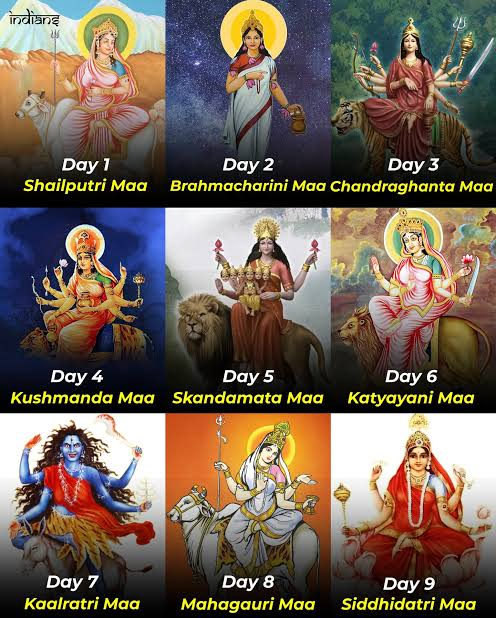
The 9 Forms of Maa Durga and Their Inner Meaning... 🙏
The Shakta traditions describe nine forms of Maa Durga worshipped during Navratri... These are not just deities… they represent stages of inner evolution.
> Maa Shailaputri… the daughter of the mountain
> Represents grounding, stability, and the beginning of the spiritual path
> Maa Brahmacharini… the seeker in austerity
> Symbolises discipline, tapas, and unwavering focus
> Maa Chandraghanta… the warrior form
> Represents courage, alertness, and readiness to face inner conflict
> Maa Kushmanda… the creator of the cosmic egg
> Symbolises inner radiance and the power of creation
> Maa Skandamata… the nurturing mother
> Represents compassion, protection, and selfless care
> Maa Katyayani… the fierce protector
> Symbolises strength, determination, and righteous action
> Maa Kalaratri… the destroyer of darkness
> Represents facing fear, ignorance, and inner shadows
> Maa Mahagauri… the purified and radiant form
> Symbolises inner cleansing, peace, and renewal
> Maa Siddhidatri… the giver of spiritual perfection
> Represents fulfillment, wisdom, and realization
👉 These nine forms reflect the journey from grounding to ultimate realization
What appears as devotion to Maa... is also a path of psychological and spiritual evolution.
Jai Mata Di 🙏
Happy Chaitra Navratri 🙏
👉 Follow @_TheSanatani for more timeless wisdom of Sanatana Dharma.
👉 Join me on Telegram for all the Archives: https://t.co/NIElWWIHwg
Align Your Planets: Daily Habits for Cosmic Health
1. Wake up early and face the morning light. Do that for your Sun (Surya).
2. Sit in silence and drink pure water. Calm your mind. Do that for your Moon (Chandra).
3. Break a sweat and push your physical limits. Channel your drive. Do that for your Mars (Mangala).
4. Read a few pages and speak honestly today. Do that for your Mercury (Budha).
5. Show respect to your mentors and be generous. Do that for your Jupiter (Guru).
6. Put your head down and do the hard, boring work. Don't take shortcuts. Do that for your Saturn (Shani).
As a person navigating life, focus on your daily karma, because a harsh planetary period (Dasha) will absolutely humble you.
The Complete Structure of the 14 Lokas… From Bhu to Satya 🔥
The Puranic and Vedantic cosmology describes existence as layered planes of experience... These lokas are not merely places… they are levels of consciousness and karma.
> Bhu loka… the physical world of human experience and action
> Bhuvar loka… the subtle space of prana and ancestral realms
> Svar loka… the celestial plane of refined enjoyment and punya
> Mahar loka… the realm of great rishis absorbed in contemplation
> Jana loka… the plane of higher beings established in knowledge
> Tapa loka… the field of intense austerity and near liberation
> Satya loka… the highest manifest realm of Brahma… beyond return for the realised
📌 Below the human plane are the seven lower lokas...
> Atala… the realm of deep material absorption
> Vitala… where gross enjoyment dominates
> Sutala… the plane of powerful but bound beings
> Talatala… the field of deluded technological and occult power
> Mahatala… the realm of intense instinct and fear
> Rasatala… the plane of darkness and aggression
> Patala… the densest level of material identification
👉 Movement across lokas follows the law of karma and inner evolution... Human birth alone is the turning point where liberation is possible.
You do not merely live on one plane, you evolve through them.
👉 Let me know if you want a detailed thread on this.
📌 Follow @_TheSanatani for more timeless wisdom of Sanatana Dharma.
📌 Support my work at... TheSanatani@axl / https://t.co/NFFX2tGDtV
For most people, intelligence means thinking faster, remembering more, or solving problems. But the Vedas describe a completely different kind of intelligence. They speak of five higher faculties hidden within you:
Dhī — the power to directly perceive truth.
Medhā — the power to retain and integrate knowledge.
Prajñā — the awareness that sees beyond thought.
Dhṛti — the inner will that holds you steady in truth.
Smṛti — the remembrance of your real nature.
Gayatri is not asking for wealth, success, or comfort. It asks for the awakening of these faculties. Because once these awaken, reality is no longer interpreted. It is seen. This is why Gayatri is called Vedamata — the mother of knowledge. Not because it gives you information. But because it awakens the intelligence that recognizes what has always been true. Source: Lecture by Pravrajika Divyanandaprana, IIT Delhi