Delighted to share our work on #TE deregulation in #Preeclampsia.
We show upregulation of multiple TE-subfamilies in Preeclampsia (PE). Moreover, type-1 IFN responsive genes expression goes up in PE.
We are excited to share our latest work: Transposable elements are deregulated in #Preeclampsia, which correlates with type-I IFN levels. "TE signature in maternal cell-free RNA can predict preeclampsia before the appearance of symptoms" https://t.co/4aWHNlaoA4
Online Now: Self-clustering of three CBX2 molecules drives PRC2 to promote facultative heterochromatinization of Polycomb target genes https://t.co/YHi8dr6Lmg
We're excited to announce that our 2nd Annual QMUL Centre for Epigenetics Conference is happening on June 18th, 2026 at Mile End campus.
To find out more and book your tickets, please follow this link: https://t.co/63lKAfVhbP
Very fast CRISPR and its applications from Taekjip Ha lab.
Very fast CRISPR on demand
https://t.co/ddsAxcczIX
https://t.co/dxw3uekBjr
Cohesin drives chromatin scanning during the RAD51-mediated homology search
https://t.co/GyBihdRhAt
#bps2026
New from us in @CellGenomics: Using FFPE-compatible Hi-C to detect oncogenic rearrangements genome-wide in routine lymphoid cancer biopsies. Congrats to first author pathologist-scientist Jamin Wu, co-senior author Matija Snuderl @NYUGSOM_Path, and @ArimaGenomics.
RNA-binding protein MYC binds to nascent, intronic RNA.
It then forms multimers, and suppresses the accumulation of R-loop to prevent innate immune signalling.
https://t.co/xbvnKICHq2
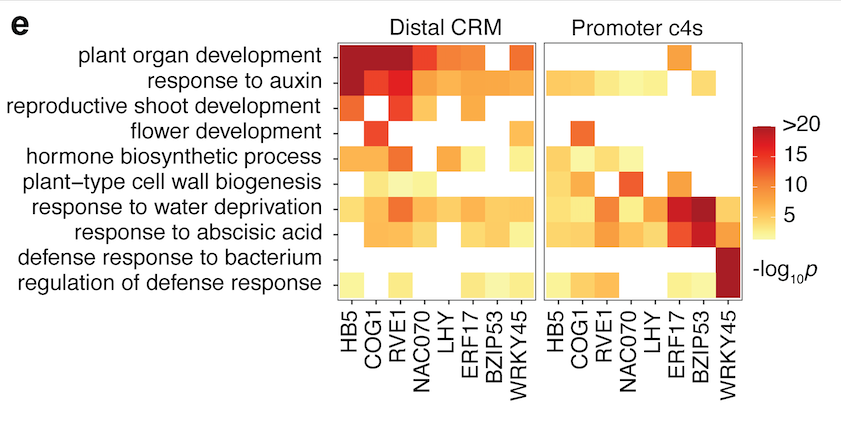
New preprint! The same TFs can drive distinct regulatory programs depending on where they bind.
TSS → rapid stress responses
Intronic & upstream → cell-type programs
Enhancer-like CRMs → embryo/meristem programs
Coding-sequence binding → repression
https://t.co/KwDWtkxJKU
Check this new work on BRD4's role in preventing the premature activation of developmental transcription factors via #Polycomb, providing new mechanistic insights into the pathogenesis of neurodevelopmental disorder #CdLS#NDDs, #chromatinopathies https://t.co/H3x3WJ9cUK
Does the noncoding genome actually carry more genetic information than coding seqs? Motivated by this question we mutated every bp in the 10kb MYC locus. Results are even more exciting: Decoding the MYC locus reveals a druggable ultraconserved RNA element https://t.co/MynOLLNvXi