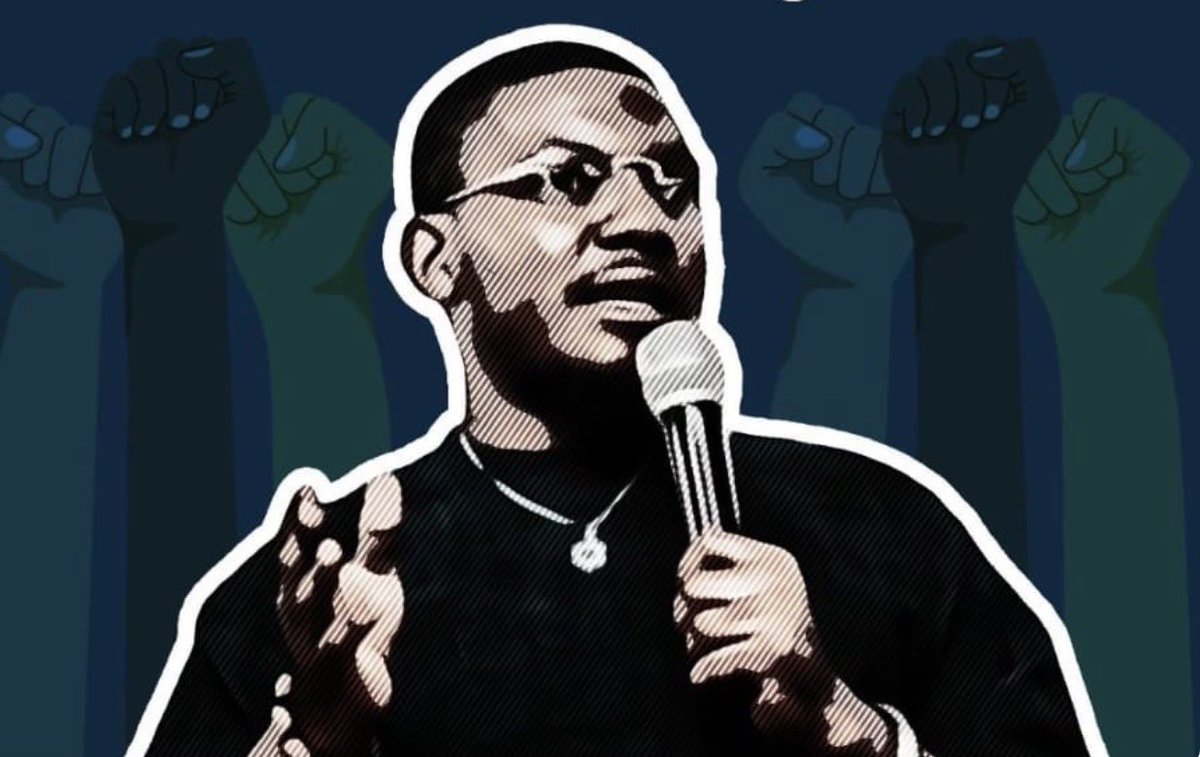
I want Nigerians to understand the seriousness of what is happening here.
We have children learning under trees, sitting on bare floors, some of them, their parents cannot afford to give them the most basic education.
Yet when @Mazi_OJD investigates how public money meant for classrooms was spent, he is jailed.
It is madness!!!! #FreeDanielOjukwu
Yes. She was born in Canada and is therefore a Canadian citizen by birth.
With the relevant information provided to the Canadian High Commission, she should be able to obtain the necessary travel documents and a Canadian passport.
President Tinubu has never granted a one-on-one interview to any Nigerian journalist, indigenous media personality, or local station. Instead, he sat down with American political strategist and lobbyist Diana London (of London Global Strategies), a figure whose character and motives have drawn serious questions amid reports of large payments and lobbying ties. This is an insult to the Nigerian people and the local press.
— Ayo Mairo Ese
🚨 BREAKING: Another troubling INEC revelation!
Uploaded polling-unit results cannot appear on IReV until a RATECH logs in and approves them. Even worse, the RATECH has the power to overwrite the results.
Why should anyone other than the Presiding Officer have such power over uploaded election results?
INEC must explain this. Nigerians are watching!
Repost and Tag INEC, remember Rig and Die 2027.
Social media age has made it so difficult for Nigerian Politicians to cope.
Look at this Diana London saga.
Whenever the interview comes out, you just know it’s lost its zest.
These centers were intended to provide basic medical services, maternal care, immunization, treatment of common illnesses, and health education.
We also supplied medical equipment, essential drugs, and other materials to these facilities.
We provided solar-powered boreholes and sanitation facilities to improve hygiene and the general conditions of healthcare delivery. These interventions were particularly important in rural communities where access to clean water and adequate sanitation was limited.
Maternal and Child Healthcare
We paid special attention to maternal and child health because we understood that a society cannot develop properly when mothers and children are exposed to preventable deaths.
Anambra State won the Bill & Melinda Gates Foundation’s US$1 million award as the best-performing state in immunization in the South-East. We complemented the prize money with government resources and used the funding to construct 10 maternal and child care centers, particularly in remote communities, in partnership with religious institutions.
In September 2013, we also provided an additional ₦330 million for the construction of 11 more rural maternity and child health centers.
These interventions were designed to bring antenatal care, childbirth services, immunization, and other essential healthcare closer to women and children who would otherwise have difficulty accessing them.
We considered this particularly important because many maternal and infant deaths can be prevented when appropriate medical attention is available at the right time.
Beyond maternal and child healthcare, we also pursued broader public health interventions, working with development partners, including UNICEF, the World Bank, and DFID, on immunization, malaria prevention, maternal health, and other disease-control programs. We recognized that a good healthcare system must not only treat illnesses but also prevent them through sustained public health interventions, community awareness, and accessible preventive services.
Ambulances, Medical Equipment and Emergency Services
We also understood that healthcare infrastructure without effective emergency response was incomplete.
Consequently, we purchased and distributed close to 100 ambulances to selected hospitals and medical institutions across the state. We also provided medical utility vehicles to improve transportation and service delivery.
We regularly supplied medical equipment and essential drugs to hospitals and primary healthcare centers. Our interventions included improvements in diagnostic facilities and other specialized medical equipment required for effective treatment.
In addition, we distributed medical equipment worth ₦135 million, sourced through the Millennium Development Goals program, to over 105 government and mission health institutions across the state. This intervention was intended to improve their capacity to provide effective medical services and ensure that healthcare facilities had the necessary tools to attend to patients.
The objective was to improve the capacity of our hospitals to diagnose illnesses, respond to emergencies, and provide appropriate treatment.
Specialised Healthcare: The Joseph Nwilo Heart Centre
Another important intervention was the establishment of the Joseph Nwilo Heart Centre at St Joseph’s Hospital, Adazi-Nnukwu.
Through our partnership with the Church, we supported the construction and equipping of this specialised cardiac facility, where heart operations could be performed at affordable costs.
This was particularly significant because specialised cardiac treatment was largely concentrated in a few major centres in the country. We believed that Anambra people deserved access to such services without always having to travel outside the state.
NIGERIANS, GO AND VERIFY (4)
Building a Healthy Nation: Our Health Sector Record in Anambra
Peter Obi
In the previous instalment of this series, I discussed our investments in education and explained why we considered human capital development central to the progress of Anambra State. Another sector that received considerable attention under our administration was healthcare. We understood that education gives people the tools to build their future, while good healthcare enables them to live healthy and productive lives.
When we assumed office in 2006, the healthcare system in Anambra faced serious challenges. Our health institutions required rehabilitation, medical equipment was inadequate, many communities lacked accessible primary healthcare facilities, and several medical training institutions had not secured accreditation. We therefore decided to approach healthcare as a comprehensive development priority, rather than concentrate resources on a few prominent hospitals.
Under our Anambra Integrated Development Strategy (ANIDS), we invested simultaneously in primary, secondary, and tertiary healthcare, medical training, maternal and child health, medical equipment, and partnerships with religious and private institutions.
Our approach was simple: healthcare should be accessible to people wherever they live, and the quality of treatment they receive should not depend on their status or whether they live in a city or a rural community.
Building a Teaching Hospital and College of Medicine
One of our most significant achievements was the establishment of the Chukwuemeka Odumegwu Ojukwu University Teaching Hospital at Awka.
We initiated, constructed, equipped, and secured accreditation for the institution, building it virtually from scratch. When I discovered that the state university was admitting medical students without having a teaching hospital through which they could complete their training, possibly with the intention of assigning them elsewhere, I considered the situation unacceptable. We therefore embarked on the construction of a modern teaching hospital to address this deficiency.
We constructed more than 25 buildings and provided facilities for the College of Medicine, laboratories, pathology, accident and emergency services, pediatrics, male and female wards, special wards, consultant clinics, and other essential departments.
We also provided vehicles, including ambulances and staff buses, to support the hospital and the College of Medicine as part of the accreditation requirements.
The objective was not merely to build another hospital but to establish an institution capable of providing specialist healthcare while training the next generation of Nigerian medical doctors.
Rehabilitating General Hospitals
We also recognized that a teaching hospital alone could not meet the healthcare needs of the population. General hospitals had to function effectively because they provide the essential link between primary healthcare and specialist treatment.
We rehabilitated and resuscitated 15 general hospitals across the three senatorial zones of Anambra State. We undertook substantial improvements in their buildings, wards, equipment, and general facilities.
In 2013, we provided ₦400 million for the ongoing renovation of 11 selected general hospitals, alongside other healthcare interventions.
Our intention was to ensure that people did not have to travel unnecessarily long distances to obtain basic secondary medical care.
Taking Primary Healthcare to the Communities
We believed that the best healthcare system is one that prevents illnesses and treats people early, rather than one that waits until minor health problems become emergencies.
That informed our extensive investment in primary healthcare. We built over 120 primary healthcare centers across communities in the 177 autonomous communities of Anambra State and rehabilitated existing facilities.
Did you see how they, @CorrectionsNg officers chained David Nwokorie? He is awaiting trial, and his ordeal began after he broke up with the daughter of a retired police DIG, Hillary Opara.
The Nigerian Correctional Service continues to subject awaiting-trial inmates to inhuman and degrading treatment, hauling them to court in nazi-grade “Black Marias” and keeping them in chains inside.
Yet when @GodwinIEmefiele’s faces serious financial charges, where are the Black Maria and the chains? Why does dignity depend on who you are? #RevolutionNow
Radiograph of one of our members that was attacked in the Lagos town hall meeting @ Oregon.
Good news was that the bullet was successfully removed.
There should not be any more bottle necks to surgical removal of bullets
anymore.
My colleagues take note!!
Daniel Ojukwu of @fijnigeria investigated serious allegations of corruption. He is now jailed at Kuje prison, for just doing his job! The Nigerian authorities are using the criminal justice system to punish journalists for exposing corruption and holding public officials accountable.
Just look at this foolish lady. She kept sharing this nonsense articles to misinform the global audience.
We didn’t even know she was getting paid for it, damn.
You’ll find her share this particular article multiple times. One of her BAUs was to communicate on the Christian genocide. Look at the last line of this image.
@dianalondon_usa permit me, but God will punish you. You’re helping a useless government with damage control, don’t you have conscience?
This is one of the people responsible for the state of that classroom.
She is @Adejoke_O_A , Adejoke Orelope-Adefulire.
She is Tinubu’s SSA.
She was Buhari’s SSA.
She has been in politics since the 90s.
She paid money meant for clasroooms into a restaurant account.
A journalist investigated it and found no classrooms and is currently in jail.
#FreeDanielOjukwu
Based on all the documents and what was reported, the Nigerian government thought Aster Legal paid DCI over 4 million dollars.
At different points from 2025, @dianalondon_usa has gotten the sum of $1,324,000 in total.
Our government is paying for Global PR😭
This woman was posed as a journalist, she even interviewed the president, meanwhile she’s just a hustler, ripping us off.
We are a poor nation, this is what our government tell us, but we keep buying SUVs for youth leaders, renovating VP’s houses with over 25 billion naira, paying close to 5 million dollars for PR to launder our president’s image, it is disgusting.
I hope you guys can see who you are voting for.