we're making @blocks smaller today. here's my note to the company.
####
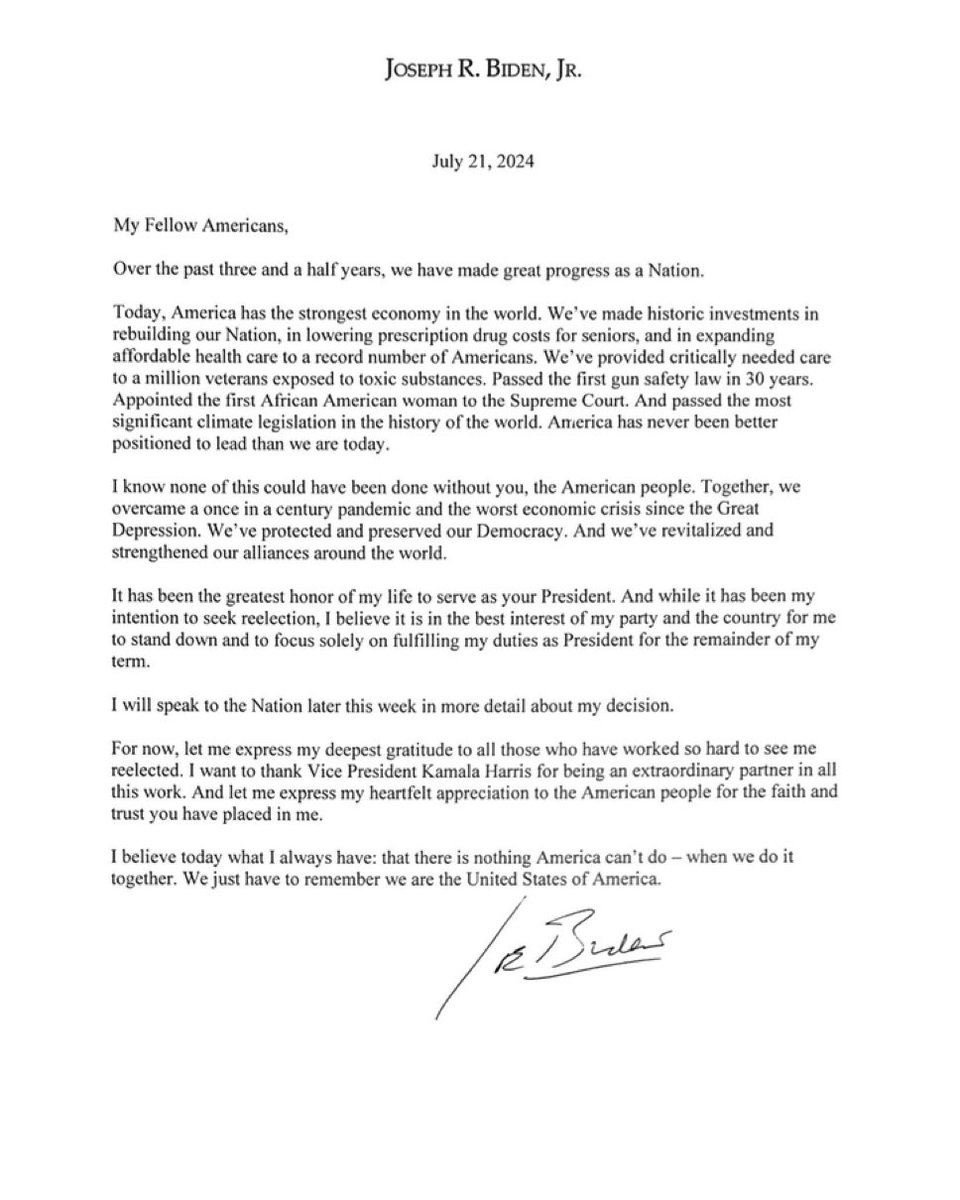
today we're making one of the hardest decisions in the history of our company: we're reducing our organization by nearly half, from over 10,000 people to just under 6,000. that means over 4,000 of you are being asked to leave or entering into consultation. i'll be straight about what's happening, why, and what it means for everyone.
first off, if you're one of the people affected, you'll receive your salary for 20 weeks + 1 week per year of tenure, equity vested through the end of may, 6 months of health care, your corporate devices, and $5,000 to put toward whatever you need to help you in this transition (if you’re outside the U.S. you’ll receive similar support but exact details are going to vary based on local requirements). i want you to know that before anything else. everyone will be notified today, whether you're being asked to leave, entering consultation, or asked to stay.
we're not making this decision because we're in trouble. our business is strong. gross profit continues to grow, we continue to serve more and more customers, and profitability is improving. but something has changed. we're already seeing that the intelligence tools we’re creating and using, paired with smaller and flatter teams, are enabling a new way of working which fundamentally changes what it means to build and run a company. and that's accelerating rapidly.
i had two options: cut gradually over months or years as this shift plays out, or be honest about where we are and act on it now. i chose the latter. repeated rounds of cuts are destructive to morale, to focus, and to the trust that customers and shareholders place in our ability to lead. i'd rather take a hard, clear action now and build from a position we believe in than manage a slow reduction of people toward the same outcome. a smaller company also gives us the space to grow our business the right way, on our own terms, instead of constantly reacting to market pressures.
a decision at this scale carries risk. but so does standing still. we've done a full review to determine the roles and people we require to reliably grow the business from here, and we've pressure-tested those decisions from multiple angles. i accept that we may have gotten some of them wrong, and we've built in flexibility to account for that, and do the right thing for our customers.
we're not going to just disappear people from slack and email and pretend they were never here. communication channels will stay open through thursday evening (pacific) so everyone can say goodbye properly, and share whatever you wish. i'll also be hosting a live video session to thank everyone at 3:35pm pacific. i know doing it this way might feel awkward. i'd rather it feel awkward and human than efficient and cold.
to those of you leaving…i’m grateful for you, and i’m sorry to put you through this. you built what this company is today. that's a fact that i'll honor forever. this decision is not a reflection of what you contributed. you will be a great contributor to any organization going forward.
to those staying…i made this decision, and i'll own it. what i'm asking of you is to build with me. we're going to build this company with intelligence at the core of everything we do. how we work, how we create, how we serve our customers. our customers will feel this shift too, and we're going to help them navigate it: towards a future where they can build their own features directly, composed of our capabilities and served through our interfaces. that's what i'm focused on now. expect a note from me tomorrow.
jack
When the telephone was invented, 99% of the country had no use for it. The technology was patented in 1876. Three years later, there were basically no telephones in existence. Thirty years later, there were basically no telephones. Household adoption of telephones didn't pass 50% until the 1940s.
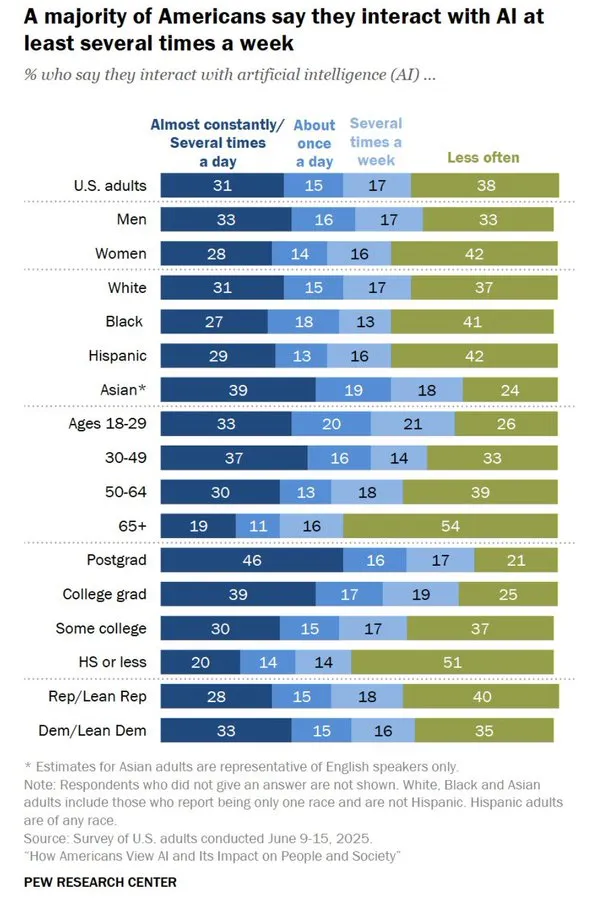
AI is 3 years old. A majority of Americans say they use it every week.
Remote work doesn't thwart productivity. It boosts focus.
Data: Government workers are 12% more productive when randomly assigned to work from home. They're more efficient where it's quiet.
Most people aren't shirking from home. They're escaping distractions and long commutes.
This has to be one of the most mind-blowing human feats of all-time.
We’re going by to explore the stars and settle other planets.
Let’s just hope it happens in our lifetime ❤️
The Economist latest cover story on solar energy is packed with interesting stats.
▫️Solar energy will be the primary source of human energy use by 2040
▫️$500B spent on buying and installing solar panels in 2024 (nearly same “sum being put into upstream oil and gas”)
▫️Solar on track to produce “more electricity than all the world’s nuclear power plants in 2026, than its wind turbines in 2027, than its dams in 2028, its gas-fired power plants in 2030 and its coal-fired ones in 2032”
▫️Since the 1960s…the levelised cost of solar energy—the break-even price a project needs to get paid in order to recoup its financing for a fixed rate of return—has dropped by a factor of more than 1,000
▫️From the mid-1970s to the early 2020s cumulative shipments of photovoltaics increased by a factor of a million, which is 20 doublings.
▫️Over the same span, the “prices dropped by a factor of 500. That is a 27% decrease in costs for each doubling of installed capacity, which means a halving of costs every time installed capacity increases by 360%.”
▫️The cost of a kilowatt-hour of battery storage has fallen by 99% over the past 30 years.
The chart below — which they made vertical (kind of weird) — shows global useful energy consumption over the past century.
I’ll add two more posts after this one with excerpts on obstacles and opportunities.
Full link: https://t.co/zP9GQqgCww