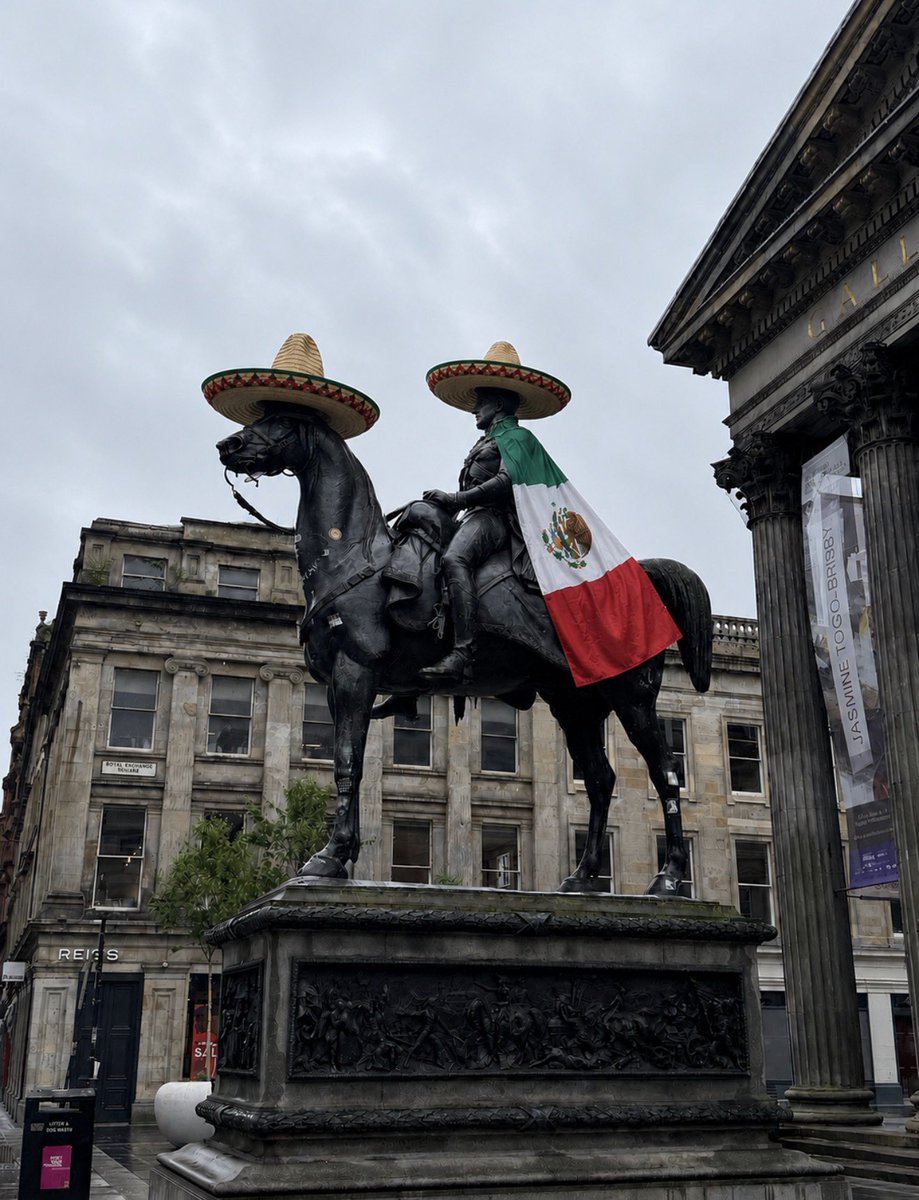
@octavioislas Pues tiroteos en Fan Fest no fueron en México...Canada, EUA tambien vieron a la baja su ocupación hotelera....pero sin duda es un factor..
"People were very friendly, very respectful, very emotional. Amazing training facility today, beautiful environment."
Thomas on our time in Mexico so far ahead of tomorrow's game 🤝
Our thoughts on the importance of AI sovereignty.
1. Your AI sovereignty dictates your institution’s future. Sovereignty is the precondition for choice. Relinquishing sovereignty transfers the future choices of your institution to others, who are likely to exploit it for their gain and your loss.
2. Data retention is your treasure. Transfer it at your own peril. Your ability to win is dictated by your ability to recognize and use your unique edges, and you keep winning by compounding the underlying data to generate new insights. Transferring that data hands over access to your pre-existing winning plays and yields the means of production for new ones.
3. Tokenmaxxing hijacks your value orientation and decreases your institutional fortitude and intelligence. The pursuit of high token usage incentivizes disposable scripts over robust software — with the addictive feeling of false progress. There is a reason why those selling tokens refuse to charge based on value.
4. Controlling your weights is controlling your fate. Weights are the distilled form of hard-won, accumulated institutional knowledge. If you let others control your weights, you are allowing them to migrate the alpha of your business to theirs.
5. There is no contradiction between sovereignty and alpha. The architecture that maximally preserves sovereignty is one that enables institutions to own their tribal knowledge, and to compound it as alpha.
6. Politicizing the technical issues involving sovereignty is what your adversary wants. Techno-politicization is the wellspring of false sovereignty. Techno-politicization drives decisions that seem to reduce dependency, but ultimately limit agency — especially on the battlefield in the West.
7. Real expertise is existential. Allowing politics or favoritism to determine your technical decisions rewards whoever is best at politics, not whoever is right. Listen to those closest to the problems, not those speaking most compellingly about them.
8. Learn from institutions that are winning or that have consistently delivered. Institutions facing existential threats do not have the luxury of making technical decisions based on political preferences.
9. Only listen to institutions, countries, and people who have a proven record of being right. A track record of correctness is the best and only signal for future correctness. Judging something as right or wrong based on who you like is exceedingly misguided.
Me crucé con esto, Messi está casi 6 desviaciones estándar por encima de la media de delanteros de grandes ligas en cuanto a goles y asistencias en 90 minutos. Estadísticamente es prácticamente imposible que vivas para ver a alguien así
I actually suspect that no-one seriously believes in the existence of the "Thucydides trap": not the Chinese, not the West, and probably not even Graham Allison, the author of the concept (he's too smart for this).
Heck, even Thucydides himself, in the original text, doesn't believe it: as he shows in his history of the Peloponnesian War, Sparta - the established power the "trap" says should have been the aggressive one - was in fact the reluctant party. Its own king argued against war, the provocations came from rising Athens, and Sparta was dragged into the war reluctantly.
Funnily, Xi himself publicly called the Thucydides trap "hearsay, paranoid or self-imposed bias" in a speech in Seattle in 2015 (https://t.co/Yc8jLYcP4t): "We should strictly base our judgment on facts, lest we become victims to hearsay, paranoid or self-imposed bias. There is no such thing as the so-called Thucydides trap in the world. But should major countries time and again make the mistakes of strategic miscalculation, they might create such traps for themselves."
What everyone has now obviously come to believe, however, from Trump to Xi to Carney 👇, is that it's actually a very politically convenient concept: a shared, face-saving vocabulary that benefits everyone.
From the U.S.'s standpoint they can justify their inability to contain China as not falling into a trap: "yes, we're in a real rivalry and history says this is the dangerous part - so we need to be strategic enough to not fall into this trap and avoid WW3"
From China's standpoint they can say: "our rise isn't the threat, your fear of it is. If you resist it you're walking right into the trap Thucydides warned about."
And for third-party countries like Canada - the allegorical grass that would be trampled when elephants fight - they can frame self-preservation as a noble cause: "as a middle power, we have a special duty to help the great powers avoid the trap."
It's actually pretty ironic: Xi, as per his own words, initially rejected it because he believed the narrative could be self-fulfilling - driving the very war it predicts. But now it's being used by everyone - including China - as a face-saving reason to avoid one.
Which is actually a good sign: regardless of whether it's true, in practice it makes peace more likely.
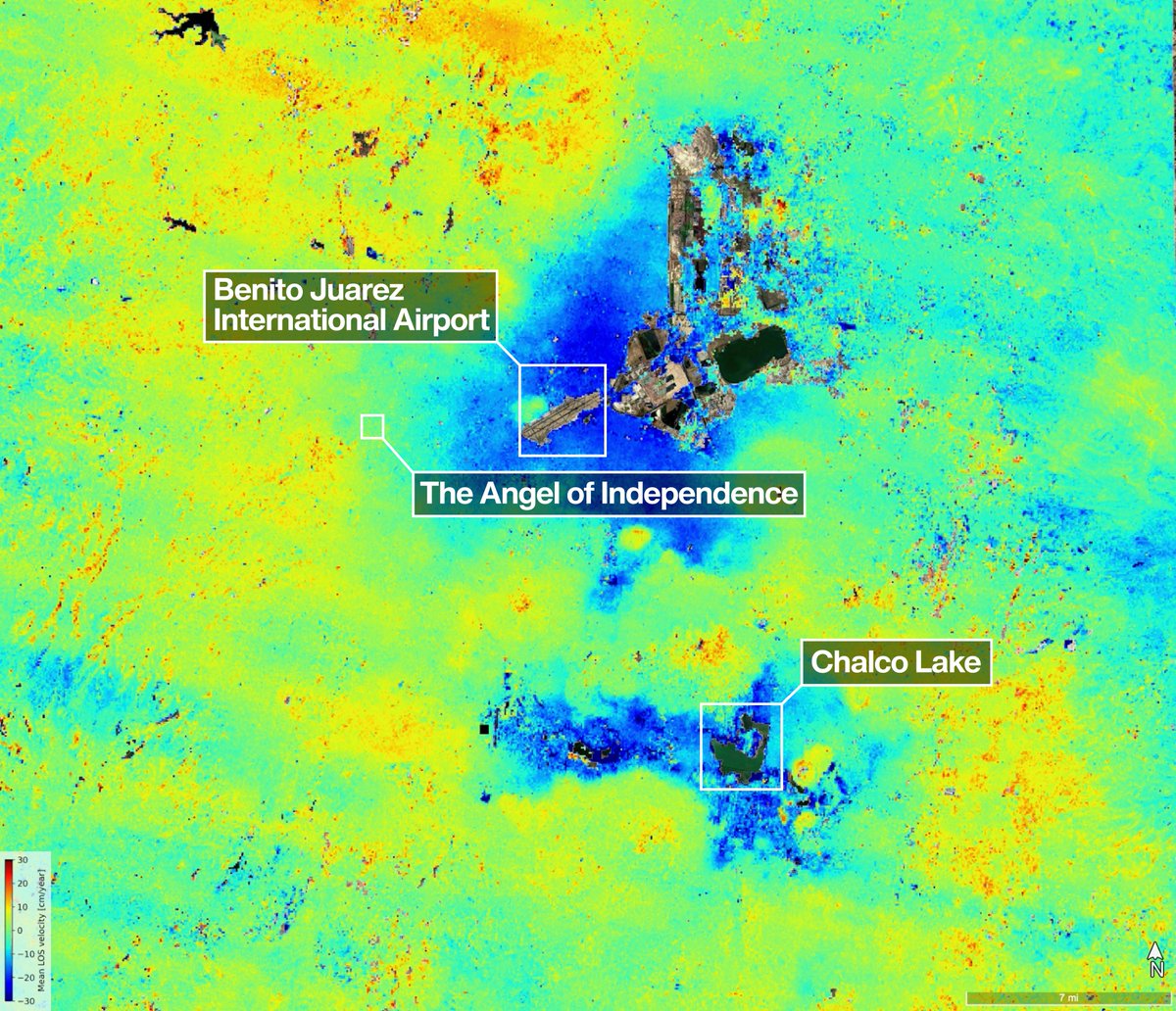
The ground beneath Mexico City is slowly sinking, and now, the NISAR satellite can track it from space.
New data shows parts of the city (in blue) that sank more than half an inch (more than 2 cm) per month from Oct. 2025 to Jan. 2026.
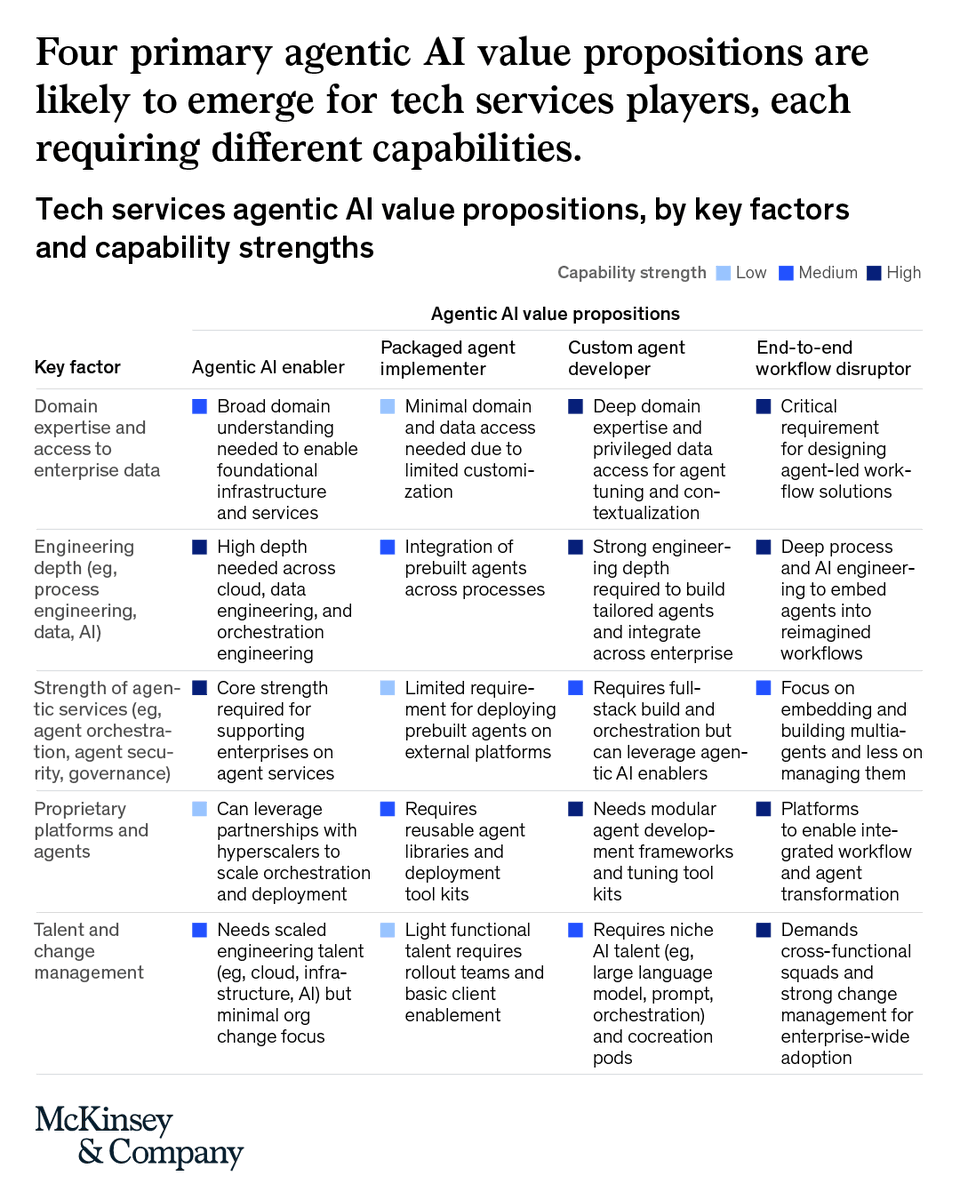
Agentic AI is changing how tech services create value.
We’re starting to see four distinct roles take shape, each with a different set of capabilities, bets and trade-offs.
The question isn’t whether to play but where to focus and how to build around it. https://t.co/Kg9LETGDur