Voy a decir algo que incomoda.
Y no me importa.🤷
La escuela argentina no se cayó sola.
La tiraron abajo con premeditación y alevosía.
Durante veinte años aplicaron un modelo educativo que fue, en los hechos, una demolición cultural sistemática.
Y lo hicieron con una coartada perfecta: los derechos del niño.
Nadie se iba a oponer a eso. Genial. Aplausos.👍
Pero detrás de esa bandera vinieron tres operaciones que destruyeron generaciones enteras:
- Le sacaron la autoridad a los docentes.
El maestro pasó de ser una figura de respeto a ser un empleado maniatado.
No puede exigir, no puede reprobar sin justificarse ante diez formularios, no puede corregir sin que le digan que "violenta".
Lo castraron pedagógicamente y después se preguntan por qué los chicos no aprenden nada.
- Le sacaron la autoridad a los padres.
La escuela se convirtió en el brazo del Estado para hablarle a tus hijos por encima tuyo.
Sin pedirte permiso. Sin escucharte.
Agenda de género, ideología, educación sexual desde la infancia.
El hijo ya no es tuyo.
Es del sistema.😳
Nivelaron para abajo y lo llamaron inclusión.
Sacaron la exigencia.
Sacaron el esfuerzo.
Sacaron la nota que duele y te obliga a crecer.
Todo era trauma, todo era violencia, todo era exclusión.
El resultado está a la vista: chicos que terminan el secundario sin poder escribir una carta ni resolver una cuenta simple.🤌
Y mientras hacían todo eso, ¿saben qué desapareció silenciosamente del aula?🤔
- Los modales.
- El protocolo social.
- El castellano correcto.
- La música.
-El arte.
-La estética.
-La formación del carácter.
Todo aquello que hacía que un pibe de barrio saliera de la escuela sabiendo pararse ante el mundo con dignidad.
Eso era la verdadera movilidad social.
Eso era igualdad de verdad.👍
Lo borraron.
Y lo reemplazaron con adoctrinamiento que no le sirve para conseguir trabajo, criar una familia ni entender la realidad.
Esto no es una crítica a los docentes.
Al contrario.👍
Los docentes son las primeras víctimas de este esquema siniestro.
Los que tienen vocación se rompen el alma tratando de enseñar dentro de un sistema diseñado para que no puedan.
La crítica es al modelo.
A la ideología que lo construyó.
A los que lo diseñaron sabiendo exactamente adónde llevaba.
Una generación sin autoridad que la contenga.
Sin belleza que la eleve.
Sin exigencia que la forje.
Eso no es un error.
Eso es una política. 😳🇦🇷
Y los resultados los estamos pagando todos.
👇 ¿O me equivoco?
@Argenpoirot@MA_Geller Cuando uno pierde la brújula dice lo menos pensado ... Se salió del catecismo y se fue al "pasto". Que se puede esperar.... justifica lo injustificable. Cuando se pierde la confianza.... una legitimidad rota.
Hoy es mi cumple.
Ya son muchos años.
Pero todavía no pierdo la esperanza que nuestra generación deje un país mejor al que nos ha tocado vivir hasta ahora.
Entre todos tenemos que poder lograrlo.
+ de 400 jóvenes de todo el país iniciaron Medicina Veterinaria (Tandil) @UNICEN_Oficial
Un comienzo de etapa con el acompañamiento de docentes, nodocentes y el CECV, y una base en Biología, Química, Física y Matemática para su trayectoria académica.
¡Bienvenidos!
🇦🇷🚅|HISTÓRICO: EL GOBIERNO DE MILEI COMPRARÁ 43 TRENES NUEVOS . ESTA INVERSIÓN PERMITIRÁ REEMPLAZAR MATERIAL RODANTE CON 50 AÑOS DE ANTIGÜEDAD.
✅ LAS UNIDADES OPERARÁN EN LAS LINEAS ROCA, MITRE, SARMIENTO Y BELGRANO SUR .
👇🏻¿APOYÁS ESTA MEDIDA?
Same with the seminomads that I live with now — all livestock diet (lamb, goat, and beef).
They weren't introduced to the concept of eating vegetables until the Russians arrived and began to rule them in the early 1900s.
The majority herded animals for 12 hoirs every day. Oldest accounts of modern semi nomads I've seen is the early 90s.
As far back as the mid 1200s, the Secret History of the Mongols suggests that Chingis Khan's forces were so easily able to crush sedintary chinese forces because of how long they could go without eating.
For example, a peasant chinese infantry man could barely last one day without food due to a grain diet that was noted to fully rot the teeth.
Mongols, however, could go for a maximum of three days without eating — this was because they had such a heavy diet of milk and meats that they simply had more calories than all opponents.
However, they additionally carried dried yogurt in leather puches that they consumed while on the move ans jerky under their saddles.
Chinese peasants were stated to defect to the Mongol army because they knew they'd get access to a meat-based diet rather than grain based.
The flaw of the modern world is that it does not honor the nomadic heritage and traditions of our ancient past.
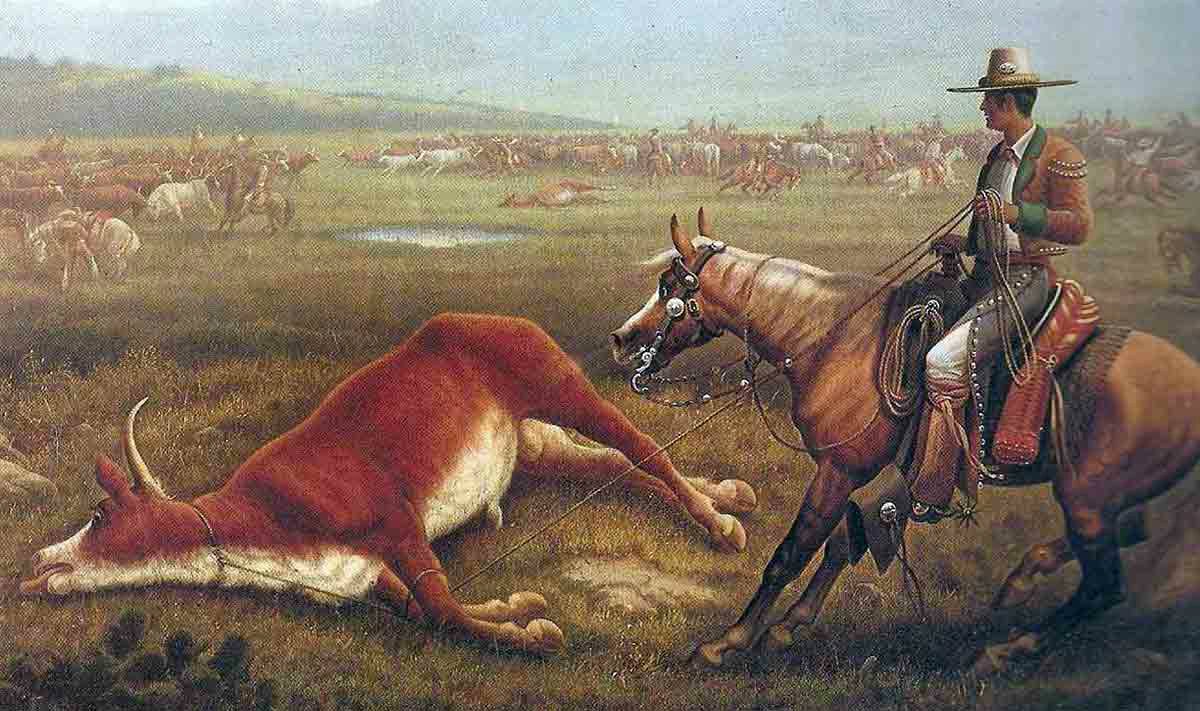
1800s Argentina: British writer William Henry Hudson visits the Pampas, encounters gauchos. Documents their diet with horrified fascination.
"The gaucho eats nothing but beef. Flesh morning, noon, and night. Never bread, never vegetables, rarely salt."
Hudson expects malnutrition and disease. Finds "men of extraordinary stamina and strength, capable of riding 12-14 hours without rest, then dancing all night."
The diet: beef, mate tea, occasionally grilled kidney fat (delicacy). Nothing else.
Darwin visits 1832-1833, observes gaucho life: "I was surprised at the difficulty persuading gauchos to eat anything but beef. I brought biscuits and found them thrown away. They'd rather go hungry than eat bread if beef was available tomorrow."
Typical meals: Morning - beef roasted over fire, fattier cuts. Afternoon - grilled ribs. Evening - beef again, tougher cuts slow-cooked.
Zero vegetables. Zero grains. Zero variety. Just beef and tea.
Hudson documents outcomes: "The gauchos suffer none of the ailments common to civilised man. No digestive troubles, no obesity, no tooth decay I could observe. Their teeth were uniformly excellent despite never cleaning them and consuming nothing but meat. Physical endurance such that they could ride for days with minimal rest, fight when necessary, resume riding without apparent fatigue."
French physician Dr. Jules Crevaux, 1850s-1870s: "These men live exclusively on animal flesh and appear healthier than our European peasantry who eat varied diet of grains and vegetables."
When asked why they don't eat bread or vegetables, common response: "That's food for horses and cattle. We eat cattle."
They understood hierarchy. Cattle eat grass, convert to meat. Humans eat meat. Eating what cattle eat makes you perform like cattle.
Into early 1900s, traditional gauchos maintained beef-exclusive diet. Then European immigration brought wheat cultivation.
Health transformation documented by Argentine physicians. Traditional gauchos: healthy into old age. Urbanised former gauchos on European diets: diabetes, obesity, cardiovascular disease, dental decay.
Modern Argentina: 28% obesity, cardiovascular disease leading cause of death, diabetes nearly 10%.
The gauchos who ate nothing but beef had none of these. They rode horses 12 hours daily into their 60s, maintained teeth without dental care, died from accidents or old age, not chronic disease.
Same beef. Different context. When you eat beef with grains, seed oils, sugar: modern disease. Beef alone: You have the health of a 19th century gaucho.
308 estudiantes del secundario de diversos orígenes, que realizan un programa articulatorio de ciencias básicas para facilitar el 1er año de FCV @UNICEN_Oficial . 29 años de experiencia y articulación! #universidadpublica
This is one of the most thought-provoking critiques I've heard on the current thinking around climate change and CO2.
This is Olivier Hamant, Research Director at France's National Research Institute for Agriculture, Food and Environment (INRAE).
Hamant explains that it's actually a counterproductive trap to laser focus on CO2 reduction, and even on climate, as we create "solutions" that actually "worsen the penury of resources, worsen global pollution and worsen the collapse of biodiversity."
It's a bit like the story we often hear about the danger of AI, where an AI tasked with "eliminating cancer" decides the most efficient solution is to eliminate all humans. We've given our economic and political systems the narrow goal of "reducing atmospheric CO2," and these systems actually end up destroying the living world that actually regulates our climate.
Hamant's alternative is elegantly simple: start with life, with biodiversity, which he says is "the most systemic lever" with positive impacts on climate, pollution and resource shortage.
I've often been struck with the collapse of biodiversity and the lack of public attention on the topic. For instance a recent survey in the UK found that, in just the last 3 years alone, the insect population in the UK had collapsed by an astounding 63% (https://t.co/lQ7c7bh7BK).
Yet if you look at it, the UK is actually doing an extremely good job in terms of CO2 emissions, they've more than halved them since the 1970s (https://t.co/bpt1YUq3nD). So what gives? What's the point of reducing CO2 emissions if they're simultaneously literally destroying the very foundation of life in the country - the insects, plants, and ecosystems that sustain everything? It sounds like madness.
Hamant is right that at the end of the day life is the litmus test, it all starts and ends with it. Maybe we need to start asking ourselves if we're not treating a symptom and killing the patient.
@ClaudioErsinger Que se podría esperar de los personajes que destruyeron lo más preciado del INTA. Lo destruyeron para hacer de este ente, como hicieron con muchos organismos que eran de excelencia, los convirtieron en ineficiencia, falta de credibilidad, poca transparencia y muchas corrupción