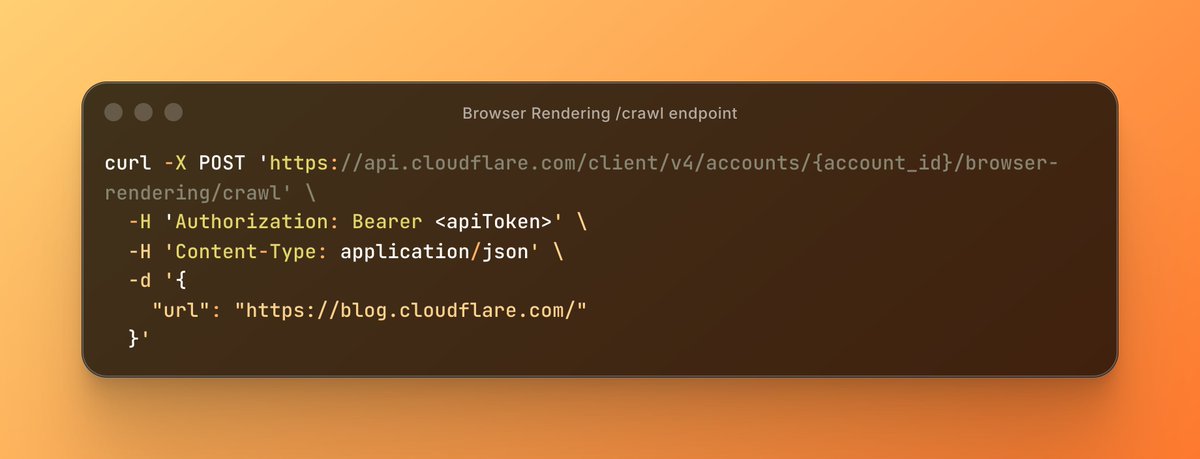
Introducing the new /crawl endpoint - one API call and an entire site crawled.
No scripts. No browser management. Just the content in HTML, Markdown, or JSON.
Qwen3.5 is multimodal on paper, but don't use it for OCR workloads in ollama
Running on NVIDIA RTX 4000 Ada (20GB VRAM) in Docker
Single document scan (img size 2000x3000):
-qwen3.5:9b-q8_0 → timeout, HTTP 500
-qwen3.5:9b (Q4) → 560s
-qwen3-vl:8b-instruct-q8_0 → 15s
slow af
That's a 37x difference. Same GPU, same ollama, same image.
- qwen3.5 = great text model with vision as a bonus
- qwen3-vl = actual vision model optimized for image processing
No idea why it's that slow. Does someone has a hint?
#Qwen
Qwen3.5 is multimodal on paper, but don't use it for OCR workloads in ollama
Running on NVIDIA RTX 4000 Ada (20GB VRAM) in Docker
Single document scan (img size 2000x3000):
-qwen3.5:9b-q8_0 → timeout, HTTP 500
-qwen3.5:9b (Q4) → 560s
-qwen3-vl:8b-instruct-q8_0 → 15s
slow af
I got tired of rebuilding the same AI dev workflows in every repo: same prompts, same checks, same agents - just with different versions and improvements each time.
So I created skill-library.
https://t.co/BllZ2Idt59
Start here:
Pick 5 skills, cover the full dev cycle:
e.g.
prompt-builder → plan-review → tdd → systematic-debugging → session-verify
Fork it, add your own, keep everything versioned - one library for all projects.
Every installed skill costs tokens on every API call.
27 skills with 3-4 line headers = ~100 lines of permanent system prompt you carry around.
Research shows context bloat alone kills 14-85% of model performance (EMNLP 2025).
So I designed for less.
A small, practical hub to store, organize, and reuse AI coding skills across all projects.
27 skills. 5 agents. 4 rules. You install only what you need.
Mostly based on Python.
Sam Altman is such an incredible backstabber, liar and traitor.
While your competitor is taking a heroic and principled stand, you swoop in to make your deal. Imagine working for this guy - is there a greater shame?
This should lead to a mass exodus from OpenAI.