Fan-run archive dedicated to the preservation of Mariah Carey’s legacy. Museum-grade stewardship of memorabilia. Not affiliated with @mariahcarey or her team.
🦋 Hey #Lambily! We’re building a special fan project to celebrate and preserve Mariah Carey’s legacy, and we want your stories to be part of it!
Please share your most memorable moments with Mariah through our official Fan Story Submission Form:
https://t.co/Jss9IKw4P2
Concert memories, how a song helped you through tough times, the magic of her voice, photos, or even audio clips — every submission helps keep her legacy alive. We can’t wait to read them! 🎤❤️
#MariahCarey #Lambily #MariahMoments
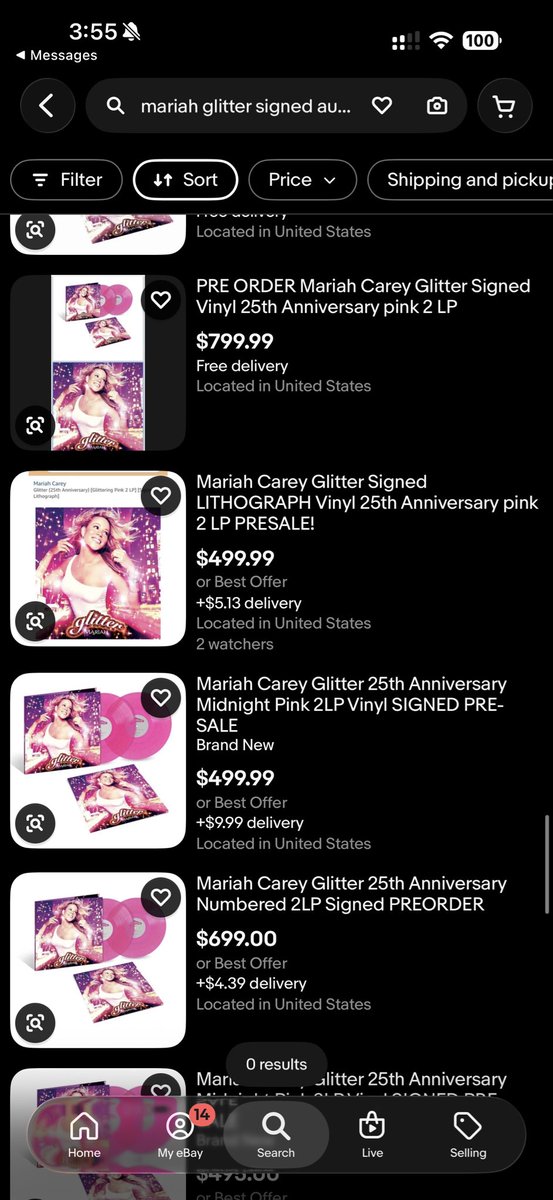
For the record, ALL of the Daydream and Glitter vinyls were signed by Mariah herself! If you think otherwise, you clearly don’t know her AT ALL! She didn’t have to take the time to do this, but she did it for us. When she stops signing vinyls then y’all can really go and cry
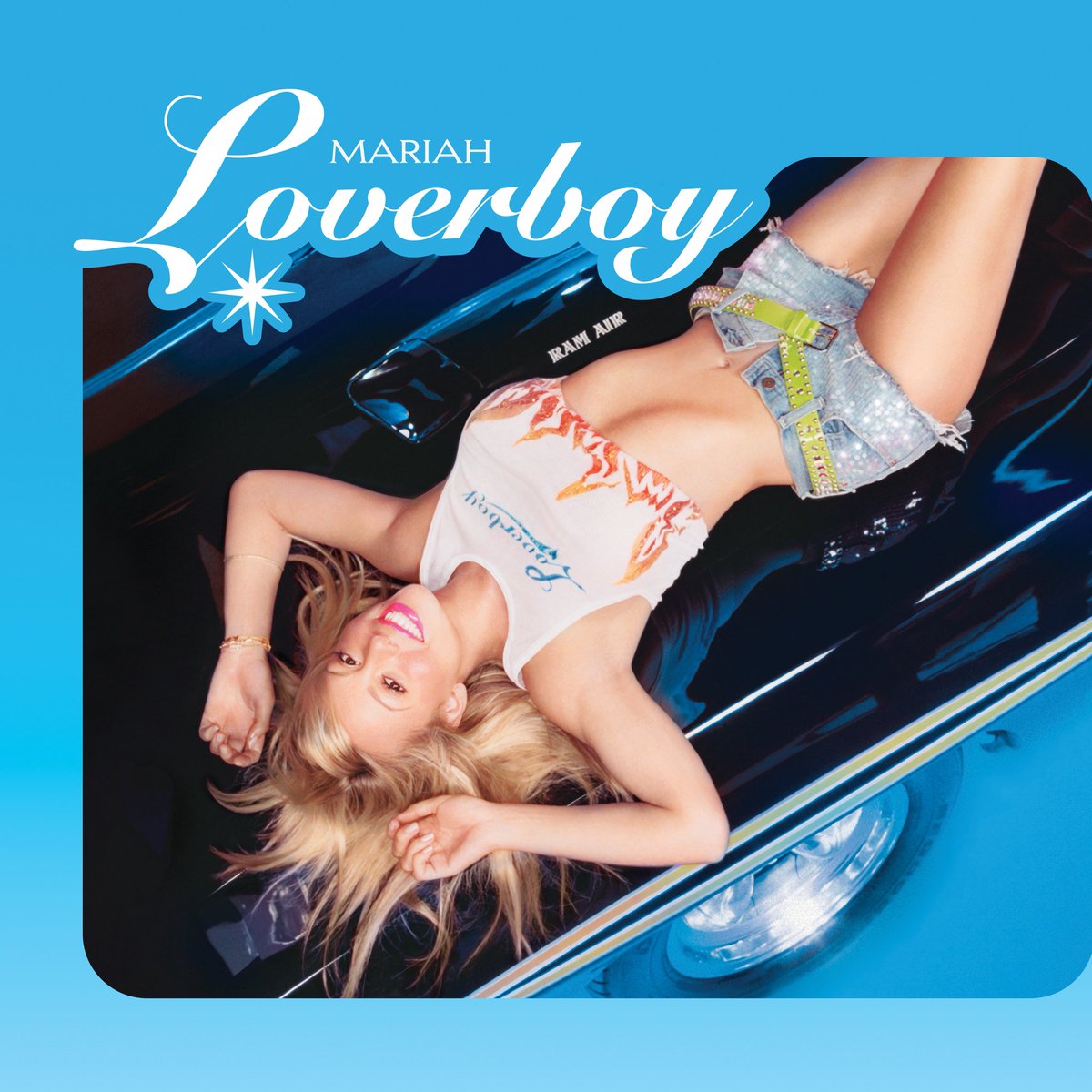
Why this was done for Loverboy
The original film elements still existed in the UMG archives, which made a proper restoration possible. Many older music videos no longer have accessible film elements, so teams are limited to cleaning or AI-upscaling whatever digital masters remain. In this case, the materials were available, and the 25th anniversary of Glitter provided the occasion to do the work at a higher standard.
The approach was also consistent with the visual ambition of the original video. LaChapelle’s 2001 shoot was colorful, stylized, and film-based; a high-quality scan and new grade could unlock more of that imagery than a simpler upgrade. Fans immediately noticed the difference and specifically praised it for going well beyond standard music-video restorations and avoiding AI tools. Mariah Carey herself highlighted the restoration, noting that LaChapelle shot it on a racetrack in the desert and calling it one of her favorite videos.
The decision reflects both practical possibility (the film elements survived) and a preference for archival authenticity over faster, lower-cost digital enhancement methods.
The Loverboy Remix 4K release is a full film restoration, not a digital remaster or AI enhancement. Here is exactly what was done, how it compares to other common approaches, and why this method was chosen.
What they actually did
In May 2001, David LaChapelle directed the “Loverboy” and “Loverboy Remix” videos at LA County Raceway, shooting on 35mm film. As was standard for music videos at the time, the final edit was finished on tape rather than on film. This meant there was never a single assembled 35mm negative of the completed video—only the original camera rolls (unassembled film elements).
For the 2026 restoration, released for Glitter’s 25th anniversary, the team:
1Located the original, unassembled 35mm film elements through the UMG Film Archives.
2Scanned the footage frame by frame in true 4K on a Lasergraphics Director scanner at ProTek Vaults. This is a specialized optical film scanner used for archival work, not a digital conversion of an existing video file.
3Re-edited the scanned material shot by shot to reconstruct the exact original 2001 cut, preserving the original pacing, performances, and edit decisions. This step was necessary because no finished film negative of the final edit existed. Restoration edit was by Morgan James Chadwick.
4Applied a new color grade by Rob Bessette (Color Refinery) to recover the film’s full dynamic range and detail that earlier transfers had limited.
5Performed VFX cleanup by Skulley Effects.
The result is the first digital and streaming version of the video in true 4K. It retains the original edit and performances while revealing substantially more authentic detail, color, and clarity than previous versions.
How this differs from other restoration methods
Typical digital remasters or “HD upgrades” These usually start with an existing master (often a standard-definition tape transfer or early digital file). The file is cleaned, noise-reduced, color-corrected, and sometimes sharpened. The result is limited by whatever information was already in that source file. Detail that was never properly transferred from the original film cannot be recovered.
AI upscaling AI tools (such as Topaz Video AI and similar models) take a lower-resolution digital file and use machine learning to generate higher-resolution detail. The algorithm analyzes patterns and invents plausible textures, edges, and resolution that were not present in the source. This can make footage look sharper and more modern, but the added detail is estimated rather than real. Common side effects include overly smooth or plastic-looking skin, invented textures in hair and fabric, flickering between frames, and a recognizable “AI-enhanced” appearance. AI upscaling cannot recover information that was never captured in the starting file.
True film restoration (what was done here) This starts with the original physical film. Frame-by-frame optical scanning extracts actual information that was recorded on the negative in 2001. Because the source is the film itself rather than a previous transfer, the process recovers genuine detail, grain, and color range. It requires significantly more time, specialized equipment, and skilled labor (scanning, shot-by-shot reconstruction, professional color grading, and VFX). The result is authentic rather than synthesized.
In short: a digital remaster improves an existing file; AI upscaling invents missing detail from an existing file; the Loverboy restoration recovered detail that had always been on the original film but never fully extracted.
Mariah wanted to honor this release by giving back to the fans, and unfortunately, you ruined that for us by allowing the scalpers to win due to the vinyl being mislabeled. The copies labeled “signed” were NOT the signed copies. That is false advertising.
We’re heartbroken that so many genuine fans never even had a fair opportunity to get a signed copy. Please do the right thing and fix this. The fans deserve better.
Fans are mad because Complex posted shop links ~30 min before Mariah’s official announcement, letting bots/scalpers clear the limited 3k numbered pink signed lithograph edition. The site also swapped labels and prices, so buyers who selected the “signed” version received the regular one instead after the real signed sold out.
Complex/uDiscover should audit affected orders, upgrade them to signed or fully refund/replace, cancel clear scalper buys if feasible, and prioritize a fair restock for fans. Email https://t.co/uV72w8CRNk.
Complex dropped the shop links ~30 min before Mariah’s official post. The signed numbered pink edition (with lithograph, limited to 3k) is sold on Complex’s site via uDiscover.
For the early drop, labeling mix-ups, or bot/scalper issues, email https://t.co/uV72w8CRNk. Limited high-demand drops routinely sell out fast.
One second you’re exited about having Glitter vinyl signed by @MariahCarey 👑💖 and the other you found out that it was actually mislabeled on the site and you bought the version that doesn’t come signed and now the signed version are all sold out.
Genuinely sad. @uDiscoverMusic
@Complex@ComplexMusic I hope both sides of the pillow are never cold. That you hit your toe on corner of every piece of furniture. And you get a paper cut on everything you touch. 🖕you