👩🏻💻Civil servant and Software PM at @maecgob. IT Engineer. UOC Security Master. Certified: @criptocert, GCLD and GCTI @certifygiac, CCSP and CDPP @ismsforum
Today a crazy quantum story just got wilder.
On March 31, the Google Quantum AI team published a landmark result on Shor's algorithm for elliptic curve cryptography. Technically, the paper was a bombshell: a dramatic 10x improvement over the state-of-the-art. As a stunt and wakeup call to the blockchain space, those optimisations were illustrated on secp256k1, the elliptic curve underlying Bitcoin and Ethereum signatures.
But perhaps the most striking part of the paper was sociological, not technical. Instead of following standard academic process, the optimisations were kept secret, hidden behind a zero-knowledge (ZK) proof. Google's accompanying blog post mentions they "engaged with the U.S. government". The ZK proof demonstrates the existence of algorithmic improvements without leaking details. Academic censorship with ZK, a historic first!
As a co-author of the Google paper I witnessed some of the context surrounding this censorship. To be honest, multiple aspects of that context don't sit well with me. As much as I believe the general public ought to know more, I am limited in my ability to whistleblow. Though let me be clear about one thing: the Google team's professionalism has been absolutely exemplary, and they deserve nothing but praise.
Censorship has a way of backfiring. The Streisand effect, where an attempt to bury something only draws more attention to it, is exactly what's unfolding today. First, Google's key optimisation has been rediscovered by the French. And in a thrilling turn of events, a collaborative Shor-at-home challenge just launched. The initiative, available at ecdsa[.]fail, breached a new Shor world record in a matter of hours.
Let's start with the rediscovery. Just two months after Google's paper, French quantum expert André Schrottenloher cracks the main secret optimisation. His paper, titled "Optimized Point Addition Circuits for Elliptic Curve Discrete Logarithms", landed on the arXiv today. Big congrats to André, who beat several other nerdsnipped experts to it. In a blog post also published today, Craig Gidney, the world expert on Shor optimisations, revealed that he'd been sitting on this very optimisation for a whole year under censorship pressure.
Interestingly, André missed a handful of minor optimisations, both from Google's original publication and from improvements found since. It's plausible there's still plenty of juice left to squeeze out of Shor, and this is exactly what the ecdsa[.]fail challenge is about. The verifier program developed for the ZK proof does double duty, automatically filtering for valid submissions. Dozens of compounding small and micro improvements are rolling in. As of the time of writing there's an 8.4% improvement to Google's circuit, as measured by the product of logical qubit count and Toffoli gate count. Nice!
The nerdsnipping ran deeper than anyone expected. Over the last few weeks it became clear it extended well beyond André and other quantum experts. Behind the scenes, a small army of amateurs quietly got to work. Inspired by Karpathy-style autoresearch, they turned AI on Shor. Ironically, the verifier program for the ZK proof makes an ideal reward function for AIs. The barrier to entry for this modern style of research is refreshingly low, with several non-experts, even a teenager, finding nice optimisations. Get in touch if you'd like to join a Telegram group with fellow autoresearchers :)
Part 2: neutral atoms and qday
The story doesn't end with Google. On the same day Google went public, a stealthy startup called Oratomic published its own Shor paper in a coordinated release. It made a splash, ultimately becoming the most upvoted paper on scirate[.]com, a website ranking arXiv papers.
Oratomic's claim was wild. By building on Google's logical optimisations and applying custom physical optimisations for neutral atoms, they claimed just 10K physical qubits were sufficient to run Shor's algorithm on secp256k1. That number is mind-bogglingly low.
Knowing essentially nothing about neutral atoms when Oratomic's paper landed, I was intrigued and decided to learn more about the tech. I fell straight down the rabbit hole and spent a couple hundred hours on the topic. I got a little obsessed and watched every YouTube video I could find and spoke to a bunch of experts.
My conclusion? The tech is real, very real. Even Google recently decided to start a neutral atom lab, a notable pivot from their sole focus on superconducting qubits. If you care about qday, i.e. the day a quantum computer will break the first piece of cryptography in production, neutral atoms demand your attention. I shared some of my learnings on Shor and neutral atoms in a 30min talk at the ZKProof cryptography conference. You can find it on YouTube by searching "zkproof neutral atom".
Here's an interesting observation about this duo of breakthrough papers: neither Google nor Oratomic say a word about what their results mean for qday. No timelines. Zero. Nada. That is especially baffling given that the whole point of whitehat quantum cryptanalysis is to inform qday estimations and help the general public make good decisions.
So let me attempt to partially fill the silence, similarly to what Scott Aaronson did in his April 29 post. Given everything I know, including scary non-public information, I now put the odds of qday by 2032 at 50%. 10% by 2030.
Anecdotally, the US government has its own date: 2035. Originating at the NSA and later adopted by NIST, it's when branches of the US government will be disallowed from using quantum-vulnerable cryptography. In plain language: with hindsight, that date is a joke and should be discounted entirely. I don't see how NIST avoids being forced to pull it forward by years.
Part 3: post-quantum cryptography
There are good reasons to sound the alarm today, but please do not panic. Rushing carelessly towards immature post-quantum cryptography is a recipe for disaster. IMO a good target date for migration is 2029, roughly 3.5 years out. 2029 happens to be the date selected by Google, Cloudflare, and the Ethereum Foundation.
These days most of my time goes to safely migrating Ethereum towards post-quantum cryptography as part of the broader lean Ethereum effort. There's a lot to do. We need to rip out and replace BLS signatures at the consensus layer, KZG commitments at the data layer, and ECDSA signatures at the execution layer.
The plan to get there is compelling, and is based on hash-based cryptography. Within the Ethereum Foundation we've developed a Swiss army knife called leanVM (github[.]com/leanEthereum/leanVM) powered by the magic of hash-based SNARKs. Thanks to truly exceptional work by Emile, Thomas, and others, its performance is derisked. Regarding security, leanVM is a jewel, a minimal zkVM crafted for end-to-end formal verification and maximum security.
Want to help? There are two $1M initiatives. First, the Proximity Prize (proximityprize[.]org). Solve a long-standing mathematical conjecture in coding theory, improve hash-based SNARKs, and go home a millionaire. Second, the Poseidon Initiative (poseidon-initiative[.]info), offers $1M for breaking Poseidon, the SNARK-friendly hash function.
🔔Post-Quantum Signatures: NIST's Second Wave
In August 2024, NIST finalized its first PQC standards: ML-KEM (key exchange), ML-DSA, and SLH-DSA (signatures). A third signature, Falcon (FN-DSA, FIPS 206), is still in draft.
Last week, NIST announced the nine candidates advancing to Round 3 of a parallel competition aimed at additional signature schemes, explicitly chosen to fill the gaps left by the first wave.
Each of the standardized signatures comes with sharp trade-offs. None of them is naturally suited to threshold signing, and all have signatures that are large compared to ECDSA's 64 bytes.
➡️ SLH-DSA (SPHINCS+, hash-based) The most conservative choice: its security rests only on the collision resistance of a hash function. The price is enormous signatures (7–50 KB !!!). It is the safest pick for very long-lived signatures (firmware, archival, some blockchains such as QRL).
➡️ML-DSA (Dilithium, lattice-based). Compact and fast, while elegant, is younger than hash-based assumptions. It is becoming the default for TLS, PKI, and most non-blockchain ecosystems (~2.4 KB signatures).
➡️Falcon (FN-DSA, lattice-based). The smallest of the three (~666 B at NIST-I), which is why Algorand and Solana selected it. Its drawback: signing relies on floating-point arithmetic, making error-prone and side-channel-resistant/ constant-time implementations notoriously hard. Its FIPS 206 standard is still in draft.
🔍Most blockchains are leaning towards customized shorter versions of SLH-DSA.
NIST is organizing a second wave of standardization. The goal is twofold: shrink signature sizes and diversify the underlying mathematics so a single cryptanalysis breakthrough cannot break everything. The nine Round 3 finalists span five families:
🔸 Isogeny: SQIsign
🔸 Lattice: HAWK
🔸 MPC-in-the-Head: MQOM, SDitH
🔸 Multivariate: MAYO, QR-UOV, SNOVA, UOV
🔸 Symmetric-based: FAEST
Notably, no code-based scheme survived. Both Round 2 candidates were eliminated: LESS and CROSS were dropped because of 2 attacks
👉 Two candidates worth watching
⏩ SQIsign produces the smallest known post-quantum signatures by a wide margin: from 148B to 292B (depending on the level of security), with sub-130-byte public keys. That is the only PQC signature scheme today that even approaches the bandwidth profile of ECDSA, extremely attractive for blockchains, certificates, and firmware. The catch: isogeny-based cryptography is still young, signing is mathematically intricate, and side-channel hardening is an active research area.
⏩HAWK is essentially "Falcon without the floating-point." It is a lattice hash-and-sign scheme producing 555 B signatures at NIST-I (smaller than Falcon's 666 B) and can be implemented purely with integer arithmetic, a major engineering win.
NIST has said the Round 3 review will last roughly two years and that any multivariate winners are unlikely to be standardized without yet another round. Realistically, the earliest a new signature standard will land alongside ML-DSA and SLH-DSA is 2028.
The urgency to migrate has grown sharply, yet the current standards still have significant drawbacks, and this last-minute selection round, while necessary, collides head-on with the migration timeline.
⚠️ On May 16, 2026, we confirmed a targeted attack by a cybercrime group that gained unauthorized access to our GitHub repositories and downloaded our codebase.
Here is the latest update about our investigations. https://t.co/C2btjWDOxu
‼️Vulnerabilidad crítica en Google Chrome CVE-2026-7908
Recomendaciones:
1. Aplicar el parche oficial
2. Consultar el advisory del fabricante y de CISA
3. Implementar controles compensatorios
4. Revisar inventario de activos
Descubre más: https://t.co/FYKDfJhae0
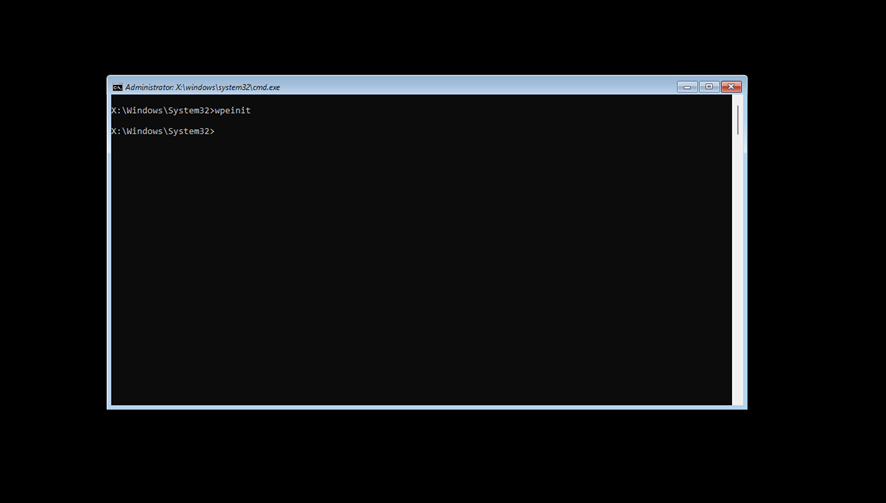
Noticias del autor de BlueHammer enfadado con Microsoft. Nueva vulnerabilidad muy interesante que permite eludir BitLocker. Se llama YellowKey, solo necesita un USB y parece un error de debug olvidado en el código. Además promete más sorpresas. Hilo¬
A severe authentication bypass vulnerability in cPanel, one of the most widely deployed web hosting control panel platforms on the internet, is being actively exploited in the wild, according to security researchers and hosting providers. https://t.co/LFDrIlRA0I
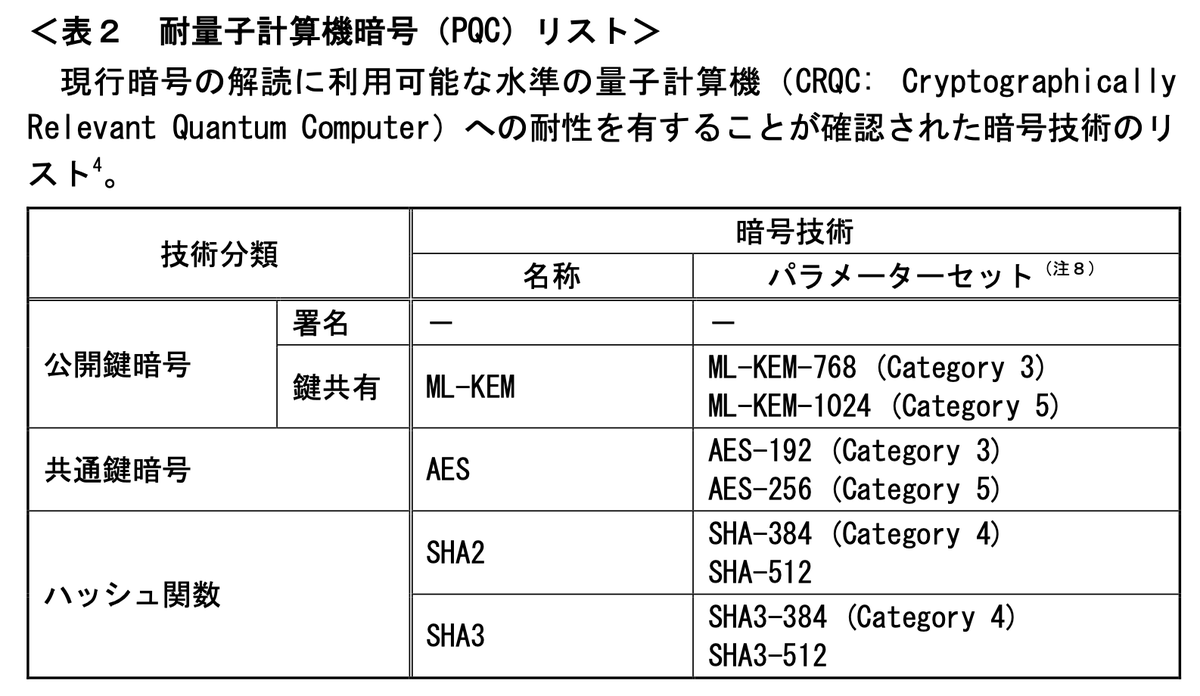
In Japan, CRYPTREC (NIST equivalent) defined PQC requirement for e-government systems: no signature defined yet, ML-KEM but not hybrid, AES but with 192b+ key size
PDF: https://t.co/7pbW6Sgvgp
Germany's parliament speaker had her Signal account fully compromised by Russian SVR hackers. J. Klöckner, holder of the country's second-highest office was a member of a German ruling party CDU executive board Signal group that also included Chancellor Friedrich Merz. It is unclear if Russia read those chats and for how long. Merz's phone was inspected by counterintelligence and came back clean. Klöckner's did not.
The attack is insultingly simple. Fake "Signal Support" just ask to hand over the PIN securing the account. Many European policymakers fell for it. That's it. https://t.co/YsFnQ8Uq9E