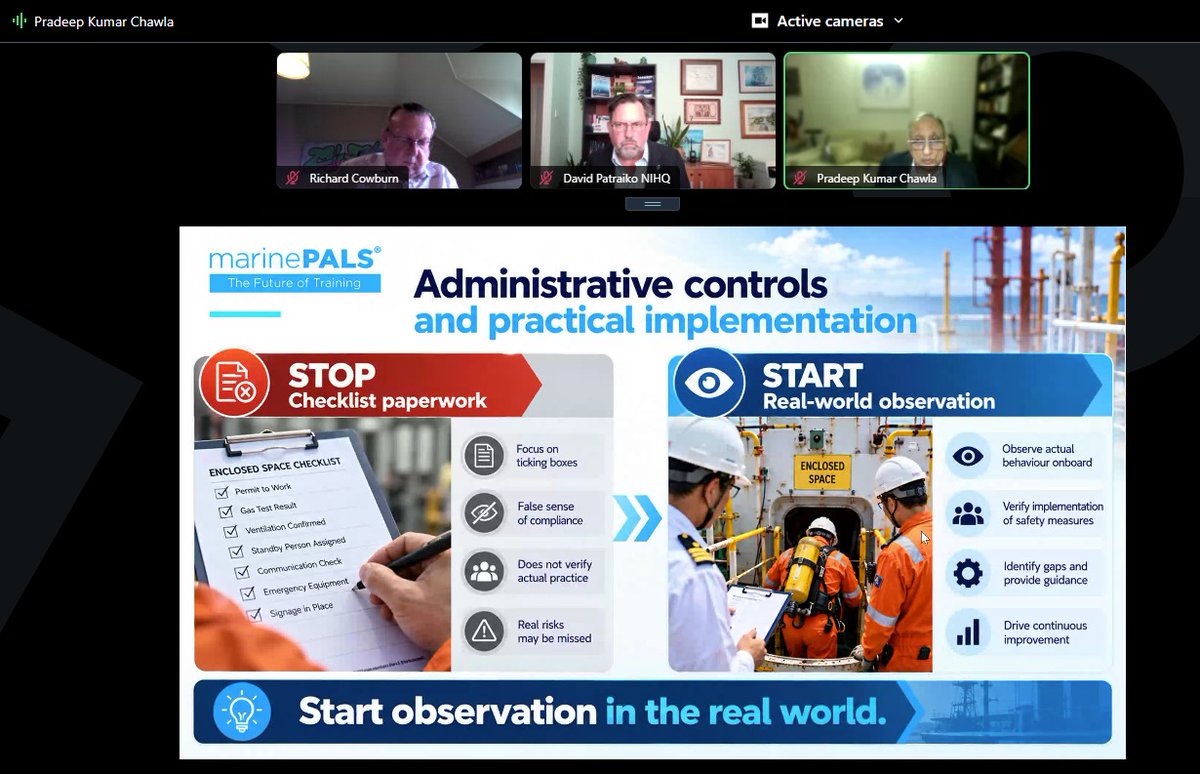
A new pair of eyes sees what crews have grown used to.
🔑The goal is to move from checkbox compliance to observing real behaviour onboard, and to driving continuous improvement.
Would you agree? Tell us in the comments. #EnclosedSpaces#SeafarerSafety#MaritimeRisk
As part of @NauticalInst's webinar on #EnclosedSpaces, @chawlapk discussed the fact that while procedures and training to prevent incidents and fatalities remain critical, we need to look beyond them to address the incidents that remain a factor for our industry.
#SeafarerSafety
🔑 On administrative controls, he suggests mandatory enclosed space drills during port state control inspections, and an ISM Code amendment so internal auditors and vessel managers observe drills during audits. It isn’t about distrusting seafarers.
Join our CEO @chawlapk tomorrow, 27 Oct 2026, from 9:00 - 10.00 UTC, for a webinar hosted by @NauticalInst on Enclosed Space Safety: Shared Risks, Shared Responsibility.
It will also share results from @InterManagerOrg's survey on this topic.
Register: https://t.co/xBSnsK5dEG
Last week at @MaritimeIC#CrewConnectGlobal, MarinePALS CEO & @GlobalMetOrg Chairman @chawlapk noted the need for the STCW revision to move faster. He noted that @IMOHQ's priorities on alt fuels, mental health & DEI are largely in place, but manning levels need deeper scrutiny.
Will you be joining @chawlapk tomorrow for @MaritimeIC's #CrewConnectGlobal's steel man debate on the next phase of the #STCW Convention Which of the 22 identified gaps in the STCW do you think should be addressed as a priority, on what timeline, and to whose standard? Tell us!
Safety is built by supporting the people who do the job, long before an incident happens. At MarinePALS, that is what drives our work.
Find more information on how we support safer operations at https://t.co/zChygKJ52v or reach out to us at [email protected]
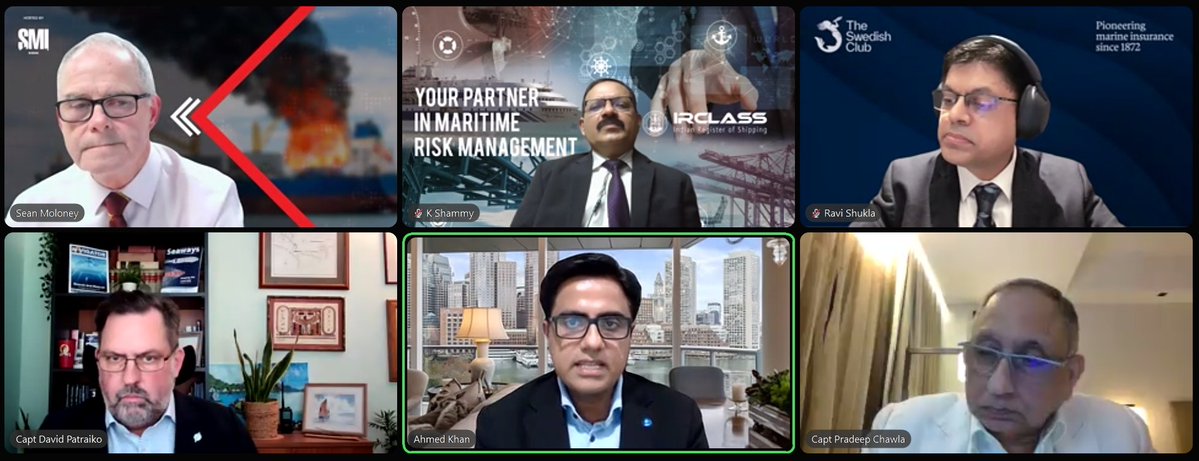
Drawing on 32 years of industry experience in safety and training, @chawlapk had a clear message during today’s @ShipManInter webinar on identifying and managing risk:
When things go wrong at sea, we need to look at the systems in place before we rush to blame the seafarer.
🔹 Invest in training — As a high-hazard industry, shipping still spends very little on training: around 1% of operating costs, compared with a minimum of around 5% in other high-hazard industries. This should change if we want to support crew and reduce risk.