When Arafat Compared Himself to Saint Peter
Arafat was not one to avoid hyperbole; that much is certain. During a visit to Rome in September 1982, he compared himself to Saint Peter. Said Arafat:
"Many years ago a man came to Rome from Palestine. He was a fishermn and he not only entered the city, but also the hearts of Romans. Today, another man came from Palestine. I am not a fisherman, but an engineer. But I also want to talk to the hearts of Romans..."
One reason for Arafat's self-confidence may have been the highly publicized audience he was granted with the Pope—never mind that Arafat had just departed the only Arab country in which Christians wielded significant political influence, and one whose destruction he had helped bring about.
The U.S. Embassy in Rome was clearly unimpressed by Arafat's comparison of himself to Saint Peter. Reporting back to Washington, embassy officials dryly wondered whether "Arafat recall[ed] how Saint Peter wound up?" (He was crucified).
The Myth of Patriarch Hoyek Rejecting Wadi al-Nasara
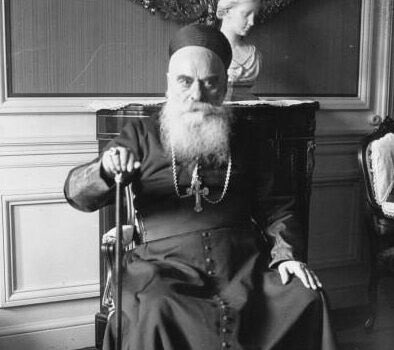
1/ One of the most persistent myths in Lebanese history claims that Patriarch Elias Hoyek was offered the annexation of Wadi al-Nasara to Greater Lebanon, but rejected it because the valley had an Orthodox majority.
Lenin waited until Russians were eating human flesh and corpses lined the roads before ordering the Church destroyed.
In March 1922, with millions already dead from famine, the Bolsheviks seized Orthodox gold, silver, and sacred vessels under the banner of feeding the starving.
Patriarch Tikhon offered voluntary aid but refused to surrender consecrated items. When parishioners in Shuya defended their cathedral, Red forces opened fire and killed several.
4 days later Lenin sent a top secret letter to the Politburo and turned the crisis into a kill order.
He said the famine was the perfect window. Peasants were too broken to resist, so strike now with “the most frenzied and ruthless energy.” Arrest dozens of priests, stage lightning trials, and shoot “the very largest number of the most influential” so the rest remember for decades.
Because the Church was the last independent power still commanding loyalty outside Party control.
Marxist atheism treated it as a rival that had to be broken, and the famine gave them the cover and the timing. They framed defense of the altar as sabotage of the starving, then executed clergy for it.
The Bolsheviks effectively turned mass starvation into a weapon against the only force left between the State and total control of the Russian soul.
@1MicheLeb1 There's no such thing as a "Lebanese Nation". There's no history of a "Lebanese Nation". Prior to the declalration of Greater Lebanon by the french, there was simply Mount Lebanon, which is not the same as the Nation of Lebanon.
@Ortho_Enjoyer@Amineiskandar2 Not really. Mount Lebanon should have been as it is, and neither the South, Beqaa, nor Tripoli and Akkar should have been annexed.
Your median professor sits so far left that AOC, Sanders, and Warren would count as moderates in any faculty lounge.
Faculty from 55 elite universities form one towering blue spike of ideology far out on the left, density exploding past 6, with virtually nothing on the conservative side.
This was built through decades of selective hiring, social enforcement, and the systematic purge of dissent.
And because they credential the people who run media, law, government, and tech, the monoculture leaks into every elite institution downstream.
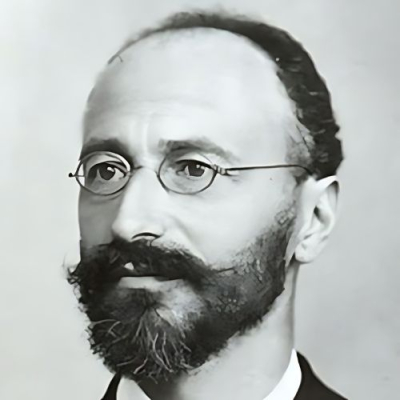
Karl Marx built his entire life’s work on the Labour Theory of Value. Eugen von Böhm-Bawerk destroyed it.
In Capital, Marx claimed that the value of a commodity is determined by the socially necessary labour time required to produce it, and that capitalists exploit workers by paying them less than the full value they create. But in his 1896 work Karl Marx and the Close of His System, Böhm-Bawerk demonstrated that Marx’s entire theory of exploitation collapses because the Labour Theory of Value cannot explain how actual market prices are formed.
Most damaging was what became known as the transformation problem. Marx was unable to explain how labour values could be consistently converted into the prices we actually observe in the market without contradicting his own assumptions. His attempt to resolve this in Volume III of Capital failed on logical grounds.
Böhm-Bawerk also highlighted Marx’s neglect of time in production. Capital goods take time to create, and people generally value goods available in the present more highly than those available in the future. This time preference is the real source of interest — a phenomenon Marx could never satisfactorily explain within his framework.
Without a coherent theory of value based on labour, Marx’s central claim - that capitalists systematically steal “surplus value” from workers - loses its foundation. Böhm-Bawerk did not merely offer an alternative view; he showed that Marx’s system was internally inconsistent and incapable of explaining real economic phenomena.
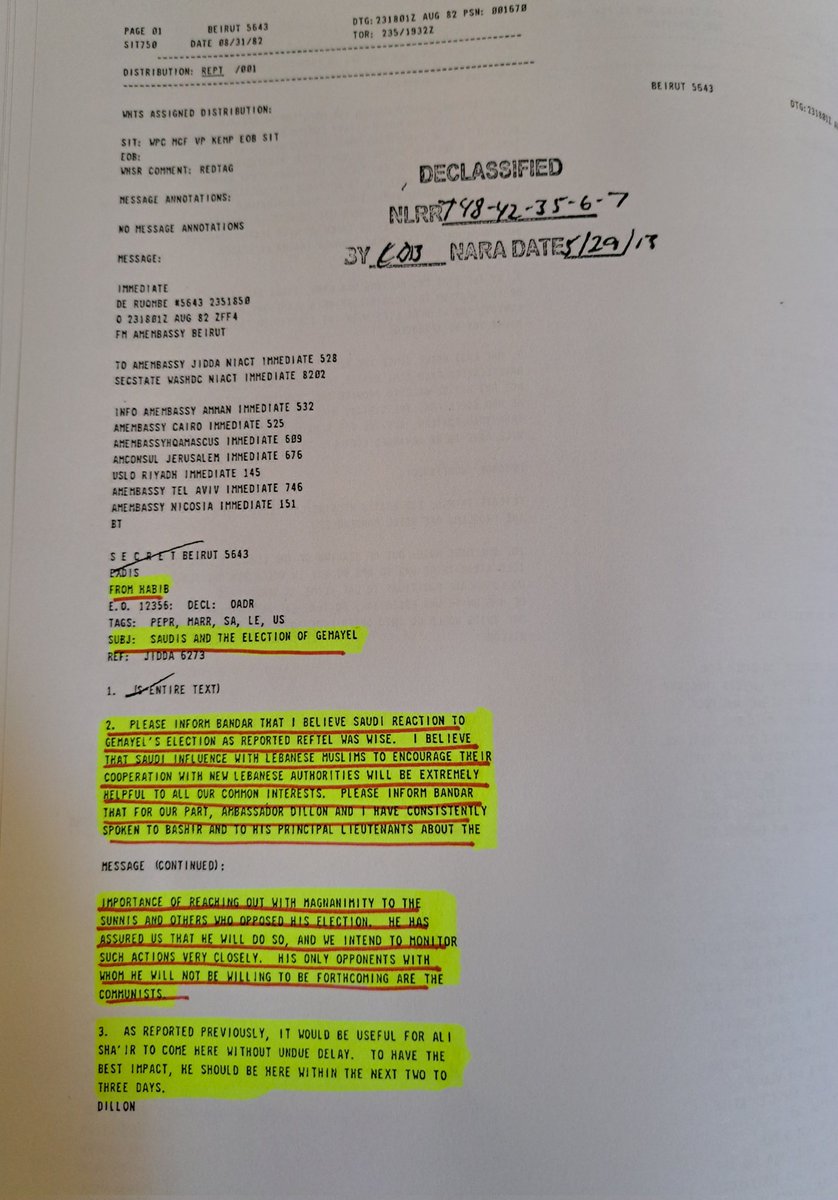
Reagan's Envoy to Saudi Arabia: Your positive reaction to the election of Bashir Gemayel to the Lebanese presidency is "wise"
On August 23, 1982, American diplomat Philip Habib instructed the U.S. Embassy in Saudi Arabia to convey to the influential Saudi diplomat Bandar bin Sultan his satisfaction with the Saudi reaction to Bashir's election. Habib believed that Saudi influence over Lebanon's Muslims would be crucial in encouraging them to cooperate with the new Lebanese administration under Bashir.
The embassy was also instructed to inform Bandar that Habib and Dillon had done their part to encourage Bashir to reach out to Sunnis and other groups that had opposed his election. "He has assured us that he will do so, and we intend to monitor such actions very closely," Habib wrote. The only opponents with whom Bashir was unwilling to reconcile were the communists.
@JJgtlx@Batrak_Primus You mean the only metric. And that metric itself is based on estimates. 1200+ years and you still have the audacity to argue it wasn't worse.
@JJgtlx@Batrak_Primus And "surpassed in every metric"? The Saharan trades ran 1,200+ years vs 366, and were hardly gentle: desert-crossing mortality estimated as high as the Middle Passage, Saharan salt mines, and castration of boys for the eunuch trade with death rates most estimates put above 50%.
@JJgtlx@Batrak_Primus The 10–17M is extrapolated precisely because a 1,200+ year overland trade left no ship manifests . If anything, extrapolation from caravan records risks UNDERCOUNTING, not inflating. So'its likely the number may have exceede 17m.
@JJgtlx@Batrak_Primus Eltis & Richardson, Atlas of the Transatlantic Slave Trade (2010) and the Trans-Atlantic Slave Trade Database (https://t.co/7ESEuOwzvY); Ralph Austen, "The Trans-Saharan Slave Trade: A Tentative Census" (1979, rev. 1992); Paul Lovejoy, Transformations in Slavery (3rd ed., 2012)





![Hbounassif's tweet photo. When Arafat Compared Himself to Saint Peter
Arafat was not one to avoid hyperbole; that much is certain. During a visit to Rome in September 1982, he compared himself to Saint Peter. Said Arafat:
"Many years ago a man came to Rome from Palestine. He was a fishermn and he not only entered the city, but also the hearts of Romans. Today, another man came from Palestine. I am not a fisherman, but an engineer. But I also want to talk to the hearts of Romans..."
One reason for Arafat's self-confidence may have been the highly publicized audience he was granted with the Pope—never mind that Arafat had just departed the only Arab country in which Christians wielded significant political influence, and one whose destruction he had helped bring about.
The U.S. Embassy in Rome was clearly unimpressed by Arafat's comparison of himself to Saint Peter. Reporting back to Washington, embassy officials dryly wondered whether "Arafat recall[ed] how Saint Peter wound up?" (He was crucified).](https://pbs.twimg.com/media/HOit2w7XcAE7mlu.jpg)