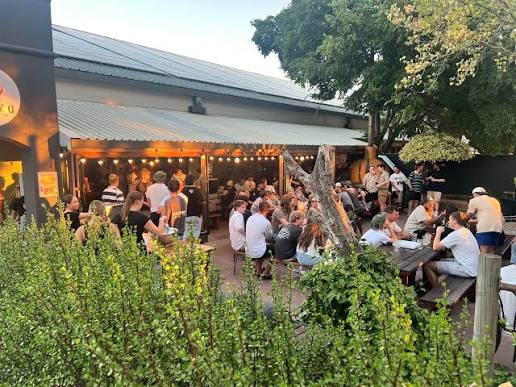
Winter is a wonderful time to connect! I am excited to announce some great events happening on July 24, 2026, at Stellenbosch. Join us for the "Biotech Beers" event at a fantastic venue. Before that, we will have a paddle partnership with SWEAT Africa. https://t.co/Z8aWFwuAur
One reason to understand drivers of outbreaks is that bloodbanks can prepare. Example: mosquitoborne disease: increasing in Europe, difficult to detect, potentially flying under the radar. See what blood banks do to prepare. Their conlusion: not fail safe https://t.co/6WT0lqTZIo
Does an AI model like ChatGPT or Claude learn from your conversations?
Most people assume it does. It's called machine *learning*, it runs on neural networks inspired by the brain, and it even seems to remember things you told it weeks ago.
The answer is no. Nothing you say to a deployed AI model changes the model in any way. And this points to what I think is the most fundamental difference between AI and the human brain. It's also a difference that won't last forever.
And the day that difference disappears, AI will become a lot more personal.
I explore all of this in a new episode in The Framework App: https://t.co/eJYO2AqiGM
@MarionKoopmans@K1963213 Exact dat, en dat maakt het zo wrang. Zolang labinfrastructuur na elke crisis weer verdampt, sta je in de praktijk met lege handen en heb je simpelweg niets aan modellen of richtlijnen.
@K1963213@Melvin_Beckers Ik denk dat dat juist deel van het probleem is. Een paar grote markt partijen, nauwelijks investering in lab expertise en mensen die snel testen kunnen aanpassen. En nee, die is specialistisch denken, op WHO niveau. Reageren per pathogeen ipv systemisch
@Melvin_Beckers@K1963213 Punt is: die test capaciteit is beperkt. Tot 2 mnd geleden was er 1 lab in DRC dat kon testen, pakweg 3000 km afstand. Inmiddels zijn er wat snelle testsites neergezet, met flink wat geld (oa uit europa) maar zonder structurele oplossingen. Na deze uitbraak verdwijnt dat weer
The beauty of citizen science. Platforms like the incredible eBird help researchers moving towards better data driven risk prediction. Keep it up. https://t.co/NurqGUMQTz
@K1963213 Punt in diagnostiek is: waar begint dat en waar eindigt dat. Na de pandemie is het grotere schaal testen weer afgeschaft. We weten bv dat we west nile hebben maar wanneer ga je daar op testen? Gaat over kosten vs kans. Klassiek preparedness dilemma
The fascinating work of Sandra Jungle's team, looking at factors that explain where in the city of Berlin West Nile can be found. Important for other regions that are at the edge of increased outbreaks (like The Netherlands). https://t.co/ov6JuMxjXd
3/10
True scale could be at least 2-4x larger than official # because 80% of new infections aren't occurring among known contacts, @Chikwe_I says.
“We’ve seen the fastest growth in a single month since the outbreak started and of all the Ebola outbreaks that we have managed.”
@MarionKoopmans They could try and throw machine learning models at it. Maybe it is a specific combination of symptoms that is difficult for humans to figure out.
Signs and symptoms of Bundibugyo disease. Comparison between test positive and test negative persons. Shows how difficult it is (or really: impossible) to diagnose based on clinical symptoms https://t.co/flUF73cAMQ
In memoriam Dr Fred Murphy, iconic virologist. His EM photo of Ebola, the first ever, is the best known image outside virology. With a shared love for toroviruses, we discussed our work. He was very supportive for junior scientists. He will be missed https://t.co/9YUPmfASAe