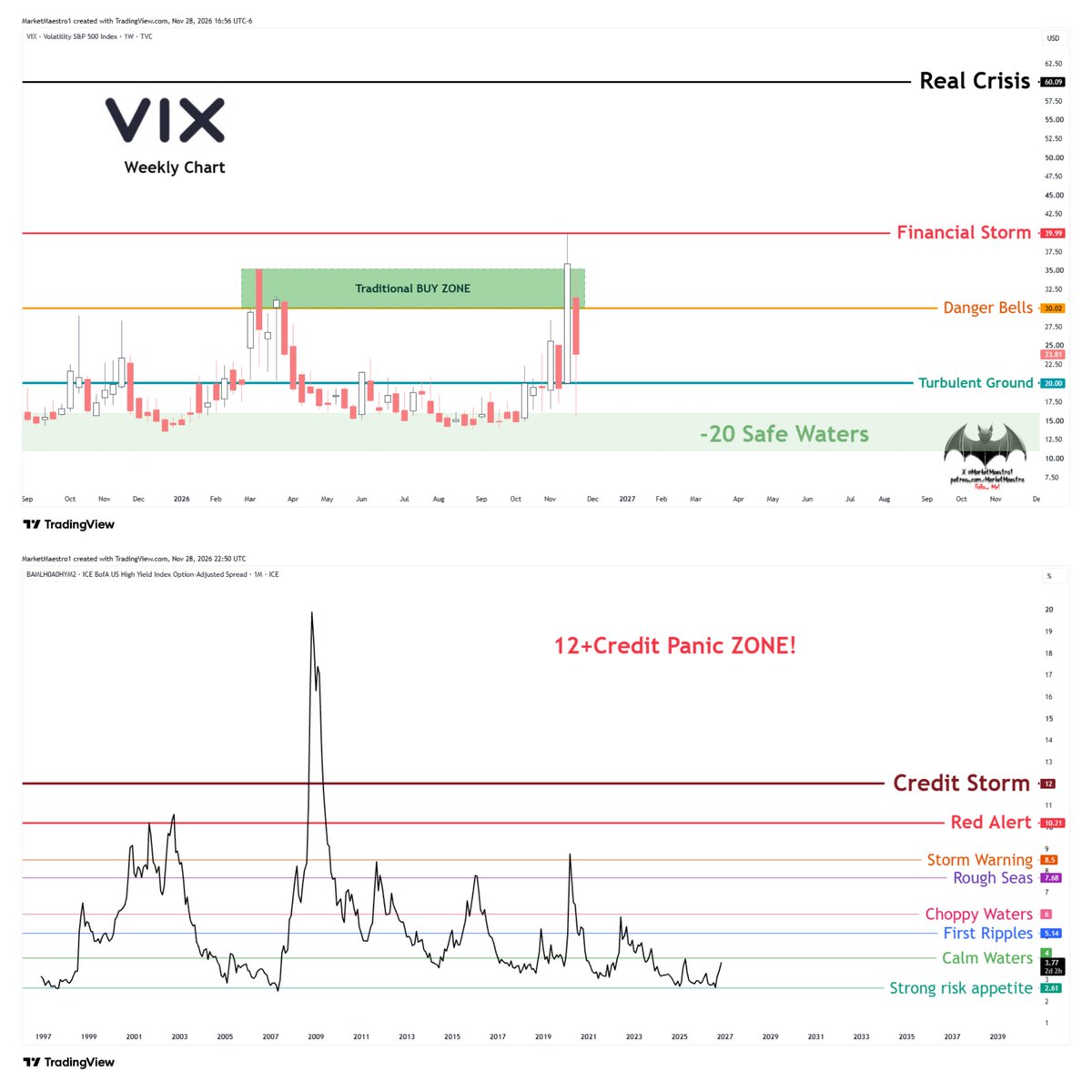
VIX fell from 35.89 to 23.81 in one week. But is the credit market confirming Nasdaq’s bounce? The risk premium on U.S. high yield corporate bonds is 377 basis points. On my chart, we’re still in the Calm Waters zone.
Between November 13 and 26, spreads widened by 101 basis points for bonds rated CCC and below, and by 42 basis points for the higher rated BB group. Investors are demanding more yield from both groups. The sharpest increase is among companies with the weakest debt repayment capacity.
Annual core PCE inflation rose from 3.1% to 3.3% in October. The market assigns roughly a 99% probability to a 25 basis point Fed rate hike on December 9.
Why am I tracking this?
Because while the Fed raises rates, the real vulnerability lies in indebted SMid cap growth companies. When credit spreads widen too, new borrowing becomes even more expensive. For companies with weak cash flow, this can turn into refinancing risk. In this environment, if investors demand higher credit premiums from small and mid cap growth companies that burn cash and need to refinance soon, financing their growth becomes more expensive. A company struggling to refinance its debt may postpone investment or issue new shares at a low price, diluting existing shareholders.
My confidence in the recovery will increase if credit spreads narrow and more small and mid caps participate in the rally.
Because stock market recoveries generally don’t last when they aren’t supported by credit market risk pricing. Or the rally may remain limited to a narrow group of stocks!
$SPY $QQQ
Ed Yardeni: It is very unusual to see the forward P/E of the S&P 500 Growth index fall below that of the S&P 500 Value index. That's what happened last week, for the first time since the bear market of the Great Financial Crisis. And it didn’t even happen during the Tech Wreck bear market! The AI Panic Attack has hit the Growth index's valuation multiple harder than usual relative to Value's valuation multiples.