Tough to balance the vast potential of machine learning tech with the potential risk data leaks can confer to our patients - not the last time we'll see a headline like this. https://t.co/zIcp3bH1Tz
@ntenenz @DrHughHarvey Variance in the location of training data acquired --> variance in 1) dz prevalence, 2) acquisition tech/parameters and 3) population 'substrate'. Perhaps most substantive difference: variations in clinical practices & workflows.
We're expanding our collaborations - important to know how models work in different environments. Here are some we're doing along with ACR. Would love to find more partners to ensure model performance across geographic differences... https://t.co/j5IxdbsdlO
Join Romane Gauriau at #SIIM19 in Denver, CO on 6/28 at 8am (Adams B Room) to learn about automated DICOM series categorization from metadata. A simple Random Forest algorithm can help speed up cohort selection and route image series to #AI algorithm.
https://t.co/2rF26vNYmK
Join Romane Gauriau at #AIMed Radiology in Chicago on 06/19 to discover exciting work we do @clindatsci and how we address some challenges of deploying #AI algorithms in the hospital.
https://t.co/HldBGUkaux
#Radiology#MachineLearning#CCDS
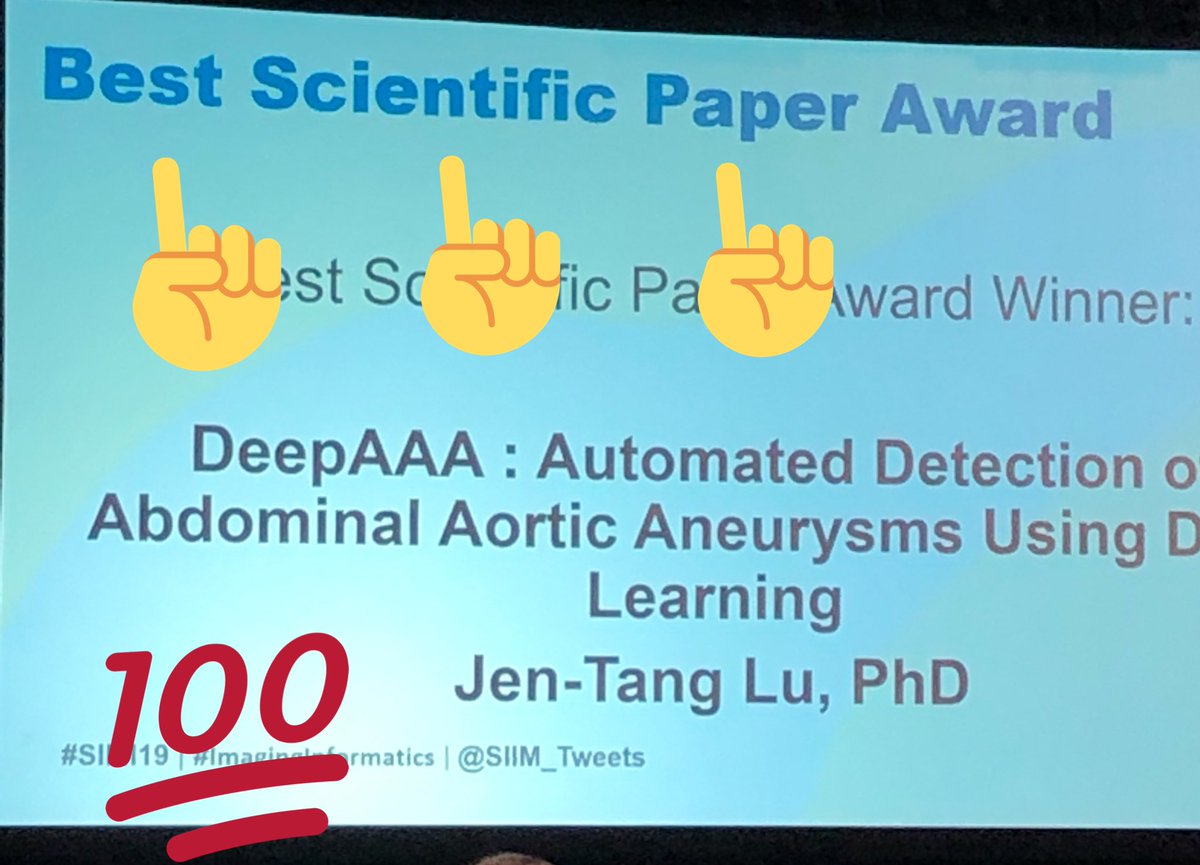
The DeepAAA algorithm, developed by our team @clindatsci, accurately detected and measured an abdominal aortic aneurysm (AAA) in a CT image even though appearance of the AAA was complicated by a blood clot.
https://t.co/izi4d2YHsn
#AI#CCDS#DeepAAA
Day 2 #WMIF19. Join Drs. Dreyer and Andriole @clindatsci for the session "Last Mile: Fully Implementing #AI in Healthcare" that will focus on how radiology and pathology specialties apply #AI in the clinic. 11:45am in NVIDIA Ballroom, 3rd floor.
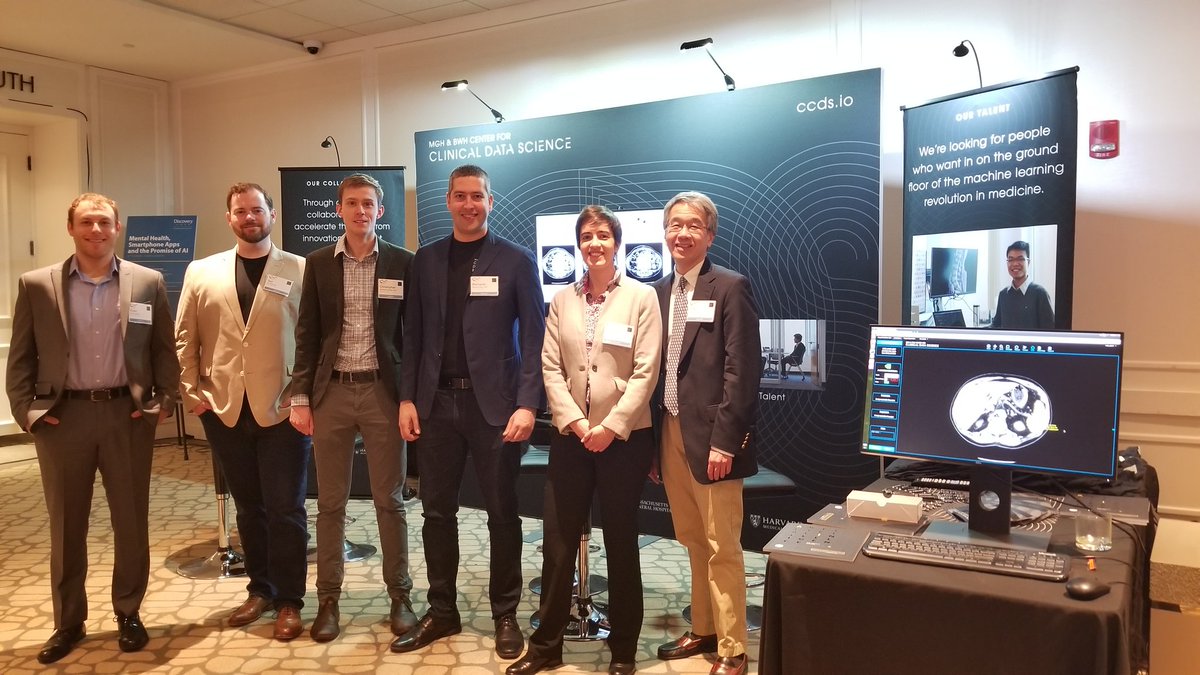
Come visit our booth #WMIF19 to see how #AI is transforming healthcare. Our models detect and quantify health conditions like stroke, lumbar spine degenerative disease and aortic aneurysm. 3rd floor at Westin Copley Place.
Nice (brief) Forbes article on a coming ML issue in HC "Your model’s accuracy will...[deteriorate] as the world it was trained to predict changes...A predictive readmission model...deployed at a hospital would start sharply degrading within 2-3 months." https://t.co/WssObyKJYf