@medievalguy Thx for your elaborate response to my question! A (radar) survey of Crecy (and find the exact location of the ditch) would already be great
@medievalguy Just visited the site today with the map fron your book in hand. Brilliant! Question for your next q&a podcast with Kelly Devries: are there any serious plans to do archeological research? Either at Crecy of Agincourt?
I am now 100% convinced that Alexander for 12 centuries was lying in Venice, Saint Mark Basilica.
For those who are unfamiliar with this theory, it goes that when Venetians in 9th stole the remains of St. Mark from Alexandria, it was actually the body of Alexander.
When Christianity became a dominant religion of Rome, pagan worship sites became a target. Alexander, who after all those years was revered to be a god. To avoid destruction, his body was rebranded as St. Mark.
What is interesting that in records, St. Mark's remains appear at the same time as the body of Alexander disappears.
Another evidence appeared in 1960. During excavation near original St. Mark's crypt a limestone was found. What is unusual about it, is that the stone had a symbol of a shield with Macedonian Vergina Sun.
The stone is believed to be the casing for Alexander's sarcophagus. Stone's dimensions match the outer casing of sarcophagus of Nectanebo II. Which is believed to be the main sarcophagus of Alexander the Great.
Many evidence prove that the body of Alexander left Egypt a long time ago. And for 12 centuries hid silently in Venice.
I'm from Central Italy.
The Italians I know rarely spend their weekends in the hotspot cities.
Not Florence. Not Rome. Not Siena. They drive an hour east, or south, to towns no foreign list ever mentions.
Central Italy is the most concentrated cluster of beauty in the world.
9 underrated towns where the piazza is yours, the trattoria is real, and the Renaissance still feels personal.
🧵
You can now retire in Italy and pay a 7% flat tax on foreign income in qualifying southern towns with up to 30,000 inhabitants, not just 20,000.
This has been valid since April 2026. Much bigger change than it sounds. Actually massive.
The new threshold opens 70+ additional towns that were previously excluded. Not tiny villages with no services, but proper small cities with hospitals, restaurants, train stations, beaches, and real year-round life.
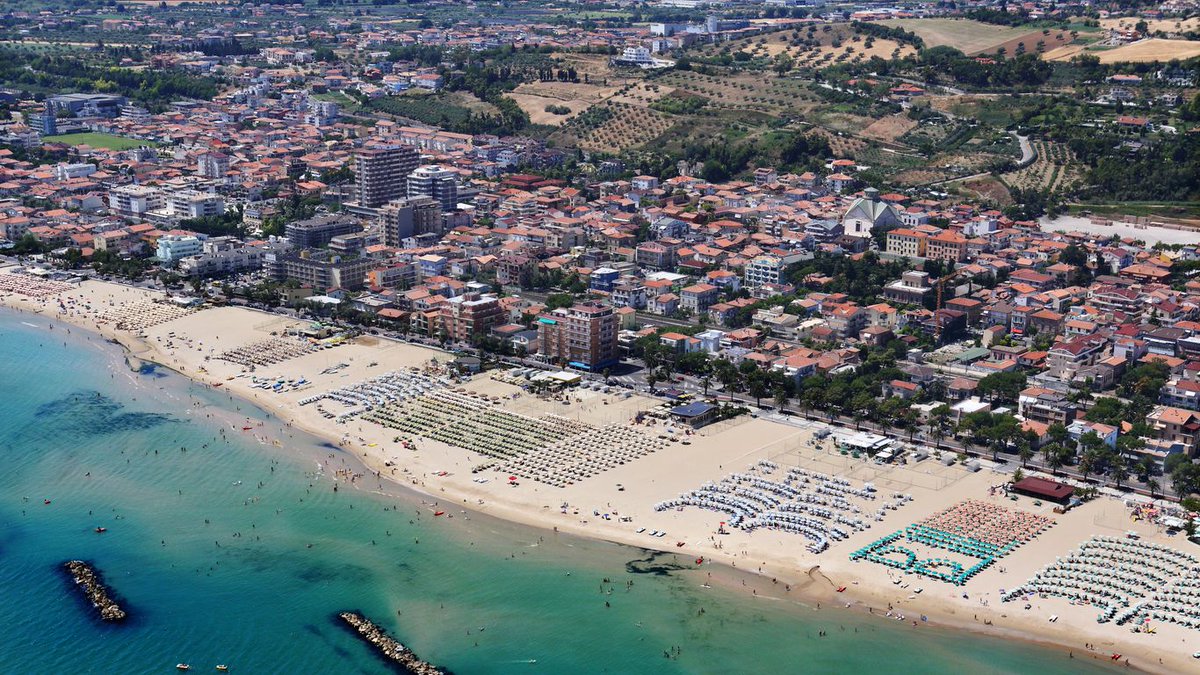
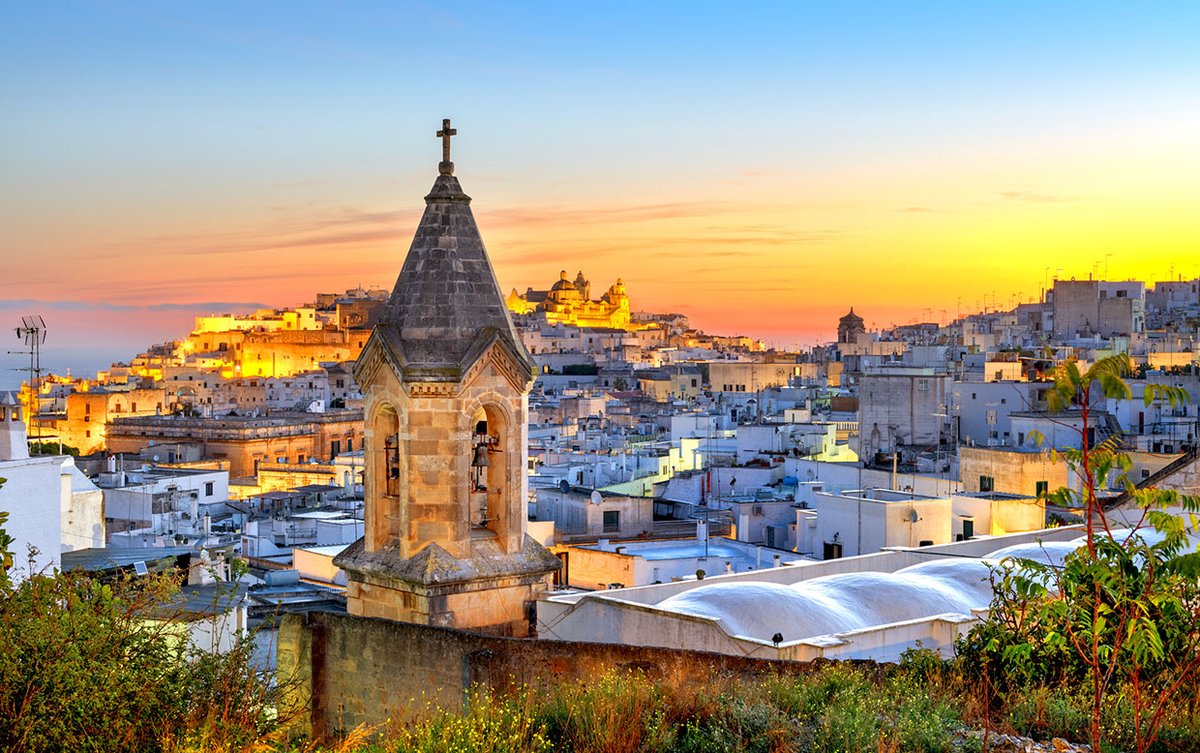
I made a deep dive. Puglia is the obvious winner. Ostuni alone makes the reform worth attention. Add places like Conversano, Galatina, Manduria, Mesagne, and Putignano, and suddenly the regime becomes much more attractive for people who want beauty without giving up practicality.
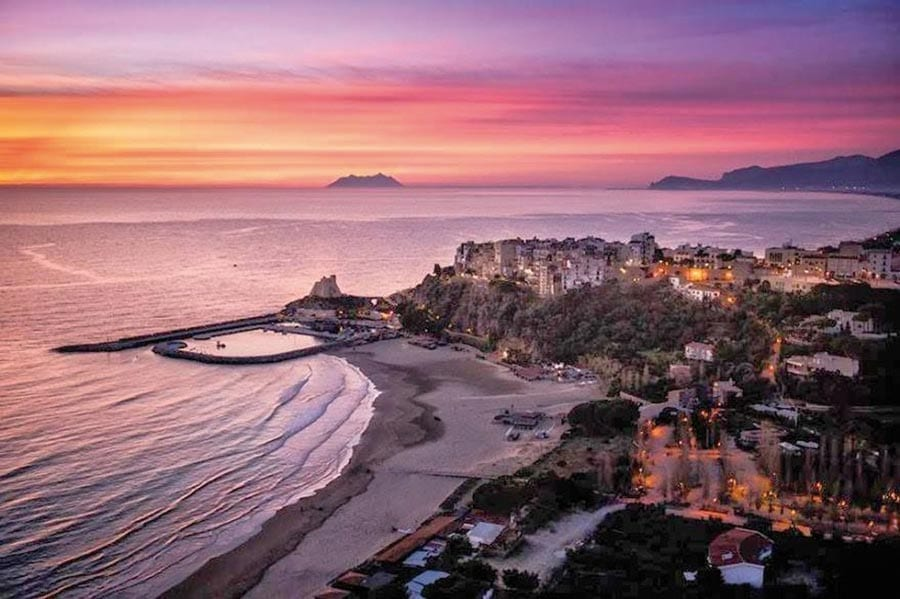
But personally, I would look very seriously at Abruzzo. Roseto degli Abruzzi. Giulianova. Sulmona. These are not "buy a €1 house and disappear" places. These are towns where I could genuinely imagine my retired parents living well: sea, mountains, good food, human scale, and lower cost of life than the obvious Italian hotspots.
Sardinia also becomes more interesting. Cagliari is already one of Italy's most underrated cities, and now nearby towns like Sestu, Assemini, Capoterra, and Selargius give retirees a way to live close to the city while still qualifying for the regime.
Worth paying attention to. We'll be discussing these and more next week in our webinar with our migration lawyer and will be open to your questions.
Want to know my secret to wellness and longevity?
I go to the “Terme di Saturnia Natural Destination” once a year 🌊🇮🇹
Read carefully what follows and treasure it
This is a unique hidden gem in the world 💎
Terme di Saturnia Resort is located in Tuscany, Italy, in the heart of the Maremma, and is built around a famous thermal spring that has been flowing for over 3,000 years
• The spring and its water
The water emerges from a crater after an underground journey of about 40 years from Monte Amiata
It is sulfurous (containing hydrogen sulfide), carbonated, sulfated, and bicarbonate-alkaline-earthy, rich in calcium, magnesium, and other minerals
It flows constantly at 500 liters per second, completely renewing the pools every four hours
• Temperature
The temperature remains constant year-round at around 37.5°C (about 99.5°F), making it ideal for relaxing and therapeutic bathing without being too hot
• The bioplankton
In the spring basin, the Saturnia Bioplankton (or thermal plankton) forms naturally — a precious “gift of nature”: a gelatinous organic-mineral substance, similar to an algae or biofilm, rich in minerals, amino acids, sulfur, potassium, and magnesium
It has anti-inflammatory, antioxidant, and regenerative properties, particularly beneficial for the skin, joints, and respiratory system
It is used in spa treatments and in an exclusive skincare line
• Ancient use 🏛️
The baths were already known and frequented by the Etruscans and, above all, by the ancient Romans, who used them for their healing properties (balneotherapy)
Centurions, soldiers, and ordinary people immersed themselves here for health and well-being; the remains of Roman structures still testify to this millennia-old tradition
It is a unique place where nature, history, and luxury blend into a deeply relaxing experience, thanks to this “miraculous” water that has been flowing unchanged for millennia
I wholeheartedly recommend it
@jeffersonmorley What Groden says is that from the regular copy he made from the original no important things can be seen. If however someone makes a lighter copy potentially more can be seen in the shadow (of the entrance of the book depository)
@Medievalists Good episode. But it would be really nice to see a map where Michael thinks the battle happened. From the poscast itself it is very difficult to deduce the location
You’re tired of the crowds and sky-high prices on the Amalfi Coast?
Head up to “La Tagliata”!
Incredible views, garden-fresh food, home-style cooking, and unlimited wine
Much calmer than the center
Totally worth the detour
Positano, Italy 🇮🇹 🍋
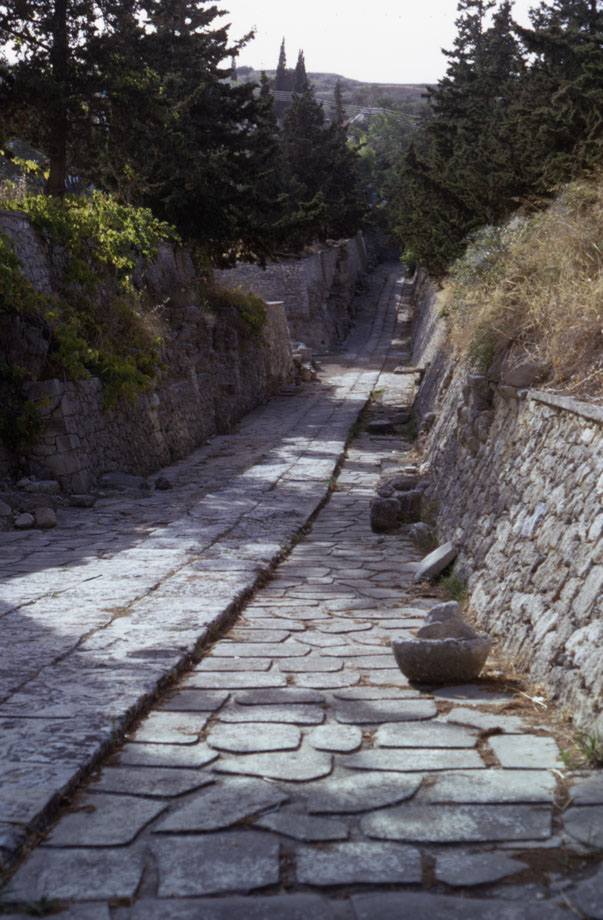
The oldest paved road you can walk in Europe is the Minoan Royal Road in Crete, Greece, which is over 3.500 years old. A 50km roadway connecting the ancient sites of Knossos, Gortyn & Lebena.
If you go to Knossos, you will step exactly where the Minoans walked 3.500 years ago.
@PMisLeeOswald@NBCNews@RepLuna According to Robert Groden (see interview with Jess Connell) the camera original positive of the Wiegman film is in a Long Island City film archive
@lucasbergkamp Typische stroman redenatie. De 4 formele doelstellingen van de Amerikanen (raketten, atoomwapens, luchtmacht en procy’s) zijn allemaal grotendeels bereikt.
Lang voordat de Amerikanen het Iraanse olie-eiland Kharg aanvielen vestigde de VOC zich op wat toen nog Kareek heette. In het eiland zagen de Nederlanders een strategisch knooppunt in de Perzische Golf. Net als nu dus! 🇳🇱🇮🇷
In 1753 werd op Kharg een handelspost ingericht en later versterkt met het naar de VOC-bestuurder Jacob Mossel genoemde Fort Mosselsteijn. In de regio had de VOC veel handelsposten en met Kharg hoopte het een goed knooppunt gevonden te hebben. Precies zoals het eiland nu dient als knooppunt voor Iraanse oliehandel.
👉 Kharg bood duidelijke voordelen: zoet water, diepe aanlegplaatsen en een ligging op het kruispunt van belangrijke zeeroutes. Het eiland trok kooplieden aan en fungeerde in onrustige tijden als een veilige haven. Hier kwam de Nederlandse handelsgeest tot uiting: vasthoudend, gericht op samenwerking en steeds op zoek naar nieuwe verbindingen.
Hoewel het experiment uiteindelijk strandde en de VOC het eiland in 1766 verliet, blijft het treffend hoe vooruitziend de Nederlandse blik was: Kharg als strategische post in een zee vol handel, onrust en gevaar! 🔥