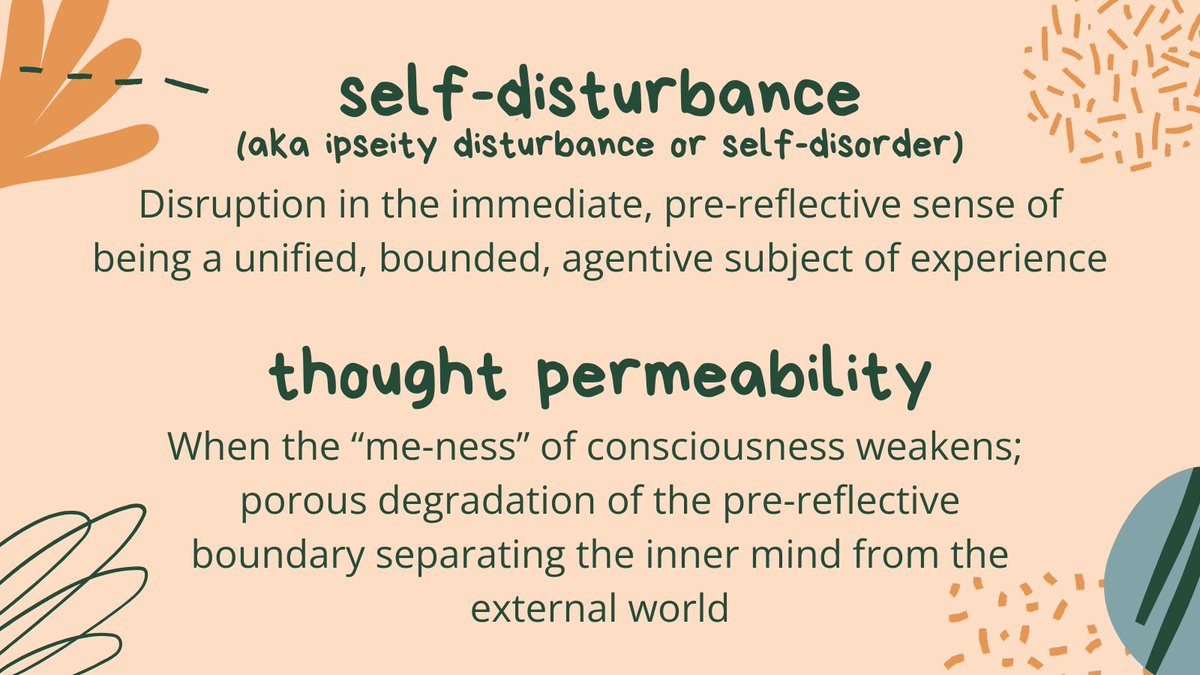
𝐓𝐈𝐋 about 𝘀𝗲𝗹𝗳-𝗱𝗶𝘀𝘁𝘂𝗿𝗯𝗮𝗻𝗰𝗲 and the related concept of 𝘁𝗵𝗼𝘂𝗴𝗵𝘁 𝗽𝗲𝗿𝗺𝗲𝗮𝗯𝗶𝗹𝗶𝘁𝘆 that are common in psychotic experience, especially in early phases
self-disturbance (https://t.co/wAqAN4QAAZ)
thought permeability (https://t.co/HhxWLL173Z)
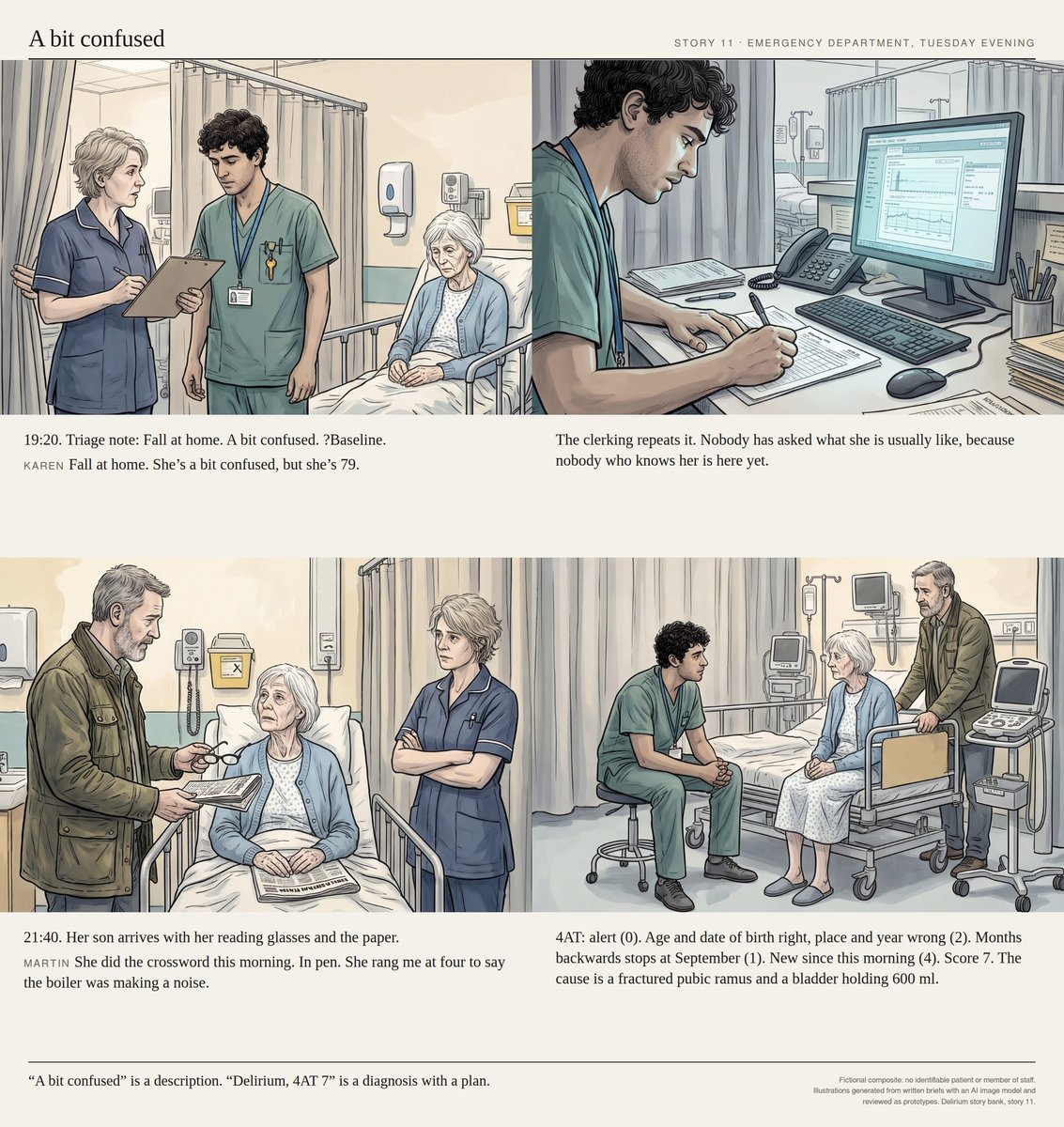
“A bit confused, but she’s 79.”
Her son: she did the crossword this morning. In pen.
4AT 7/12 (delirium test, positive at 4 or more). Fractured pelvis, 600 ml stuck in the bladder.
“A bit confused” is a description.
Delirium is a diagnosis that stimulates a plan.
#delirium
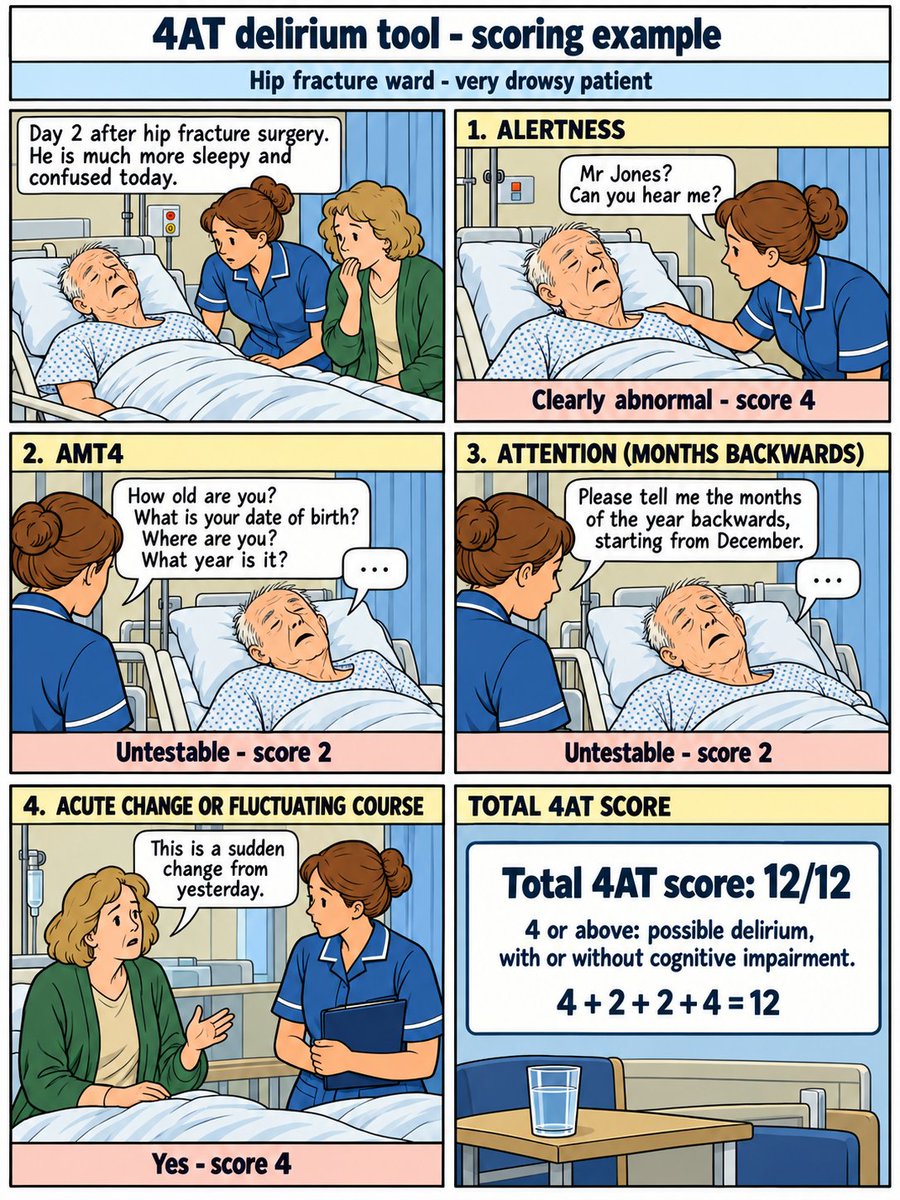
Too drowsy to answer? The 4AT can still be scored.
This hip fracture example: alertness 4, AMT4 2, attention 2, acute change 4. Total 12/12: possible delirium, requiring clinical assessment.
#Delirium
What resonates with me about the recent FDA clearances of blood tests for Alzheimer’s disease is that we are crossing an important threshold: biomarkers that largely lived in research studies and specialty centers are rapidly moving into everyday clinical practice. Four FDA-cleared blood-based assays are now available, including two cleared in August 2026, with p-tau217 emerging near the center of this new diagnostic pathway. But clinicians need to understand that ordering the test may be the easy part; managing what comes next will be harder. These are tests for the likelihood of amyloid pathology, not stand-alone tests that diagnose Alzheimer’s disease, and results must be interpreted in the context of the person’s symptoms, age, cognitive testing, comorbidities and pretest probability. A negative result may help some patients avoid more invasive or expensive testing, while intermediate or positive results may lead to amyloid PET or CSF confirmation and potentially consideration of disease-modifying therapy. We also need to think carefully about false positives, particularly when testing people in lower-prevalence populations, and about the counseling required before and after testing. The blood test should therefore never replace the clinician or the clinical history. It should make us better clinicians by helping us put the right patient on the right diagnostic pathway at the right time.
Large language models vs. conventional search in identifying delirium guidelines:
LLM identified 17/45 guidelines, LLM "suggests a possible role in complementing conventional search methods in scoping reviews"
Excellent @A_MacLullich and team!
https://t.co/IKBQXRuSyN
What resonates with me about Abraham Myerson’s original 1944 description of the glabellar “tap reaction” is how remarkably modern some of his observations feel. He described repeated eye closure “against the will of the patient,” contrasted this with the normal habituation that occurs after several taps to the forehead, and, importantly, recognized that the finding was not confined to Parkinson’s disease. Most strikingly, Myerson reported that the response could occur frequently in what was then called “catatonic dementia precox,” could vary with the severity of the catatonic state, and could even disappear during the same examination as the patient’s clinical state changed. Eight decades later, this observation is an important reminder that neurological signs do not exist in diagnostic silos. In the modern era of Parkinson’s disease, catatonia, functional neurological disorders, and other neuropsychiatric syndromes, we should resist assigning a diagnosis based on a single examination sign. The neurological examination is most powerful when we interpret what we see in the context of the history, associated signs and symptoms, medications, longitudinal course, and the patient’s overall clinical picture.
https://t.co/nAUMswgvEB
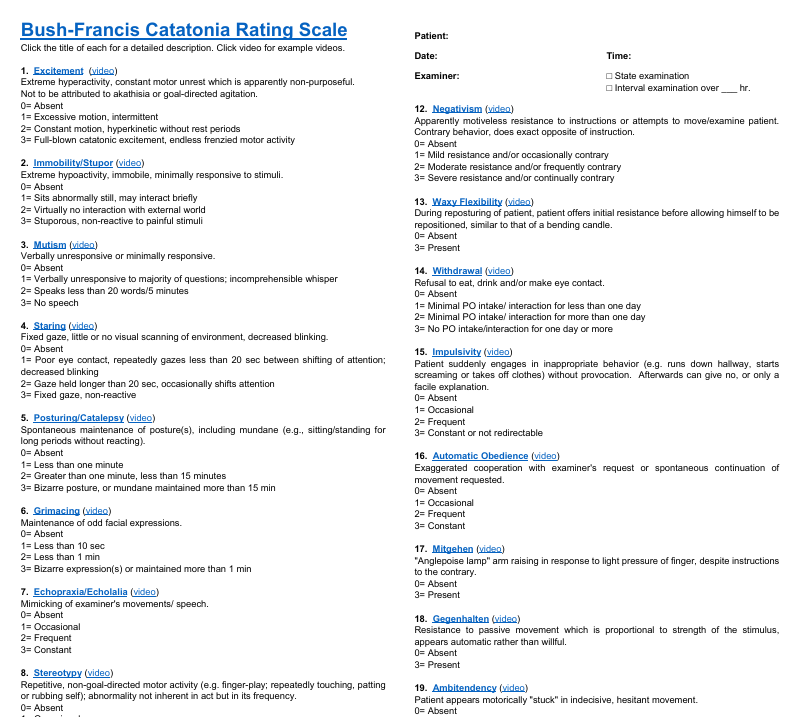
5/ That's why the Bush Francis Catatonia Scale is now standard practice for detection and quantification.
(BTW the University of Rochester has an excellent online version of the BFCS with embedded videos illustration how to examine each item)
https://t.co/AEFx1A85SH
1/ Some thoughts on CATATONIA...
In 20+ years of inpatient practice in LA, I saw maybe 20 cases and most resolved with brief treatment with lorazepam.
But now that I've been in SF since 2022, I've seen about 80 or more cases... it seems *very* common now!
🆕Prospective study (n = 100)
📍⬇️ sleep efficiency (PSG) & ⬇️ relative amplitude (actig) a/w ⬆️ delirium incidence/severity
📍AHI ≥ 15 a/w ⬆️ odds of delirium
📍SWS & REM were not a/w delirium incidence/severity
🙌Truly grateful to my amazing team!
🆓https://t.co/a33EFxaBdC
Found delirium?
***Name it delirium***
Don’t let it disappear into the notes as “acute confusion”.
Writing “delirium” supports ongoing review, a clear family explanation and continuity into the discharge letter.
AI-generated teaching film. #Delirium#4AT
By all means, treat all the causes of delirium.
But don't stop there.
We also need to address underlying pathophysiology, neuropsychiatric disturbances, and overall patient wellbeing.