Over 5 hours of online video content taking you through the ACLR rehab program from prehab to return to play. Utilising more than just sagittal plane loading #aclr#rehab#kneeinjury#physio
https://t.co/BwS0lF4K1d
Also to every therapist/trainer/guru, the only way to 'bullet-proof' anything is with lead or kevlar. Doing a generic exercise for a certain body part means you get better at that skill/mvt - may help with pain, doesn't stop bullets/injury
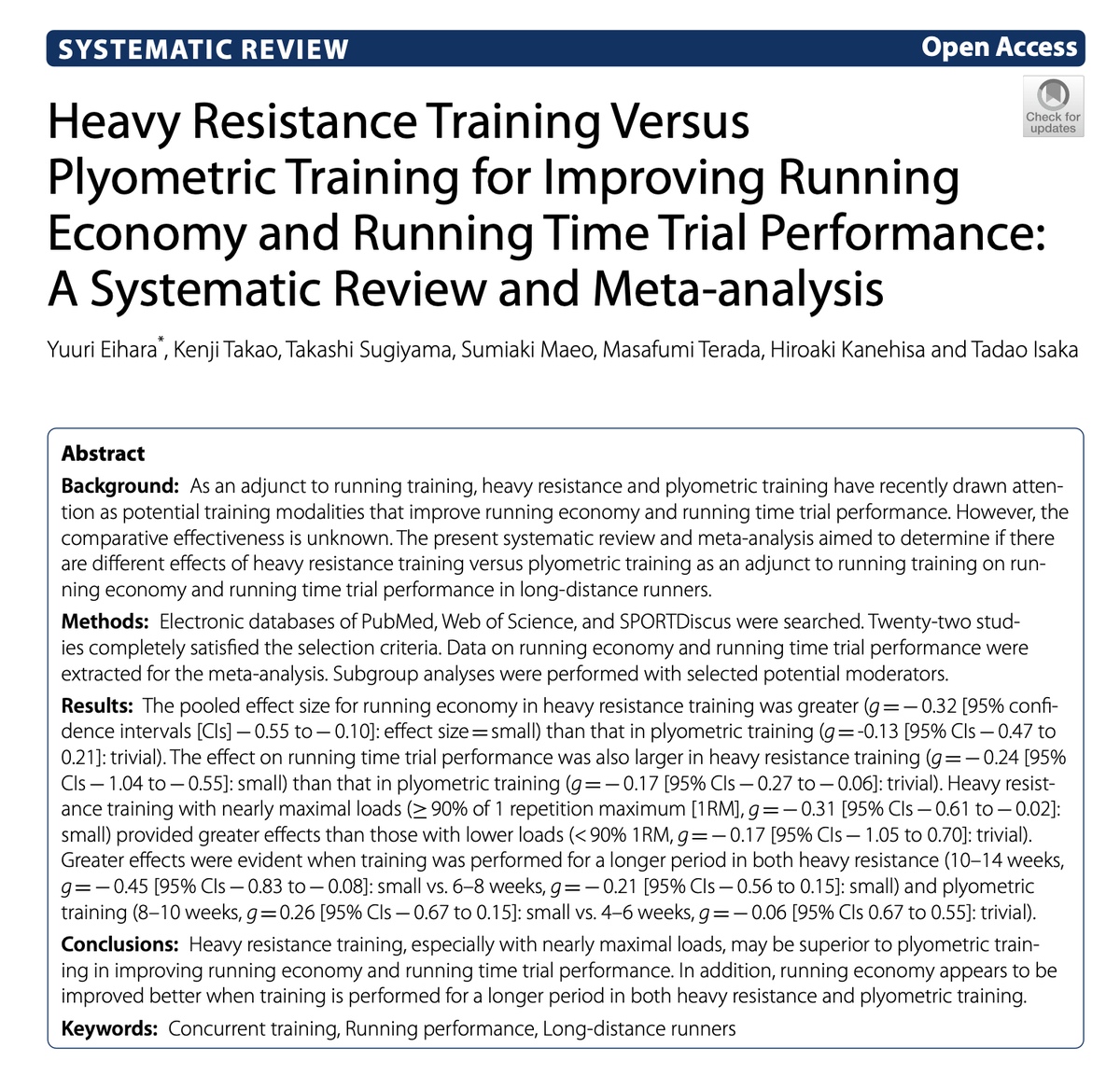
Runners 🏃🏻🏃♀️: HEAVY resistance training 🏋️♀️ is definitely something you should consider ✅
Review on the effects on economy and performance compared to plyometrics - Run strong
Open access👇
https://t.co/NI6IAeLrrK
Do you know how to break down sporting movements to assess for possible cause of injury and enhancing performance? https://t.co/IfV95jFahu
Learn how to assess these movements at every joint in the body to help you clients. See link in description
Anatomy books are great for understanding passive structures, but that is not how we move. Muscles are synergistic and rarely work in the agonist/antagonist model.
Also just because someone has knee pain it doesn't mean they have weak glutes!!!
Watch “Mentorship Program” on #Vimeo https://t.co/d4O7iktkjx
Next intake starting January 2022. Functional biomechanics for treatment, rehab and training #physio#strengthtraining#rehab#aclrehab#achilles DM or check the website link
90's physio themes that are somehow still alive
1) weak core
2) weak rotator cuff
3) lower traps not firing
4) glut med weakness
5) VMO not tracking the patella correctly
6) over pronation
Just because the 'rotator cuff' are named so, it does not mean that resisted rotation exercises will help! It is not their primary function. Get the shoulder moving fully first, then strengthen through range
Always found it interesting that the primary approach to achilles & patella tendinopathy is overload (ecc/iso/slow-heavy), when generally it's an overload injury. Need to ask WHY the problem is present?
Objective measures for ACLR RTP are great, which ever battery of tests you use. However, don't lose focus on HOW they do the movements. If you cannot land on one foot then what are you testing?
Soleus has an interesting anatomical bias to TP and FP movement control of the foot and knee (along with PF). So many focus on heel raises, maybe looking more and pronation and supination sequence could be more beneficial