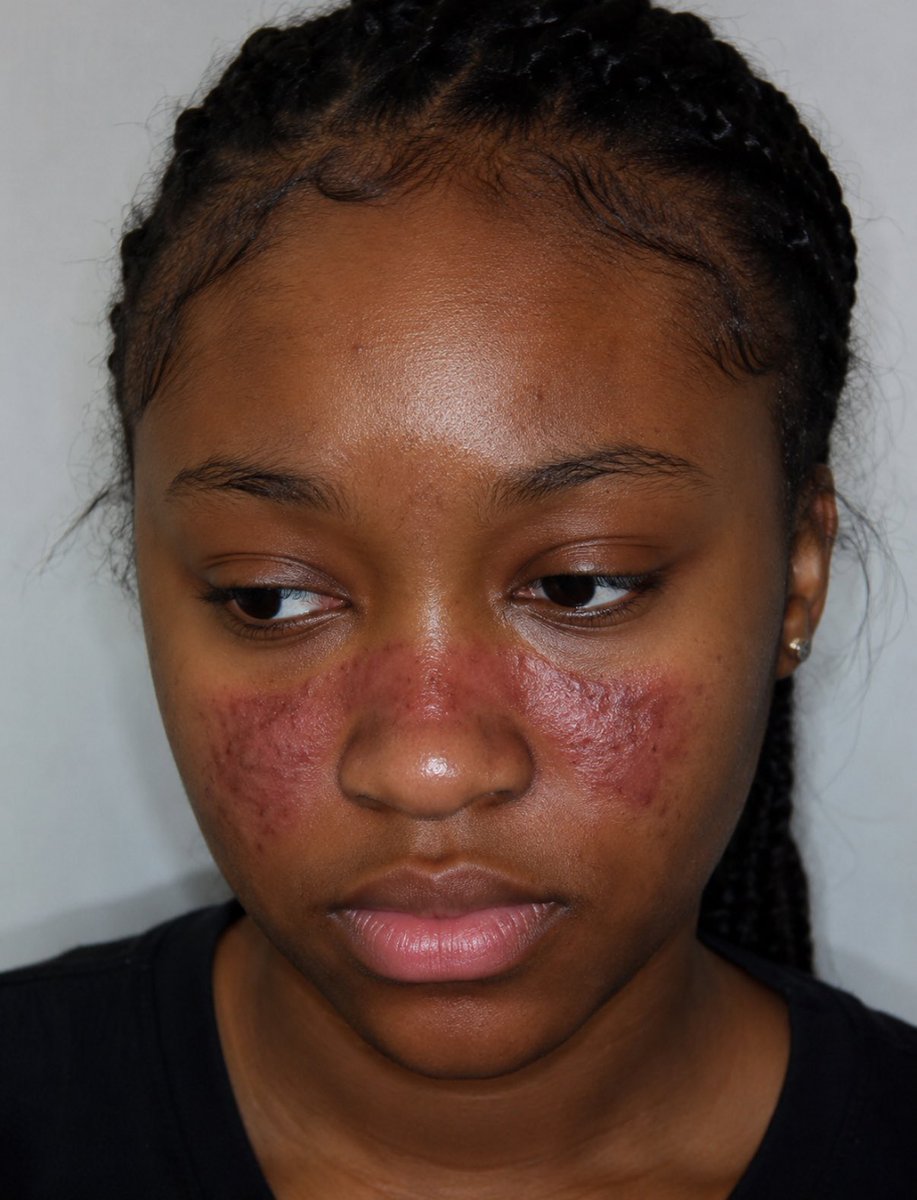
Her name was Amara.
She was 13 years old.
The kind of child teachers remember.
Always early to class.
Always neat.
Always smiling.
Always surrounded by friends.
Then something changed.
Not suddenly.
Quietly.
The first sign was not the rash.
The first sign was tiredness.
The kind of tiredness that makes a child come home from school, drop her bag by the door, and go straight to bed.
Her mother was not worried.
Neither would most parents be.
School can be stressful.
Children get tired.
Life goes on.
Then came the fever.
Not a severe fever.
Just enough to make her forehead warm.
Just enough to cause headaches.
Just enough to make her complain that her body hurt.
In many Nigerian homes, the first thought is malaria.
So she was treated for malaria.
The fever improved.
Then it returned.
She was treated again.
Then again.
Soon, the family knew something was wrong.
But they did not know what.
Weeks passed.
The fever stayed.
The tiredness stayed.
Then the joint pains arrived.
First her fingers.
Then her wrists.
Then her knees.
Some mornings, buttoning her school shirt became difficult because her fingers felt stiff.
Some afternoons, she limped slightly while walking home.
People had explanations.
“She’s growing.”
“Maybe she needs vitamins.”
“Children complain too much.”
The symptoms kept speaking.
But nobody understood the language.
By March, Amara was no longer the same girl.
The child who once answered every question in class now struggled to stay awake during lessons.
The child who once played after school now preferred lying quietly on the couch.
The child who once smiled easily now looked exhausted.
Then one Sunday morning, while helping her prepare for church, her mother noticed something unusual.
A faint reddish rash stretched across both cheeks and over the bridge of her nose.
It wasn’t painful.
It wasn’t itchy.
It looked harmless.
Almost beautiful.
Like a butterfly had gently rested on her face.
Her mother stared at it for a few seconds.
Then suddenly she said,
“Is this not that rash that Dr. Sina mentioned during one webinar one time?”
She paused.
Trying to remember.
“Lup… Lup…”
Then she laughed nervously.
“Abeg, God forbid.”
But diseases do not disappear because we reject their names.
Sometimes they continue their work quietly while everyone is looking elsewhere.
Weeks later,
@_emmaco4real_@the_beardedsina We need to create more awareness about Lupus. Cos as it stands, a lot of people do not know anything about it, a lot of facilities in nigeria can't even detect it when tests are run, results often show malaria/typhoid.
They treat those till the seizures start...
@ArcSadam Her line for up to 5 years (NCC directives state that lines can be recycled after 180 days of inactivity) for as low as 7,500 for up to 5 years, and service can be renewed.
So it's not everything that's the banks/telcos fault, we as a people take things for granted.
@ArcSadam The honest truth is, what happened is on the lady.
There were steps she could have taken to protect her money before she travelled, but she didn't.
She could have gone to the bank to disable sms alerts/ussd services.
She could have paid her service provider to secure 1/2
@a4lasade "What does the law say?"
Copyright Act 2022. The Act generally provides that the author of a work is the first owner of the copyright in that work, subject to certain exceptions (for example, where rights are transferred by agreement, or in some employment-related situations).
@a4lasade The pictures are the MUA's intellectual property, and as such she has the right to post them, if your cousin didn't want her to post them, she should have bought the full rights. That said, the MUA should have been patient and waited for your cousin to post first.
@ObaDeleke If in their culture, the responsibility rests on my shoulders, then I'll do it low key, invest whatever is left for the next gen.
If the responsibility rests o her family, then they're free to do as they please.