This is a farmer’s house in Maharashtra, India. The brick was never plastered. That was the decision.
In many African countries, exposed brick means the work is not done. We plaster over it, paint it white, smooth it into something that looks borrowed from somewhere else. White paint is not the problem. The problem is painting white walls in regions with reddish brown soil, where the first rainy season stains them permanently. We treat brick as a raw material that needs to be hidden, not a finished one worth showing.
Atelier Shantanu Autade and Studio Boxx built this house for a farmer in Dhotre, Kopargaon with load-bearing brick walls laid in rat-trap bond. The gaps in the brickwork you see in the verandah are not mistakes. They are the ventilation system. Air moves through them. The house breathes through its own walls.
The roof is lightweight shingle over a fabricated steel frame. The courtyard has a tree for shade and recycled glass at the top to manage heat. No air conditioning. The building handles its climate through the intelligence of how it was assembled.
The brief was shaped by rural economic reality. A farmer who cannot finish everything at once. A house designed to grow incrementally without losing dignity at any stage of construction.
Half built is not half done. It is architecture that is honest about where it stands.
Atelier Shantanu Autade + Studio Boxx | Dhotre, Kopargaon, Maharashtra 🇮🇳 | 2,152 sq ft | 2022
Network usage does not automatically equal token value.
Ask yourself:
Does increased usage FORCE buying pressure on the token itself?
Directly.
Not indirectly.
Gas fees.
Staking.
Validator security.
Governance.
Most of that is baseline Layer 1 utility.
The real question is:
Can institutions use the network while abstracting the token away from holders?
Because if they can, the network can grow while the token itself bleeds value through:
• inflation
• unlocks
• emissions
• validator sell pressure
• treasury selling
That means the VALUE is being extracted from the network while holders absorb the dilution.
Direct value capture is when the token itself becomes unavoidable:
• the network requires the token
• security depends on the token
• users must acquire the token to participate/ strict amount
• demand rises as network usage rises
• supply gets locked or removed from circulation/ hard locks, not a 14 hour window
That’s the difference between a token being part of the product…
and the token BEING the product.
Most tokens in this space are just apart of the product… not the actual product itself.
A few examples of “direct” value capture mechanics than the average crypto indirect value capture:
•Bitcoin
The asset itself IS the network reserve asset. Security, scarcity, settlement, and demand all revolve around BTC itself.
•Tellor
Reporters, disputes, and network security revolve around TRB. Participation directly affects token demand and available supply.
•Maker
Historically one of the stronger value capture models because protocol activity and stability mechanisms were tied into MKR burn/governance dynamics.
•Aave
The token is tied into protocol security, governance, and ecosystem participation. Not perfect forced value, but stronger than many generic Layer 1s.
•Binance Coin
Exchange activity, fee reductions, burns, ecosystem utility, and Binance growth historically fed directly back into BNB demand.
Usage increases token relevance
instead of…
usage happens while the token becomes optional…
P2P is wholesome tbh.
You just have to ensure that the person you’re trading with is cool and nice, and then you also need to move your money through 3 apps, whilst paying fees from end to end, and finally you also need to ensure……
Just quit the “constant ensuring” and pivot to Busha.😑
@technextdotng That’s exactly where Busha by @getBusha comes in.
No need for P2P negotiations and the delayed confirmations or fear of scams that come with the process. With Busha, you can seamlessly convert crypto to naira and spend with far less friction in everyday life.
Rwanda keeps raising the standards that most African countries are neglecting.
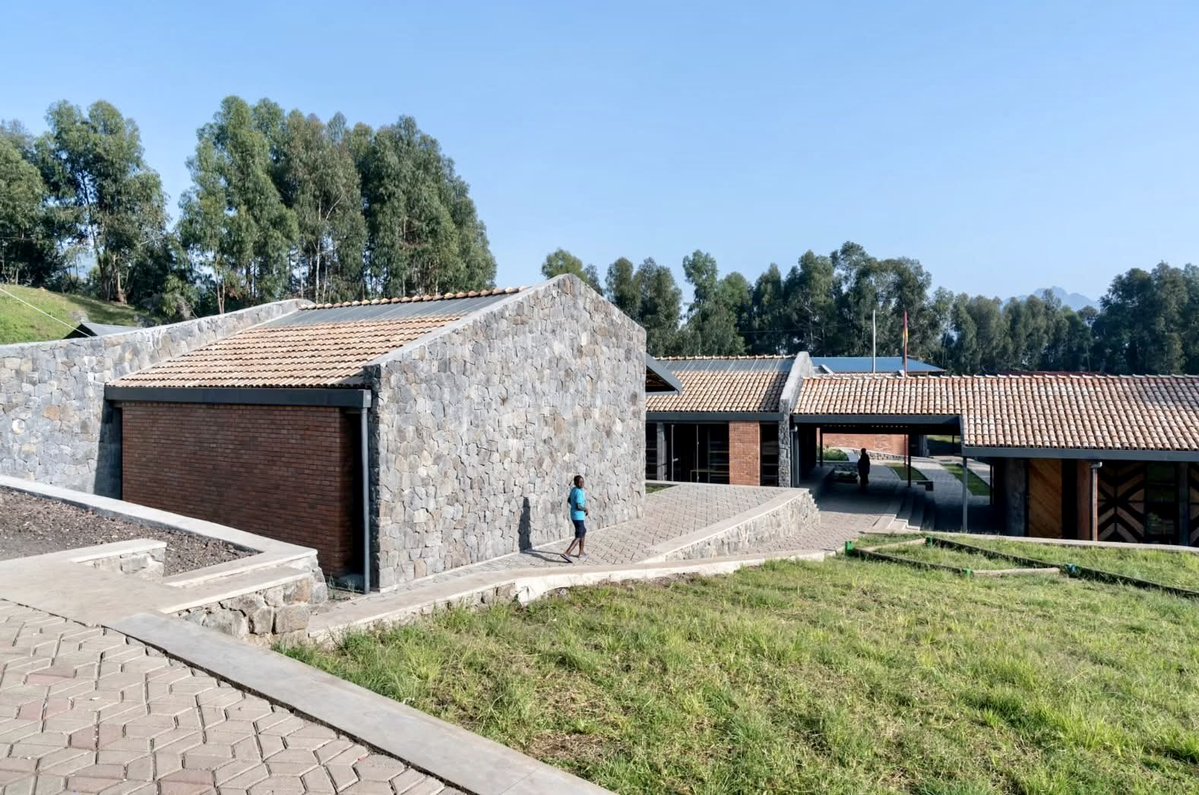
Ruhehe Primary School sits along a gently curving wall of local volcanic stone, paying homage to Rwandan craftsmanship. Volcanic rock on the walls. Clay roofing tiles that muffle rainfall so lessons continue through storms. Woven bamboo and bark panels filtering light and absorbing sound. 80 percent of construction materials sourced within 50 kilometres of the site. 75 percent of the budget spent inside Ruhehe Village and Musanze district. 110 local workers hired. 35 percent of them women.
Now look at what we build and call a school across most of this continent. A cement block box. Plastered over. Painted yellow on top and ox-blood red at the bottom. No ventilation strategy. No acoustic consideration. No connection to the landscape or the culture. A building that could exist anywhere and therefore belongs nowhere.
The material knowledge is here. The stone is here. The clay is here. Rwanda proved that building well does not cost more and it costs differently, and it pays back in ways a painted cement box never will.
This is not a foreign standard. This is an African one.
Ruhehe Primary School, Musanze District, Rwanda 🇷🇼 | MASS Design Group + African Design Centre | 1,120 students | 2018 | 📷 Iwan Baan
We recently took over the University of Ibadan and put students at the center of the Busha experience.
Nigeria’s financial future is being rewritten, and Busha is leading it by connecting with the next wave of capital deployers.
But this is just the start. The Busha Campus Invasion is rolling out to every city. Watch out for our next one👀