Yesterday, President Trump said that the US will ask Europe to repay the money the US spent on Ukraine.
My thoughts on that:
First and foremost, the people of Ukraine are deeply grateful to the United States for all the assistance provided!
Indeed, Ukraine has received real and massive military assistance from the United States - $67.8 billion in committed defense articles and services: over 10,000 Javelin systems, over 3,000 Stingers, dozens of HIMARS, Patriot, and NASAMS systems, Abrams tanks, Bradley and Stryker fighting vehicles, howitzers, and millions of artillery shells.
Part of the U.S. assistance was provided as non-repayable grants. Aid to Ukraine also included U.S. defense spending and orders placed with American industry. The cost of aid to Ukraine and the economic and security benefits for the U.S. existed simultaneously.
First, the U.S. did not transfer $195 billion to Ukraine. This figure represents the total budgetary framework of the U.S. response to the war, which includes not only weapons and financial aid to Ukraine, but also U.S. troops in Europe, the replenishment of U.S. military stockpiles, purchases from its own military-industrial complex, logistics, and agency operations. As of March 31, 2026, out of $195 billion, $177.8 billion had been obligated and $116 billion actually disbursed. Moreover, roughly $4.2 billion within this system already came from allies via the PURL, PURL, rather than from the American taxpayer.
Second, nearly $50 billion of this amount was not aid to Ukraine at all - it was U.S. spending on its own troops in Europe. This includes EUCOM, the European Deterrence Initiative, troop deployments, transport, logistics, infrastructure, and sustaining the U.S. military presence. These were real U.S. budget expenditures caused by the war, but Ukraine never received these funds. Presenting them as an American "gift to Ukraine" that Europe must now compensate for is incorrect.
Third, nearly $46 billion more was allocated to replenish the U.S.’s own arsenals. The U.S. provided weapons to Ukraine from its own stockpiles, after which the Pentagon received funds to replace them. In effect, Ukraine might have received an older system, while new budget funds went to American manufacturers to produce new weapons for the U.S. As a result, these expenditures simultaneously funded the rearmament of the U.S. military and the operations of American factories.
In other words, tens of billions of dollars in military assistance did not go directly to Ukraine - they were converted into defense contracts inside the United States. Through USAI, new systems, ammunition, and military services for Ukraine are funded through manufacturers. Through replenishment, U.S. companies produce replacements for what the Pentagon transferred to Ukraine. The beneficiaries include Lockheed Martin, RTX, General Dynamics, Boeing, BAE Systems, Oshkosh, AM General, AeroVironment, L3Harris, and a large network of suppliers.
Fourth, the United States gained just corporate revenue from this spending, but also new production capacity. Funds went toward expanding production of 155mm ammunition, PAC-3 MSE, GMLRS, Javelins, and other systems. The war exposed shortages in the U.S. military-industrial complex while at the same time providing the Pentagon with funding to address them. In other words, part of the assistance to Ukraine became an investment in America’s own defense industrial base.
Fifth, direct transfers of money to the Ukrainian government were far smaller than the political claims about "hundreds of billions." The largest block of direct budget support amounted to around $30 billion and was provided mainly through the World Bank for civilian expenditures - salaries for Ukrainian teachers and medical workers, pensions, and social payments. There were also humanitarian, energy, and economic programs. This was real financial assistance to Ukraine. But that is precisely why it should be distinguished from the tens of billions spent by the Pentagon inside the United States.
Sixth, the narrative that America was paying instead of Europe does not reflect the scale of European assistance. The EU and its member states estimate their total support for Ukraine and Ukrainians at more than €220 billion. According to U.S. accounting, the United States committed $67.8 billion in military assistance, while total security assistance from allies and partners amounted to around $130 billion. The accounting methodologies differ, so these figures should not be mechanically compared dollar for dollar. But they certainly do not show a situation in which America paid while Europe did not.
Seventh, Europe is already financing American weapons for Ukraine. Through PURL, allies transfer funds to the United States for the supply of the American weapons to Ukraine and for the replenishment of American stockpiles.
By March 2026, the figure was already approximately $4.2 billion. And in the first half of 2026, European donors purchased at least €3 billion worth of weapons for Ukraine from U.S. defense companies. In other words, part of the current system literally works in the opposite direction: European money → the U.S. military-industrial complex → weapons for Ukraine.
Yes, the United States provided aid to Ukraine, but not as some enormous free transfer made in place of Europe. In reality, Ukraine received critically important assistance for which we will remain grateful, Europe spent vast sums of its own money, and a significant share of U.S. spending remained inside the United States itself - in the form of new weapons, replenished stockpiles, a strengthened military presence, and multibillion-dollar contracts for the U.S. military-industrial complex.
Ukraine blew up the launcher for Russia's most feared missile — in crimea, in broad daylight
Russia has hypersonic missiles, a navy, air defense, and more than four years of full-scale war behind it. Ukraine just hunted down and destroyed the launcher for its most advanced missile system anyway.
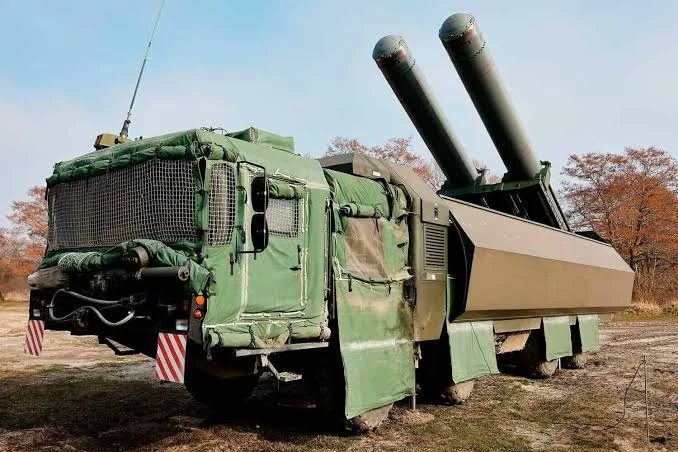
Operators from @DI_Ukraine Group 13 special unit struck a Russian "Bastion" coastal missile complex in occupied Crimea in August — the launch platform for Zircon and Onyx missiles, the weapons Russia uses for terror strikes on Ukrainian cities.
Same operation, same team, in the same window:
💥 2 fuel tankers destroyed
💥 1 command-staff vehicle destroyed
And that's just one operation from one unit in one week.
The rest of what Ukraine hit in Crimea over the same stretch:
💥 A BK-16 landing craft struck in Sevastopol — damage assessment ongoing
💥 Russian supply vessel NEFRIT struck by a Ukrainian naval drone — in the port of Sochi, deep inside Russian territory
💥 A mobile "Krasukha-4" electronic warfare station near Sevastopol — the system built to jam radar on Russian aircraft, helicopters, drones, and comms
This is what "impossible to defeat" actually looks like on the ground: a missile launcher gone, a jamming station gone, ships hit in ports Russia thought were safe on its own coastline.
Nobody is claiming Russia collapses tomorrow. But the story that it's simply too big to hurt has been disproven, target by target, all year.
Ukraine isn't waiting for permission to win. It's just doing the work.
Source: @DI_Ukraine, September 4, 2026
#Ukraine #UAF #CrimeaIsUkraine #DroneWarfare #StopRussianAggression #RussiaUkraineWar
🕯️ On September 3, one of Ukraine’s bravest defenders was killed…
Olena Sozoniuk. A combat medic with the 14th Separate Mechanized Brigade named after Prince Roman the Great. She was only 28.
From childhood, Olena had a strong character — determined, active, principled. She was never someone who simply went with the flow or accepted the easiest solution. Her leadership qualities appeared early, and an ordinary, quiet life never seemed enough for her.
Olena went to the Maidan with her sister at the beginning of the protests and remained there through some of its most dangerous days. During the beating of students, she was injured herself, suffering bruises and a mild concussion. Even then, she did not immediately tell her parents because she did not want them to worry.
In 2015, Olena decided to join the Armed Forces of Ukraine. She was initially rejected because her medical records showed that she had frequently suffered from pneumonia as a child. But she kept trying. She applied again and again — and was finally accepted on her fourth attempt. Despite her family’s fears, she remained committed to her decision and began her military service.
At around 4 a.m. on February 24, 2022, Olena called her family and told them that the full-scale war had begun and her unit was being urgently evacuated. For her, there was never any question of standing aside. Her place was with her comrades.
In May, she called her sister Olha with a request no family member ever wants to hear: if she was killed, take care of her daughter. Olena spoke calmly about her own death and admitted she was not afraid of dying. What frightened her far more was the possibility of the war reaching her native Volyn.
By then, she had already witnessed the horrifying consequences of Russian attacks in the Kyiv region — dead civilians, including children. But what she saw only strengthened her determination to save others. Olena treated soldiers and civilians, evacuated the wounded and rescued children.
Her comrades knew that whenever the radio reported wounded soldiers, Olena would go wherever the fighting was fiercest. She pulled people out under enemy fire, fully aware that she herself might never return.
Under Russian shelling, she recovered not only the wounded but also the bodies of fallen comrades. She would attach them to her belt straps with ropes and carabiners and drag them herself. After such evacuations, the straps on her uniform were often torn away — silent evidence of how much strength she gave to bring her people back.
Olena went on evacuation missions to places others sometimes did not dare to enter. On one occasion, she personally dug a soldier out from beneath the ruins of a collapsed dugout. He was alive — and because of her determination, he had a chance to survive.
Even pregnancy did not make her leave the service. For a long time, Olena hid from her family that she was directly on the front line. She remained with her combat unit, continuing to do what she believed was her duty.
On September 3, 2022, her family received the devastating news: Olena was gone.
During another Russian attack, she left her shelter to check whether anyone had been wounded — and came under enemy fire. Her injuries were fatal. Because of their severity, Olena was buried in a closed coffin.
Her parents still visit her grave every day. Her daughter Oksana now understands why her mother is no longer there. She refuses to watch cartoons in Russian and repeats words no child should ever have to say:
“The Russians killed my mom.”
Olena Sozoniuk was only 28 years old.
She gave her life saving others. And she died doing exactly that — leaving shelter to search for people who might need her help.
Eternal glory and eternal memory to Olena.
May her name forever remain among those who gave their own lives so that others could live.
President Trump:
The level of animosity between the two leaders [Putin and President Zelenskyy] is causing that war not to end.
Comment from me: this war isn't ending because Putin is not ending it.
Meine Verachtung für Russland kennt keine Grenzen. Und noch tiefer sitzt die Verachtung für alle, die Russland beim Töten eines freien Volkes zur Seite stehen.
Deutschland hat ein klares Zeichen gesetzt und den Worten Taten folgen lassen, andere europäische Staaten sind gefolgt. Und trotzdem: Glaubt niemandem, der behauptet, Russlands Eskalation sei eine Reaktion darauf. Russland hat sich längst auf die nächste Stufe vorbereitet — den Westen als Schuldigen hinzustellen, ist reine Taktik, kalkuliert, um zu zermürben. Hätten Europa und Deutschland nicht auf den Anschlag reagiert, hätte Moskau sich einen anderen Vorwand gesucht. Das tut es seit 2022
Schreibt in die Kommentare, was ihr davon haltet.
The International Civil Aviation Organization (ICAO) has issued a statement "reiterating its calls for stronger commitments from all Member States to protect civilian aircraft from all risks arising from conflict zones" - allegedly, in response to Ukraine's statement about Russian skies becoming unsafe.
The Organization mentioned the "fundamental security threat" that is "jeopardizing civilian aviation."
Perhaps it is worth noting that all civilian aviation flights are prohibited over Ukraine since February 24, 2022 - the start of Russia's full-scale war against Ukraine. It is Russia that is a fundamental security threat, not Ukraine.
📷: Russian missile in Ukrainian civilian skies over Kyiv
AMANPOUR: Zelenskyy has said that Russian airspace will be effectively closing. Putin called that "state terrorism."
🇨🇿 PRESIDENT PAVEL: Strange to hear talks about "state terrorism" from a man who directly orders to commit state terrorism on other countries, including my own.
@NOELreports I hope your country doesn't get invaded by a beast like Russia then you would understand why 90 biilon euro cannot save you. If you don't support them, then shut up your mouth
Kherson. A russian human safari — POV.
A russian drone operator hunts a civilian like prey — deliberately tracking him from above.
They film their war crimes and boast about them.
The world has no right to look away.
Share it.
This is russia. These are russians.