ChatGPT has quietly built a file on you. You've never seen most of what's in it.
Every message you send feeds it. It studies your patterns to map your personality and habits, things you never actually told it.
Here are 7 prompts to pull up everything it has on you, and wipe what you never agreed to:
STEP 6: Deliver excellent work and keep improving.
Once the first client says yes, ChatGPT becomes your assistant.
Use it to draft emails, summarize meetings, create SOPs, brainstorm ideas, research faster, and solve problems.
The more efficiently you work, the more clients you can manage, and that's how your income begins to grow.
INSTEAD OF WATCHING AN HOUR OF NETFLIX TONIGHT.
This 60-minute Cambridge lecture by Demis Hassabis will teach you more about the future of AI than most people will learn in the next 5 years.
Bookmark it and give it an hour, no matter what.
A billionaire went bankrupt.
Only $200 left. And one expensive designer suit.
One day he walked into a hotel & asked:
“How much to buy this place?”
Owner: “$5 Million.”
Billionaire: Okay, ‘‘I’ll pay $500K in cash right now & give me control for 30 days”
Next day: ↓↓↓
I told everybody that the minute those 200 US soldiers deployed permanently in Nigeria, Tinubu won his 2nd term and any "opposition" still talking about "2027 election" is just doing political dance and drama.
Some people are still asking for explanation because they still don't get it. The fool is still trying to understand the game after it has ended and the other players have gone home.
Tinubu does not forgive critics, he absorbs them. His reward system is simple: if you once exposed him, insulted him, or loudly questioned his past, you are more valuable inside the system than outside it. Name one top appointee or loud defender around him today who did not once attack him.
FESTUS KEYAMO publicly questioned Tinubu’s certificate and credibility, speaking as a lawyer who claimed to care about transparency. Today, he attacks anyone who raises the same questions he once popularised.
FEMI FANI-KAYODE (FFK) accused Tinubu of corruption, godfatherism, and running Lagos like a private estate. He used words like “criminal enterprise” and “state capture.” Today, he markets the same man as Nigeria’s saviour.
RENO OMOKRI built an online brand attacking Tinubu’s morality, background, certificate saga, and Chicago controversies. He mocked those who supported him. Today, the fire has gone cold, the memory has faded, and the criticism is carefully redirected elsewhere.
DANIEL BWALA repeatedly declared Tinubu unfit for office on national television, attacking his health, history, and integrity. Today, he defends the same record he once described as disqualifying.
NYESOM WIKE accused Tinubu of hijacking party structures, imposing candidates, and running a one-man political empire. Today, he calls it “political experience” and “capacity.”
JOE IGBOKWE once raised internal APC alarms about fairness, equity, and leadership decisions linked to Tinubu. Today, dissent is treason and silence is loyalty.
BAYO ONANUGA and DELE ALAKE once wrote and spoke critically about Tinubu’s political dominance and methods. Today, they are gatekeepers of his image, aggressively rewriting history.
The pattern is not coincidence.
It is containment.
Yesterday’s critics are not forgiven, they are neutralised.
Yesterday’s questions are not answered, they are buried.
Yesterday’s accusers are not corrected, they are compensated.
This is not unity.
This is not maturity.
This is not ideological growth.
It is political settlement, where exposure is rewarded, accountability is traded for access, and silence is bought with power.
And the most insulting part?
They now insult Nigerians for asking the same questions they themselves once asked.
-Baron Large
A Japanese Manager Once Told Me: “We Fire Employees Who Arrive on Time.”
I laughed.
Then he explained why—and it completely changed how I see success.
I first heard this in Tokyo during a business dinner.
I asked why being late is such a serious offense in Japan.
He replied calmly:
“We don’t fire the late ones. We fire the ones who arrive exactly at the start.”
The table went silent.
In my culture, arriving right on time means:
• responsible
• disciplined
• professional
In his culture? It means passive.
He explained:
“If you arrive at 9:00 sharp, you’ve waited until the last possible second.”
That tells us something important.
It tells us you didn’t plan for:
• traffic
• delays
• uncertainty
• responsibility beyond yourself
And if you don’t plan for uncertainty… you can’t be trusted with systems.
He said something I’ll never forget:
“Only the weak arrive in the last minute.”
Not because they’re lazy—but because they think in limits, not margins.
Japanese companies don’t value accuracy.
They value anticipation.
A professional arrives early to:
• settle the mind
• read the room
• prepare mentally
• show readiness
Not to rush in out of breath.
That idea stayed with me.
And once I noticed it… I couldn’t unsee it.
The most successful people everywhere, no matter within which country:
• arrive early
• stay calm
• observe first
• speak last
They’re already present before others even enter.
They build trust before the meeting begins.
They notice details others miss.
They create opportunity before others react.
That edge compounds.
Showing up early isn’t about time.
It’s about mindset.
Exactly on time says: “I did the minimum.”
Early says: “I came prepared for reality.”
Business, and life, require margin.
When someone says, “But I came on time,”
I no longer hear discipline.
I hear the limit of their thinking.
Japan understood this long ago:
Success begins before the clock starts.
Will Americans and Germans and many others relearn these self-explanatory principles?
The question going forward is:
Will YOU continue with the behavior of the Have-Nots, or choose the behavior and success of the Have-Yachts?
Bitcoin. 🟠
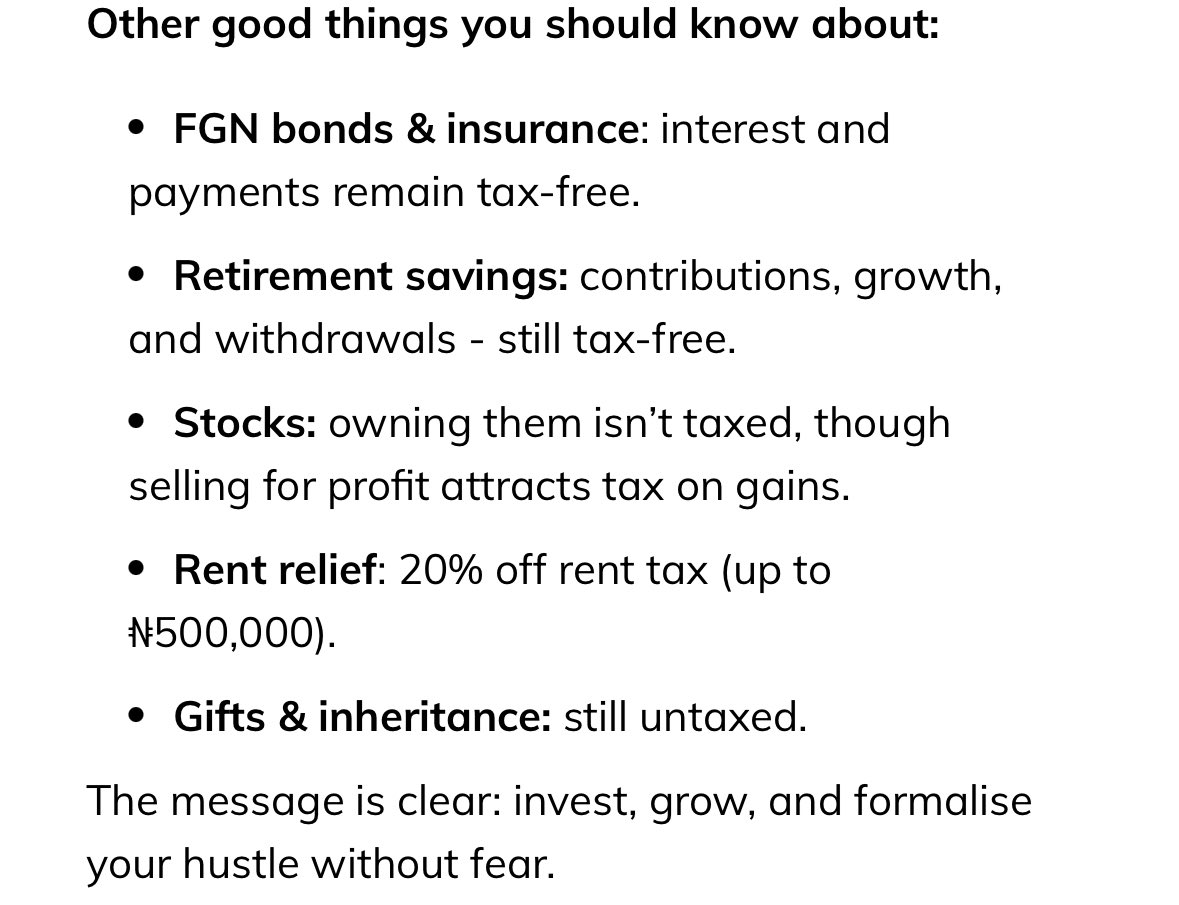
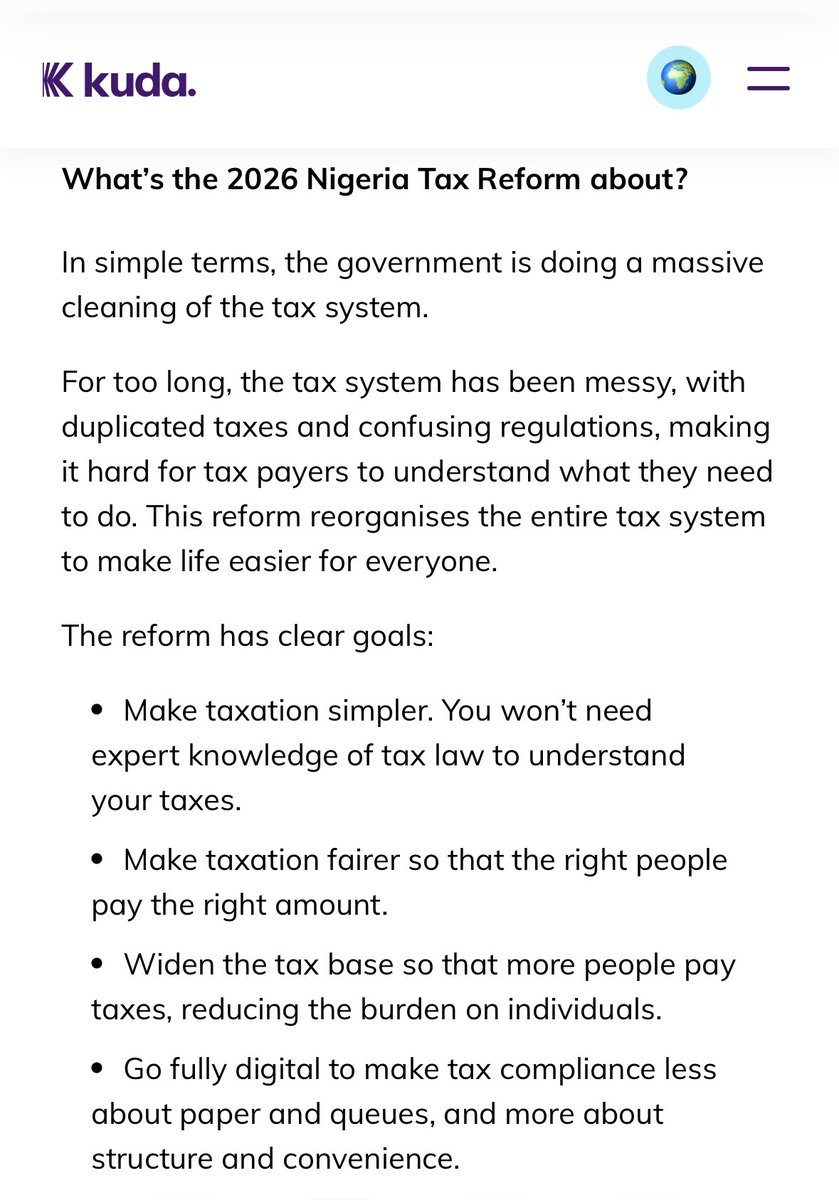
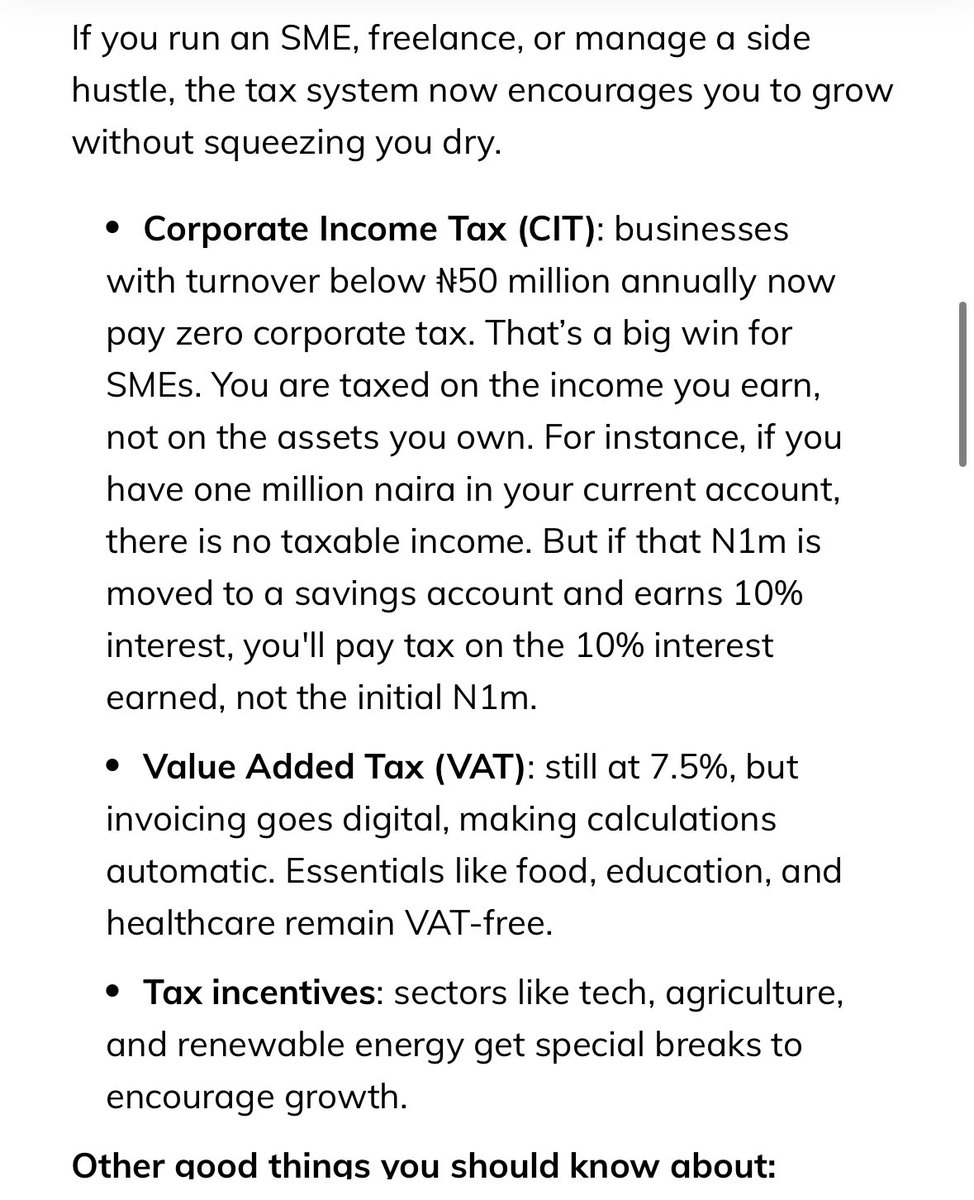
Kuda broke down the new tax law in 4 slides. If you actually read it, you’ll see there’s no need to panic. 😌
But let’s talk: which part is still confusing you? Reply, I’ll explain