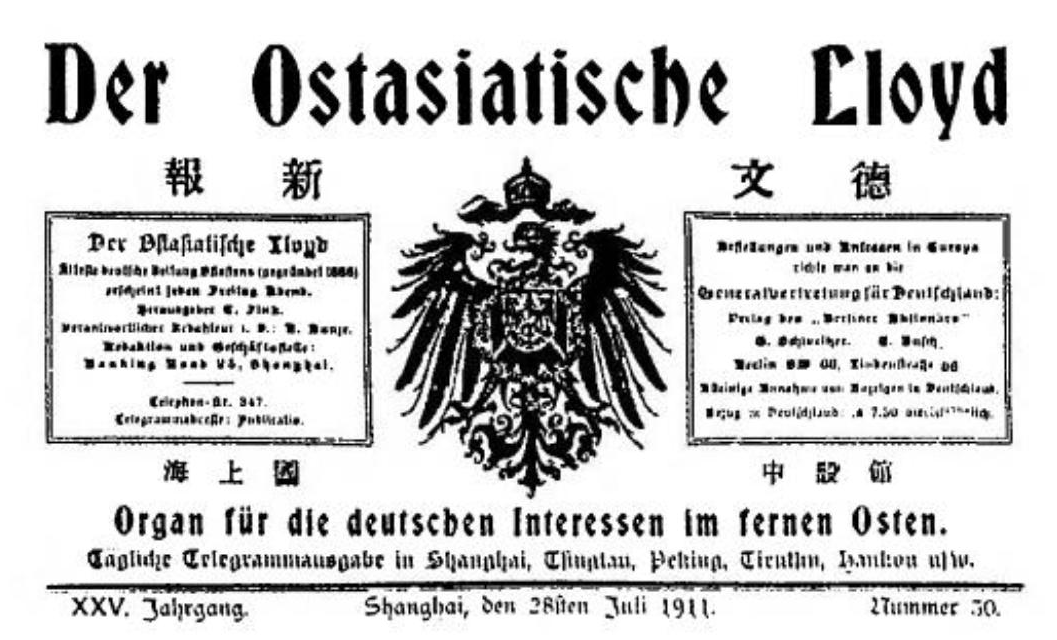
Kautsky (October 1914): 'The situation changes immediately as soon as it becomes clear that we are unable to prevent the war [...] The practical question is no longer war or peace. It is this: victory or defeat for one’s own country.' https://t.co/Oq6SiIGJr7
Kautsky vs Mehring on 'Civil Peace': 'If we did not want to be banned, our press would have to try to continue to champion party principles within, and despite, the limits of martial law, working under the sword of Damocles' https://t.co/2IUTgHjh1E
Franz Mehring (Oct., 1914) 'And [embracing civil peace] created the impression [...] that German Social Democracy had surrendered wholly to imperialism. As we all know, this impression is misleading, but even misleading impressions can do enormous harm.' https://t.co/AtZffe8zcU
Video and slides of my talk this morning on August Bebel, Wilhelm Liebknecht and the 'Franco-Prussian War'/'Der Deutsch-Franzoesische Krieg'/'La Guerre de 1870' (1870/71) https://t.co/0WXGflDtPP
"People console themselves with a sigh: ‘Well, at least this disastrous struggle between nations will be the last one that civilized humanity will have to endure!’"
Clara Zetkin, 'The Last War', October 2 1914
https://t.co/v0v7iz4Frv
'So there can be no doubt: Bismarck wanted the war and wanted it at that precise moment. But that was also true of Monsieur de Gramont!' ("How Wars are Made", 'Die Gleichheit', Christmas 1914)
Parvus on China (1908): "Newspaper companies run by the Japanese, or by Chinese people educated in Japan, sprang up like mushrooms. ‘Newspaper explainers’ are employed to make their content accessible to those who are unable to read or do not understand the Mandarin dialect."
Parvus: 'The new central government seriously set about cleaning up the rule of the Manchus and the continued existence of the dynasty itself is in question. While this looks like the abolition of aristocratic privileges in Europe, it has particularly Chinese characteristics.'
Parvus on China and the Russo-Japanese War: 'Every day, heated petitions written by angry governors and governors-general arrived in Peking by wire from all provinces, urging a joint battle with the racially related Japan against the Russian bear'. https://t.co/oaRjaQ30A8
#Parvus on #China: 'In order to centralise an empire as large as China, modern means of transport were essential. These, however, partly presuppose the capitalist reorganisation of production.' (Picture: Li #Hongzhang in 1896) https://t.co/jGe7JwQevN
Parvus (1908): 'China presents a picture of tumultuous conditions unlike any other country. Capitalist colonial policy plays a role in a political transformation in the spirit of bourgeois parliamentarism in line with the Western European model.' https://t.co/tqFSmsf0gX
New Translation! Parvus, A New China (1908): 'Until now, when people spoke of China, they associated it with the idea of the Chinese government as the representative of the Chinese conception of the state.' https://t.co/OlyoMwwYy3
Happy 135th International Workers Day from Marxism Translated! On our site you will find a quick translation of an article by Clara Zetkin in the pages of 'Die Gleichheit' on the eve of the 25th International Workers' Day on April 29 1914. https://t.co/NFMaA6kCEb
We have the same view as Ferdinand Lassalle: indirect forms of taxation making of bread more expensive are vile and inimical to culture. The state would only need to introduce progressive taxes on income and inheritances and it would have enough resources https://t.co/iVmiJXrjXU
'Assigning this entire enormous task of daily political vigilance and initiative to a party executive committee, whose command the party organization, which will soon number millions, passively awaits, is the most perverse thing there is. This is “corpse-like obedience”.'
Rosa Luxemburg with a message in a bottle for today's far left: "Discipline and unity of action are vital for mass movements like ours. But discipline in the Social-Democratic sense is fundamentally different from that of a bourgeois army."
Underrated though major figure of Polish socialism, whose name is often lost in the mix between the two opposites of Luxemburg & Pilsudski. What writings do exist in English are really valuable. Thankfully @Marxtranslated is on the case to publish an English language collection.


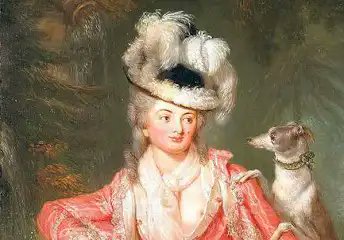
![Marxtranslated's tweet photo. Kautsky (October 1914): 'The situation changes immediately as soon as it becomes clear that we are unable to prevent the war [...] The practical question is no longer war or peace. It is this: victory or defeat for one’s own country.' https://t.co/Oq6SiIGJr7 https://t.co/ReXsqg79Zz](https://pbs.twimg.com/media/GWkXl3kXEAAzkDY.jpg)


![Marxtranslated's tweet photo. Franz Mehring (Oct., 1914) 'And [embracing civil peace] created the impression [...] that German Social Democracy had surrendered wholly to imperialism. As we all know, this impression is misleading, but even misleading impressions can do enormous harm.' https://t.co/AtZffe8zcU https://t.co/uJsLQ0Uvo4](https://pbs.twimg.com/media/GUtKNJQWIAAUP8_.jpg)