The Soldier’s Dilemma in Balochistan!
In conflict zones, morality is rarely clean but for the soldier on the ground, it is often brutally simple: protect lives, uphold the writ of the state, and respond to violence with restraint where possible.
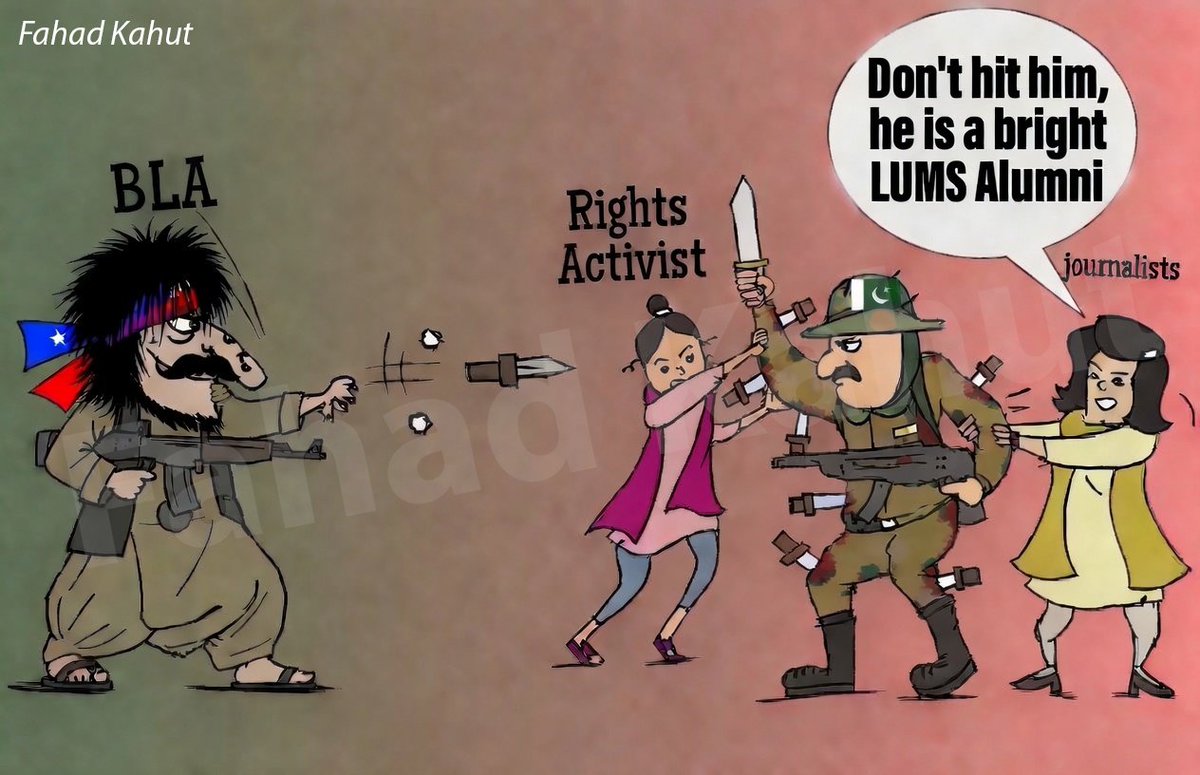
Yet, what complicates this duty is not always the threat in front of him, but the narrative behind him. The soldier becomes trapped between bullets and opinions - expected to confront armed militancy while simultaneously being judged through selective moral lenses.
This is the dilemma: when violence is clear, but its interpretation is not.
In the case of Balochistan, this tension is amplified by a growing discourse within certain liberal and media circles that tends to contextualize and at times inadvertently rationalize militancy.
By framing violence purely as a reaction to grievances, the line between explanation and justification begins to blur.
No serious observer denies the presence of political, economic, and historical issues in the province. But when armed actors are consistently presented as products of circumstance rather than agents of choice, a dangerous narrative equilibrium is created one where accountability weakens, and violence finds intellectual cover.
This is where the soldier’s dilemma deepens. On one hand, he faces those who pick up arms; on the other, he navigates a narrative environment that questions the legitimacy of his response while softening the scrutiny on those who initiated the violence.
A sustainable path forward demands intellectual honesty - the ability to hold multiple truths at once: that grievances may exist, but so does the moral and legal boundary against violence. Without this balance, the discourse risks becoming asymmetric, and the very idea of justice begins to tilt - not on facts, but on who controls the narrative.
Pakistan 🇵🇰 vs India 🇮🇳 = 7–0, Made in China 🇨🇳
On May 7, 2025, South Asia witnessed one of its most lopsided air combat outcomes in recent memory.
➡️ India launched a major airstrike targeting alleged “terrorist camps” inside Pakistan. But before their jets could complete the mission, they were ambushed and annihilated, not by American F-16s, but by a Chinese-designed air combat system.
Result?
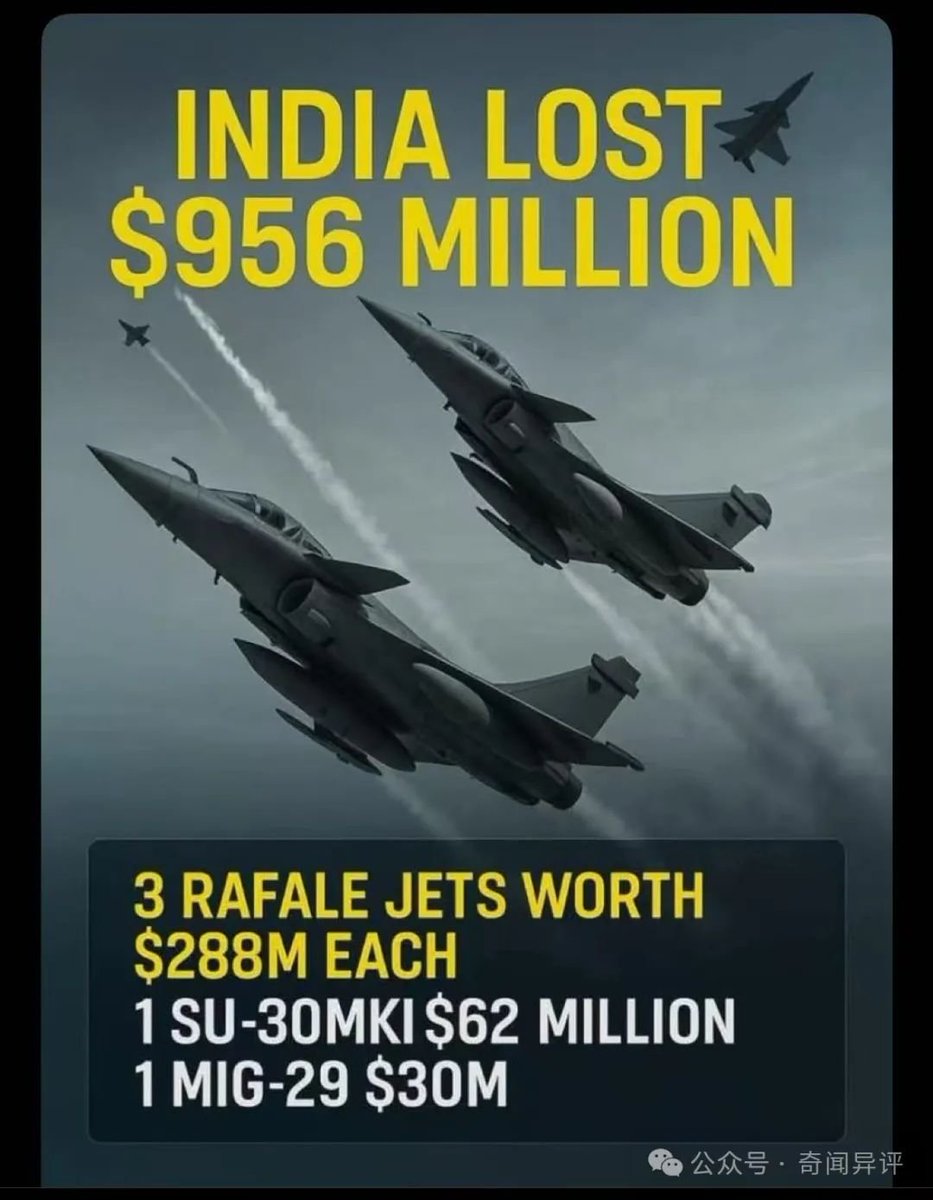
🇮🇳 3 Rafales, 1 Su-30, 1 MiG-29 = shot down
🇮🇳 2 Israeli Heron drones = toast
🇵🇰 Losses = 0
➡️ Final score: 7–0
Star players?
🇨🇳 J-10CE multirole fighters
🇨🇳 PL-15 beyond-visual-range missiles
🇨🇳 HQ-9BE SAMs
🇨🇳 ZDK-03 AWACS coordination
💥 Coordinated via A-shoot B-guide, a combat tactic not even the US or NATO has demonstrated operationally.
🧠 Tactical Masterclass
Pakistani jets didn’t even need to light up their radars. All target data came from AWACS, guiding silent J-10s to optimal firing zones. One Rafale was reportedly shot down 10km from its own runway, mid-takeoff, defenceless.
The message? India got outplayed. Hard.
🇺🇸 The American Dilemma
Here’s where things get awkward for Washington:
Pakistan didn’t use U.S. F-16s in this engagement. Why? To avoid upsetting Uncle Sam.
The irony? The U.S. pushed for a “mediator” role in South Asia, but its idea of mediation was to supply arms to both sides while pretending to be neutral. It pressured Pakistan to show restraint with American hardware while pumping military support into India as part of its broader anti-China strategy.
But America’s “balancing act” in South Asia is now a farce. It arms India as a China-containment pawn, yet Pakistan, its “Major Non-NATO Ally”, just scored a stunning win using 100% Chinese tech.
This wasn’t just a diplomatic embarrassment, it was a strategic loss. The U.S. failed to curb escalation, failed to mediate and now fails to maintain influence in a region where its credibility is in freefall.
This conflict shows what the U.S. really is in South Asia: a spectator with a shrinking influence. Its refusal to back either side decisively is alienating both.
Meanwhile, China is watching. The performance of the J-10CE and PL-15 will now be on the military shopping lists of half the Global South.
India bet big on French Rafales, Israeli drones and American support. Pakistan bet on Chinese system integration and net-centric warfare. The outcome?
Chinese weapons work.
This wasn’t just a skirmish. It was a live-fire commercial for China’s defence industry and a serious blow to the West’s military prestige.
What an interview! 💯 The iron lady, ASP Shehrbano Naqvi, is literally making Pakistani women proud in the whole world today but sadly, pti cult (including pti women) are cursing her. Fitna-e-Imraniat has literally ruined our generation…