Global geography of population aging, challenges and physical activity in pension reform: new paths and new economic metrics https://t.co/zP2OnnNbUF via @wordpressdotcom
1) and electric vehicle sales are growing rapidly.
Elevator Conversation Question:
Are condominiums preparing to receive the new fleet of Chinese electric cars, or at least hybrid cars, given that Brazil lacks the infrastructure for purely electric cars?
China is China.
Could this be the end of the internal combustion engine?
It seems that gasoline and diesel car sales in China peaked in 2017 and are now falling rapidly.
The transition to electric and low-carbon transportation is already well underway—
+ 1
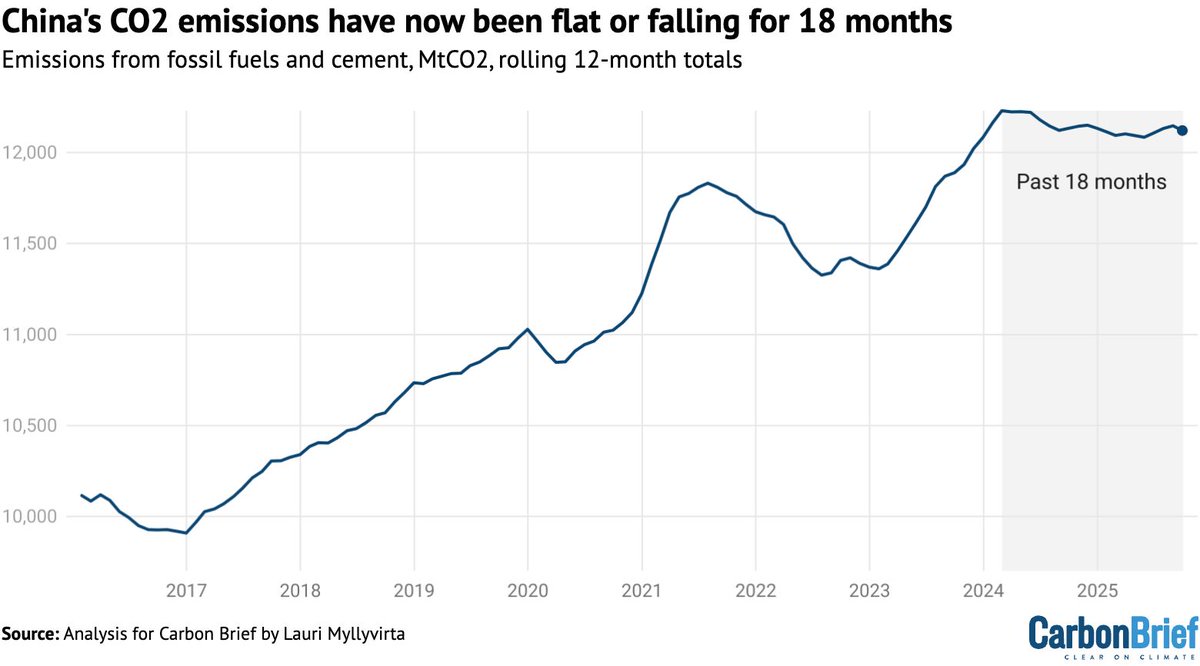
1) This is happening because clean energy—primarily solar—is meeting China's growing energy demand. China is clearly turning the page on its emissions.
This is unprecedented! CO2 emissions in China have been stable or falling for 18 months, the first time that growth in energy demand, equal to or greater than historical averages, has not driven an increase in emissions.
+ 1
China has 44 million metric tons of rare earth reserves, more than double Brazil's, but both together account for 65 million when viewed as BRICS units.
+
4)
1) How much would be enough to satisfy US demand for the next 10 years?
2) Would it be an excellent opportunity for the US to block Brazil's rare earths?
Will BRICS embrace the technological future?
In short, China plays chess while the US plays checkers with rare earths.
A China não está competindo com o Ocidente. Está humilhando-o.
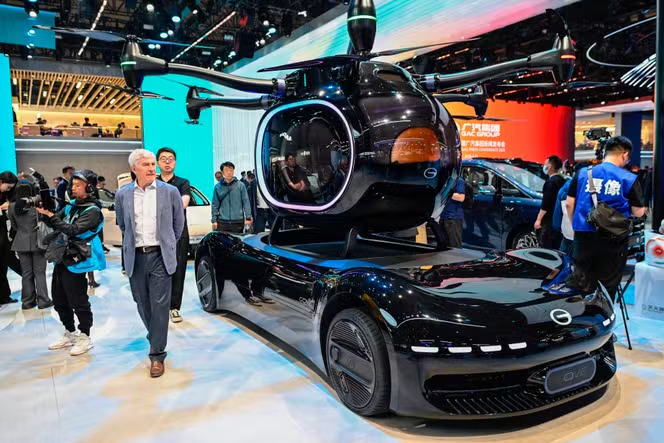
No Salão do Automóvel de Xangai 2025 surgiram carros voadores, cápsulas aéreas e ecossistemas inteligentes movidos por IA.
Enquanto isso, BMW, Mercedes e Audi se limitam a pequenas atualizações...
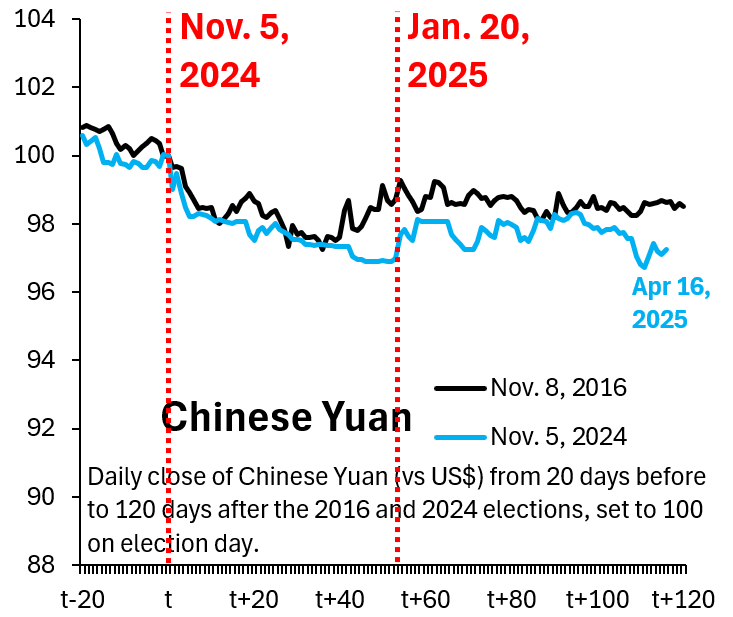
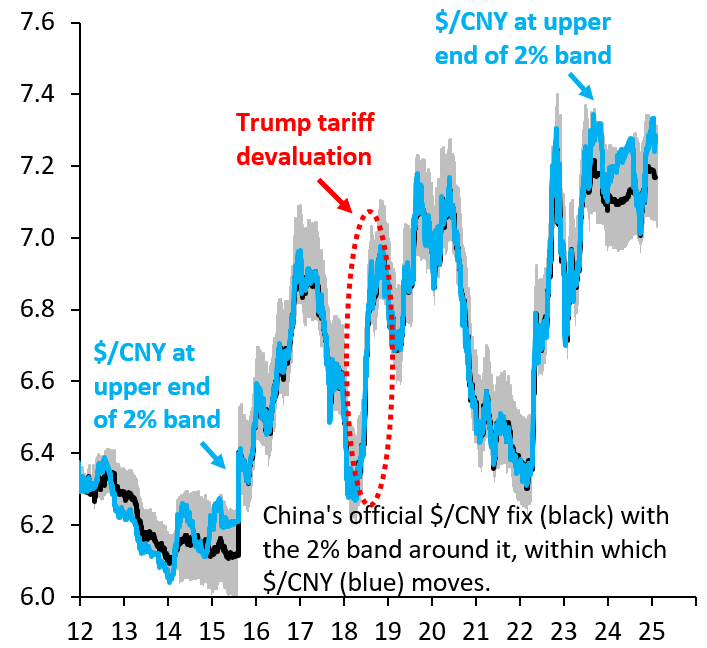
As long as China doesn't devalue the Yuan against the Dollar, this signals China is hoping to negotiate with the US. Last week we saw stress in markets mount as China did a small test devaluation of the Yuan. With the Yuan stable again, global markets have calmed back down...
BREAKING: European stocks have outperformed the S&P 500 by 20 percentage points since mid-November, the most since the 2000 Dot-Com Bubble.
The EuroStoxx 50 index has risen +15% while the S&P 500 has declined -5%.
However, the ratio between the two is still near its low as the S&P 500 has widely outperformed European equities over the last few decades.
The recent outperformance was driven by investors' flows into European stocks that hit $4 billion over the last 4 weeks, the most in 10 years.
Europe is the largest foreign owner of US stocks, holding a whopping ~$9 trillion in American equities.
Europeans are moving money out of the US.
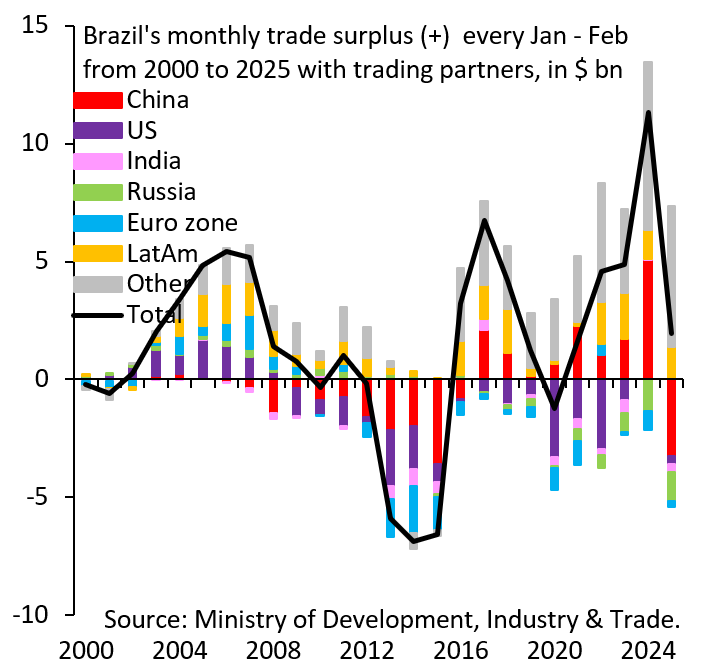
BRAZIL'S TRADE BALANCE
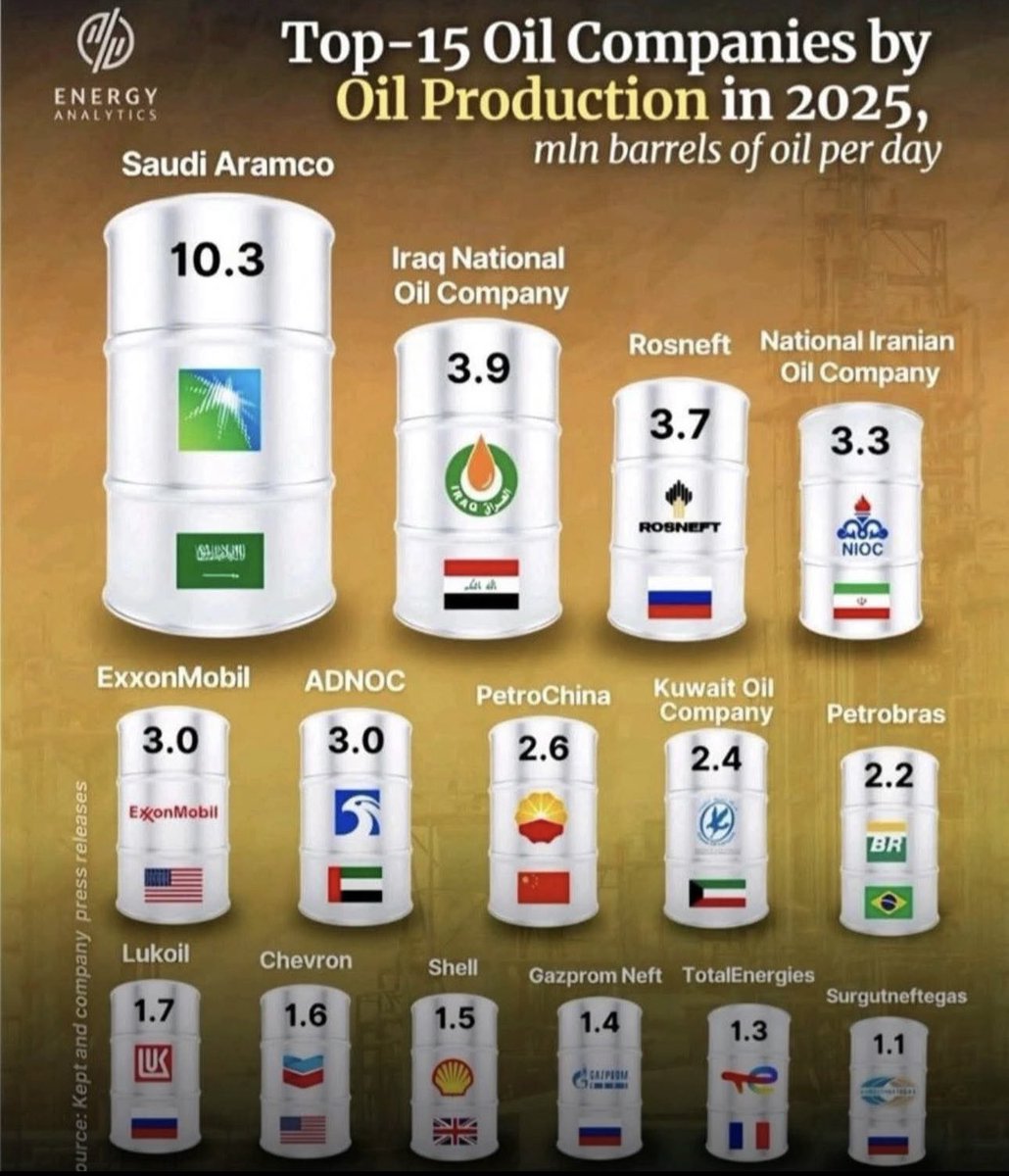
The sharp drop in Brazil's trade balance was caused by Petrobras buying floating platforms from China for US$2.7 billion.
It seems that Petrobras alone made floating platforms the largest import product from China to Brazil.
Robin Brooks' chart shows this
Brazil's rising trade surplus is the stuff of legend in EM. No other EM has been able to transform its trade balance quite like Brazil. But that stellar performance is breaking down in 2025. Brazil is running a huge trade deficit with China (red), which drags everything down.
En esta guerra arancelaria, el único ganador es China. China mantiene un perfil bajo, esperando a que Estados Unidos se desmantele, buscando pelea con todos. Sin duda, muchos aliados de Estados Unidos son gorrones, pero lo que está sucediendo ahora solo beneficia a una China...
Brad Setser's essay in the NYT on China's manufacturing boom is very problematic.
He asks an interesting question: to what degree is China's manufacturing dominance a problem for other countries?
But his approach is to blame China for "harming" and "distorting" global trade.
More shockingly, Setser portrays China's export boom as a way to compensate for domestic economic problems. This is misleading. China is choosing to export and compete simply because they can and because they develop their economy faster that way. This is, in fact, the nature of economic development!
The most problematic part of this essay, though, is that Setser does not discuss why so many countries are choosing to develop trade deficits with China, or failing to compete with China. Lots of countries have deliberately chosen the luxury of having access to imports from China — both inputs and final goods.
The US is the prime example, where consumers and multinationals have benefitted tremendously from trade with China. If this is creating problems for the US economy in the long run, they should simply do what China had to do: compete!
Sadly, this essays falls into the line of growing anti-China sentiments in the US — trying to portray China as the bogeyman. In reality, all we can blame China for is challenging US economic hegemony.
The Old-Age and Survivor Insurance (OASI) Trust Fund—the source of the program’s retirement benefits—is forecast to run out of money in 2033, at which point beneficiaries’ Social Security retirement checks would shrink by about 17%, if nothing is done.
The trust fund that pays for Social Security retirement benefits is forecast to run out of cash in 2033.
In a new paper, Wendell Primus, Tara Watson, and Jack Smalligan propose a bipartisan blueprint for achieving Social Security solvency.
https://t.co/iqxP8w5d5N
"Beijing did not devalue the RMB in retaliation for the 10% US tariff. This means Beijing thinks it can negotiate its way out of this and is playing fair until it finds out if it has leverage over President Trump. Only when these negotiations fail will Beijing devalue the RMB..."
Beijing has not devalued the RMB in retaliation to the 10% US tariff. That means Beijing thinks it can negotiate its way out this and is playing nice until it can find out if it has leverage on President Trump. Only once those negotiations go badly will Beijing devalue the RMB...
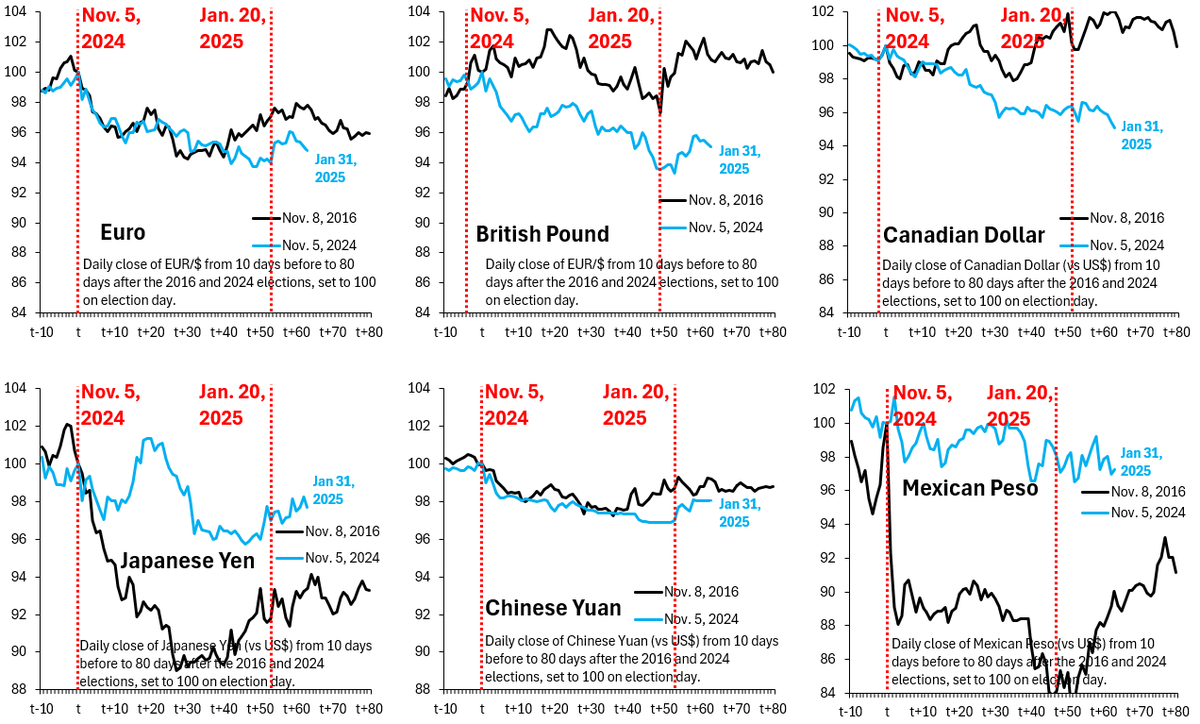
No matter where you look in global markets, the imposition of tariffs by the US is barely priced. This means that a lot of Dollar strength is coming, especially versus the Euro (top left), Canadian Dollar (top right), Chinese Yuan (bottom middle) and Mexican Peso (bottom right).