The MAST Center studies marriage and romantic relationships, HMRE programs, supports emerging scholars, and shares HMRE research and evaluation resources.
As of September 29, 2023, the MAST Center will no longer be producing work or responding to messages. The website will be active until September 2024 but will no longer be updated. At that time, all resources will be available on the Child Trends website. https://t.co/9MJjzPsbjY
Our toolkit provides research-informed recommendations for existing HMRE programming to become more inclusive and relevant for LGBTQ+ (Lesbian, Gay, Bisexual, Transgender, Queer or Questioning, and other gender- or sexually minoritized) people. https://t.co/UhFOkdYgOf
Our toolkit details key facts about LGBTQ+ relationships, reviews LGBTQ+ inclusive terminology, and summarizes research on some of the key stressors and sources of resilience and thriving for LGBTQ+ couples. https://t.co/UhFOkdYODN
Our new toolkit provides research-informed recommendations for existing HMRE programming to become more inclusive and relevant for LGBTQ+ (Lesbian, Gay, Bisexual, Transgender, Queer or Questioning, and other gender- or sexually minoritized) people. https://t.co/UhFOkdYgOf
#HispanicHeritageMonth Fact of the Day: One in seven Latino children lived with a grandparent, which amounts to 2.7 million children overall. https://t.co/ZP1dlGvMUX
Learn about various dimensions of relationship quality and how they are measured with our two new resources. Head to our website to see the new research synthesis and data tool on relationship quality. https://t.co/gTQJA0YqA6
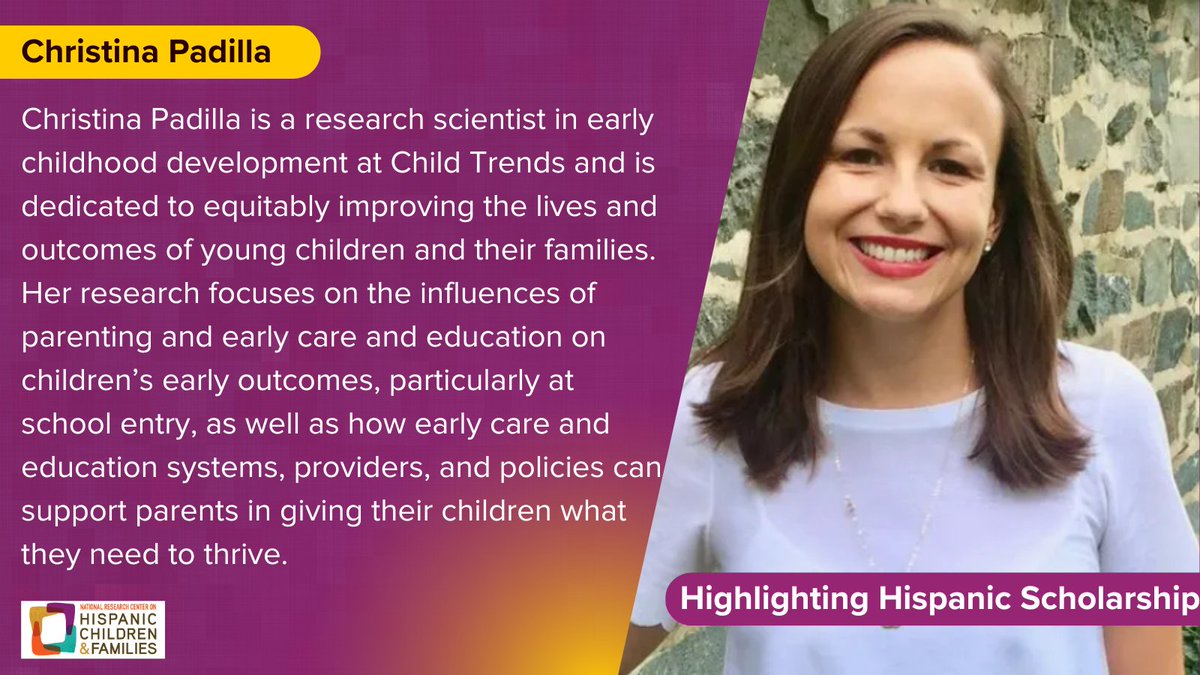
Highlighting Hispanic Scholarship: @cmpadilla12 is a research scientist in #EarlyDevelopment and a 2016 Center Scholar. She is dedicated to equitably improving the lives and outcomes of young children and their families. #HispanicHeritageMonth
Findings from our new brief show that in 2022, 44.6% of children in families with low incomes live in two-parent families, though this is less common among older children. This data story takes a deeper look at children's family structure within the U.S. https://t.co/IWEFh1yuT7
Stepfamilies differ in complexity and formation compared to other family structures in the U.S. Our new video summarizes findings from our brief on data-related challenges in measuring stepfamilies, research gaps, and implications for HMRE programs. https://t.co/ZGByDA1Zts
Considering the cultural, ethnic, and racial context of coparents is essential for HMRE practitioners delivering program content. Our new brief details strategies to provide culturally appropriate programming to support Hispanic coparents. https://t.co/nYIAWMMf62
Graduate school and subsequent transition from graduate school to the job market can feel overwhelming and confusing. This guide from the Center is designed to connect #EmScholars in the social sciences with resources. https://t.co/Ufo0yZS6FF #AcademicTwitter
Our new brief draws from a review of existing research and practice guidance as well as conversations with practitioners to provide considerations and relevant strategies to support HMRE programs serving Hispanic coparents. https://t.co/nYIAWMMf62
Healthy marriage and relationship education programs help couples develop the skills and knowledge they need to build high-quality relationships. @ChildTrends’ new datapoint discusses how trauma-informed approaches are critical to effective HMRE programs. https://t.co/T8R5MiAMHP
Given the importance of relationship skills for youth’s long-term developmental outcomes, efforts to develop and implement effective youth focused HMRE programs are critical. Incorporating Positive Youth Development has strong potential. https://t.co/hNhrXdyq6A.
HMRE practitioners working with couples have to balance relationships with both partners, which can be challenging. Programming could benefit from training staff in establishing and maintaining trusting relationships with the couples they serve. https://t.co/VsYDpnep0H
HMRE providers sometimes adjust programs to the behavioral or cultural patterns of participants without formally documenting changes, which can make measuring the full impact of adaptations hard. https://t.co/9ZkWivxEYt
Explore our emerging scholars page for professional development resources on the fields studying romantic relationships, families, and HMRE programming! #FamilyScience https://t.co/53Mv8rfkS3
Our brief reviews trends in heterosexual dating, cohabitation, marriage, and divorce, and discusses how changes in romantic relationships present new challenges and opportunities for family science researchers. https://t.co/fY9fBra5v9
#FamilyScience scholars: Gaps in the HMRE implementation literature point to the importance of culturally responsive training for program facilitators working with BIPOC couples. https://t.co/VsYDpndRb9
Explore our emerging scholars page for professional development resources on the fields studying romantic relationships, families, and HMRE programming! #FamilyScience https://t.co/53Mv8rfSHB