My reaction on @BloombergTV is below.
Two takeaways.
9 - 3 vote. Dissents are the new forward guidance.
I think when we get to the end of the Warsh term as Fed Chairman, we're going to see a vast majority of the meetings were 11-1 or 12-0 votes.
But when they are moving to change policy, dissents are the forward guidance that tells you the Fed is about to go a different direction.
What Changed?
Bob Michael of JP Morgan asked what changed. He asked why the Fed would hike rates because the data didn't really move that much from June, when we had a 12-0 vote. Correct.
I would argue what changed is the way that the Fed now operates. It's no longer the chairman dictating and everybody doing what he tells them. They are now independent, and this hawkishness was always there; this desire to raise rates was always there. It was just not allowed to be expressed or acted on. Now it is.
That's what's changed.
Worth remembering that all possible candidates are what we used to call hard left- ie happy with 45-50% of GDP being state spending. There's no "soft" or "centre" here.
Odds of the UK having a Labour Government over a full term and not experiencing either a Sterling or Gilt crisis or both, are pretty slim.
Fun period coming up, imho.
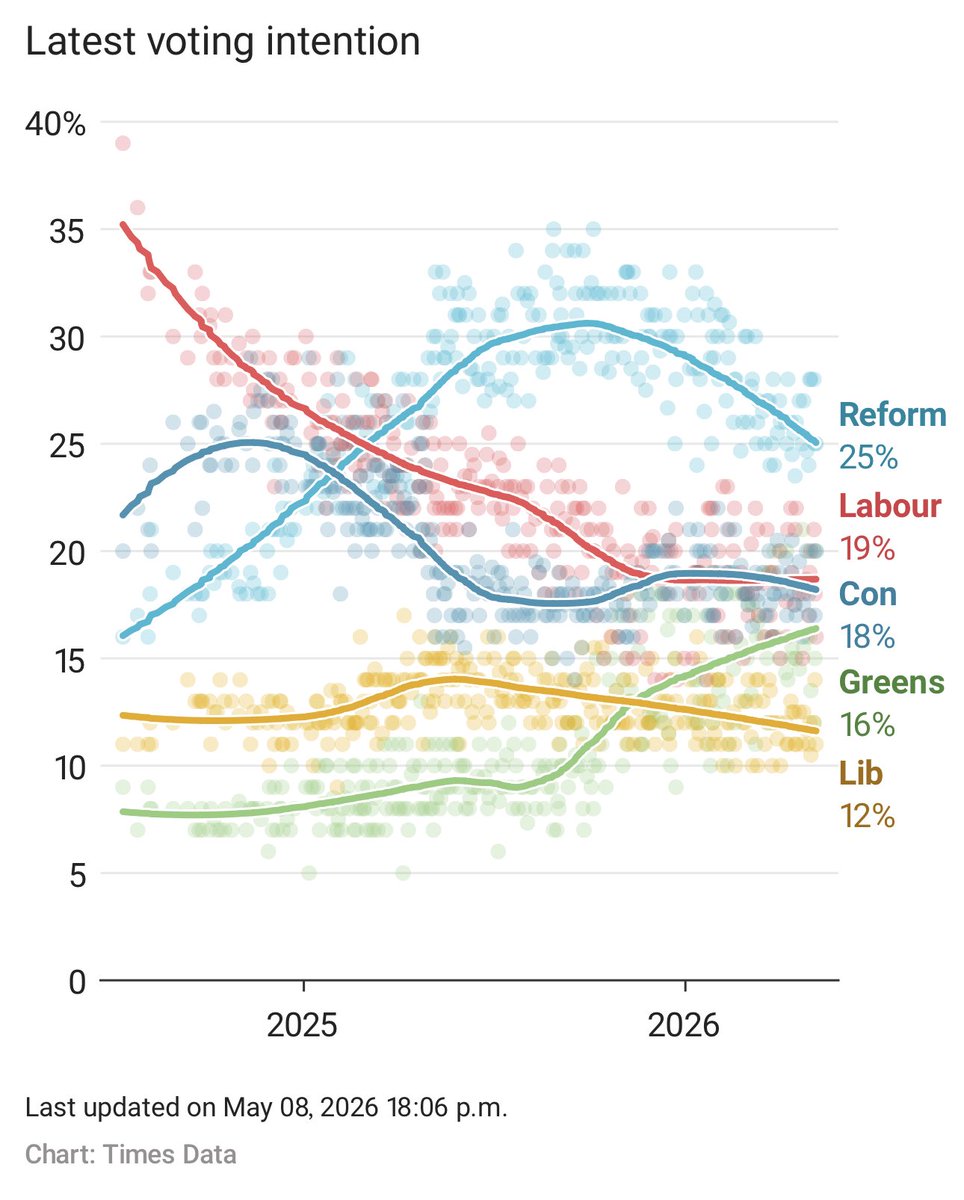
Interesting, and I hadn’t considered this. Has to have rising odds if Labour’s position remains weak into 2029. Need to think about the complex financial market implications…
There is an escape route for Labour from certain disaster at the general election: use their Commons majority to ram through PR. It’s cynical, + they’d never govern alone again, but it locks Reform out of No10. The left (Lab, Gr, LD) still have a majority over the right in the UK
Good thread on the state of the UK econ. This post is the key point - higher growth is needed so until govt policy helps this (and it can be argued it does the opposite currently) the UK will be in a doom loop.
We could escape this unpleasant set of options if we had higher growth; but growth requires accepting trade-offs, and our politics repeatedly fails that test.
So I fear taxes will continue to rise, and public services will continue to decline.
And before people say that’s obvious, it is intuitively elegant. Production loss has a value that accretes to the barrel. Crude acts like a bond pulling to par. Except in this case, par = level required to destroy demand.
Spot on. The likely post Starmer lurch left seems to be getting priced into Gilts in recent days. GBP is probably getting some support from the higher yields but I think that relationship will flip in the next 2-3 weeks and we’ll see EM style yields up currency down moves.
Weekend reflection:
The markets should begin considering who will succeed Keir Starmer, rather than whether he will depart in May-June 2026.
If Rachel Reeves remains the candidate in front of the cabinet and who might be her replacement.
As Starmer spoke, Gilt Yields increased by approximately 7 basis points across the entire curve.
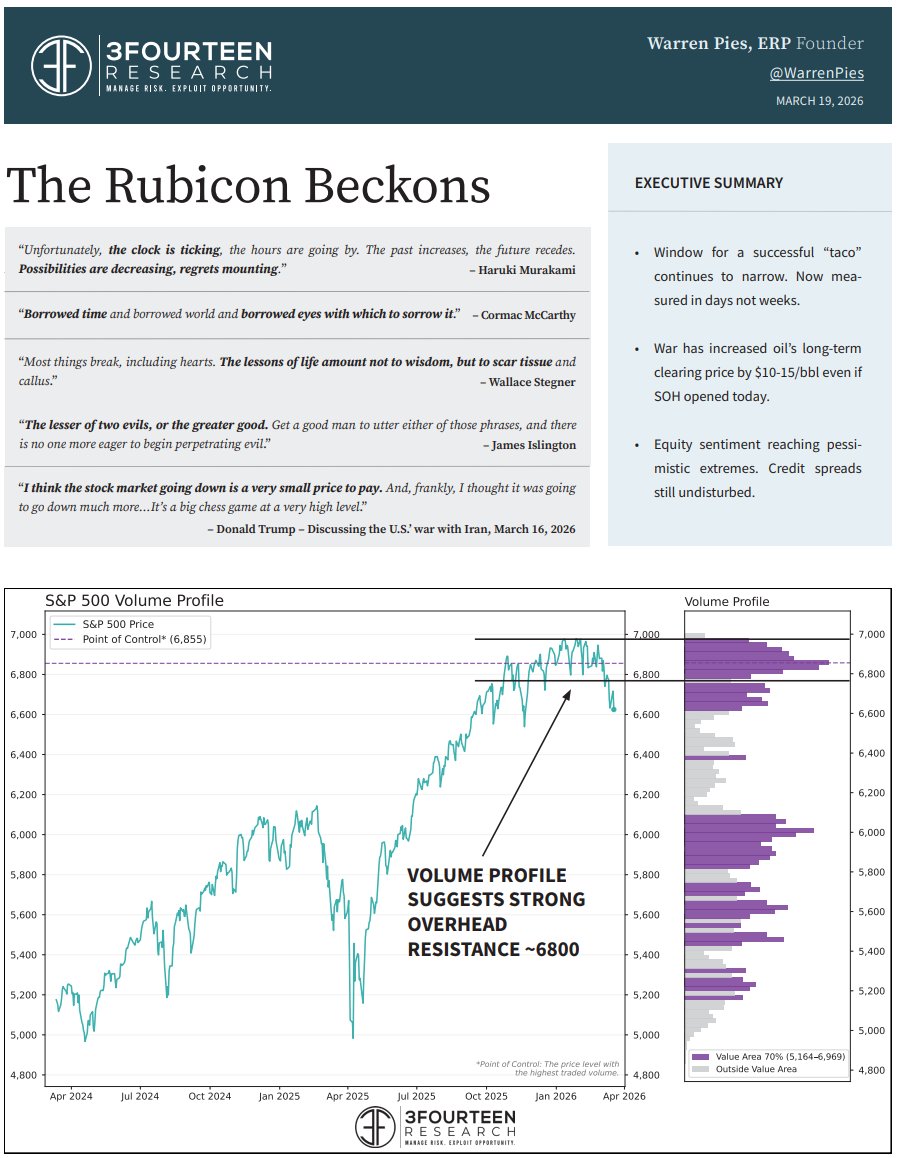
It may be one-time phenomenon, but it's certainly worth monitoring, especially given the resistance levels. Good luck.
I just went max bearish equities. However plenty of bull cases exist. The six big things that can make me wrong
1) Collapse of long term oil prices back to the low's
2) The passage of a highly stimulative fiscal package or reconcilliation
3) Manipulation of the Treasury Issuance such that they issue less duration and more bills, and Fed Balance sheet manipulation - These things are really bad for USD
4) AI ROI for all spenders on picks and shovels surprises on the upside vs already lofty earnings expectations AND margin doesnt come from firing workers.
5) Fed cuts short rates more than expected
6) Investors, companies, and banks lever up more than expected to invest and consume (Animal spirits accelerate and persist.) Which absorbs the massive overhang of issuance of government bonds, corporate bonds, IPO's etc which elevated growth expectations depend without a decline in prices, rise in yields.
AND THE JAWBONE
Crude "only" fell ~$4.50/bbl on the latest Trump post, which is less than 1/3 of the pullback he got on Monday, and the rout was reversed much more quickly.
Oil market getting more numb to the nonsense.
New report out to 3FR clients. Examining:
-The closing taco window,
-How the war has eliminated the post-War glut, raised the equilibrium oil price, and tied the Fed's hands,
-Equity outlook.
I can’t really see the scenario where stocks don’t go lower in the near term. Maybe that’s s bull case?
Market has been so desperate for a taco people have been making their own and forgot that in an actual war both sides have to agree to end it (or one has to surrender). They’re going to figure that out eventually.
The Fed’s cutting cycle is on its way to being completely priced out. 2 weeks ago, SOFR Z7 was 75bps lower than March 2026. Now it’s down to 25bps and IOR is comfortably above 2yr (meaning reserve managers are not buying the dip on the expectation the cutting cycle continues). If NFP is strong, it’ll wreck rates (at a time when financing has become increasingly important for the largest companies in the world) while if it’s weak I don’t think equities respond positively either.
And this all is coming at a time when AI is maybe not good enough to convince companies to replace workers with machines while business goes along as usual, but certainly is good enough to have companies attempt to use it for roles they had to cut because of economic pressure and potentially find out they don’t need to hire that role back.
It’s one thing to see some bearish scenarios and brush them off as priced in, that’s been a good strategy (most years have drawdowns of 10-15% routinely). But SPX is ~5% off all time highs…
Bingo. And now we know why bond longs have a problem… that and SWFs needing their money back and selling what they can (publics), not what they want (privates).
2026 is shaping up to be the year of net supply of shares. Reducing share repurchase is estimated here and wildcard which could take us to the first time of net supply since 1H 2021 is IPO's. XAi and OpenAi at low floats get us almost to net supply.