Cette tragédie n’est pas la première fois que des militants des deux extrêmes commettent un crime. Cette fois, elle donne lieu à une entreprise délibérée de disqualification d’un extrême pour réhabiliter l’autre dont on oublie les violences tout aussi meurtrières.
Le droit international est souvent jugé à partir d’un critère qui n’est pas le sien : sa capacité à empêcher les crises.
Cette approche est trompeuse, car elle transpose au niveau international des attentes propres au droit interne, alors que les deux systèmes reposent sur des logiques radicalement différentes.
Le droit interne est bâti sur une architecture hiérarchique : une autorité centrale édicte la norme et dispose des moyens matériels pour en assurer l’exécution. Le droit international, lui, s’inscrit dans un espace décentralisé, composé d’États souverains qui ne reconnaissent aucune autorité supérieure permanente. Il ne peut donc fonctionner ni comme un droit pénal global, ni comme un système de commandement, mais comme un cadre d’organisation des relations entre acteurs indépendants.
Dans ce contexte, la question n’est pas celle de la sanction immédiate, mais celle de l’incitation. Les règles internationales sont respectées non parce qu’un État y serait moralement tenu, mais parce qu’elles structurent un environnement prévisible dont tous tirent bénéfice. La stabilité juridique réduit les coûts de transaction, limite les risques d’escalade et permet aux États de concentrer leurs ressources sur autre chose que la gestion permanente de conflits.
Ce mécanisme est particulièrement visible dans les domaines où l’on ne parle jamais de “crise” : aviation civile, navigation maritime, échanges commerciaux, télécommunications, diplomatie. Ces espaces ne fonctionnent pas par la contrainte, mais par l’adhésion continue à des normes communes, précisément parce que leur effondrement serait immédiatement contre-productif pour l’ensemble des acteurs, y compris les plus puissants.
L’erreur fréquente consiste alors à déduire de l’existence de violations que la norme serait dépourvue d’effet. Or, une règle n’est pas inefficace parce qu’elle est transgressée. Elle l’est lorsqu’elle cesse d’être pertinente dans le calcul des acteurs. Or c’est l’inverse qui se produit : même lorsqu’ils s’en écartent, les États continuent de se référer au droit, de le mobiliser, de le tordre ou de le justifier. Ce simple fait indique que la norme conserve une valeur structurante.
La force brute, à elle seule, est un instrument instable. Elle permet de produire un résultat immédiat, mais elle ne suffit pas à en assurer la durabilité. Une action fondée exclusivement sur la contrainte expose son auteur à des réactions en chaîne qu’il ne maîtrise pas toujours. Le droit, en revanche, permet de transformer une situation de fait en situation acceptable, ou du moins tolérable, pour les autres acteurs du système international.
Ainsi compris, le droit international ne fait pas disparaître les rapports de force ; il les encadre. Il ne prétend pas moraliser la politique mondiale, mais en limiter les effets les plus destructeurs. Il agit moins comme une barrière que comme un amortisseur, réduisant le risque que chaque désaccord dégénère en confrontation ouverte.
L’absence d’une autorité mondiale chargée de l’imposer donne parfois l’illusion que le droit international serait une construction fragile ou purement symbolique.
En réalité, il constitue une technologie de stabilisation : imparfaite, souvent contournée, mais indispensable. Les systèmes internationaux qui ont tenté de s’en affranchir durablement ont fini par être minés par l’arbitraire, l’imprévisibilité et la défiance généralisée.
Le droit international n’est donc ni un idéal naïf ni une morale universelle. Il est un outil pragmatique, forgé par les États eux-mêmes, pour rendre la rivalité supportable et éviter que la puissance ne se retourne systématiquement contre ceux qui l’exercent.
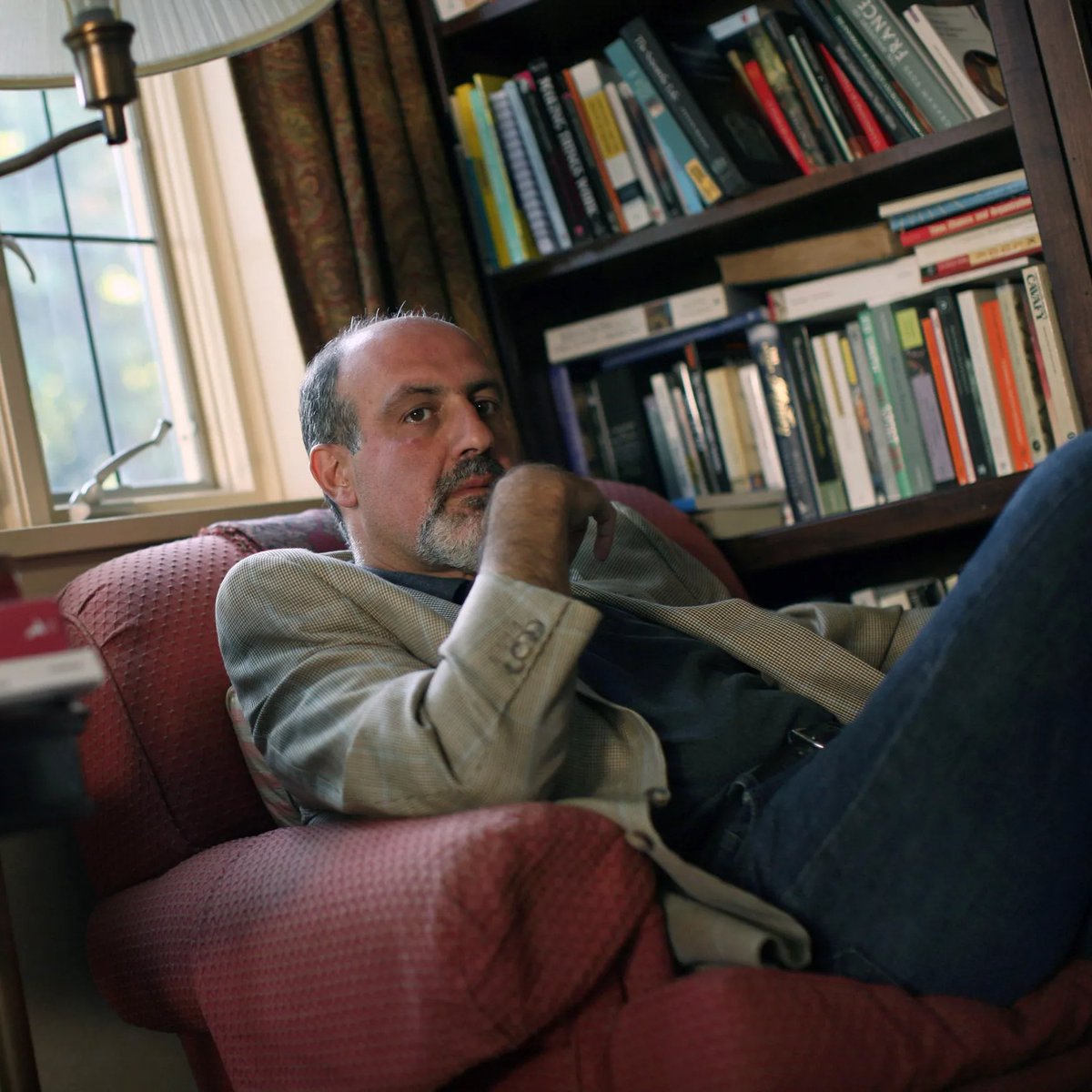
Nassim Taleb spends 30 hours every week reading books.
Here are 27 reading tips from @nntaleb:
1) The minute I was bored with a book or a subject I moved to another one, instead of giving up on reading altogether.
2) The trick is to be bored with a specific book, rather than with the act of reading.
3) A good book gets better at the second reading. A great book at the third. Any book not worth rereading isn’t worth reading.
4) I follow the Lindy effect as a guide in selecting what to read: books that have been around for ten years will be around for ten more; books that have been around for two millennia should be around for quite a bit of time, and so forth.
5) The reading of a single text twice is more profitable than reading two different things once.
6) A private library is not an ego-boosting appendage but a research tool.
7) Read books are far less valuable than unread ones. The library should contain as much of what you do not know as your financial means, mortgage rates, and the currently tight real-estate market allows you to put there.
8) Drink old wine. Read old books. Keep old friends.
9) Read nothing from the past one hundred years.
10) Never read a book that can be adequately summarized.
11) Never read a book you would not reread.
12) No book that can be shortened survives.
13) Books that endure don't look like good books; they are almost always very poorly written, but address fundamental topics.
14) What matters for a book is depth and relevance, which is extremely rare. Plus internal, not external coherence. Books that have them don't need the cosmetic shit.
15) When a risk taker writes a book, read it. In the case of Peter Thiel, read it twice.
16) Keep the book. Easier to remember contents just by looking at it. Often not even necessary to consult notes.
17) I don't remember what I learned in class. I remember much of what I read on my own.
18) To become a scholar, spend decades reading 30-40 h/week.
19) You will accumulate more knowledge and more books as you grow older, and the growing number of unread books on the shelves will look at you menacingly. Indeed, the more you know, the larger the rows of unread books. Let us call this collection of unread books an antilibrary.
20) I don’t read newspapers. I don’t watch television. I’m not on Facebook. I don’t care for the social networks. I’m on Twitter, but I use it only as a means to an end. I read books.
21) Books are not read by the majority because they read the Internet, which is like junk food for the mind.
22) The unread books on your shelf are like a universe of alternate possibilities waiting to be explored.
23) I divide my spirits into two categories: those I read for the pleasure of reading and those I read for the pleasure of rereading.
24) To see if a book is real, ask 10 people of different backgrounds & professions to summarize it. If the summaries are similar, the book will not survive as it can be shortened to a journal article.
The more the summaries diverge, the higher the dimensionality of the book.
25) If you want to study classical values such as courage or learn about stoicism, don’t necessarily look for classicists. One is never a career academic without a reason. Read the texts themselves: Seneca, Caesar, or Marcus Aurelius, when possible. Or read commentators on the classics who were doers themselves, such as Montaigne—people who at some point had some skin in the game, then retired to write books. Avoid the intermediary, when possible.
26) Criticism, for a book, is a truthful, unfaked badge of attention, signaling that it is not boring; and boring is the only very bad thing for a book. Consider the Ayn Rand phenomenon: her books Atlas Shrugged and The Fountainhead have been read for more than half a century by millions of people, in spite of, or most likely thanks to, brutally nasty reviews and attempts to discredit her.
27) A novel you like resembles a friend. You read it and reread it, getting to know it better. Like a friend, you accept it the way it is; you do not judge it.
Ni l’extrême gauche ni l’extrême droite ne proposent un modèle alternatif de société parce qu’ils ne sont porteurs d’aucun projet global. Ils se contentent de chercher des boucs émissaires et de détourner vers eux la colère sous-jacente de notre époque.
Billionaire investor Marc Andreessen (@pmarca) on why people should read more books:
"There are thousands of years of history in which lots and lots of very smart people worked very hard and ran all types of experiments on how to create new businesses, invent new technology, new ways to manage etc.
They ran these experiments throughout their entire lives. At some point, somebody put these lessons down in a book.
For very little money and a few hours of time, you can learn from someone’s accumulated experience. There is so much more to learn from the past than we often realize.
You could productively spend your time reading experiences of great people who have come before and you learn every time."
Startup idea:
Instacart, but you do your own shopping.
Imagine a big warehouse, lots of shelves with food on them, maybe a big parking lot, you go in the warehouse and pick out your own food and save on delivery fees.
Raising $600m at a $4b valuation.
Startup idea:
Instacart, but you do your own shopping.
Imagine a big warehouse, lots of shelves with food on them, maybe a big parking lot, you go in the warehouse and pick out your own food and save on delivery fees.
Raising $600m at a $4b valuation.
A surprising amount of the world’s wealthiest people are trained in the Liberal Arts because at the highest levels of business, everything comes down to understanding people